
1 in 8 U.S. Adults Say Wireless Radiation is Causing Health Issues
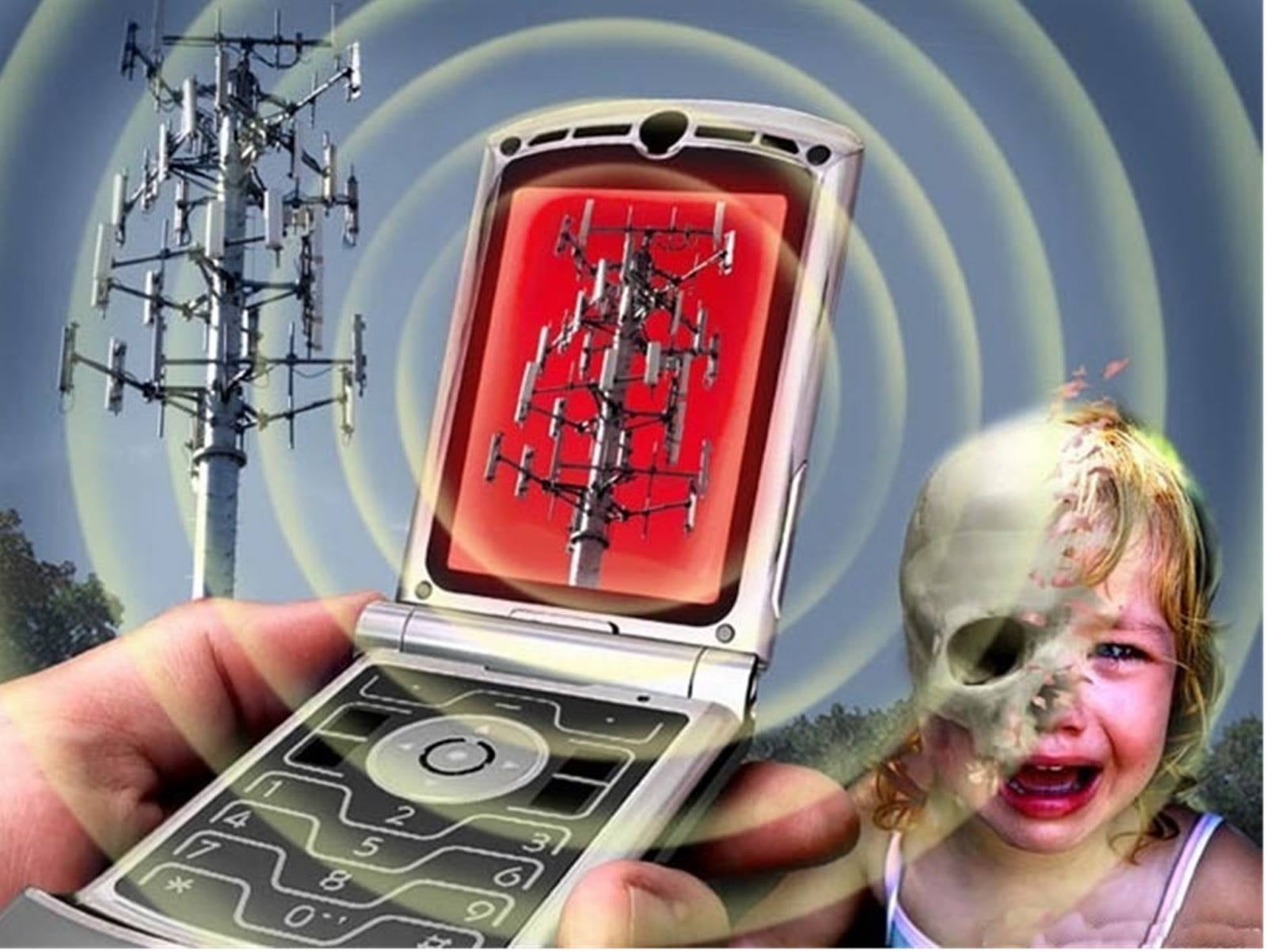
One in 8 U.S. adults reported adverse health effects from exposure to wireless radiation, according to a peer-reviewed report of nationally representative survey results.
The report, published March 12 in Next Research, also included survey results from Australia and Canada showing that roughly 1 in 6 Australian adults and 1 in 13 Canadian adults experienced negative health effects from wireless radiation.
Anne Steinemann, Ph.D., an honorary professor in the infrastructure engineering department at the University of Melbourne, Australia, and one of the report’s authors, said in a press release that many people report feeling unwell around sources of electromagnetic radiation (EMR) and wireless devices, including cell towers, cellphones and Wi-Fi routers.
Sensitivity to wireless radiation — now called EMR Syndrome — is a diagnosable medical condition, Steinemann said. “So, we wanted to find out: How widespread is this condition?”
The authors analyzed survey responses from 3,475 adults who were randomly recruited in 2022 across the U.S., Australia and Canada.
The results reveal that over 26 million adults in the U.S., Australia and Canada are experiencing health problems due to wireless radiation exposure, the authors wrote in their report.
The surveys also revealed that a high number (10.1% of U.S. Americans, 14.9% of Australians and 5.0% of Canadians) had been medically diagnosed as being sensitive to wireless radiation.
Roughly 14% of adults across the three countries reported experiencing negative health effects from wireless radiation exposure and/or being diagnosed with wireless sensitivity. The trend was highest among males ages 25-34. Those percentages are much higher than what earlier studies reported in other countries, according to the report.
The authors suggested that the increase in wireless radiation infrastructure and devices could be responsible for the uptick.
The true number of U.S., Australian and Canadian adults with EMR Syndrome could be even higher, since their study reported results from people willing to fill out a survey online. Some people who experience negative health effects from wireless radiation may avoid being online, they reasoned.
However, the true number could also be lower, as some people with EMR Syndrome have hard-wired internet and are more inclined to do online surveys, which would have inflated their estimates.
The study authors called for more research.
The authors noted that many cities and countries are shifting to wireless systems in an effort to be “sustainable.” However, leaders need to think about how wireless radiation is affecting people, especially the workforce.
Dynata, the “world’s largest and highest-quality first-party data company,” provided the survey platform. Respondents varied by age, gender and location to reflect each country’s population demographics.
Wireless technologies may be ‘eroding the health of our children’
The authors of the Next Research study also analyzed survey data to determine if people with EMR Syndrome were more likely to report other conditions, including chemical sensitivity, asthma, autism and fragrance sensitivity.
Of those who reported health effects from wireless radiation in the three countries, roughly 80% were chemically sensitive, over 70% had asthma or an asthma-related condition, over 50% had autism, and over 80% had fragrance sensitivity.
Julie McCredden, Ph.D., the study’s lead author, noted that inflammation is an underlying factor in many of these health conditions. “This could explain the surprisingly large overlap we found between wireless sensitivity and autism and wireless sensitivity and asthma,” she said.
McCredden is a consultant with the Oceania Radiofrequency Scientific Advisory Association (ORSAA) in Brisbane, Australia.
She said that wireless radiation causes oxidative stress, which underlies conditions such as inflammation, weight gain, depression, Alzheimer’s disease, diabetes, heart disease and autoimmune diseases.
“Oxidative stress is also involved in autism,” she added.
Although the survey involved adults, McCredden said its results bode poorly for children.
“While wireless technologies are bringing us many benefits, it’s also possible that they are eroding the health of our children.”
Lyn McLean, managing director of EMR Australia and one of the study’s authors, said, “It will be interesting to see if manufacturers respond by producing wireless-free devices, just as they have by producing gluten-free, lactose-free and fragrance-free products.”
People affected by wireless radiation face challenges when advocating for relief
Last year, the OneName Project announced EMR Syndrome as a unifying name for those sickened by wireless radiation.
Until then, those who experienced negative health effects faced challenges advocating for themselves and educating others because there had been no single, easily understandable term for the condition.
Instead, there were many multiple terms, including electromagnetic sensitivity, electromagnetic hypersensitivity, microwave syndrome, Havana Syndrome and others. Some countries still use these terms for medical diagnoses.
For instance, the survey asked:
“Has a doctor or health care professional ever told you that you have electromagnetic sensitivity?”
The survey assessed whether a person had EMR Syndrome or wireless sensitivity by asking:
“Do you consider yourself allergic or unusually sensitive to wireless radiation, such as from cell phones, Wi-Fi, smart meters, laptops, and other types of wireless technologies and devices?”
The authors noted that common symptoms include headaches, dizziness, cardiovascular problems, tinnitus, difficulty concentrating, nervous system effects, irritability, insomnia, fatigue, burning face, nausea and dysesthesia.
EMR Syndrome Alliance launches online resource
The Next Research report comes as the EMR Syndrome Alliance launched emrsyndrome.org, a website dedicated to supporting those who experience adverse health effects from wireless radiation.
The site includes testimonials, scientific references, recovery support, guidance for healthcare providers and information on disability accommodations.
Dr. Sharon Goldberg, an integrative and functional medicine doctor who has years of experience treating patients sickened by EMR exposure, said in an EMR Syndrome Alliance press release:
“The current mindset that we have of thinking that the electromagnetic environment is irrelevant to health has to change. There is so much science and evidence to show this is simply not the case, including the rise of EMR Syndrome.”