
New Epstein-Linked Allegation Raises Fresh Questions Over Bill Clinton’s Past

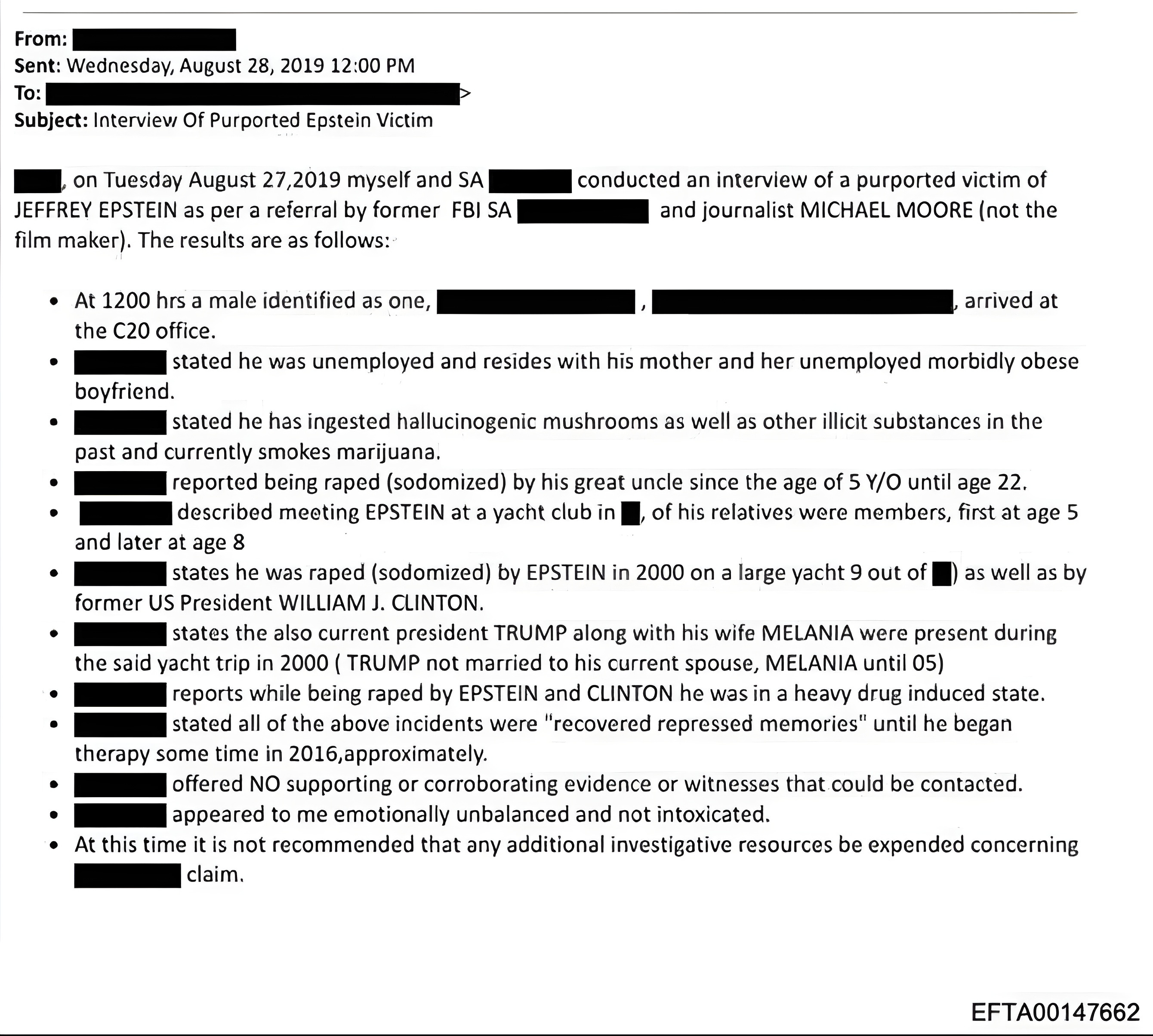
A new allegation tied to the Jeffrey Epstein files has reignited scrutiny of former President Bill Clinton, centering on a claim from an unnamed male accuser who says he was sexually assaulted aboard a yacht in 2000 by both Epstein and Clinton while under the influence of drugs.
The account, currently circulating via social media posts and secondary outlets rather than formal court filings, adds a new layer to a long-running story about Clinton’s relationship with Epstein and the broader effort to fully understand who knew what, and when, about the disgraced financier’s alleged sex‑abuse network.
The New Allegation
According to a summary shared by RT and attributed to an anonymous source, the man claims he was “sodomized” by Epstein and Clinton while he was on drugs on a yacht around the year 2000.
The account suggests the incident took place in a setting consistent with Epstein’s known lifestyle: private luxury travel, exclusive social circles, and a mix of powerful political and business figures.
At this stage, the accuser’s name has not been publicly revealed, and there is no indication that a criminal complaint or civil lawsuit specifically describing this yacht incident has been filed in court.
The allegation appears amid a broader wave of disclosures about Epstein’s activities, including recently surfaced material often referred to as the “Epstein files,” which have produced new claims and re‑energized old ones about prominent individuals in his orbit.
While details of this yacht account are scant and filtered through intermediaries online, the nature of the claim—rape of a male victim under the influence of drugs—marks a notable departure from the more commonly discussed accusations involving Epstein and underage or young adult women.
Clinton’s Long-Running Epstein Problem
Clinton’s association with Epstein has been well‑documented for more than a decade, even as the former president has denied any involvement in or knowledge of Epstein’s crimes.
Flight logs and media investigations have shown that Clinton flew on Epstein’s private jet multiple times in the early 2000s for philanthropic and speaking-related travel, including trips connected to Clinton Foundation initiatives and international tours.
Clinton has acknowledged those flights but insists he never visited Epstein’s private island and was unaware of any criminal behavior.
Beyond Epstein, Clinton has faced a series of separate sexual misconduct allegations over the years, ranging from harassment to rape, though he has consistently denied the most serious claims.
The
era prompted a re‑evaluation of Clinton’s history, with some commentators and Democratic figures later arguing that his behavior with Monica Lewinsky and earlier accusers would likely be judged far more harshly today.
The addition of a new Epstein-linked allegation, even in anonymized and untested form, therefore lands in a context where questions about Clinton’s past conduct already have a long and contentious history.
What Is Known and What Isn’t
At this point, the yacht allegation exists primarily as a claim relayed through social media and secondary reporting, rather than as a detailed affidavit or sworn testimony accessible in public court records.
There is no official indictment or civil complaint naming Clinton as a perpetrator of rape in this specific scenario, nor has there been public confirmation from law enforcement authorities that they are investigating this particular claim.
For that reason, it is best described as an allegation tied to the wider Epstein document trove, not as a proven fact.
Key unknowns remain: the identity of the accuser, the precise location and ownership of the yacht, corroborating witnesses or physical evidence, and whether the account appears in any sealed or partially redacted materials that may yet become public.
It is also unclear whether the alleged incident was ever reported contemporaneously to authorities, attorneys, or advocacy organizations, or whether it surfaced only years later amid renewed focus on Epstein’s network after his 2019 arrest and subsequent death.
Media, Politics, and Polarization
The way this allegation has spread highlights the intense politicization that surrounds anything connected to both Clinton and Epstein.
RT, a state‑backed Russian outlet that positions itself as emphasizing “freedom over censorship, truth over narrative,” amplified the claim in a short, viral post, which was then picked up by various X accounts with sharply partisan agendas.

As with many stories involving high‑profile figures, the allegation is quickly being deployed as ammunition in ongoing political battles rather than treated solely as a matter for careful reporting and legal scrutiny.
Supporters and critics of different political leaders are already using the latest Epstein‑related filings to argue that opponents are more deeply implicated, often cherry‑picking aspects that support their narrative while downplaying or ignoring inconvenient details about their own side.
This dynamic is particularly evident in how some commentators juxtapose references to Clinton and Epstein with separate mentions of Donald Trump’s own historical proximity to Epstein, along with emerging questions about what Trump knew regarding Epstein’s abuse and when.
Notable context on other figures
Public documents and media reports show that Trump and Epstein had a social relationship in the 1990s and early 2000s, before Trump later claimed that he “was not a fan” and distanced himself from Epstein after allegations became more widely known.
More recent materials released by the Justice Department and investigative committees have indicated that Trump’s name appears multiple times in Epstein-related records, prompting further questions about the full scope of his knowledge of, or proximity to, Epstein’s abuse, although some alleged victims have stated they did not see Trump engage in sexual abuse of minors.
These details underline that the Epstein case implicates a broad nexus of powerful individuals and cannot be reduced to a simple partisan talking point.
The Legal and Ethical Stakes
From a legal standpoint, the yacht allegation reinforces how Epstein’s activities continue to reverberate years after his death, with potential consequences for civil litigation, ongoing investigations, and the reputations of those named in emerging accounts.
If the anonymous accuser were to file a formal complaint or lawsuit, investigators and courts would then have the opportunity to test his claims against evidence, cross‑examination, and applicable statutes of limitation.
Until that happens, the allegation remains in a gray zone—serious enough to merit attention and caution, but not yet vetted through standard legal processes.
Ethically, the situation underscores a recurring tension in reporting on sexual violence involving powerful figures: the need to center alleged victims and take claims of abuse seriously, while also recognizing the difference between an allegation and a legally established fact.
The risk of defamation is real when specific, unproven criminal accusations against named individuals are repeated as settled truth, especially in headlines or viral social‑media posts that may omit crucial qualifiers such as “alleged” or “accuser says.”
Responsible framing going forward
For journalists, commentators, and everyday social‑media users, a careful framing is essential: Clinton has already faced multiple sexual misconduct allegations over the years, and his documented relationship with Epstein raises legitimate questions that deserve rigorous investigation, but this new yacht claim remains an unverified allegation from an unnamed accuser.
Treating it as a claim under scrutiny—rather than a proven event—respects both the seriousness of sexual‑assault accusations and the importance of due process in democratic societies.
https://news.joshwho.net/p/new-epstein-linked-allegation-raise