
Embrace Your Inner Knight
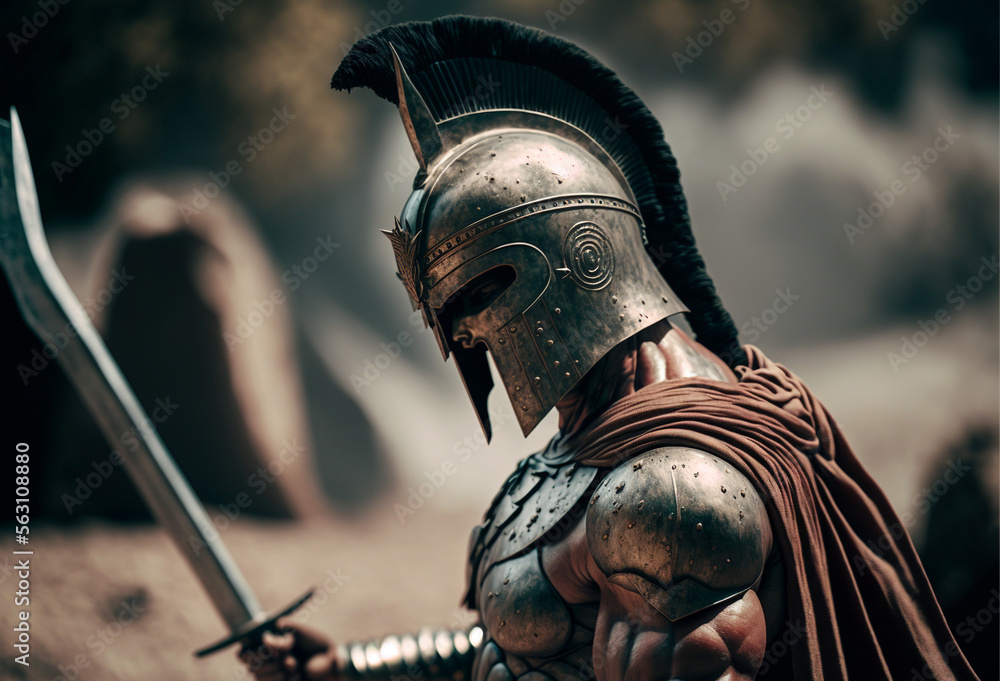
During the millennium that passed between the collapse of Roman civilization and the arrival of the Renaissance, what was the most lethal weapon in Europe? The knight and his warhorse. There was nothing more deadly than a well-trained warrior on horseback. Before the widespread use of gunpowder and the invention of firearms, cavalrymen were the world’s “weapons of mass destruction.”
A fascinating aspect of knighthood was the warrior’s code of chivalry. That word comes from the Old French term for “horse soldiery”: chevalerie. Over a thousand years, a word with descriptive military meaning transformed into an ideal code of conduct for an elite warrior. Compared to our current age — which has abandoned morality for realpolitik — it seems strange to think of “weapons of mass destruction” embracing virtues such as bravery, piety, honor, nobility, and service to others.
A knight’s code of chivalry was well known during the Middle Ages and was recorded in various languages over the centuries. As documented in “The Song of Roland,” a knight took these vows: (1) to fear God and maintain His Church; (2) to serve the liege lord in valor and faith; (3) to protect the weak and defenseless; (4) to assist widows and orphans; (5) to refrain from causing offense; (6) to live honorably; (7) to despise monetary reward; (8) to fight for the common welfare; (9) to obey authority; (10) to guard the honor of fellow knights; (11) to eschew unfairness, meanness, and deceit; (12) to keep faith; (13) to speak the truth; (14) to persevere to the end in any enterprise begun; (15) to respect the honor of women; (16) never to refuse a challenge from an equal; and (17) never to turn one’s back upon a foe. Of these seventeen vows, at least twelve relate to morality, honor, and personal conduct — as opposed to combat.
Near the close of the Middle Ages, the Duke of Burgundy wrote that a knight’s “Code of Chivalry” includes twelve virtues: (1) Faith, (2) Charity, (3) Justice, (4) Sagacity, (5) Prudence, (6) Temperance, (7) Resolution, (8) Truth, (9) Liberality, (10) Diligence, (11) Hope, and (12) Valor. Just as in “The Song of Roland,” the duke’s description of a knight’s personal code of conduct reflects Christian virtues in their highest forms.
Properly understood as a binding oath for these warriors, the medieval Christian knight’s code of personal conduct is nothing less than extraordinary. For a thousand years, there was nothing so deadly as a skilled knight. Though there were plenty of evil and avaricious men who took up the mantle of knighthood, ultimately, a moral culture took hold that counseled personal restraint. Aware of their own power, knights kept that power in check by first serving God. Rather than conquering everything before them, they exercised restraint. Rather than embodying the amoral premise that “might makes right,” they strove to uphold ideal forms of virtue. Then they instructed their young pages and squires in these same principles, so that they, too, would become knights of selflessness, piety, courage, and honor. By subordinating personal will to God’s will, the Middle Ages’ “weapons of mass destruction” led by example. Their model of gentlemanly character taught all men how best to behave.
Regrettably, we live in coarse and vulgar times. Virtue is dismissed as counterproductive or even openly mocked. Christian faith is treated as superstition and regarded as a kind of self-deluding “propaganda” best used either to keep the public docile or as a means of manipulating “uneducated” people into doing things that powerful people wish them to do. Much to our detriment, Western leaders largely see virtue and faith as imaginary spectacles whose only real value comes from how those “magic” words can be invoked to compel “lesser” humans to do what their “betters” command.
What would it mean for the world if a chivalric code still existed today? Can you imagine if nuclear powers exercised self-restraint not because of mutually assured destruction but rather because of brotherly love and Christian virtue? Can you imagine if covert operatives working for the CIA vowed “to fear God and maintain His Church”? That thought is almost comical, isn’t it? The idea that the Intelligence Community might “eschew deceit” and “speak truthfully” sounds absurd. The prospect of politicians “living honorably” and “refraining from causing offense” seems outlandish. The thought of masculine heroes wandering the streets while “protecting the weak and defenseless,” “assisting widows and orphans,” “fighting for the common welfare without reward,” “respecting the honor of women,” “guarding the honor of other warriors,” “never backing away from a fight,” and “never turning a back on a foe” is preposterous in this day and age. Yet consider how much better the world would be if we resurrected Christian virtue from the ash heap of postmodern destruction.
The Enlightenment’s deification of science and the physical world seeded a nihilism that took root during the nineteenth-century’s Industrial Revolution and grew lushly from the blood-soaked grounds of the twentieth-century’s global wars. What started with a patch of existential dread here and a grove of suicidal ideation there swept across the Earth. We have been harvesting parasitic weeds for so long that everything vital for life — even God, Himself — has been blocked from our view.
Are we better, as a society, without virtue? Are we happier, as a people, since the philosophers declared that God is dead? Do men behave more or less honorably than they did in the past? Have pornography and the indulgence of strange sexual appetites taught people to respect each other and behave nobly? Are there fewer rapes and murders now that several generations of men have been disarmed of their masculinity? Do we kill fewer people during war because we have chosen science over moral conviction? Are our streets safer because we have decided that decrying sin is too “judgmental” for our modern tastes? Do we have more selfless heroes, brave knights, and noble leaders in this age? Or have we condemned ourselves to a time when the courageous are punished and the villainous lead?
Or permit me to ask this question differently: Can we survive much longer as a species without virtue? Consider the elements of a knight’s code once again: (1) Faith, (2) Charity, (3) Justice, (4) Sagacity, (5) Prudence, (6) Temperance, (7) Resolution, (8) Truth, (9) Liberality, (10) Diligence, (11) Hope, and (12) Valor. As a society, have we not abandoned every one of these virtues? Don’t our entertainers mock anyone who diligently follows such a code? Don’t our “leaders” routinely disparage people who pursue honorable lives as “toxic,” “deplorable,” “Christian,” “right-wing,” “fascist,” “judgmental,” “uneducated,” and “racist”? Does it seem remotely possible for humanity to endure if we continue down a path on which hedonistic vice is celebrated and the cultivation of virtue is abandoned?
This world of ours is rapidly changing. Technology replaces human contact. Subjective “feelings” have replaced moral purpose. The economy might be one “bubble” away from collapse. It seems as if we are walking upon an invisible wire separating total war from relative peace. Everything is fragile.
Why are people so afraid of what lies ahead? The answer is obvious: Without virtue as a guide, life is frightening. With virtue in our hearts and faith in God, obstacles become opportunities. We modern humans dismiss the lessons of the past as if they were unworthy of our attention. We surely know so much more than those who once traveled where we stand but now lie buried beneath our feet.
But we are not a happy people. We are not a brave people. We are not an honorable people willing to fight each day for what is right.
For our society to survive, we must return to God. We must rededicate ourselves to virtue. We must find our inner knights.
Hat tip to Lady Lydia.
https://www.americanthinker.com/articles/2026/02/embrace_your_inner_knight.html