
Europe is Sleepwalking Toward War — and Calling It Peace
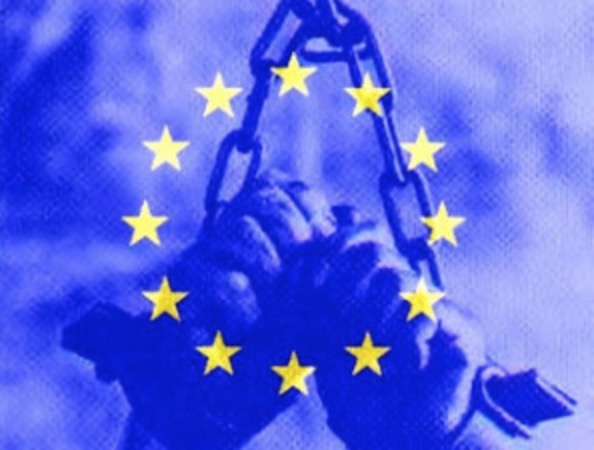
The question is whether Europe is prepared to sacrifice its prosperity, its political stability, and potentially its survival for an ideological crusade that lacks a coherent end-state.
A striking article published by Politico on 13 February carried the headline: “Western countries see World War III coming.” It reported that voters across leading allied states broadly support higher defence spending — but balk when asked to accept the economic trade-offs that such a shift would require.
This poll result should not reassure us. It should terrify us.
Because it reveals something far more dangerous than the prospect of future conflict: it reveals a civilisation preparing itself psychologically for war while refusing to accept what war actually means.
And it reveals how far Western political culture has drifted into a condition of mass strategic irrationality — sustained by a decades-long narrative of demonisation that can only be described as Russophobia.
The Russophobia Test Case
If one needed to be convinced of the mental harm and political danger of hate propaganda, the West’s treatment of Russia is the ultimate test case.
From the end of the Cold War onward, Russia has been framed not as a rival power with interests and security anxieties, but as an intrinsically malign actor — a civilisational enemy, “evil” by nature, and therefore beyond negotiation.
Once this framing takes hold, policy ceases to be about outcomes and becomes about morality. Diplomacy becomes betrayal. Compromise becomes appeasement. Strategic realism becomes disloyalty.
The result is a political atmosphere in which critical assessment becomes impossible, because the conclusion is pre-written.
The Collapse of Nuclear Fear
In the 1960s and 1970s, with the memory of World War II still alive, hundreds of thousands of Europeans demonstrated against the nuclear threat. Fear of escalation was a stabilising force. Leaders understood that even a “limited” nuclear exchange would be an unprecedented catastrophe.
Today, something has changed.
The European public appears almost numb. Calls from EU member states to explore extending the French nuclear umbrella — and possibly the British one — to create a European nuclear deterrent have produced no mass public reaction. The taboo has eroded. Nuclear weapons are now discussed with the casual language of “capabilities,” “coverage,” and “strategic autonomy.”
The irony is grim. This is not the confidence of a secure society. It is the recklessness of a society that no longer understands risk.
And this psychological shift has occurred at precisely the moment when trust in Western leadership is collapsing. Approval ratings for major Western leaders often sit between 11 and 25 percent. The public does not believe in its leaders — but it has been conditioned to fear the enemy more than it distrusts its own governments.
This is not resilience. It is manipulation.
The War That Cannot Be Named
Europe is now witnessing the consequences of a truth that has become politically unmentionable: Russia does not have the military capacity to conquer Europe.
Even in Ukraine — a state on Russia’s border, with deep historical and cultural ties, and with Russian-speaking regions — Russia has struggled to achieve belated decisive strategic success. The notion that Russia could mount an occupation of Poland, Germany, or the Baltic region is not a credible military proposition. It is a political myth.
Yet this myth is necessary, because it sustains the narrative.
It is the myth that justifies permanent escalation. It is the myth that turns every diplomatic contact into moral weakness. It is the myth that allows European leaders to frame a war of attrition as “defence of peace.”
The United States and the Logic of Attrition
The West’s current position did not emerge spontaneously in 2022. It is the result of long-term structural decisions.
The expansion of NATO eastward, despite agreement not to do and repeated warnings from Russian leaders and Western strategic thinkers, set the stage for confrontation. The 2014 Ukrainian crisis and the overthrow of a democratically elected government — widely accepted as a Western-engineered regime change — cemented Moscow’s belief that the West sought to pull Ukraine permanently into its strategic orbit.
The subsequent dishonesty surrounding Minsk, and Istanbul, confirmed for many Russians that Western diplomacy was not intended to produce settlement, but delay.
From the American perspective, the logic has been brutally simple: Russia can be weakened through a proxy conflict at limited cost to the United States. The Ukrainian battlefield becomes an attritional instrument — a “vehicle” through which Russia’s manpower, economy, and military-industrial capacity can be degraded.
Whether this was a long-planned strategy or an opportunistic adaptation matters less than the outcome. The effect is indistinguishable: the United States has found a way to fight Russia indirectly, while keeping the costs of war largely externalised.
Ukraine pays the blood price. Europe pays the economic price.
Europe’s Strategic Prison
The European Union is now trapped in a dead-end street of its own making.
EU institutions have discouraged, and in many cases effectively prohibited, meaningful engagement with Russia. Those who break the consensus — such as Viktor Orbán or Robert Fico — are treated not as dissenting voices but as internal enemies.
This is not a healthy alliance culture. It is ideological conformity.
Europe has now locked itself into a posture where it cannot negotiate without losing face, cannot compromise without collapsing its narrative, and cannot de-escalate without admitting that its strategic approach was flawed.
It has become self-imprisoned.
The public messaging is absolute: no dialogue, no settlement, no security architecture, only resistance “as long as it takes.”
But the phrase “as long as it takes” is not a strategy. It is an evasion of strategy.
The Brussels–Munich Acceleration
The most alarming aspect of Europe’s current trajectory is not merely its strategic rigidity, but the speed with which that rigidity is now being institutionalised.
Last week’s informal meeting of EU leaders, followed immediately by the Munich Security Conference, functioned as a political accelerant. Together, they signalled not a reassessment of Europe’s approach, but its consolidation.
The emerging “strategy” is now openly framed in two parallel commitments:
- unlimited support for Ukraine “to the end,”
- and simultaneous preparation for “the worst” regarding Russia.
This is being presented as prudence. In reality, it is a dead-end street.
Supporting Ukraine indefinitely without a defined political end-state is not strategy; it is moralised endurance. Preparing for war with Russia while simultaneously eliminating diplomatic engagement is not deterrence; it is pre-escalation.
What these meetings demonstrate is that Europe has now entered a self-reinforcing logic where every new declaration of resolve makes retreat politically impossible, and every new step toward militarisation becomes proof that war was always inevitable.
In other words, Europe is not preparing for war because war is unavoidable. It is making war unavoidable because it has decided that negotiation is illegitimate.
This is the final stage of strategic imprisonment: a continent declaring itself committed to peace while systematically dismantling every mechanism that has historically prevented war.
The Emerging Reality
We now face a stark and increasingly dangerous geopolitical configuration:
- The United States has pursued an attritional confrontation with Russia, using Ukraine as the battlefield.
- The US has sidelined the EU from meaningful involvement in peace settlement processes.
- The EU, trapped by its own media environment and moral framing, has eliminated diplomatic flexibility and treated negotiation as betrayal.
- Even if the US reaches a settlement, Europe will remain psychologically committed to confrontation — preparing for a future war it cannot afford and cannot win.
This is the new European paradox: a continent preparing for war while simultaneously dismantling the economic foundations that make military readiness possible.
The Missing Framework: European Security Architecture
There is only one realistic long-term solution, and it is the one European leaders refuse to pursue.
A sustainable peace requires a continental European security agreement — not a NATO security arrangement, not an EU “strategic autonomy” framework, but a genuine architecture that includes Russia.
Russia has repeatedly stated that its objective is not merely Ukraine, but the strategic settlement of European security order. Whether one trusts Moscow or not is irrelevant. The basic fact remains: you cannot build a durable security system in Europe by excluding the largest military power on the continent.
Yet the West insists on precisely that. It speaks of “European security” while explicitly excluding Russia. This is not security policy. It is a recipe for permanent instability.
Europe’s Leadership Crisis
Europe’s political leadership is behaving as if escalation is costless and war is manageable.
But war is not manageable. It is a system of cascading miscalculations.
In an environment of demonisation, propaganda, and moral absolutism, escalation becomes inevitable because retreat becomes politically impossible. Once leaders commit their legitimacy to the destruction of an enemy, they cannot negotiate without admitting failure.
That is why propaganda is not merely an ethical issue. It is a strategic danger. It destroys off-ramps.
The Coming Reckoning
Europe is drifting toward a future defined by militarisation, economic decline, and heightened nuclear risk — while its populations are being conditioned to accept it as normal.
The question is not whether Europe can “defend Ukraine.” The question is whether Europe is prepared to sacrifice its prosperity, its political stability, and potentially its survival for an ideological crusade that lacks a coherent end-state.
At some point, the economic damage and social decline will become so severe that the public will be forced to confront the truth: Europe is paying for a confrontation it does not control, in a war it cannot win, while being led by political elites with collapsing democratic legitimacy.
The hope is that this reckoning comes through democratic pressure — millions of ordinary Europeans demanding sanity, diplomacy, and the removal of reckless leaders.
The fear is that it comes only after catastrophe.
Conclusion: Sleepwalking Toward the Abyss
Europe today is not marching confidently toward security. It is sleepwalking toward escalation.
The erosion of nuclear taboo, the destruction of diplomacy, and the moralisation of foreign policy are not signs of strength. They are symptoms of a continent losing its strategic mind.
History will not forgive leaders who inflamed fear, outlawed dialogue, and drove Europe into a confrontation that could have been avoided.
And history will be merciless if Europe, once again, learns the price of strategic blindness only after the dead begin to accumulate.
https://leonvermeulen.substack.com/p/europe-is-sleepwalking-toward-war