
The War in Ukraine Could Go Nuclear
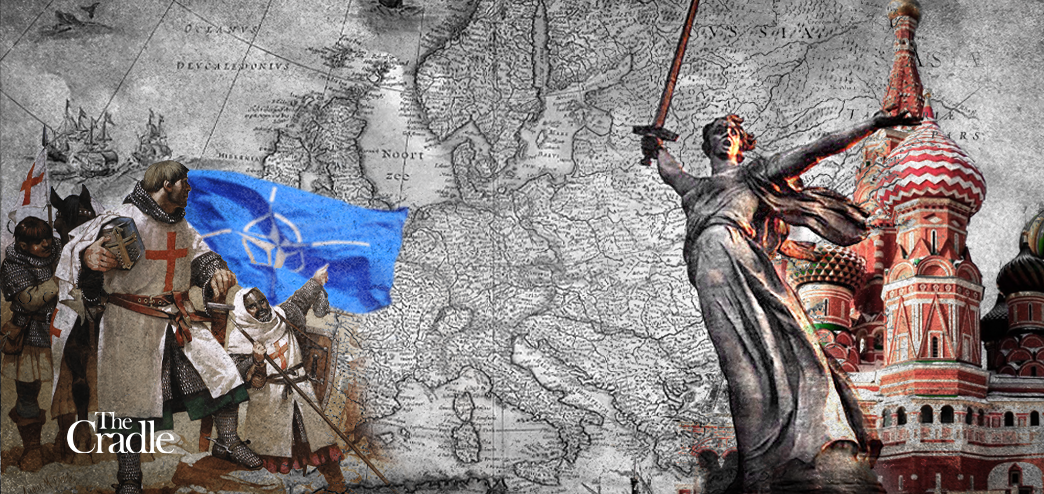
Too many influential voices are contemplating how to ‘win’ a nuclear war.
ith all eyes on the U.S. military buildup around Iran right now, the Russia-Ukraine War has been temporarily upstaged. It will not play second fiddle for long. The recent trilateral talks in Geneva involving the Russian Federation, Ukraine, and the United States have been unable to resolve a principal issue of disagreement: Ukraine’s martial-law-president Volodymyr Zelenskyy’s refusal to cede any land and Russia’s insistence that the Donbas region — specifically the four eastern territories that have already held a referendum in support of becoming part of the Russian Federation — be acknowledged as sovereign Russian territory.
As the war heads into its fifth year, dangers mount for Europe. While President Trump wants to end the bloodshed before the violent conflict transforms into something even more catastrophic, too many parties seem committed to ratcheting up the butcher’s bill a while longer. Unfortunately, there are numerous reasons for prolonging the war that have nothing to do with protecting civilian lives or securing Ukrainian territory.
There is the political reality that a growing embezzlement scandal is taking down high-ranking Ukrainian officials with close relationships to Zelenskyy and the prospect that general peace would mean not only an end to the hold-over-president’s power but also an end to his legal immunity. There is the dogged determination of the European Commission and certain European nations — particularly the United Kingdom and its Ukraine-obsessed MI6 — to drag the fighting out as long as possible as part of a larger effort to weaken President Vladimir Putin’s control over the Russian Federation. There is the long-term European Union goal of absorbing Ukraine into the continental federation and eventually welcoming it into NATO — or at least to use the present war as an excuse for positioning European troops close enough to Ukraine’s current battle lines to trigger a U.S. military response once the lives of NATO-allied soldiers are threatened. There is the dire financial need for the European Central Bank and discrete national Treasuries to use the war as a publicly digestible excuse for fabricating new war bonds, cutting welfare programs, further integrating Europe’s separate national economies, subsidizing Europe’s defense industries, and printing enormous sums of money. There is the relentless goal of European Commission President Ursula von der Leyen (selected by the elite members of the European Council and elected not by the European people but rather the European Parliament) to use the War in Ukraine as a justification for expanded powers for her office and the formation of a European-wide military under her putative authority.
For many reasons that have nothing to do with saving lives or resisting invasion, Europe seems committed to prolonging war and forestalling peace.
At the same time, there is a growing sentiment among Russians that a larger war in Europe has become inevitable. While European political leaders have spent more than a decade publicly framing (1) Russia’s annexation of Crimea, (2) its military assistance to Russian separatist groups in the Donbas region, and (3) its “special military operation” in Ukraine as completely unprovoked instances of “Russian aggression,” most Russian citizens view them as legitimate responses to (1) the U.S.- and E.U.-led coup d’état of Ukrainian president Viktor Yanukovych in 2014 (an event that the West euphemistically calls the “Maidan Revolution” or “Revolution of Dignity”), (2) the Ukrainian military’s attacks on ethnic Russians, and (3) NATO’s decades-long advance right up to the Russian Federation’s borders.
If European and American leaders intended to weaken President Putin’s domestic support so severely that he would be removed, betrayed, or killed, those efforts have failed. Instead, a rally-around-the-flag patriotism for “Mother Russia” has swept across the world’s largest nation state. As European sports leagues banned Russian athletes from competing under their own flag, anger in Russia grew. As Russians living abroad found their bank accounts frozen for the actions of their government, anger in Russia grew. As Western news corporations increasingly dismissed politically inconvenient stories as “Russian disinformation,” anger in Russia grew. Whereas once the prospect of Russian integration with continental Europe seemed likely, Russia now looks East and toward a future with other Asian powers.
A prospect even more unsettling than the current War in Ukraine now takes shape: the quickening drumbeat toward nuclear confrontation. What U.S. and former Soviet Union leaders spent half a century working to avoid is now discussed too openly for comfort. American senators, such as Lindsey Graham, have occasionally suggested that effective nuclear deterrence requires U.S. willingness to use the nuclear weapons in its arsenal. France’s President Emmanuel Macron and Germany’s Chancellor Fiedrich Merz have held not-so-secret talks on creating a European-managed “continental nuclear shield.” Turkish President Recep Erdogan wants nuclear weapons of his own. Polish President Karol Nawrocki says that his country needs nukes in order to defend against the “Russian threat.” Meanwhile, one of the most influential intellectuals in the Russian Federation believes that President Putin must be willing to utilize “limited but decisive nuclear strikes using operational-strategic weapons” should European Union powers refuse to retreat.
Russian political scientist Sergey Karaganov says that the E.U. is playing with nuclear fire and must be taught a lesson. Karaganov is no ordinary academic. He holds a reputation in Russia similar to Henry Kissinger’s in the United States. Karaganov is a founding member of Moscow’s prestigious Valdai Discussion Club, the honorary chairman of Russia’s Council on Foreign and Defense Policy, a supervisor at the School of International Economics and Foreign Affairs at Moscow’s Higher School of Economics, and a personal confidant of both Foreign Minister Sergey Lavrov and President Putin. When Professor Karaganov suggests that the time is approaching when his country must contemplate using nuclear weapons against strategically important areas of Europe, people should listen.
In a lengthy and polemical essay for the foreign-policy journal Russia in Global Affairs, Karaganov argues that Europe’s political “elites” are pushing the continent toward a nuclear confrontation. He says the War in Ukraine has “dragged on longer than necessary” because of a “lack of determination to employ active nuclear deterrence.” He argues that nuclear weapons represent the “only mechanism capable of resolving” the “European problem,” a problem that he describes as, “an existential threat to our country.” Furthermore, “Targets should include places where elites gather, including in nuclear states. Governments must feel personal risk.”
Professor Karaganov then takes the Russian people through a sympathetic history lesson. He claims to have had a conversation with a group of European leaders back in 2013 during which he warned that “dragging Ukraine into the E.U. and NATO would lead to war and mass casualties.” He says they “looked down at their shoes” and mumbled about “democracy,” “human rights,” and “containing Russia.” Karaganov argues that years of Russian “appeasement” has come at the “terrible cost” of tens of thousands of “brave soldiers” who “lost their lives” in Ukraine. Describing Russia’s fallen warriors as heroes whose sacrifice cannot be forgotten, he insists that Russia not make the same mistakes of the last two decades.
Striking Ukrainian targets, Karaganov argues, is not a “strategic solution” because “E.U. elites” represent the real threat. “The conflict will continue until its true source is addressed: Western Europe’s degenerated ruling classes, intellectually, morally, and materially exhausted, who cling to power by fueling war.” He insists that Russia must “break” Europe’s “will” to keep fighting. He argues that effective nuclear deterrence is the only way to prevent a larger U.S.-Russia war. Furthermore, he believes that France and the United Kingdom must be deprived of nuclear weapons because “they have forfeited the moral right to possess them. Any Western European move toward nuclear proliferation must be treated as grounds for preemptive action.”
Too many influential voices are contemplating how to “win” a nuclear war. Say a prayer for peace.
https://www.americanthinker.com/articles/2026/02/the_war_in_ukraine_could_go_nuclear.html