
Austrian Parents are Pulling Kids Out of State Schools as Language Crisis Deepens
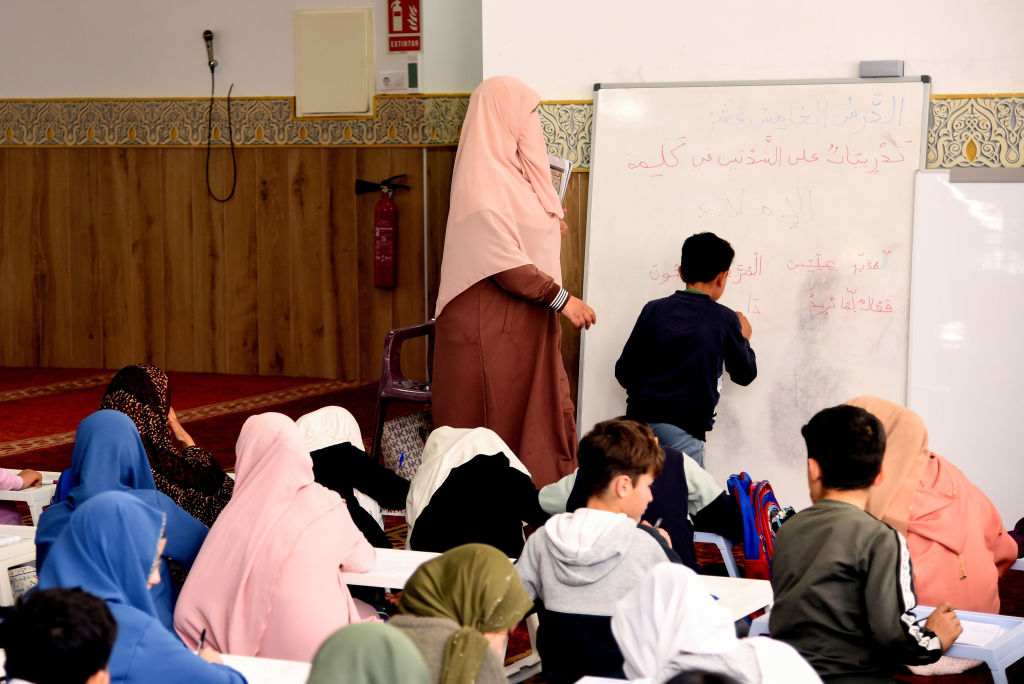
‘Only four children spoke German!’
A growing number of Austrian parents who can afford it are withdrawing their children from public schools over concerns that insufficient German language proficiency in classrooms is undermining academic standards.
As reported by Heute, Sabine G., a mother of three from Vienna, made that decision after two years at a primary school in the capital’s Rudolfsheim-Fünfhaus district, in which just four children from her daughter Lena’s class spoke German fluently.
Teachers, she said, spent large portions of lesson time translating instructions and managing basic communication, leaving limited scope for structured teaching. By the end of the first school year, she claims, her daughter was still unable to recite the alphabet, while several classmates were required to repeat the grade.
The situation did not improve in the second year. Sabine described significant age and developmental gaps within the same classroom, with older pupils who had repeated multiple years learning alongside younger children. She attributed many of the academic delays to weak German language skills.
Concerns extended beyond performance in core subjects. Sabine said her daughter began expressing views she had picked up from classmates, including refusing to eat pork after being told it was “unclean.” She also declined to wear certain summer clothing. “I felt my child was being strongly influenced,” Sabine said.
After completing second grade, the family transferred the girl to a private school in Vienna at a cost of €560 per month. “I didn’t want to watch my daughter fall behind,” Sabine said. “It’s about her future.”
Educators elsewhere in Austria describe similar pressures. In Graz, the head of Bertha von Suttner Elementary School in the Gries district told local media that German is now a minority first language among her pupils.
“We have four or five out of 170 children with German as their first language,” the principal said late last year. Around 80 percent of students at the school are Muslim. She said tensions frequently arise over religious and cultural issues, including objections from some parents to sex education classes and complaints about Christian symbols such as Christmas trees. At the same time, she reported that some families remove children from school for several days during religious holidays without formal notice.
Data published by the Ministry of Education last November showed that 46,385 pupils across Austria in 2025 were classified as unable to follow lessons due to insufficient German skills. Although slightly lower than the previous year’s total, the figure represents a sharp increase compared to a decade ago.
“When one in four students now speaks a language other than German at home, and the number of students with special educational needs due to insufficient German skills is exploding, then we are no longer talking about a challenge, but a full-blown educational emergency,” said Freedom Party of Austria (FPÖ) education spokesman Hermann Brückl. He warned that “German is becoming a foreign language in our own classrooms.”
Brückl described conditions in Vienna as “particularly dramatic,” citing figures showing that 41.2 percent of pupils in the capital’s elementary, middle, and special schools in the 2024/2025 academic year were registered as Muslim, according to the Austrian Integration Fund.
Similar concerns about language proficiency have surfaced elsewhere in Europe. In France, national assessments in November 2024 found fewer than half of final-year primary pupils demonstrated competence in key grammar skills.
Just 46.7 percent of these students showed proficiency in “conjugated verb agreement,” and more than 50 percent struggle to “recognize the main components of a sentence.”
The demise of proficiency in European languages is now having an impact on job recruitment. In Germany last month, Berlin’s police chief told lawmakers that most failed recruitment exams could be traced to inadequate German language ability.
Appearing before the Interior Committee of Berlin’s House of Representatives, Slowik Meisel said, “We have a very serious problem with German language skills, regardless of nationality. I don’t want to criticize schools, but there is a problem with the educational levels young people are leaving school with.”