
From Ajax to Epic Fury
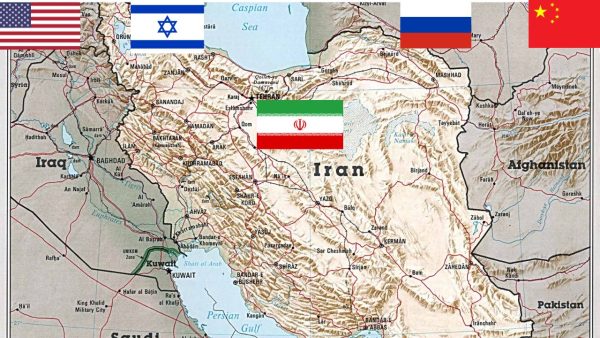
In the early morning hours of February 28, 2026, the United States and Israel launched a massive joint military assault on Iran. The Pentagon called it Operation Epic Fury. Israel named its portion Operation Roaring Lion. American B-2 bombers, F-22s, and F-35s struck targets across Tehran, Isfahan, Qom, Karaj, Kermanshah, and Bushehr. Carrier strike groups led by the USS Abraham Lincoln and USS Gerald R. Ford unleashed sorties from the Arabian Sea and the Eastern Mediterranean. President Donald Trump announced the strikes in an eight-minute video from Mar-a-Lago, declaring that the objective was regime change.
Iran’s Supreme Leader, Ayatollah Ali Khamenei, was killed in the strikes. Thousands of IRGC personnel were reported dead or wounded. Iran retaliated with missile and drone salvos against Israel and American bases across the Gulf, spreading the conflict to Saudi Arabia, the UAE, Qatar, Bahrain, and Kuwait.
The world reacted with a mixture of horror, celebration, and condemnation. U.N. Secretary General António Guterres condemned the strikes at an emergency Security Council session, warning that “military action carries the risk of igniting a chain of events that no one can control in the most volatile region of the world” and accusing Washington and Tel Aviv of “squandering an opportunity for diplomacy” that had been underway through Omani-mediated nuclear talks. Russia’s Foreign Ministry called the strikes a “premeditated and unprovoked act of armed aggression.” Spanish Prime Minister Pedro Sánchez rejected “the unilateral military action by the United States and Israel.” Iranians in the diaspora danced in the streets of Los Angeles waving pre-1979 Lion and Sun flags alongside American and Israeli banners.
And the American corporate press, as it always does, covered the spectacle of war without ever pausing to ask the question that should precede every bomb that falls from an American aircraft.
The million dollar question: How did we get here?
The Sin That Started It All
The honest answer begins not in 2026 but in 1953, when the CIA and British intelligence overthrew the democratically elected government of Prime Minister Mohammad Mossadegh in a covert operation called Operation Ajax. Mossadegh’s crime was nationalizing Iran’s oil industry, which had been controlled and exploited by the Anglo-Iranian Oil Company, the predecessor of British Petroleum. The Eisenhower administration, persuaded by London that Mossadegh was drifting toward the Soviets, authorized the CIA to organize street mobs, bribe military officers, and engineer a coup that replaced a popularly elected leader with the autocratic Shah Mohammad Reza Pahlavi. The Shah ruled for 26 years with the help of SAVAK, a secret police force trained and organized by the CIA, until the Iranian Revolution of 1979 swept him from power and installed the Islamic Republic.
No American politician articulated the consequences of that original sin more persistently or more courageously than former Congressman Ron Paul of Texas. On the floor of the House of Representatives, in presidential debates, in book after book, Paul returned to the same point with the stubbornness of a man who believed the truth mattered even when nobody wanted to hear it. “We started it in 1953 when we sent in a coup, installed the Shah, and the blowback came in 1979,” Paul told Rick Santorum during a Republican presidential debate. “It’s been going on and on because we just plain don’t mind our own business.”
73 Years of Escalation
The catalog of American actions against Iran since 1953 is not a list of isolated incidents. It is a pattern so consistent, so relentless, and so escalatory that it reads less like foreign policy and more like a slow-motion siege spanning nearly half a century of the Islamic Republic’s existence and over seven decades since the original coup.
After the 1979 hostage crisis, the Carter administration froze over $8 billion in Iranian assets and severed all diplomatic relations with the newly formed Islamic Republic. The Reagan administration designated Iran a State Sponsor of Terrorism in 1984, then provided economic aid, intelligence, and dual-use technology to Saddam Hussein’s Iraq during the Iran-Iraq War, even after the CIA confirmed Iraq was using chemical weapons against Iranian soldiers and civilians. In 1987 and 1988, the U.S. Navy launched Operation Earnest Will, the largest naval convoy operation since World War II, followed by Operation Praying Mantis, which destroyed nearly half of Iran’s operational fleet in a single day. On July 3, 1988, the USS Vincennes shot down Iran Air Flight 655, a civilian passenger plane, killing all 290 people aboard.
The Clinton administration imposed a near-total trade embargo in 1995 and signed the Iran and Libya Sanctions Act in 1996, punishing even foreign companies that did business with Tehran. George W. Bush branded Iran part of an “Axis of Evil” in 2002, sabotaging secret diplomatic cooperation that had been underway since the invasion of Afghanistan. Congress passed the Iran Freedom Support Act in 2006, appropriating $10 million to fund “pro-democracy groups” opposed to the Iranian government and explicitly declaring U.S. policy to “support a transition to democracy in Iran.”
Under Bush and Obama, the Stuxnet cyberweapon was deployed to destroy approximately 1,000 Iranian nuclear centrifuges, the first known instance of a cyberattack causing physical destruction to critical infrastructure. Barack Obama expanded financial sanctions to a degree that crushed Iran’s economy, levying billions in fines against European banks for doing business with Tehran. He then negotiated the JCPOA nuclear deal in 2015, offering a rare moment of diplomatic restraint, only for Donald Trump to withdraw from the agreement in 2018 and impose what his administration called “maximum pressure.”
Trump’s first term produced over 1,500 sanctions designations against Iran and foreign entities doing business with it, targeted Supreme Leader Khamenei personally, designated the IRGC as a Foreign Terrorist Organization (the first time any branch of a foreign government’s military received such a label), and culminated in the killing of Major General Qasem Soleimani in January 2020.
Joe Biden refused to lift sanctions without prior Iranian compliance, sanctioned the morality police over the Mahsa Amini protests, and allowed the JCPOA to officially lapse in October 2025. Trump’s second term reimposed maximum pressure, slapped 25 percent tariffs on any country trading with Iran, and then in June 2025 ordered Operation Midnight Hammer, the first direct American military strike on Iranian soil, sending B-2 stealth bombers to drop bunker-buster bombs on the Fordow, Natanz, and Isfahan nuclear facilities.
And then came February 28, with America launching the most devastating military operation against Iran in history, killed its Supreme Leader, and called it liberation.
At what point does a nation that has done all of this stop and ask itself whether the problem might be closer to home than it imagines? And better yet, ask who is the real sovereign dictating these policies? These are the tough questions that must be asked and answered if we want any semblance of sanity to occur in American foreign policy decision-making.
What Would Redemption Look Like?
If there is a path out of this cycle, it begins with honesty. It begins with acknowledging that the United States government has been the aggressor in its relationship with Iran for the better part of a century. It begins with recognizing that sanctions are not diplomacy but economic warfare, that regime change is not liberation but imperialism, and that the American people have never been given an honest accounting of why their government treats a country of 90 million people on the other side of the planet as an existential enemy.
The policy prescriptions are not complicated. They are simply unthinkable within the current political order. Remove all American military bases from the Persian Gulf and the broader Middle East. End every sanction against Iran, unilaterally and without preconditions. Reestablish diplomatic relations severed in 1980. Treat Iran the way America treats dozens of other nations whose internal politics Washington may find objectionable but whose sovereignty it nevertheless respects. Stop subsidizing and arming governments in the region whose interests diverge from those of the American people. And above all, retire the fantasy that the United States government has the right, the wisdom, or the competence to dictate the political future of a civilization that was ancient before America was born.
Any genuine shift toward a non-interventionist foreign policy remains unattainable without also acknowledging the true sovereign of American political life: the organized Jewish community. The current ruling class functions essentially as an instrument for the expansion of this collective’s geopolitical influence. Entities such as AIPAC and WINEP have effectively repurposed the United States national security state into a private security apparatus designed to realize the Old Testament-style fantasies of global Jewry.
The events of February 28, 2026, were not anomalous; they were the predictable terminal point of seven decades of institutionalized hostility. This latest stage of escalation is the direct outcome of a Judeo-accelerationist agenda championed by Donald Trump. Unless the United States dismantles the Jewish supremacist power configuration that has entrenched itself within the federal bureaucracy, the cycle of perpetual warfare will remain unbroken. As long as this nexus of influence persists, the Judeo-American imperium will continue to feast upon the vitality of White America, leaving nothing but ruin in its wake.