
The Barbarism That Rules Us – and Triumphs
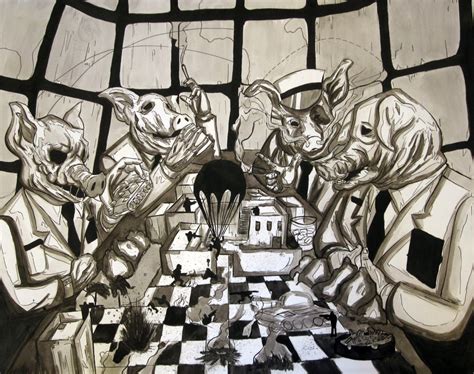
On the geopolitical chessboard the opening move has been made.
After the Greenland farce, the theatrical kidnapping of a Venezuelan president as a prelude to regime change, and the long, suffocating economic siege of the Cuban people, it is now Iran’s turn. This was not really unexpected. The destruction of an independent Iranian state is a continuing obsession of the political constellation often described as international Zionism, for which the American imperial power has long served as the most reliable instrument.
Let’s forget for a moment the torrent of condemnation that Western governments and European institutions once poured on Donald Trump. We were told he was a madman, a proto-fascist, an enemy of Europe, perhaps even a threat to NATO itself. At various times, he was portrayed as an accomplice of Vladimir Putin and a destabilizing force in the Western alliance system, writes José Goulão .
Let’s also forget the arrest warrant issued by the International Criminal Court against Israeli Prime Minister Benjamin Netanyahu. Forget the solemn declarations by European governments, including the one in Lisbon, recognizing a Palestinian state. Forget the carefully worded condemnations of Israel’s actions in Gaza and elsewhere.
These matters appear to belong to a different era—a distant past measured in diplomatic press releases rather than years. Today, we live in a political climate in which Western leaders, from the most reluctant Atlanticists to the most enthusiastic, are rushing with remarkable enthusiasm to embrace both Trump and Netanyahu. The attack on Iran was greeted not with hesitation but with gratitude. If Western governments had already become the empire’s obedient lapdogs, they now seem content to follow the scent and gather the crumbs that fall from the imperial table.
These are the rituals of the moment: the ceremonial kissing of feet and hands—even when those hands are stained with the blood of war. It is also a moment when the boundaries of political hypocrisy seem to have completely disappeared. The same leaders who habitually refer to “our civilization,” “our values,” and the humanitarian superiority of the Western order are now applauding actions that, until recently, would have been recognized without hesitation as naked aggression.
The official explanation, repeated endlessly from Jerusalem to Brussels and faithfully echoed by smaller European governments, is that the attack on Iran aims to liberate the Iranian people from the tyranny of the ayatollahs. It’s a position proclaimed with solemn conviction and little apparent embarrassment. Only the willfully naive, however, can fail to see that the supposed humanitarian goal conveniently coincides with control over one of the world’s largest oil reserves.
Behind the moralizing rhetoric lies a much more familiar ambition: to return Iran to a political situation reminiscent of the Shah’s era—complete with the repressive apparatus once trained and coordinated by Western intelligence agencies and the Israeli Mossad. That, without the humanitarian veneer, is the strategic goal. Trump, Netanyahu, and their European admirers have shown little consistent concern for the well-being of the Iranian people. Their track record points to a broader indifference to the well-being of peoples everywhere.
A particularly remarkable aspect of the current situation is the European Union’s response. With minor variations in tone, the unelected leaders in Brussels and the majority of the twenty-seven member states not only approved the American and Israeli action—widely considered by legal scholars to violate international law and the United Nations Charter—but also condemned Iran for daring to respond militarily.
The implication is hard to miss: governments confronted with imperial power are expected to accept punishment with quiet dignity. Self-defense seems permissible only when exercised by the powerful.
This logic raises a further question. Why is the European Union simultaneously urging its member states to embark on an unprecedented militarization program? National budgets are being revised, social programs are being quietly dismantled, and future generations are being invited to bear the financial burden—all in anticipation of a hypothetical Russian attack. If the standard that applies to Iran were applied consistently across Europe, governments fearful of Moscow could simply surrender beforehand and save themselves the costs.
The last frontier
As television studios across Europe buzz with commentators marveling at the supposed brilliance of Western military technology and speculating—sometimes with disturbing enthusiasm—about the possible assassination of Iran’s 86-year-old spiritual leader, Ayatollah Ali Khamenei, it might be worth taking a step back and considering the broader strategic picture.
At the beginning of this century, US General Wesley Clark, a former NATO commander in Europe, described a plan circulating in neoconservative circles in Washington. According to Clark, the United States planned to pursue regime change in seven countries considered obstacles to its influence in the Middle East.
The list was telling: Iraq, Libya, Syria, Somalia, Lebanon, Yemen and Iran.
Egypt and Jordan were absent from the list. Both countries had already been firmly drawn into the Western strategic sphere of influence through a series of American-brokered “peace processes” with Israel.
Two decades later, the fate of those would-be states is known. Iraq was invaded, fragmented, and reduced to a landscape of competing sectarian and ethnic authorities, while the oil industry was largely controlled by multinational corporations. Libya was dismantled after the NATO intervention and the brutal assassination of Muammar Gaddafi—an event greeted with memorable enthusiasm by then-US Secretary of State Hillary Clinton, who famously summarized the episode with the words: “We came, we saw, he died.”
Syria descended into a devastating war that attracted a complex array of external sponsors, dividing the country into spheres of influence while foreign powers continue to control its oil supplies. Somalia remains a fragile political landscape, while Yemen endured years of catastrophic conflict largely supported by Western allies in the Gulf.
Lebanon, repeatedly ravaged by regional confrontations and internal instability, is barely surviving amid economic collapse and political paralysis.
The pattern is hard to miss. One by one, states once considered obstacles have been weakened, divided, or placed under external influence. The strategic environment has become increasingly favorable for the regional ambitions of Israel and its Western allies.
In this context, Iran appears to be the last and most formidable barrier. Since the 1979 revolution that overthrew the Shah, the Iranian state has supported a network of political and military actors across the region, including Hezbollah in Lebanon and movements opposing foreign influence in Iraq and Yemen. The country is also one of the few remaining sources of political and material support for the Palestinian cause.
For critics of Iranian policy, this network represents destabilizing interference. For others, it represents the last remaining counterbalance to a regional order completely dominated by Washington and Tel Aviv.
Clearly, the geopolitical stakes are enormous. The fall of an independent Iran would profoundly alter the strategic map of the Middle East and Central Asia. The Gulf monarchies, already closely aligned with Western interests, would face little regional opposition. Israel’s longstanding strategic concerns would largely disappear.
The argument that Iran’s nuclear ambitions are the sole, or even primary, motivation for confrontation therefore seems increasingly unconvincing. The nuclear issue serves as an easy and understandable justification for a much more ambitious geopolitical project.
Donald Trump’s role in this drama has sometimes been misunderstood. He has often been portrayed as a whimsical anomaly within the American political system—a random disruption of an otherwise stable order. In reality, he represents a particular stage in the evolution of that system.
Neoliberal globalization, faced with rising economic tensions and political discontent, has increasingly embraced authoritarian forms of governance. The combination of aggressive nationalism abroad and populist rhetoric at home offers a way to control both.
The parallel development of Trumpism in the United States and the increasingly uncompromising policies of the Israeli government points to a deeper ideological convergence. It is reminiscent of earlier moments in twentieth-century history, when economic and political crises pushed democratic systems to adopt stricter and more authoritarian forms.
The result is a world teetering uneasily on the brink of escalation. The confrontation with Iran is not just another episode in the long series of conflicts in the Middle East. It has the potential to reshape global alliances and provoke reactions from other major powers.
So far, however, the international response has been cautious, even timid. Concern is widely expressed in diplomatic circles, but decisive action remains lacking.
On the geopolitical chessboard, the opening move has been made. The architects of imperial power believe they’ve set checkmate. Whether anyone has the will—or the pieces—to prevent checkmate remains an open question.
https://www.frontnieuws.com/de-barbarij-die-ons-regeert-en-zegeviert