
What Does It Really Mean to Be English?
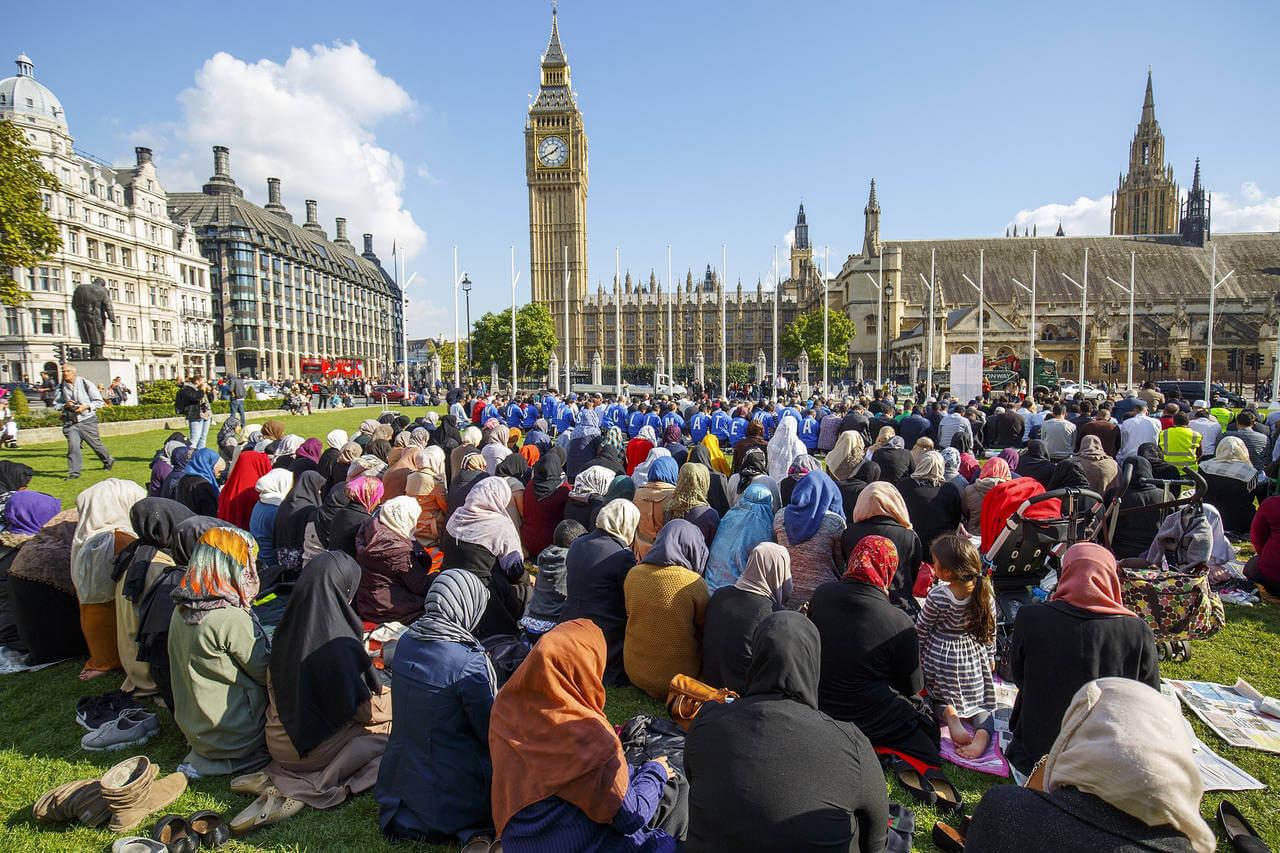
The increasing ethnic diversity of England – due to 30 years of mass-immigration combined with the much higher birth-rate of Muslim immigrants in particular – has led to an extremely emotional debate over what it means to be English. The Pakistani Labour Home Secretary, Shabana Mahmood, has asserted that she is “English” and the Prime Minister has stated that those who dissent from her view are “the enemies of national renewal.” This is a euphemism; a way of saying that you are being divisive if you insist on the idea that to be “English” you must be ethnically so. By contrast, the former (Conservative) Home Secretary Suella Braverman, an ethnic Indian, provoked huge controversy by accepting that though she was “British” she was surely not “English” and didn’t see herself as such.
So, we have two ideas of what it means to be English: (1) That you are born in England, or even simply live in England, regardless of your genetics and (2) That you are . . . well . . . actually English; that you are a member of the ethnic group that is the English. A system of categories is only useful if it allows correct predictions to be made. The second definition allows correct predictions to be made.
Two random English people are twelfth cousins. They have a common ancestor in about the sixteenth century and they are both descended from King Edward III due to the fact that socioeconomic status strongly predicted completed fertility until the Industrial Revolution. This means something, as their helping each other – and certainly breeding with each other –means that they can indirectly pass on more of their genes. This is why most people marry endogamously. It is why studies find that we disproportionately co-operate with people of our own ethnic group. It is why studies find that we sexually select for genetic similarity. It is why friends and housemates are more likely to be from the same ethnic group.
As Frank Salter has shown in his book On Genetic Interests, this can be quantified based on genetic similarity. If the world was only English and Danes then two English people would be 7th cousins. The replacement of 10,000 English with 10,000 Danes would be the equivalent of each Englishman losing 167 children. If we replace Danes with Bantu, it would mean the loss of 10,054 children. Hence, the genetic definition of ethnicity is highly meaningful. It explains why English people will lay down their lives in war, even against relatively similar ethnic groups; such as the Germans. So, this model of Englishness predicts something very important.
Secondly, the English – due to centuries of endogamy and relative isolation – are a genetic cluster. This will lead to modal differences in behaviour or “national character,” again rendering genetic Englishness a useful predictive category. For example, psychologist Richard Lynn (1930-2023) showed in his book An Introduction to the Study of Personality that the English are far lower in Neuroticism than the French, which likely explains why France is so much less politically stable, with all its different “Republics.”
There are many other crucial ways in which English ethnicity is a predictive category. If it is not, then why does the National Health Service put out adverts asking for Black and Asian organ donors? The answer is that your body is more likely to accept an organ from someone who is strongly genetically similar; from someone of your own ethnic group. Similarly, cystic fibrosis is 1 in 19 among the Irish but 1 in 25 among the English. Lactose intolerance is higher among the English than among the Irish.
“Englishness” is meaningful as a predictive category . . . of course it is, because the English are a distinct genetic cluster. The Pakistani Home Secretary, Shabana Mahmood, is no more likely than a random Irish person to be lactose intolerant. The Shadow Home Secretary, Chris Philp, is more likely to be. Mahmood, being from an area of Pakistan where 70% of people marry their cousins, is, however, more likely to have a whole host of genetic problems that are common there.
Thirdly, there is a simple matter of consistency. The left will allow that the Saami – the reindeer herders of Lapland – are an ethnic group, defined by their ancestry. But, according to data presented by Salter, so are the English. Both present as genetic clusters due to common ancestry and endogamy. If the Saami is an ethnic group, indeed, an “indigenous” group, then so are the English. If the English are not an indigenous group, then, surely, I can simply move to Saamiland and declare myself a Saami. Of course, I cannot, which highlights the inconsistency. The Saami know I’m not one of them, though they might eventually “adopt” me, and this raises a crucial point.
We know – deep within us – who are our “family,” though the borders can be nebulous. Do we see all our second cousins – even those we haven’t met – as “family”? For English people, the English are, in effect, their highly extended family. It’s nothing to do with “values.” Your brother is still “family” even if he is a murderer. It’s the same with your “ethny.” But as with “family,” this “feeling” element means that it is mainly, though not completely, about genetics. Surely, we would see sur dog as more part of our family than our cousin, and our dog is a different species!
Can this be true in relation to our ethnic family? Can there be nebulous borders in the same way? It was common in the 1980s to assert that all non-Whites should be sent home “except Frank. He’s one of us is Frank.” “Frank” was the Black boxer Frank Bruno who’d been born in England, married an English woman, and had done our country proud. I think intelligent people can disagree over whether someone like that can be “adopted” into the family of Englishness.
We are a highly pro-social species, we create very strong social bonds, and you can see how an element of being “one of us” can be social. The Scottish comedian Count Dankula once tweeted that he wanted every foreigner sent home, except the ones who were his friends. This resonated with a lot of “based” people. I don’t want my friend, a Native South American woman who was adopted by English people at six weeks, “sent home.” Even bees – a eusocial species – “adopt” into their hives. In a process known as trophallaxis, a bee gets lost, lacks the energy to return to her hive, acquires some nectar as a gift, goes to another hive and, if she’s lucky, is accepted in, with the guard covering her with the guard’s – and thus the hive’s – scent.
Overall, however, only the genetic definition of Englishness is predictive, consistent and congruous with what the English feel, as reflected in how they behave rather than how they virtue-signal. And as for Suella Braverman’s idea that she is “British” but not “English,” it says in the national anthem, “One realm of races four” and the same arguments that I’ve made about “English” could be made, far more cautiously, about “British.” This is because there is a large genetic gap between the English and the Celts. England, after all, is the “land of the English” and the English came from what is now the Netherlands and Denmark and displaced (in the east), and interbred with (in the west), the Celts.