
State-Financed Rape
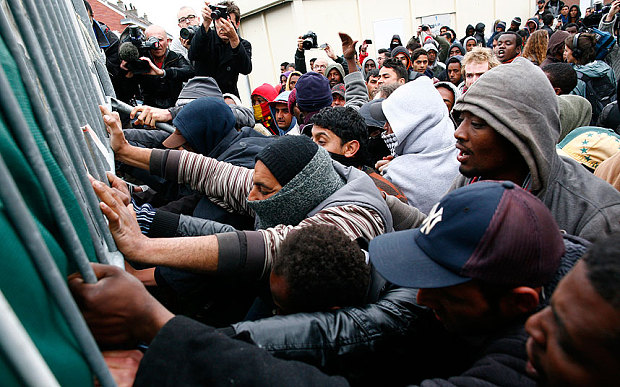
How Europe’s Welfare System Subsidises Immigrant Crime Waves.
For decades, the prevailing orthodoxy among Western European political elites, media institutions, and academic establishments has maintained that mass immigration is an unalloyed economic necessity and a net cultural benefit. According to this consensus, the integration of non-Western migrants into advanced European welfare states was only a matter of time, sufficient state expenditure, and appropriate social programming. However, the empirical reality unfolding across the continent has increasingly contradicted this narrative. The resulting dissonance between elite rhetoric and the lived experiences of European citizens has birthed a overt political realignment, driving the resurgence of conservative and populist movements from Stockholm to Rome, and significantly reshaping the political landscapes of nations like the United Kingdom and France.1
At the epicentre of this debate is the “welfare-crime paradox”, the observable phenomenon wherein certain migrant populations simultaneously impose massive fiscal burdens on the host nation’s welfare system while presenting disproportionately high rates of severe criminal behaviour. In most European nations, the political and media establishments have systematically obfuscated the data required to analyse this paradox. Bureaucracies often obscure immigrant crime statistics by conflating citizenship with national origin, while political leaders frequently cite concerns over social cohesion or accusations of prejudice as justifications for restricting public access to demographic data.2 This elite reluctance to openly discuss uncomfortable statistical findings has created an environment where the white working classes, who primarily bear the brunt of failing integration policies are disenfranchised and alienated by a class of academics and bureaucrats who remain insulated from the consequences of their policies.3
Denmark, however, stands as a singular and highly instructive exception. Possessing one of the most comprehensive and transparent administrative data infrastructures in the world, the Danish state, specifically through Statistics Denmark and the Ministry of Finance, publishes granular, country-of-origin data regarding the fiscal impact and criminal behaviour of its resident populations.4 By prioritising empirical reality over ideological comfort, Denmark has provided researchers and policymakers with a precise, albeit uncomfortable, anatomical map of the failures of modern European immigration policy.
The Empirical Reality
The reluctance of mainstream European institutions to acknowledge the dual failure of economic and social integration among specific third world migrant groups necessitates a rigorous reliance on primary, unadjusted data. The Danish Ministry of Finance regularly publishes comprehensive analyses of the net fiscal contributions of immigrants, categorising them meticulously by their country of origin.5 Concurrently, Statistics Denmark maintains robust demographic and judicial databases, most notably the STRAFNA4 dataset, which tracks convicted persons by type of offence and country of origin, and the FOLK1C dataset, which tracks the precise demographics of the national population.6
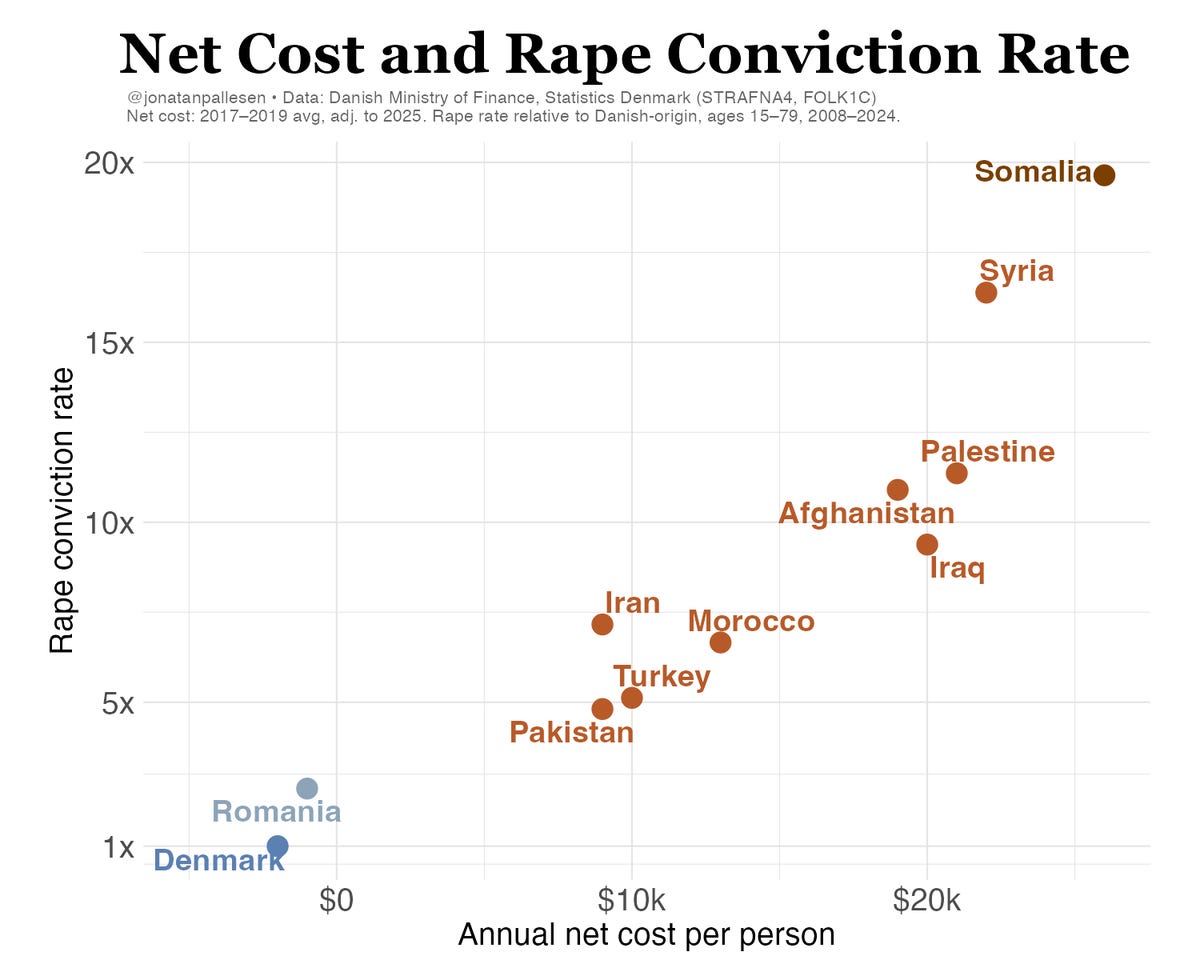
The intersection of these vast administrative datasets reveals a stark reality, powerfully illustrated in the statistical analyses recently popularised by data scientists such as Jonatan Pallesen. By plotting the annual net fiscal cost per immigrant group against their conviction rates for severe offences, specifically rape, a distinct, upward-sloping correlation emerges.
The data indicates unequivocally that the demographic groups imposing the heaviest financial burdens on the Danish welfare state are simultaneously responsible for the most extreme disproportionate representation in violent and sexual crime statistics. To ensure methodological integrity, the baseline for this analysis utilises native citizens of Danish origin as the benchmark, representing a conviction rate multiplier of 1x and an approximate net fiscal cost of $0, as the native taxpaying base cross-subsidises the entirety of the welfare apparatus.
This data entirely shatters the conventional progressive argument that immigration, irrespective of origin, is an inherent net positive for the economy and society. The statistical landscape requires a detailed demographic deconstruction to fully comprehend the magnitude of the policy failure.
Migrants from Somalia demonstrate a staggering rape conviction rate roughly 20 times higher than that of the native Danish population, while simultaneously costing the Danish taxpayer approximately $20,000 per individual, per year. The Somali diaspora in Denmark, largely arriving as refugees since the 1990s, has persistently registered some of the lowest employment rates and highest levels of welfare dependency of any demographic group. The financial burden is compounded by severe integration failures that manifest in high rates of severe criminality.
Similarly, populations arriving from the Middle East, specifically Syria and Palestine, exhibit conviction rates 15 to 18 times higher than the native baseline, carrying corresponding annual net fiscal burdens of $15,000 to $18,000 per capita.7 The Syrian cohort, largely a product of the 2015 migration crisis, represents a massive contemporary fiscal drain. Recent Ministry of Finance data highlighted that individuals with origins in Syria account for a highly disproportionate share of the total net expenditure on immigrants, costing the state billions of kroner annually despite widespread public assumptions that their integration was proceeding smoothly.8
Migrants from Afghanistan and Iraq follow closely, with rape conviction multipliers of 13x and 12x, respectively, and annual per capita costs of $14,000 and $13,000. These populations, arriving in waves following Western military interventions in the early 2000s, have similarly formed entrenched communities characterised by high levels of permanent welfare reliance and an overrepresentation in the judicial system.
Further down the correlation line, yet still vastly exceeding the native baseline, are established migrant populations from nations such as Turkey and Pakistan. Many of these individuals or their ancestors arrived in Denmark during the guest worker programs of the late 1960s and 1970s. Despite having decades, and in many cases multiple generations, to assimilate into the Danish socio-economic fabric, they continue to present conviction multipliers of 6x to 7x and annual costs between $6,000 and $7,000 per capita. This persistent, multi-generational cost entirely invalidates the argument that integration is merely a matter of time.
In stark contrast, intra-European migrants from nations such as Romania present vastly different profiles. While their conviction rates are slightly elevated (3x the Danish baseline), their net fiscal cost is marginal, sitting at approximately $2,000.9 This reflects the realities of European Union freedom of movement, where migration is predominantly driven by immediate labour market participation rather than asylum seeking or welfare tourism, alongside a much closer cultural proximity to the host nation.
The Fiscal Burden of Non-Western Migration
To understand the absolute scale of the fiscal drain implied by the per capita figures in the preceding analysis, one must look at the aggregate macroeconomic data provided by the Danish state. The Ministry of Finance has explicitly reported that immigrants and their descendants from non-Western countries cost the state tens of billions of kroner annually. In a landmark 2021 report analysing data from 2018, the Ministry revealed that non-Western immigrants and descendants resulted in a net cost of 31 billion DKK to the public finances.10
Crucially, the Ministry’s analysis demonstrates that this burden is not distributed evenly among all non-Western nations. Populations from MENAPT countries (Middle East, North Africa, Pakistan, and Turkey) account for the overwhelming majority of this deficit. By isolating the MENAPT demographic, researchers found that this specific group alone was responsible for a net expenditure of 22 billion DKK (projected to 2025 levels), representing a catastrophic failure of economic contribution.11
The methodology utilised by the Ministry of Finance is rigorous and exhaustive. The net fiscal contribution is calculated by taking all the taxes and duties paid by an individual and subtracting all public expenditures consumed by that individual, including direct transfer payments (welfare, housing benefits, child allowances) and the individual’s proportional consumption of public services (healthcare, education, infrastructure, and the judicial system).12 When a demographic group presents structurally low employment rates, they naturally contribute very little in income taxes. When that same group presents high fertility rates, high reliance on social housing, and high rates of criminality, their consumption of public services skyrockets. The convergence of these two factors guarantees a massive, structural net fiscal deficit.
Criminality, Demographic Disparities, and Statistical Adjustments
The suggestion that certain immigrant groups are vastly overrepresented in severe crime statistics frequently meets fierce resistance from progressive commentators, who argue that raw conviction rates are skewed by socio-economic factors, age demographics, or systemic police bias. However, the rigour of Statistics Denmark’s methodology systematically dismantles these deflections.
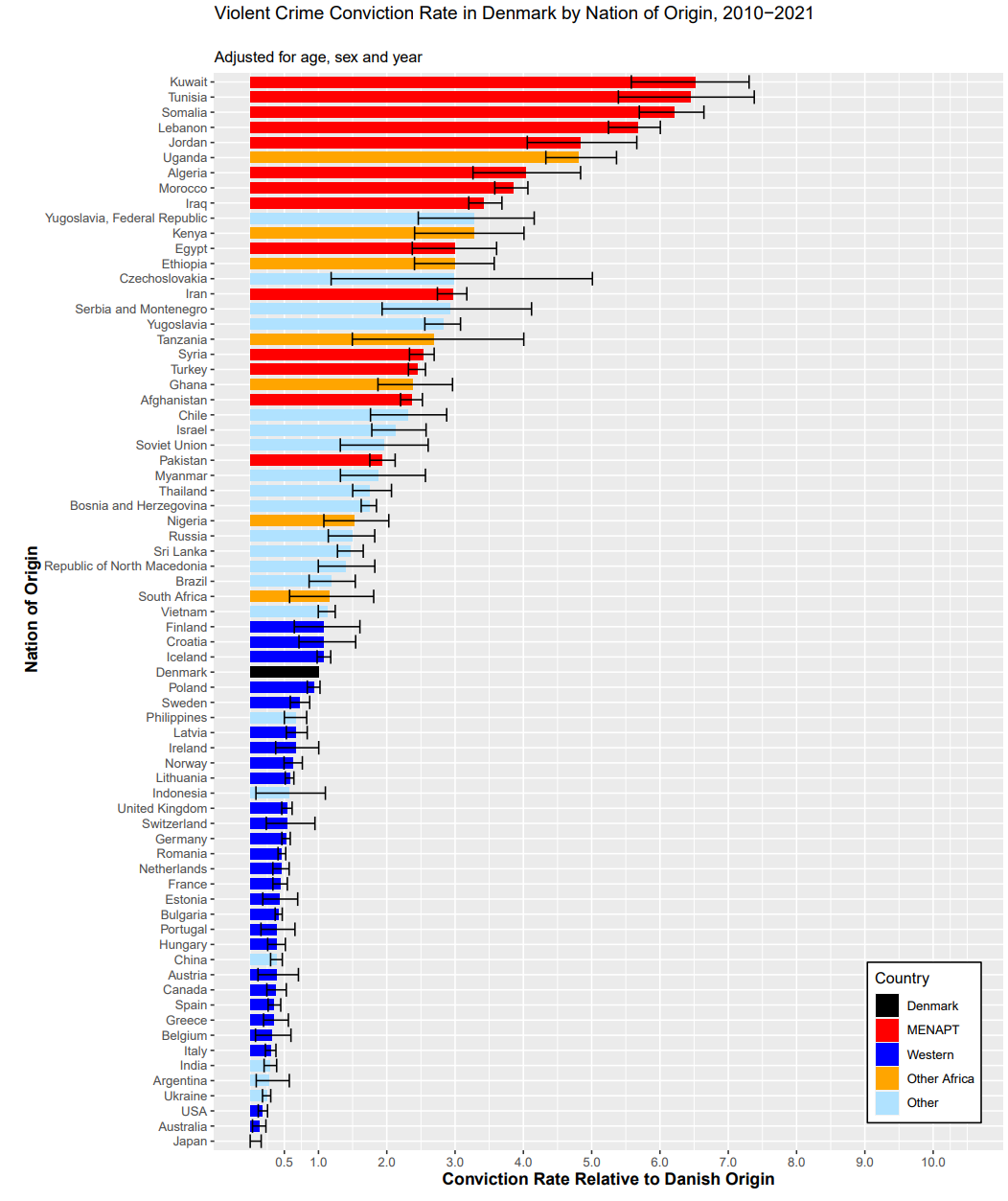
Because different national origin groups possess vastly different demographic makeups, specifically, non-Western immigrant populations tend to skew significantly younger and more male than the aging native Danish population, Statistics Denmark calculates a “standardised index of criminality”.13 This index is designed precisely to allow for objective comparisons between groups by mathematically adjusting for differences in age and socio-economic composition.14
Even after adjusting for age (young men commit more crimes than old men) and socio-economic status (poor individuals commit more crimes than wealthy individuals), immigrants from MENAPT countries remain vastly overrepresented in the STRAFNA4 dataset, particularly in categories of violent and sexual offences. The disproportionate rape conviction rates for nations like Somalia, Syria, and Afghanistan cannot simply be explained away by poverty or age. As right-wing analysts have repeatedly pointed out, poverty does not mandate sexual violence. The fact that comparable low-income native Danish cohorts do not exhibit anything approaching these multipliers proves that deeper, cultural mechanisms are driving the criminal behaviour.
Historical Context
To understand how Denmark arrived at this critical juncture, characterised by entrenched parallel societies and a multi-billion kroner annual integration deficit, one must trace the historical trajectory of its immigration policies over the last four decades. Historically characterised by ethnic homogeneity, high social trust, and a robust, egalitarian welfare state, Denmark was fundamentally ill-prepared for the realities of mass non-Western immigration.
The Era of Humanitarian Optimism (1980s–1990s)
In 1983, the Danish parliament ratified an Aliens Act that was widely celebrated by human rights organisations as the most liberal and progressive in Europe. The legislation granted extensive legal rights to asylum seekers, codified broad and generous provisions for family reunification, and ensured immediate access to the expansive Danish welfare system for newly arrived refugees.15
The prevailing belief among the Danish political establishment during this era was grounded in a naive socio-economic determinism. They assumed that the nation’s superior social democratic model could effortlessly assimilate individuals from vastly different cultural, ethnic and economic backgrounds. Migrants arriving from the Middle East, North Africa, and South Asia were viewed primarily as new participants in the universalist welfare project, who would rapidly adopt Danish values of egalitarianism and secularism once granted physical security and economic support.
However, by the late 1990s, the cracks in this utopian vision became undeniably visible. First-generation guest workers from countries like Turkey and Pakistan, who had been expected to return home, instead utilised the liberal 1983 laws to bring their extended families to Denmark.16 Concurrently, Denmark received increasing numbers of refugees fleeing conflicts in Somalia, Iraq, and the former Yugoslavia. It rapidly became apparent that these populations were not integrating into the labour market at the expected rates.17 Instead of functioning as temporary guests or active, taxpaying workers, large segments of these communities transitioned into permanent dependents of the welfare state. Distinct cultural enclaves began to form in the urban peripheries of major cities like Copenhagen, Aarhus, and Odense, laying the physical groundwork for what would soon be recognised as parallel societies.
The 2015 Migration Crisis and the Breaking Point
The true paradigm shift, however, occurred during the 2015–2016 European migration crisis. As hundreds of thousands of undocumented migrants crossed Europe’s porous external borders, marching up the highways of the continent, Denmark witnessed firsthand the systemic collapse of the European asylum architecture. The sudden influx placed unprecedented, acute strain on municipal budgets, the housing infrastructure, and the criminal justice system.
It was during this chaotic period that the Danish public and, crucially, the social democratic political class, recognised that the survival of their high-trust welfare model was fundamentally incompatible with open-ended, mass immigration from the third world. The realisation was not only economic; it was deeply and viscerally cultural. The observable rise in specific types of crime, most notably gang violence and sexual offences shattered the illusion of seamless multicultural integration.18
Welfare Incentive Structures: The State as a Hammock
The generosity of the Danish welfare state inadvertently functions as a powerful, global magnet for migration and a paralysing trap for long-term dependency. In its noble effort to eradicate poverty and ensure a high baseline standard of living for all residents, Denmark provides substantial social transfers, housing subsidies, free healthcare, and generous child benefits.
However, for a low-skilled migrant, the economic differential between engaging in full-time, minimum-wage employment and maximising welfare dependency is often entirely negligible. Conservative think tanks in Denmark, such as the Centre for Political Studies (CEPOS), have long argued that the fundamental structure of public benefits directly disincentivises work for immigrants. When the host state provides a standard of living that far exceeds the average median income of a migrant’s home country, without the absolute, existential necessity of employment, the motivation to engage in the arduous, multi-year process of language acquisition and skills training evaporates.
The welfare state, designed originally as a temporary safety net for a homogenous, high-trust population sharing a strong Protestant work ethic, morphs into a permanent hammock for populations unaccustomed to the reciprocal obligations of the Nordic model. This structural trap ensures that generation after generation remains economically marginalised, dependent on state transfers, and alienated from the broader working society.
The Cultural Chasm: Gender Norms and Severe Crime
Perhaps the most uncomfortable truth highlighted by the statistical correlation in the Pallesen graph is the intersection of culture and severe crime. Socioeconomic deprivation alone cannot explain why Somali or Syrian migrants exhibit rape conviction rates 18 to 20 times higher than native Danes. To understand this phenomenon, one must engage in a frank, unapologetic discussion of cultural and ethnic dissonance and imported gender norms.
Many of the migrants driving the extreme upper end of the STRAFNA4 crime statistics hail from societies with deeply patriarchal, religiously conservative structures. In these origin countries, women’s rights are severely curtailed, female modesty is violently enforced, and Western concepts of female autonomy and affirmative consent are entirely foreign, if not actively despised and viewed with contempt.19
When large cohorts of young men from highly conservative, patriarchal cultures are transplanted into one of the most egalitarian, trusting, and sexually liberated societies on earth, the cultural friction is explosive. The disproportionate conviction rates for sexual offences reflect a systemic failure to respect the fundamental liberties and physical autonomy of European women. Organisations such as Amnesty International and the European Institute for Gender Equality have noted the high levels of sexual violence and the significant challenges in reporting and achieving convictions within Denmark, which recently necessitated legislative shifts toward strict, consent-based definitions of rape to combat the crisis.
Furthermore, the historical reluctance of European authorities and media to openly discuss the ethnic and cultural components of these crimes, often out of a paralysing fear of being labelled racist or xenophobic, has allowed the problem to metastasise unchecked. The statistical data demonstrates irrefutably that cultural values are not left at the border crossing; they are carried into the host nation, often with devastating, violent consequences for public saftey.
Urban Segregation and the Rise of “Parallel Societies”
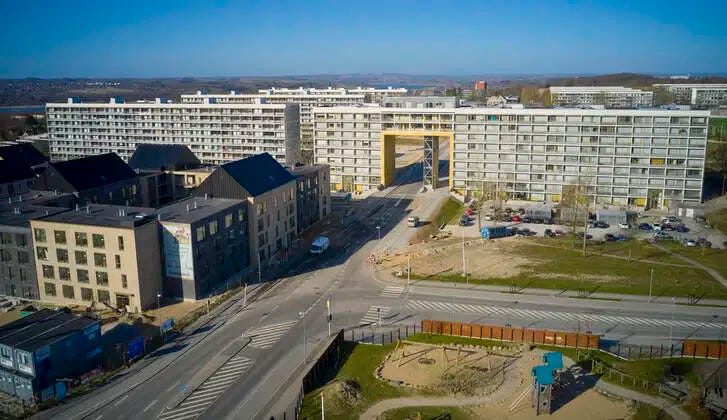
The physical manifestation of this total failure of economic and cultural integration is the creation of what the Danish government officially, and controversially, terms “parallel societies” (formerly designated explicitly as “ghettos”).20 These are geographically distinct urban and suburban areas characterised by a high concentration of non-Western immigrants and their descendants (exceeding 50% of the local population), endemic unemployment, low educational attainment, and drastically elevated crime rates.21
In these isolated enclaves, the host nation’s laws, cultural norms, and linguistic supremacy are actively subverted. Parallel societies function as self-contained socio-political ecosystems where native Danish values are systematically replaced by the cultural, tribal, and religious edicts of the migrants’ countries of origin.22 The intense social control exerted within these communities, particularly over women, who are pressured to wear religious garments and remain in the home, and youth, who are recruited into ethnic street gangs, prevents successful integration and fosters a pervasive subculture of hostility toward the Danish state and its law enforcement apparatus.
These areas serve as the geographic incubators for the welfare-crime paradox. They are the breeding grounds for organised gang activity, systemic welfare fraud, and the precise types of severe criminal behaviour captured in Statistics Denmark’s datasets. As former immigration minister Kaare Dybvad stated, Denmark refuses to accept the norms of foreign entities trying to dominate areas of the country and dictate parallel legal structures.23
The Information Gap: Public Perception Versus Statistical Reality
One of the most fascinating and disturbing aspects of the immigration debate is the success with which the political and media establishment has managed to suppress the reality of the crisis from the general public. A revealing study conducted by researchers at Aalborg University tested the knowledge of the Danish public regarding how well non-Western immigrants and their descendants perform in areas such as crime, employment, and education.24
The findings were staggering, the Danish public is utterly out of touch with reality, consistently and drastically underestimating the severity of the integration failure. For example, respondents perceived the crime rate of young non-Western immigrants to be far lower than it actually is, and estimated employment rates and support for gender equality to be significantly higher than the empirical data dictates. This misconception crossed all political lines; even left-leaning citizens with highly positive attitudes toward immigration completely failed to grasp the magnitude of the disparity between ethnic Danes and non-Western populations.25
This highlights a critical victory for the conservative push for data transparency. As the Aalborg researchers posited, one must ask whether the current, or historical, migration policies would have maintained any democratic support if the public had been accurately informed of the true fiscal and criminal costs. The systematic downplaying of the welfare-crime paradox by legacy media institutions has artificially propped up failing policies for decades.26
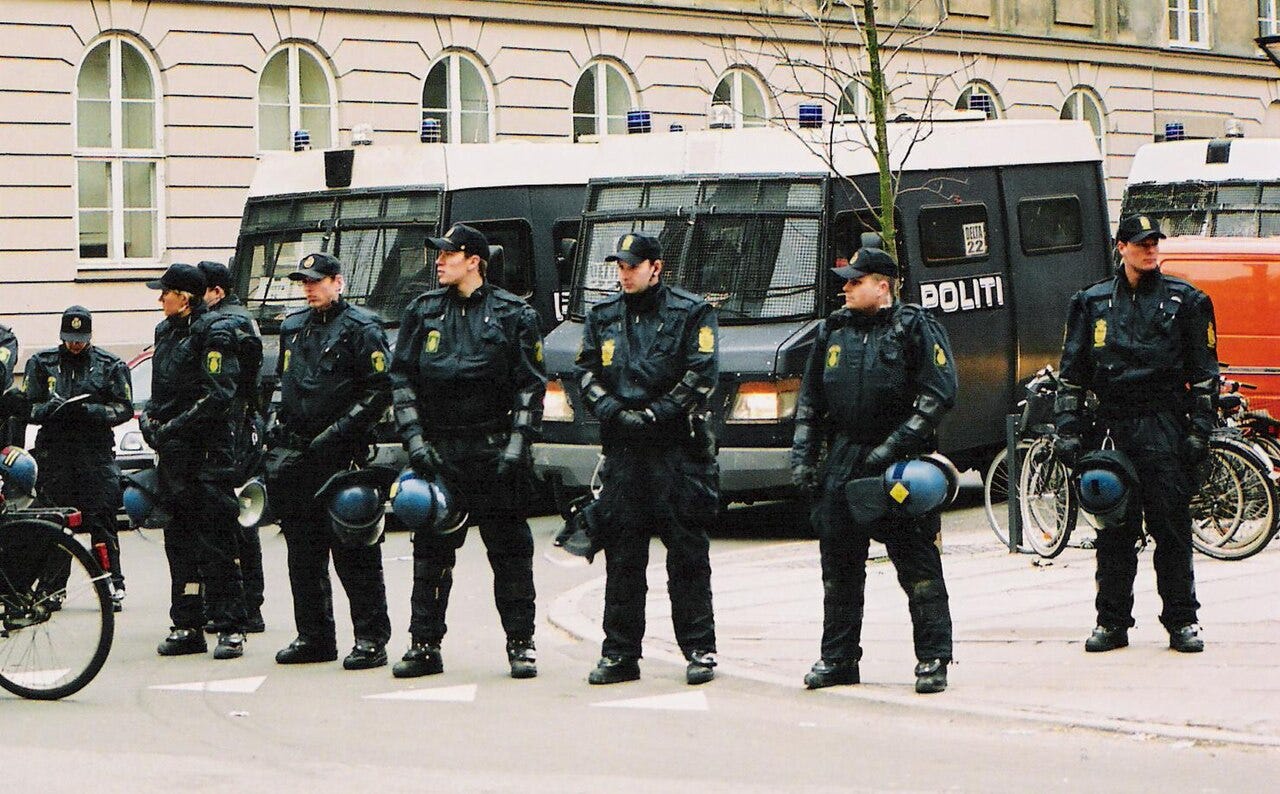
Denmark’s Policy Paradigm Shift Post-2015
Unlike Sweden, the United Kingdom, or Germany, where mainstream conservative and social democratic parties have largely capitulated to progressive dogmas regarding migration, Denmark has executed a dramatic, unapologetic, and highly effective paradigm shift. Driven by voter outrage and the indisputable evidence of their own statistical agencies, successive Danish governments, crucially led by both right-leaning coalitions and the center-left Social Democrats have systematically dismantled the liberal immigration architecture erected in the 1980s.27
Benefit Caps and the Dismantling of the Welfare Magnet
Recognising that the welfare state itself was the primary pull factor for low-skilled economic migration, the Danish government introduced severe restrictions on access to public funds for foreigners. The implementation of the “integration benefit” (integrationsydelse), a significantly reduced welfare payment specifically targeted at newly arrived migrants, was designed to drastically increase the financial pain of unemployment, thereby incentivising rapid entry into the workforce and deterring those seeking a comfortable life on the public dole.28 While progressive parties occasionally attempt to roll back these cuts, the consensus remains that welfare must be earned, not expected upon arrival.
Furthermore, during the height of the 2015 crisis, Denmark passed the globally controversial but highly effective “jewellery law.” This legislation empowered border authorities to confiscate valuable assets and cash from arriving asylum seekers to help defray the immense costs of their state-provided housing and support.29 While heavily criticised and sensationalised by international human rights organisations and foreign media, the policy served its intended purpose brilliantly: it sent an unequivocal, global message that Denmark was no longer a lucrative destination for welfare-seeking migration. The government has also maintained and defended stringent restrictions on family reunification, most notably the “24-year rule,” which dictates that both spouses must be at least 24 years old before reunification is granted, a direct and successful attack on the practice of forced, transnational arranged marriages.30
The Vision of “Zero Asylum” and Extraterritorial Processing
Perhaps the most radical departure from European orthodoxy is the official government vision, articulated by Social Democratic Prime Minister Mette Frederiksen, of achieving “zero” spontaneous asylum seekers arriving uninvited on Danish soil.31 Denmark recognises that the current international asylum system, governed by outdated post-war conventions written for a drastically different geopolitical era, is fundamentally broken. The current system actively enriches transnational human trafficking cartels and facilitates illegal economic migration under the guise of humanitarianism.
To achieve this goal, Denmark became the first European Union nation to legally pass legislation paving the way for the extraterritorial processing of asylum claims. By actively exploring bilateral agreements to transfer asylum seekers to third countries outside of Europe, such as Rwanda, Denmark intends to completely sever the link between claiming asylum and gaining permanent residency in the European welfare state.32
Concurrently, Danish policy has firmly shifted from the presumption of permanent integration to the strict presumption of temporary protection. Residence permits for refugees are now explicitly temporary and subject to regular, rigorous review. If the security situation in the home country improves, as Denmark has controversially but correctly determined regarding certain regions of Syria, like Damascus, residency permits are revoked, and the individuals are expected to return.33
Repatriation and the Reassertion of Sovereignty
Coupled with these restrictions is a robust, well-funded framework of repatriation incentives. The Danish Return Agency (Hjemrejsestyrelsen) actively facilitates the return of foreign nationals who have no legal right to remain, as well as those who simply wish to leave, offering significant financial incentives to those who voluntarily repatriate to their countries of origin.34 The explicit, stated goal of the Danish state is no longer only to manage an ever-growing, unassimilated migrant population, but to actively reduce it through remigration.
Conclusion
The empirical reality presented by the Danish datasets is incontrovertible. Specific non-Western migrant groups simultaneously consume vast quantities of public wealth while perpetrating severe sexual and violent crimes at rates vastly exceeding the native population. This exposes the systemic failure of the post-war European consensus on immigration. The “welfare-crime paradox” is an active, destabilising force that threatens the fiscal solvency, physical safety, and social trust of Western nations.