
Power Without Principle: The Rise of the Bully Presidency
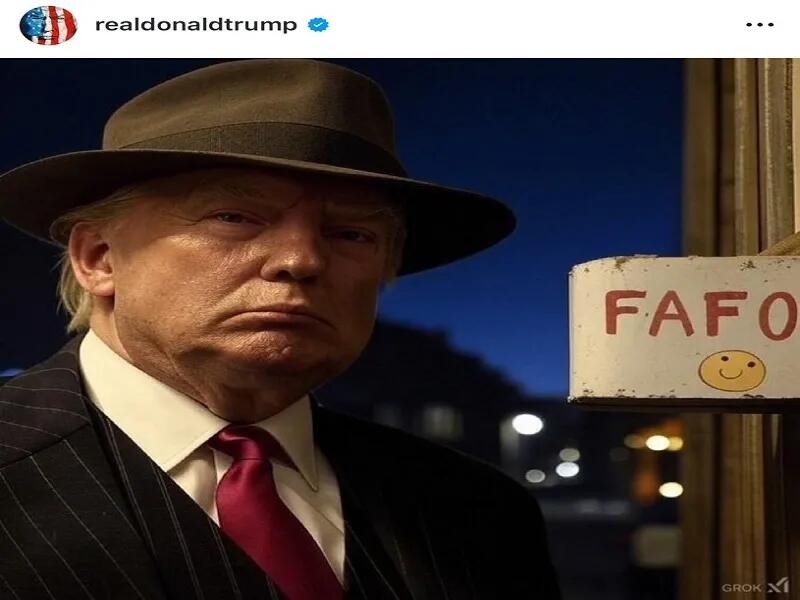
“When you’re a star, they let you do it. You can do anything… Grab ‘em by the pussy. You can do anything.”— Donald J. Trump on seizing women, Access Hollywood (2005)
“I think I can do anything I want with it. Whether I free it, take it, I think I can do anything I want with it.”—Donald Trump on seizing Cuba (2026)
It’s been 20 years since Donald Trump bragged that, as a star, he could do anything—even assault women—and get away with it.
Two decades later, what once sounded like crude bravado has become a governing philosophy: might makes right, power excuses everything, and accountability is for other people—not this president.
Despite the Access Hollywood recording—and everything it revealed about his character—Trump was elected to the White House twice. And ever since, he has governed exactly as he promised: as a man who believes he is unaccountable, entitled, and free to act without limits.
The same mindset that once bragged about being able to “stand in the middle of Fifth Avenue and shoot somebody, and I wouldn’t lose any voters” has now been scaled up and weaponized through the presidency.
With a core MAGA following that seems unwilling to hold him accountable for any wrongdoing, Trump has justifiably earned his nickname as “Teflon Don.”
He can be accused of sexually assaulting young girls, and he won’t lose any voters. He can, as commander-in-chief, sanction the bombing of a girls’ school in Iran—killing young girls, their mothers and teachers—and he won’t lose any voters. He can torpedo a thriving economy, sending inflation and gas prices soaring, and he won’t lose any voters. He can dismantle a government structure that has been in place for over 200 years, and he won’t lose any voters. He can be a walking—talking—living contradiction of everything Christians claim to stand for, and he won’t lose any voters. He can send Americans servicemen and women to die in wars that the U.S. had no business starting, and he won’t lose any voters.
This is the mindset now shaping American policy.
Trump’s acts of aggression against other nations—Venezuela. Iran. Greenland. Canada. Now Cuba—are expansions of the same worldview, only this time backed by the full force of the U.S. military and funded by American taxpayers.
It is the logic of the schoolyard bully: Take what you want. Dare others to stop you. Punish anyone who resists.
That same might-makes-right mindset has transformed the American presidency into something that tracks more closely with the abuses of King George III than with our revolutionary forebears who risked their lives and fortunes to stand against tyranny.
Our Founders didn’t just fight a war—they fought a mindset. They stood against a King who thought his word was the law.
By treating the Constitution like a list of suggestions, Trump is bringing that King back to life. He’s trading our hard-won freedom for the ego of one man who thinks he is untouchable.
We are trading a republic for a playground where the bully makes the rules.
Trump wanted Venezuela’s oil, so he used the military to get it—and then bullied the country’s leaders into letting him keep it and its profits.
The tactics—swaggering, arrogant, and always prepared to browbeat and mow over anyone and anything in his way—have become all too familiar.
Trump wants a new ballroom? Tear down the old one and build another.
Trump wants to be in charge of global peace? Seize the U.S. Institute of Peace and rename it.
Trump wants to prove his economic prowess? Levy tariffs against any nations who refuse to fall in line.
Trump wants to be seen as the one who solved Iran? Launch a preemptive war that kills civilians, destabilizes regions, and threatens the global economy—then turn to the same allies he once disparaged to bail him out.
The pattern is unmistakable: Power without restraint. Action without accountability. Force without principle.
And when the law stands in the way, it is bent—or ignored. Justice is weaponized. Congress is sidelined. The courts are defied, their rulings delayed or disregarded when inconvenient. Due process becomes conditional—a privilege for the favored few, optional for the disfavored.
This is not constitutional governance. This is how a bully operates: rules are for other people, constitutional prohibitions are inconveniences, and the law becomes whatever the one in power says it is.
The same egomaniacal traits are evident in how Trump treats dissent.
Criticism is not tolerated—it is punished.
Media outlets that report unfavorably are threatened with government retaliation. The FCC is weaponized to intimidate broadcasters. “Fake news” is redefined to mean anything that challenges the narrative.
Truth, in Trump’s America, is whatever serves power.
And those who challenge that power are ridiculed, demeaned, and dehumanized.
Trump insults, belittles, and mocks anyone he considers an opponent.
He calls California Governor Gavin Newsom “Newscum” and mocks him as “low IQ” for being dyslexic.
He routinely disparages women, attacking their appearance and intelligence if they dare to challenge him. He referred to New York Times correspondent Maggie Haberman as “Maggot Hagerman” and a “SLEAZEBAG writer.” He told Bloomberg reporter Catherine Lucey to be “quiet, piggy.”
This is not behavior that should be brushed off as a personality quirk.
It is a reflection of character.
And when that character is paired with unchecked power, it becomes dangerous.
Trump’s embrace of the so-called unitary executive theory—which elevates the presidency into an all-powerful office under a distorted reading of Article II—reveals the logical endpoint of this mindset: a president who believes he can do anything, answer to no one, and operate above the law.
In a constitutional republic, no one is supposed to be above the law.
A bully—an autocrat—a dictator—believes he is the law.
One think tank has rightly concluded that the U.S. under Trump is going through a rapid process of “autocratisation,” faster than any other dictatorship in the world.
As The Guardian reports, “the speed with which US democracy is being dismantled is unprecedented in modern history. The main factor is a ‘rapid and aggressive concentration of powers in the presidency’… Congress has been marginalised, jeopardising the ‘checks and balances’ (judicial and legislative constraints on the executive) so crucial to US democracy. At the same time, civil rights have been rapidly declining and freedom of expression is now at its lowest level since the 1940s.”
This is what happens when a man who believes he can do anything is given the power to do almost everything.
“Peace through strength” has become the Trump administration’s rhetorical cover for preemptive violence, military incursions, and acts of aggression that bypass Congress and ignore constitutional limits.
Distractions. Deflections. Wag-the-dog theatrics. That is the spectacle.
It’s increasingly hard not to feel as if the noise on the world stage—the wars, the threats, the swagger—is a convenient distraction meant to keep us from asking the hard questions about the man who reportedly appears tens of thousands of times in the Epstein files.
Perhaps if we are distracted enough—by the brutality of war and the easy dismissal of innocent lives lost—we will fail to grapple with the deeply troubling allegations and connections raised in the Epstein files. One account alleges that Epstein introduced a 13-year-old girl to Trump, “who subsequently forced her head down to his exposed penis which she subsequently bit. In response, Trump punched her in the head and kicked her out.”
This allegation alone deserves serious scrutiny. Because if there is even a grain of truth to it, it raises profound questions about Trump’s character and fitness for public office.
This should never be a partisan issue.
It is a question of character.
And even setting aside the most disturbing allegations, the public record alone tells a troubling story: a man who has long boasted of his treatment of women, who has admitted to infidelity and exploitation, and who has faced repeated accusations of dishonesty, fraud, and abuse of power.
Is this really the man we want as a role model for our young people?
Is this really the image of leadership we want to project to the nation—and the world?
At what point do we admit that character still matters?
Because the character on display here—cruel, arrogant, insulting, egomaniacal, and devoid of restraint—is not incidental to Trump’s presidency.
It defines it.
For too long, Trump’s supporters have excused his behavior as a refreshing willingness to “tell it like it is.” His press secretary has described his insults as “frank” and open and honest.
But vulgarity is not honesty. Cruelty is not strength. And abuse of power is not leadership.
Americans recognize this. According to Pew Research, nearly seven in ten Americans believe Trump is attempting to expand presidential power beyond that of his predecessors—and most view that as a danger, not a virtue.
When asked to rank U.S. presidents, Trump comes in last, with nearly half of respondents rating him as poor.
History has set a higher standard.
Abraham Lincoln, John F. Kennedy, and George Washington—they were rated as “outstanding.” Not perfect men, but men who understood that leadership requires restraint, responsibility, and a sense of duty beyond oneself.
John F. Kennedy challenged Americans to ask what they could do for their country.
Trump, by contrast, governs as if the country exists to serve him.
We should be better than this.
America deserves better than a president whose conduct is defined by insult, impulse, and intimidation.
Because in the end, this is what it comes down to: we have put a schoolyard bully on the world stage, and we are pretending it is leadership.
A man who measures strength by how much he can dominate others. A man who confuses cruelty with leadership. A man who believes that power means never having to say no—to himself.
The bully doesn’t follow rules—he rewrites or ignores them. And like all bullies, this particular bully thrives not just on aggression, but on silence, fear, and complicity.
Bullies don’t rise to power alone.
They are enabled. Excused. Defended. Normalized. Until their behavior becomes the standard.
That is how a nation loses its moral center.
We are already seeing the consequences.
A government that mocks instead of leads. A presidency that intimidates instead of inspires. A political culture that rewards aggression and punishes restraint.
The bully’s code—might makes right—has replaced the Constitution’s promise of equal justice under law. But history warns us that power without restraint is just another name for a King.
This nation was born in defiance of a bully.
Two hundred and fifty years ago, a king who believed himself untouchable used force, intimidation, and unchecked power to bend a people to his will.
The colonists refused.
They stood their ground—not because they were the strongest, but because they believed they were right.
They understood something we seem to be forgetting: Power without principle is tyranny. And tyranny, no matter how loud or forceful, is not invincible.
The question now is whether we still believe that.
Whether we still have the courage to reject the politics of domination. Whether we are willing to demand leaders who embody something better than ego, arrogance and aggression. Whether we will continue to reward the bully—or finally refuse to be ruled by one.
Because the example we tolerate is the example we become.
And right now, the lesson we are teaching our children, our country, and the world is this: the bully wins—unless someone finally refuses to play by his rules.
We’ve seen this script before.
As I’ve warned in Battlefield America: The War on the American People and in its fictional counterpart The Erik Blair Diaries, the collapse of a country starts the moment we decide that the bully is the hero.
We may already be in the final act of that story. But we can still change the ending—if we remember that in America, the law is king, and the citizenry are supposed to be the masters, not the servants.