
Mexico’s Central Bank, BIS, and BlackRock Discuss Phasing Out Cash and Future of Digital Money
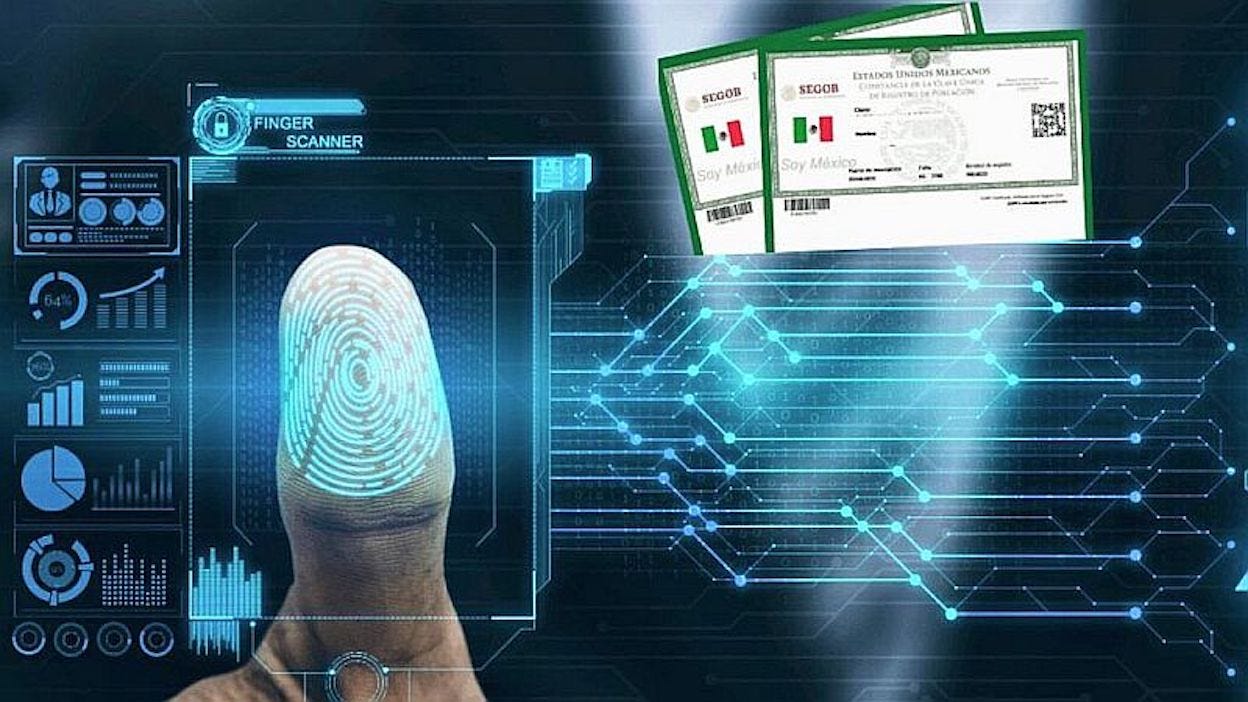
As the 89th Banking Convention wraps up in Cancún today, Mexican President Claudia Sheinbaum and former Canadian Prime Minister Justin Trudeau share the stage with Visa, Mastercard, BlackRock, and the BIS—amid a focus on ending cash that ties perfectly into Mexico’s ongoing biometric ID rollout.
On Wednesday, the 89th Banking Convention began in Cancún, Mexico, as representatives from the Mexican government and banking sector met to discuss the future of digital payments and the phasing out of cash in a country where more than three-fourths of the population depends on it.
The annual meeting brought together leaders from Mexico’s financial sector, including heads of banking, government economic authorities, and CEOs of major corporations. The convention is organized by the Association of Banks of Mexico (ABM) under the theme “Innovating Banking, Building the Future.”
La 89 Convención Bancaria dio inicio en #Cancún para abordar la transformación en el sector financiero y contará con la participación del ex ministro de Canadá 🇨🇦 , Justin Trudeau, y la presidenta Claudia Sheinbaum. 🇲🇽 pic.twitter.com/ZL1aNtAsLG
— StephaniAlmaraz (@stephiblan) March 19, 2026
On Thursday night, Mexican President Dr. Claudia Sheinbaum spoke on increasing productivity of small- and medium-sized businesses in Mexico. Former Canadian Prime Minister Justin Trudeau is scheduled to give the closing presentation on Friday evening titled “Global Leadership and Transformation.”
Other speakers include representatives of Banorte, BBVA, Scotiabank, Santander, and HSBC. Also in attendance are Ryan McInerney, CEO of Visa, and Tim Murphy, Vice Chair of Mastercard.
International Banksters Seek to Control Mexico
One sign that the meeting is of vast importance to the international banking sector—and the overall push towards Central Bank Digital Currencies (CBDCs) and stablecoins—is the presence of representatives of Mexico’s Central Bank, the Bank for International Settlements (BIS), and BlackRock.
For example, on Wednesday, Fabrizio López Gallo, Director General of Financial Stability for Mexico’s Central Bank, participated in a panel titled “Sustainable Financing: Risks and Opportunities,” while Sergio Mendez, the Director of BlackRock Mexico, spoke on a panel called “Infrastructure Investment as a Catalyst for Growth.”
Multiple panels underscore the push to digitize money in Mexico, including “The Future of Money: What’s Next for Mexico and the World,” featuring BIS’s Alexandre Tombini, and “The Role of Artificial Intelligence in the Future of Digital Payments” with McInerney and HSBC Mexico’s Jorge Arce Gama.
Several statements by Emilio Romano, the head of the ABM, make it clear that the Mexican Central Bank and the international bankers are working diligently to shift Mexico away from cash and towards a track-and-trace society where dissidents have their financial resources turned off.
In an interview with Bloomberg, Romano stated, “The central bank is preparing to publish protocols to drive the adoption of payments sent by mobile phones.”
He noted, “Authorities are studying separate measures that could include eliminating cash payments for some services and products, such as gas stations and toll roads.” [emphasis added]
Romano also emphasized that these changes are being made because in Mexico, “roughly 85% of small transactions are done in cash,” largely due to Mexicans not trusting their government and seeking to avoid taxation. “Easing concerns about how the government assesses income will help,” he said.
Additionally, the day before the convention began, Juan Pablo de Botton, the Secretary of Administration and Finance of Mexico City, published an opinion piece with similar themes.
“The banking sector is anxiously awaiting these rules to be published again so that we can advance in optimizing the digital-payments ecosystem,” Botton wrote. [emphasis added] He also reiterated the focus on digitizing Mexico’s economy and building trust among the population.
“And at the same time we must continue to advance on a key issue for our city: the digitization of payments and financial services. This transition also requires confidence. Government and financial sector must promote cybersecurity training so that people have greater certainty in their transactions and can calmly adopt the tools of the digital world.”
Digital Money and Biometric ID
The recurring theme of digitizing financial transactions in Mexico aligns with the Sheinbaum administration’s efforts to require a biometric ID for phone and internet service, as well as other areas like healthcare, banking, and school enrollment.
In July 2025, several new laws took effect in Mexico that coerce the population into registering for a biometric programrequired to access many services. Known as the Biometric CURP (for Clave Única de Registro de Población or Unique Population Registry Code), the new laws require users to submit a photograph and scan a QR code that embeds biometric data, including fingerprint and iris scans.
The Mexican government claims these new laws aim to combat organized crime, drug trafficking, and aid with the search for missing people. The government has also argued that controversial changes to the nation’s telecommunications laws are designed to bridge the so-called “digital divide,” referring to the limited access to internet and cellular service in rural areas compared to urban environments.
However, critics worry that the biometric CURP system will increase opportunities for government surveillance.
In September 2025, José Flores, director of the local digital rights group Red en Defensa de los Derechos Digitales (Network in Defense of Digital Rights) (R3D), released a “concept note“ about the laws and the dangers they pose. The organization has filed lawsuits against the package of laws.
“This unprecedented system of surveillance and social control is also an indirect restriction on freedom of expression and the right to association, as it implies the possibility of civil and military authorities accessing sensitive data, including the places where people are, who they meet or talk with, and all their daily activities, creating a hostile environment for the expression of political criticism and dissent,” the group writes.
Many questions remain about whether the biometric CURP will actually be mandatory for daily life. President Claudia Sheinbaum has repeatedly stated that it is voluntary, and some media reports have claimed the same. However, Mexicans and expats living in Mexico have already begun receiving notices from cellphone providers reminding them of the June 30 deadline. Users are told that their service will be ended if they fail to register their phone with their biometric CURP.
On Wednesday, Mexican journalist Ignacio Gómez Villaseñor stated that less than ten percent of Mexican phone lines have been registered. “It’s completely unfeasible for companies to cancel numbers not associated with CURP,” he posted. “They would be left without customers! The issue has escalated to the point where they’re analyzing campaigns to try to discredit the real concerns of experts.”
He concluded, “I insist: don’t register. We’re beating the government.”
When combined with the digitization of all financial payments and the elimination of cash, it’s not difficult to imagine how the Mexican government could utilize these technologies to limit the freedom of movement and economic exchange for the Mexican population.
https://tlavagabond.substack.com/p/mexicos-central-bank-bis-and-blackrock