
Istvan Kapitany Might Succeed in Hungary Where George Soros Failed
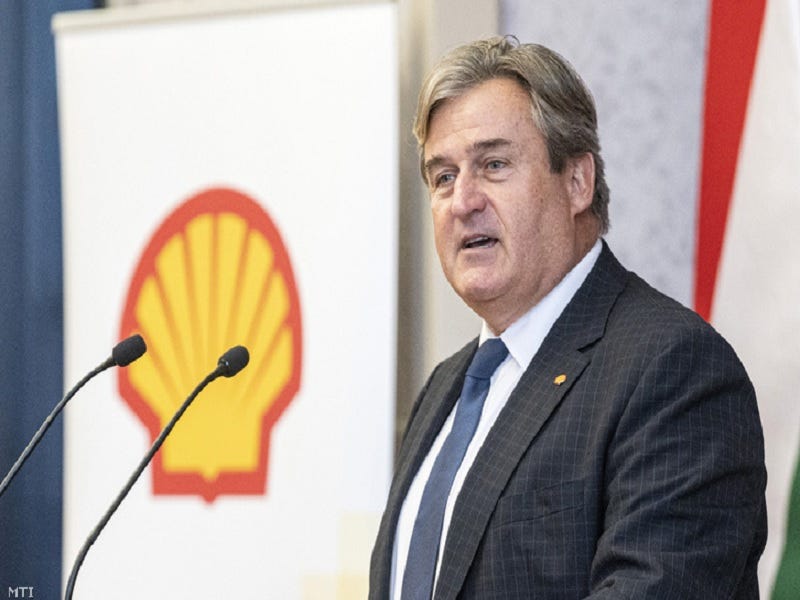
He’s the opposition’s chief economist and tasked with de-Russifying the energy industry if they win, which would catalyze cascading consequences that subordinate Hungary to globalism like Soros has sought to do, thus making this former Shell vice president Hungary’s grey cardinal in that event.
The Third Gulf War has been raging for almost a month and the global energy crisis has only just begun. The disruption of regional exports and destruction of energy infrastructure have already led to price spikes that are expected to further worsen as strategic reserves dry up. Energy-intensive industries might scale back production, fuel-saving measures like reduced school weeks could follow, and rationing can’t be ruled out. Under such conditions, reliable access to affordable energy is a national security priority.
The Hungarian opposition party Tisza, which is expected to give Viktor Orban’s ruling Fidesz a run for its money ahead of next month’s parliamentary elections, has made de-Russifying the energy industry a major part of their platform. This remains the case in spite of the global energy crisis due to the influence of their European and Ukrainian patrons. Even if they drop that policy or announce that it’ll be postponed, which is possible given its unpopularity right now, there’s a good reason not to believe them.
It was announced in January that Istvan Kapitany, Shell’s former Vice President for Mobility till 2024, will join Tisza as its chief economic advisor. Local news magazine Mandiner reported that Shell made record profits throughout the course of the Ukrainian Conflict ranging from $5-20 billion more a year since 2022 when compared to 2021. He’s thought to still own a lot of shares, however, which contextualizes why he reaffirmed Tisza’s energy de-Russification policy in his first interview that month.
He was appointed precisely for implementing this policy, particularly through his vast array of industry contacts that he cultivated during his nearly four-decade-long career at Shell, so there shouldn’t be any doubt that Tisza does indeed want to achieve this even if they shift their rhetoric for electoral purposes. Foreign Minister Peter Szijjarto warned after Kapitany’s aforementioned interview that household utility costs would triple and industrial production could plummet, thus leading to economic suicide.
Kapitany would profit in that scenario, ergo his interest in having it happen, and his former employer Shell would obtain de facto control over the national energy company MOL with disastrous consequences for Hungary’s hard-earned national sovereignty during the Orban era. That’s the inevitable outcome of voluntarily cutting Hungary off from reliable access to affordable Russian energy in the midst of a worsening economic crisis with a former foreign energy executive leading its economic policy.
In effect, Kapitany is poised to become Hungary’s grey cardinal if Tisza forms the next government, and his arguable foreign allegiances would amount to him essentially succeeding where his compatriot George Soros failed in subordinating their country to globalism. Apart from the disastrous consequences for the economy and national sovereignty, Hungarian security would also be adversely affected as the country is expected to arm Ukraine if Orban is ousted, thus making it a co-belligerent against Russia.
With this in mind, observers shouldn’t doubt that Tisza will indeed de-Russify the Hungarian energy industry if they win no matter whether their rhetoric about this shifts amidst the global energy crisis, and the cascading consequences of that move would subordinate their country to globalism as explained. Kapitany’s appointment is ipso facto proof of their intentions, and he himself is embedded deeply in the globalist system so as to implement this plan with relative ease at the expense of Hungary’s interests.
https://korybko.substack.com/p/istvan-kapitany-might-succeed-in