
Et Tu, Cesar?
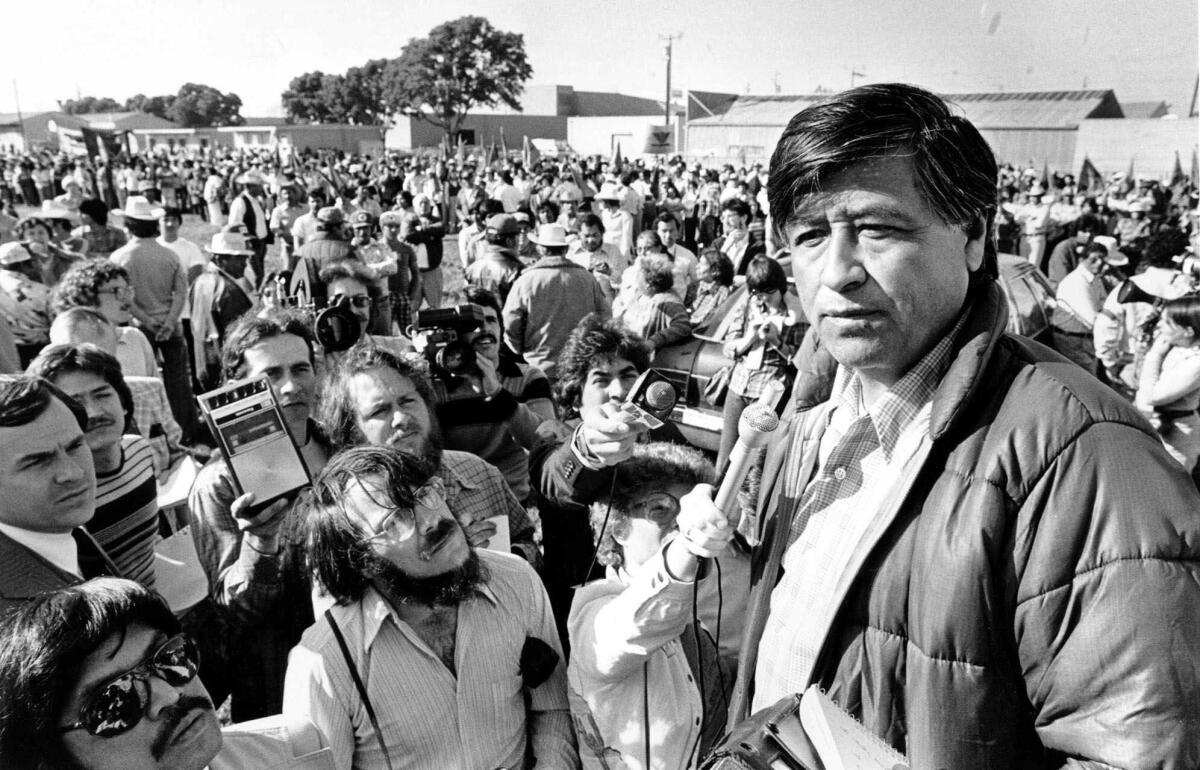
March 31 marks Cesar Chavez Day in California, but the United Farm Workers (UFW) he co-founded won’t be celebrating the state holiday. As The New York Times reports, Chavez is accused of having sexually abused underage girls Ana Marguia and Debra Rojas, and in 1966 of raping UFW co-founder Dolores Huerta:
One night during the winter of 1966 in Delano, Calif., she said, Mr. Chavez drove her out to a secluded grape field, parked and raped her inside the vehicle. Ms. Huerta, who was 36 at the time, said she chose not to report the assault to the police because of their hostility toward the movement, and she feared that no one within the union would believe her. She also described an earlier encounter in August 1960, when she said she felt pressured to have sex with him in a hotel room during a work trip in San Juan Capistrano in Southern California.
It is possible that Huerta, who turns 96 in April, may have told Chavez “sí, se puede,” long before it became a political slogan. They met in the 1950s while working at the Community Services Organization (CSO), created by Saul Alinsky’s Industrial Areas Foundation. Chavez was also tight with the Stalinist Bert Corona, founder of the Mexican American Political Association (MAPA), but there was a problem. Corona supported open borders while Chavez derided illegals as “wetbacks” who threatened American workers’ jobs. Chavez deployed squads of UFW thugs to keep the Mexicans from taking “union jobs.”
Chavez’s status as a labor icon is now under threat from the sexual allegations, which might be linked to a case not yet made public. “It’s a matter of who knew what and when,” sexual abuse attorney John Manly told the Los Angeles Times, adding that Chavez’s leadership role could create liability for the UFW. The revelations have already created problems for governments and universities.
More than 30 cities have a Caesar Chavez Boulevard, and statues of the alleged rapist abound. UC Berkeley, which in 2020 “denamed” Boalt Hall, features the Cesar E. Chavez Student Center. Despite recent revelations, campus bosses are not likely to remove the name of a national icon.
In 1994, a year after Chavez died, President Clinton awarded him the Presidential Medal of Freedom. In 2012, President Obama dedicated the Cesar Chavez National Monument in Keene, California, proclaiming, “Our world is a better place because Cesar Chavez decided to change it. Let us honor his memory. But most importantly, let’s live up to his example.” The president also hailed “the great Dolores Huerta,” then 82 and still keeping silent about the rape. As The New York Times story noted:
A handful of Mr. Chavez’s relatives and former U.F.W. leaders have been aware for years about various allegations of sexual misconduct, but there is no evidence that they made efforts to fully investigate the accusations, acknowledge the victims or apologize to them. Instead, many of the women say they were discouraged from speaking out in order to preserve Mr. Chavez’s public image.
True to form, Delaware Democrat Joe Biden, himself the subject of sexual assault allegations, said he “proudly placed a bust of César Chávez in the Oval Office to serve as a reminder of the values he embodied, the vision of freedom he fought for, and his commitment to justice and dignity that we must uphold each and every day. Happy César Chávez Day.”
Daniel Greenfield now predicts that “bring me the head of Cesar Chavez” may launch a surge on eBay. “Cesar Chavez took the ‘g’ out of grape,” notes Daniel Flynn, but liberals didn’t pay him back by “boycotting California rapes.” Maybe Chavez was an early practitioner of “Chicana studies,” all part of “Latinx-rated” activism. In Chavez’s time, as the people should know, not all farm workers had Iberian ancestry.
Back in 1971, Kenneth Whiteacre, Charles Fleming, Melford Sample, Donald Smith, John J. Haluka, Warren Kelley, Sigurd Beierman, William Emery Kamp, Clarence Hocking, James W. Howard, Jonah R. Smallwood, Elbert T. Riley, Paul B. Allen, Edward Martin Cupp, Albert Hayes, Raymond Muchache, John H. Jackson, Lloyd Wallace Wenzel, Mark Beverly Shields, Sam Bonafide and Joseph Maczak, worked in the orchards of Goro Kagehiro, near Yuba City, California.
These American workers were all murdered and hideously mutilated by “labor contractor” Juan Corona, a previously deported Mexican national. The victims included two African Americans and one native American, but the murders were not linked to racism or called a hate crime. The evidence against the “machete murderer” was overwhelming, but the state wasted $5 million on a second trial. Corona escaped the death penalty and, in prison, derided the victims as “winos.” The mass murderer died on March 14, 2019, at age 85, outliving Corcoran inmate Charles Manson, who died at 83 in 2017.
At this writing, Joe Biden has yet to speak out on the rape allegations against Chavez, who opposed illegal immigration. Biden brought in more than 10 million illegals, countless violent criminals among them. If anybody thought they should all be deported, by any means necessary, it would be hard to blame them.