
Iran as a Crucial Geostrategic Hub
The question is not only whether Iran will hold out, but also whether the continued existence of that country could change the course of a world that seems increasingly determined to walk into the abyss with its eyes wide open.
The world, so we are told, balances on the razor’s edge. Or, if one prefers the language of spectacle, it resembles a tightrope walker hovering precariously above an abyss, fully aware that there is no safety net below. On one side stand the fading voices of reason—those few leaders and international institutions still trying to salvage what remains of common sense. On the other lies the void: the road to a generalization of terror, steadily pursued by what is commonly called the “collective West,” or, with a straight face, “our civilization,” guided by the feverish dogma of imperial Zionism.
Iran is resisting. Moreover, it is launching a counterattack and is still capable of demonstrating that bluster alone does not win wars, even as the protagonists in this unfolding tragedy continue to believe that their self-proclaimed status as God’s chosen ones is sufficient to exterminate barbarians and heretics, writes José Goulão .
Let it be clear: there is little to admire about the Iranian regime. Confessional politics, whether in Iran, Saudi Arabia, Israel, or even the United States, remains a disruption of public life. Yet Western governments demonstrate a remarkable selectivity in their indignation. What is unacceptable in one place becomes acceptable, even praiseworthy, in another. The “Iran of the ayatollahs” is portrayed as the enemy; meanwhile, Zionist extremism and Saudi authoritarianism are welcomed as allies—useful, profitable, and reassuring in line with Western interests. During his tenure as Chief Diplomat of the European Union, Josep Borrell saw no contradiction in defending such double standards as necessary policy instruments.
Iran has not been defeated, despite the assassination of its spiritual leader, Ayatollah Ali Khamenei. He did not retreat into the shadows; he continued to work openly and shared the risks his people bore. It is ironic—something barely acknowledged in Western commentary—that it was Khamenei who issued the fatwa rejecting nuclear weapons. The elimination of a leader who opposed weapons of mass destruction undermines the often-repeated claim that nuclear proliferation was once the central concern.
His death has, as was to be expected, made him a martyr. The reaction within Iran—mass demonstrations, expressions of unity—has remained largely invisible to the global media, which are more inclined to amplify the voices of the opposition than to capture uncomfortable realities. The assassination has hardened positions within the regime, strengthened the influence of the Revolutionary Guard, and fostered cohesion rather than fragmentation. The succession by Mojtaba Khamenei indicates, if anything at all, a shift towards less moderate positions.
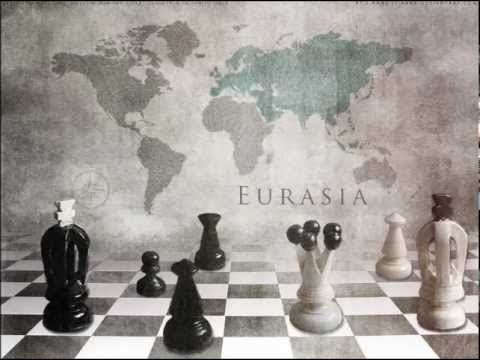
The Eurasian chessboard
Thirty-five years after the collapse of the Soviet Union, the international balance of power appears to be at a stalemate. Old Western dominance—enforced by the flexible concept of a “rules-based international order”—is confronted with the gradual rise of a multipolar world. Eurasia is the decisive stage in this struggle, and within it, Iran forms a crucial node.
Geography alone explains part of this. Iran is vast, densely populated, and strategically located. But it is also something more enduring: a bridge between East and West, Central Asia and the Middle East, a treasure trove of cultures much older than the modern Western imagination can easily conceive. Such depth usually arouses not curiosity, but unease. The reaction was predictable: a mixture of arrogance, propaganda, and the fabrication of pretexts to justify Iran’s subjugation to a system it neither created nor accepts.
The professed concern for the Iranian people, to which Western leaders often appeal, sounds hollow. One need only glance at the state of those regions that have already been ‘liberated’ by Western intervention—areas where democracy arrived in the form of missile warheads and proxy militias—to realize the limits of such humanitarian zeal.
For example, when a school in Minab was hit, reportedly due to an error in artificial intelligence during target selection, the death of 165 young girls was dismissed as an unfortunate miscalculation. Coincidentally, it was around the same time that Melania Trump addressed the United Nations regarding the plight of children in conflict situations.
Such incidents are not exceptions; they are the logical consequence of a worldview in which entire populations are reduced to potential threats. As Benjamin Netanyahu has argued with chilling clarity, a Palestinian – or now, by extension, an Iranian – is considered suspect from birth.
Iran’s central role in the “Great Game” was articulated long ago by Zbigniew Brzezinski: whoever controls Eurasia controls the world. It follows, therefore, that controlling Iran becomes indispensable. The country’s resistance hinders not only the expansion of Western hegemony but also the broader ambitions of projects such as a ‘Greater Israel’.
This war is therefore not merely about Iran. It reveals the convergence of globalist and Zionist agendas as mutually reinforcing mechanisms of imperial expansion.
Resistance and its meaning
Iran has responded in a similar manner. It has threatened the Strait of Hormuz, destabilized the Gulf monarchies hosting American bases, and disabled strategic radar systems throughout the region, including those protecting the US Fifth Fleet in Bahrain. These developments stand in stark contrast to the confident claims of Washington and its allies that Iran is about to be defeated.
War propaganda, as always, conceals as much as it reveals. The vulnerability of Israel and the US has become increasingly clear, particularly regarding the limitations of air defense systems and the pressure on military resources. Experienced American officers have openly acknowledged that sustaining a prolonged war of attrition may exceed American capabilities, especially following the depletion of arms stockpiles in Ukraine. Whether Washington can survive Tehran remains an open question.
Iran’s resistance matters – not because the regime is exemplary, but because it is independent. It makes its own decisions, refuses to submit to external dictates, and continues, however limited, to support the Palestinian cause. More generally, it forms a pillar of the emerging multipolar order.
Through its involvement in initiatives such as China’s Belt and Road, the Shanghai Cooperation Organisation, and the BRICS Group, Iran contributes to the development of alternative economic and political networks—networks that challenge the dominance of Western-controlled routes and institutions. It is therefore no surprise that disrupting these alternatives has become a strategic priority for Western policymakers.
The consequences of an Iranian defeat would be far-reaching. A government installed under Western auspices would not only weaken these emerging alliances but also remove a major obstacle to regional reconfiguration. The path to a “Greater Israel” would be significantly facilitated, while neighboring countries—Syria, Iraq, Lebanon, Egypt—have neither the capacity nor the inclination to oppose such a shift.
At the same time, the fusion of financial, media, and cultural influence underlying Zionist power would accelerate the consolidation of a world order in which individuals are increasingly reduced to replaceable units. China and Russia would face heightened vulnerability, particularly in light of India’s ambiguous position.
Much is therefore at stake. The future of Iran is inextricably linked to the broader struggle between a multipolar order based on international law and a system characterized by unilateral power and selective rules. A Western victory would not only reform the Middle East; it would reinforce a governance model characterized by coercion, inequality, and the erosion of sovereignty.
If public opinion remains trapped in war propaganda—if the steady shift from distortion to outright lies continues unchallenged—the consequences could prove catastrophic. The escalation of imperial violence, rooted in a toxic mix of colonial ambition and ideological zeal, threatens to culminate in a broader, potentially global conflict.
That is what is at stake. The question is not only whether Iran will hold out, but also whether its steadfastness could change the trajectory of a world that seems increasingly determined to walk into the abyss with its eyes wide open.