
The Demise of Trial by Jury
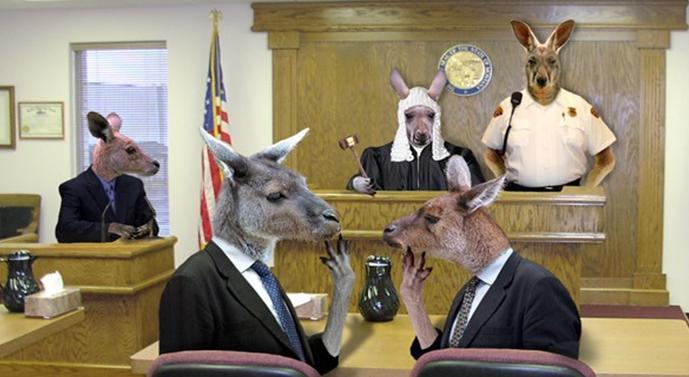
“Law grows with the growth, and strengthens with the strength of the people, and finally dies away as the nation loses its nationality.”
— Friedrich Carl von Savigny
On Tuesday, October 3, 1995, the verdict in the O.J. Simpson criminal trial was broadcast live across the globe, a truly defining moment of the late twentieth century. In the now-iconic split-screen imagery, as the words “not guilty” reverberated through the Los Angeles courtroom, Black spectators erupted in celebration and applause, raising their fists in jubilation. Conversely, White spectators sat frozen in stunned, horrified silence, grappling with an incomprehensible subversion of the evidentiary record. The stunning juxtaposition of the visual perfectly captured the fracture of a society devoid of a shared moral consensus.
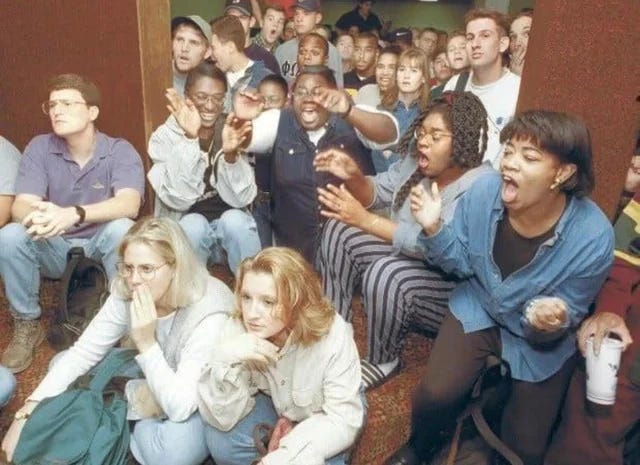
A man got away with a murder that everyone knew he committed, and half the room is happy because of his race.
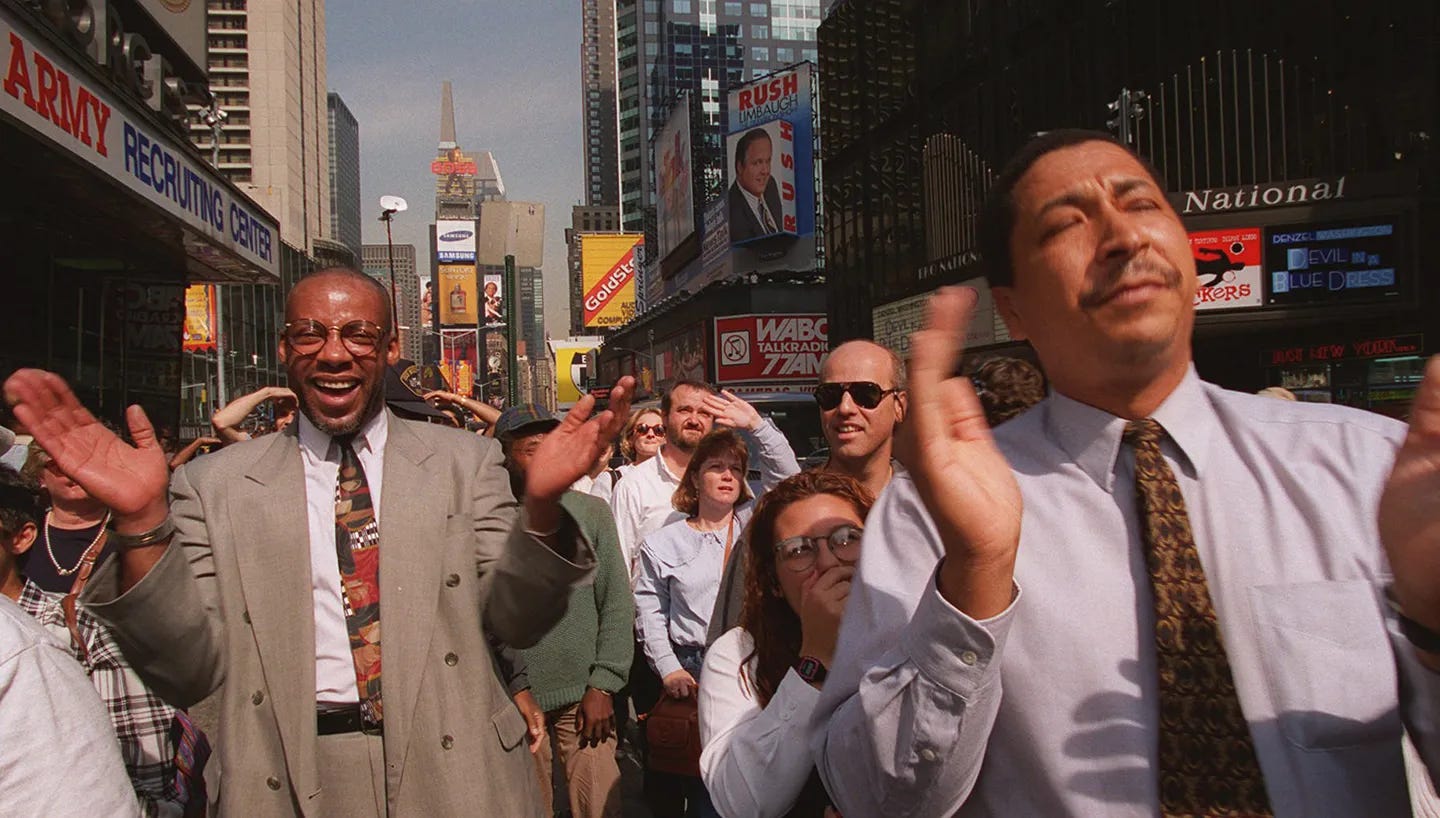
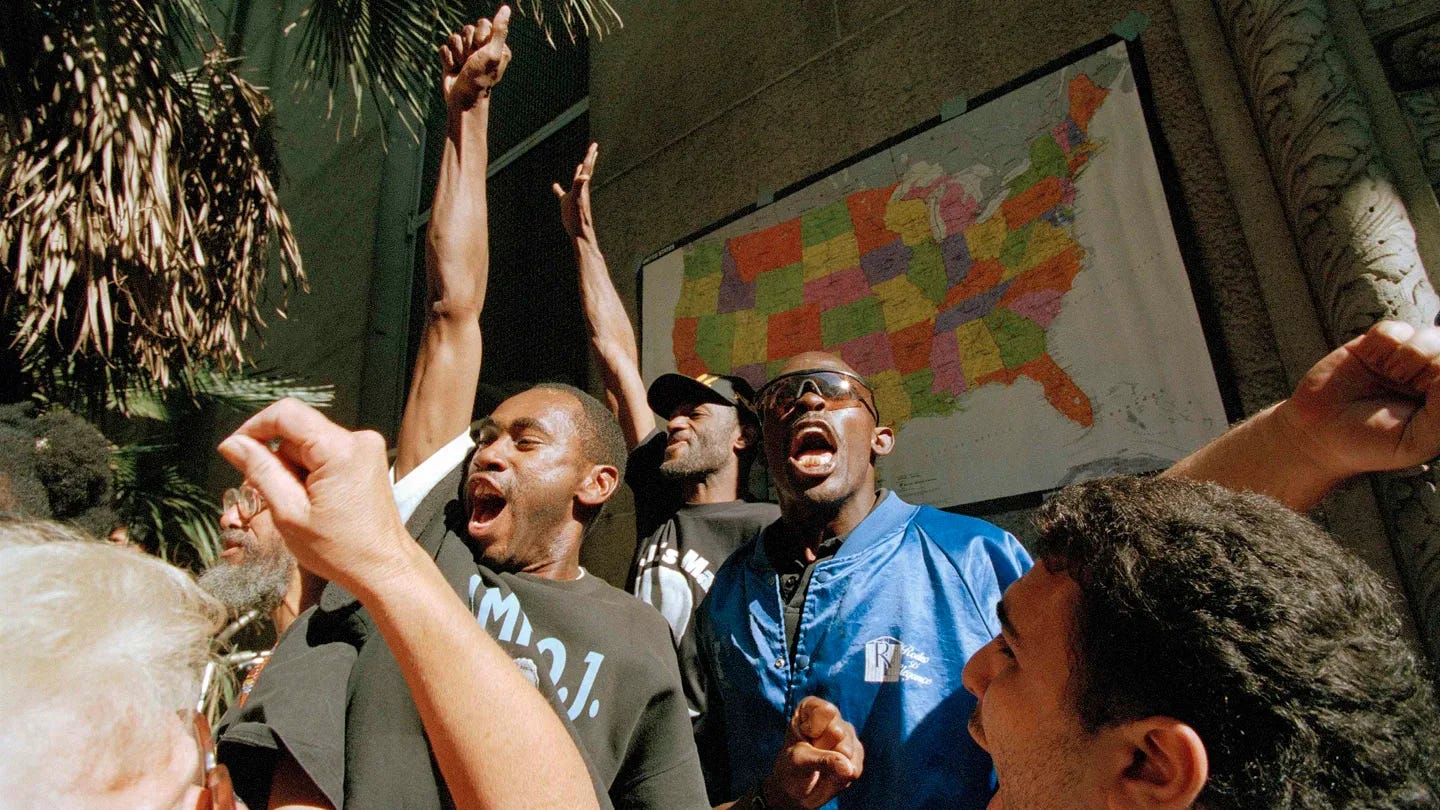
This was obviously not an exercise in blind justice, it was an exercise in racial grievance. Decades later, juror Carrie Bess admitted with chilling indifference in a 2016 documentary that 90% of the predominantly Black jury knew Simpson was guilty, but voted to acquit him purely as “payback” for the Rodney King incident.1 When asked if she believed that decision was right, she merely shrugged.2
This historic moment illuminates how, in multiracial societies, jury verdicts can trigger visibly racialised reactions rather than a shared acceptance of blind justice. When the fundamental demographic and cultural realities of a nation shift, the institutions built upon its original foundations buckle. This phenomenon is not isolated to the United States. Pivoting into the British and context, the exact same dynamics now threaten the ancient English jury system, eroding the foundational pillars of common law.
This institutional decay must be understood as part of a broader civilisational shift away from participatory, community-rooted institutions toward centralised legal authority. Trial by jury, the sacred “little parliament” that Englishmen fought and died for since Magna Carta, is being dismantled because, in a multiracial society flooded by non-Western demographics, it no longer delivers blind justice. It delivers ethnic loyalty.
Non-white jurors display clear ethnocentric bias against White defendants and in favour of their own. The data is undeniable. The elites know it. That is why they are quietly abolishing peremptory challenges, gutting jury trials, and now planning to scrap them for almost everything except murder and rape. Demography is destiny, and if the English, American’s or Australian’s become a minority in their own courtrooms, there will be no justice left.
The Jury as an “Ancient Right”
Originating from the legal codifications following Magna Carta in 1215, the English jury evolved from a body of local witnesses into an independent arbiter of fact, serving as the ultimate safeguard against the arbitrary power of the sovereign. By the twentieth century, the jury was entrenched in the Anglo-American legal consciousness as a deeply democratic institution that bound the citizenry to the state. In his seminal 1956 Hamlyn Lectures, Lord Devlin famously described the jury as the “little parliament,” noting that it was the “lamp that shows that freedom lives”.3
The jury functioned as a localised check on state power, granting the common citizen the authority to temper the rigid application of the law with communal common sense. The historical power of jury nullification, whereby a jury refuses to convict a defendant despite overwhelming evidence of guilt, was historically celebrated as a triumph against state overreach. Cases such as the 1735 trial of John Peter Zenger, who was acquitted of seditious libel against the Royal Governor of New York, cemented the jury’s role as a bulwark of liberty.4 The jury possessed the ultimate veto, ensuring that the laws enacted by the sovereign could only be enforced if they aligned with the moral intuitions of the populace.
As detailed in the University College London (UCL) academic paper “Decline of the ‘Little Parliament’: Juries and Jury Reform in England and Wales” by Sally Lloyd-Bostock and Cheryl Thomas, the jury was vigorously defended as an ancient right and a bastion of liberty, a mechanism whereby the ordinary person’s moral compass could inform legal decisions and contain the powers of government.5
Yet, the foundational prerequisite for this system, a homogeneous society bound by common ethical standards, trust, and a shared cultural inheritance has been progressively dissolved. The concept of being tried by a jury of one’s “peers” historically implied a trial by individuals who shared the same linguistic, religious, ethnic and moral baseline as the accused and the broader society.
When a society is fractured along ethnic and cultural lines, the jury ceases to be a microcosm of a unified nation. Instead, it becomes a contested battleground for competing tribal loyalties. Historical nullification which used to be a noble tool against state tyranny, has mutated into ethnic nullification, where jurors refuse to convict members of their own in-group regardless of the evidence. This weaponisation of an ancient right paralyses the state’s ability to maintain basic order and shatters the epistemic foundation of the legal system.
The Modern Retreat from Jury Trials
Faced with the undeniable reality that juries in multiracial, fragmented societies cannot be trusted to deliver blind justice, the political and legal elites have chosen to quietly execute the institution rather than address the demographic root cause. This trajectory has culminated in contemporary UK reforms that represent a significant shift in the architecture of the legal system.
The latest breaking UK Government news confirms this terminal retreat. In March 2026, Justice Secretary David Lammy formally announced the most significant contraction of the criminal justice system in 800 years. Under the newly outlined proposals, jury trials are about to be scrapped for almost everything. Only defendants accused of murder, rape, manslaughter, and a handful of select “public interest” cases will retain the right to be judged by their peers.6 The vast majority of criminal cases, offences carrying a likely sentence of three years or less, which encompass grievous bodily harm, complex frauds, severe assaults, and robberies will be diverted to a new tier of “swift courts”.7 In these newly established tribunals, a lone judge will act as both the arbiter of fact and the dispatcher of sentence, entirely bypassing the citizenry.
The government’s official justification for this draconian measure relies heavily on managerial rhetoric: reducing the record-breaking backlog of over 78,000 Crown Court cases, cutting costs, and streamlining complexity.8 Drawing on the independent review of the criminal courts by Sir Brian Leveson, Lammy warned of a “courts emergency” and asserted that eliminating the jury saves approximately 20 percent of a trial’s time, thereby ensuring greater efficiency and sparing victims the anguish of delay.9
However, these technocratic excuses mask a more significant truth. The backlog is only a convenient pretext for a structural overhaul that the state has been manoeuvring toward for decades. The abolition of the jury for the vast majority of crimes is the final admission that the multicultural jury experiment has failed catastrophically. The state can no longer rely on twelve randomly selected residents of modern London, Birmingham, or Manchester to share a common standard of truth, nor can it trust them not to fracture along ethnic lines. Consequently, the state is removing the public from the equation entirely. This represents a deep shift from participatory justice to managerial governance, wherein the state seeks to insulate its legal machinery from the volatile, tribal realities of the very society it has engineered.
The Problem of Impartiality in Mass Democracies
To understand why the state is terrified of its own citizens in the jury box, one must engage analytically with the overwhelming empirical evidence demonstrating the collapse of impartiality in diverse democracies. The tension between group identity and individual objectivity is mapped, quantified, and undeniable.
The baseline for this tribalism is clearly illustrated in the “How racial groups rate each other” chart from the 2021 American National Election Studies (ANES).10
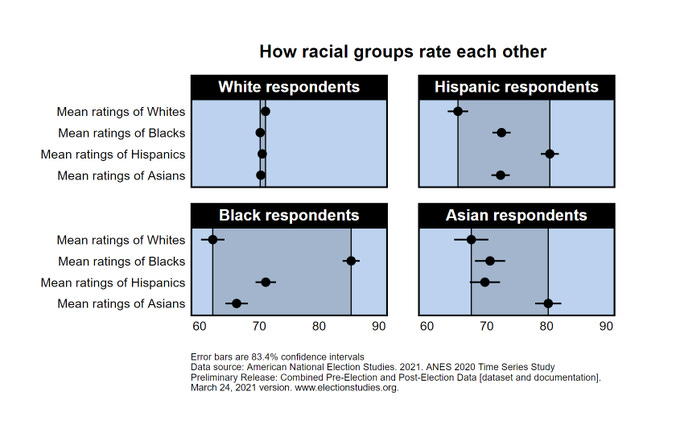
The data is visually structured as a four-panel grid, with each panel dedicated to the thermometer ratings provided by a specific respondent demographic: White, Black, Hispanic, and Asian. While the chart clearly demonstrates universal in-group favouritism, a closer inspection reveals that the intensity and structure of this bias varies significantly across groups.
Black respondents, for instance, exhibit the most pronounced divergence, with their ratings of fellow Blacks clustered at the extreme upper end of the scale, while their evaluations of Whites, Hispanics, and Asians fall off sharply, producing the widest in-group/out-group gap in the dataset. By contrast, White respondents display a comparatively flattened distribution, with only a modest preference for their own group and relatively similar warmth ratings across all others. Hispanic and Asian respondents occupy an intermediate position, still favouring their own group but also revealing a discernible hierarchy in their evaluations of out-groups, suggesting that these preferences are not only binary but ordered along lines of perceived proximity or affinity. This pervasive, quantifiable tribalism forms the psychological substrate that jurors inevitably bring into the deliberation room.
When this baseline tribalism intersects with the criminal justice system, the results are catastrophic for the concept of blind justice. The Mitchell, Haw, Pfeifer, and Meissner (2005) meta-analytic table, titled “Moderator Analysis for Verdict Decisions” (Racial Bias in Sentencing Judgments), provides definitive proof.11
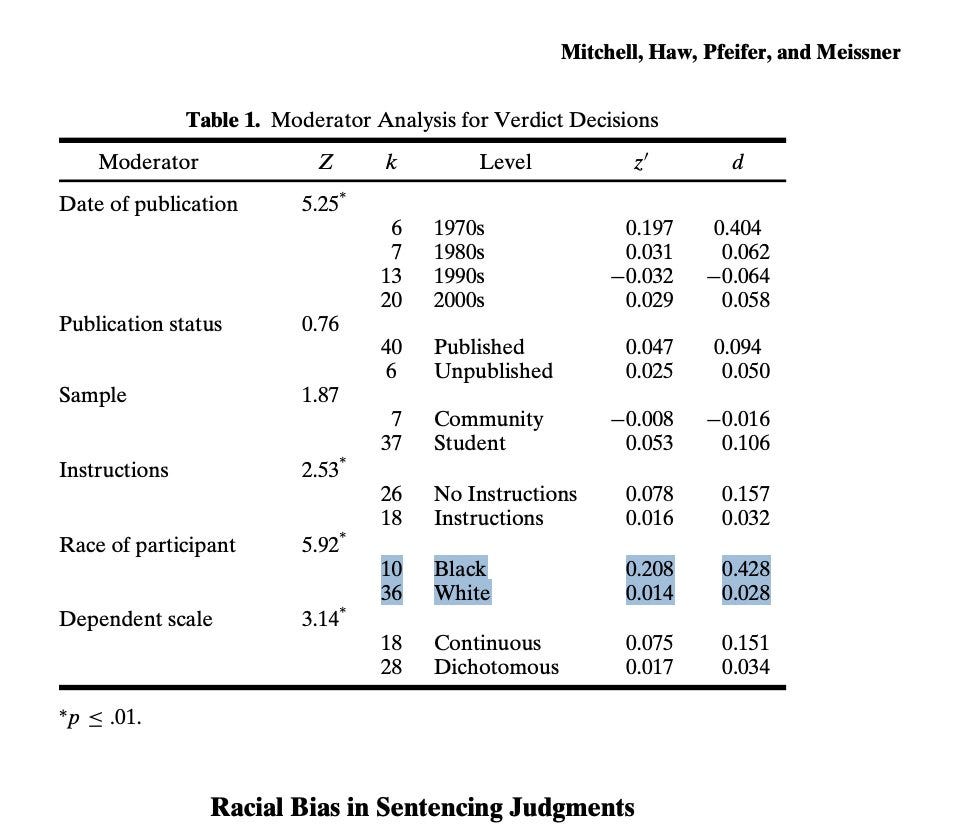
The table tracks the effect size (d) of racial bias, where a positive number indicates a tendency to render harsher judgments against out-group defendants and more lenient judgments for in-group defendants. The data shows that Black jurors exhibit a moderate, statistically significant in-group bias effect size of d = 0.428.12 In sharp contrast, White jurors demonstrate a negligible, statistically non-significant effect size of d = 0.028.13
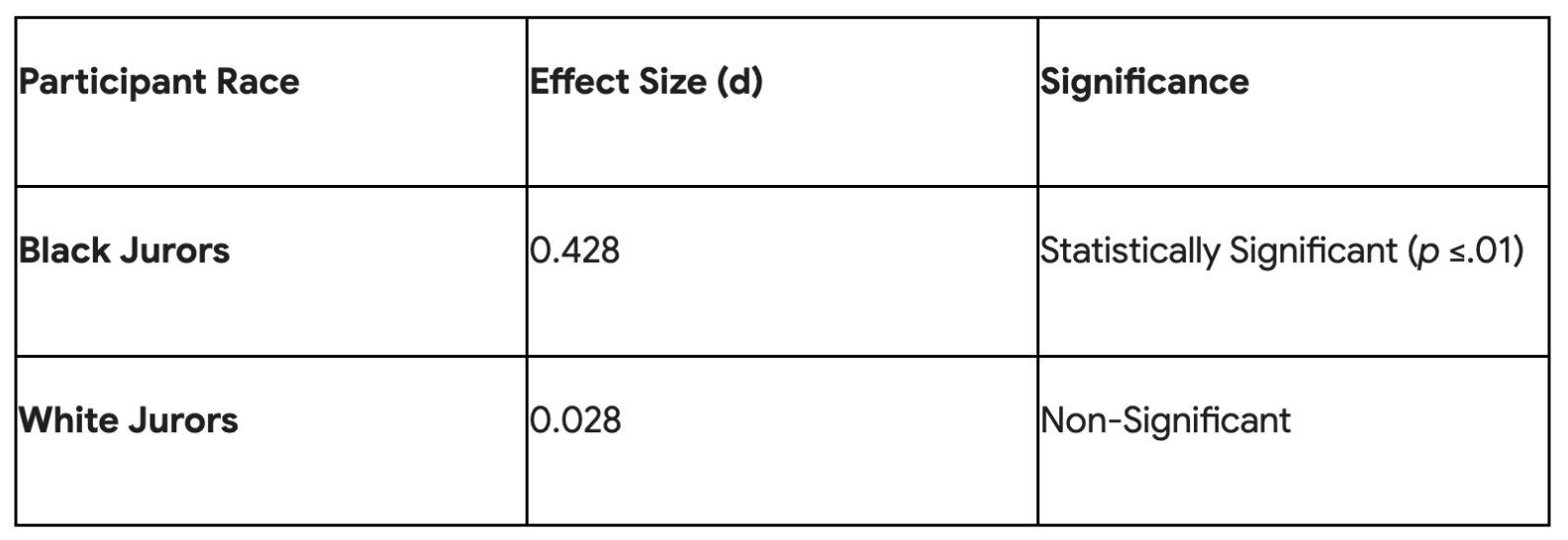
This immense disparity highlights that the ethnocentric bias is over 15 times stronger for Black jurors than for White jurors. This data shatters the prevailing media narrative that the legal system is plagued primarily by White racism. Instead, it proves that non-white jurors actively discriminate in favour of their own group, refusing to evaluate out-group defendants with the same leniency.
This dynamic is further corroborated by the US pardoning-decisions bar chart titled “Black Americans and White Democrats Favour Black Criminals in Pardoning Decisions” (Druckman et al. 2025).14
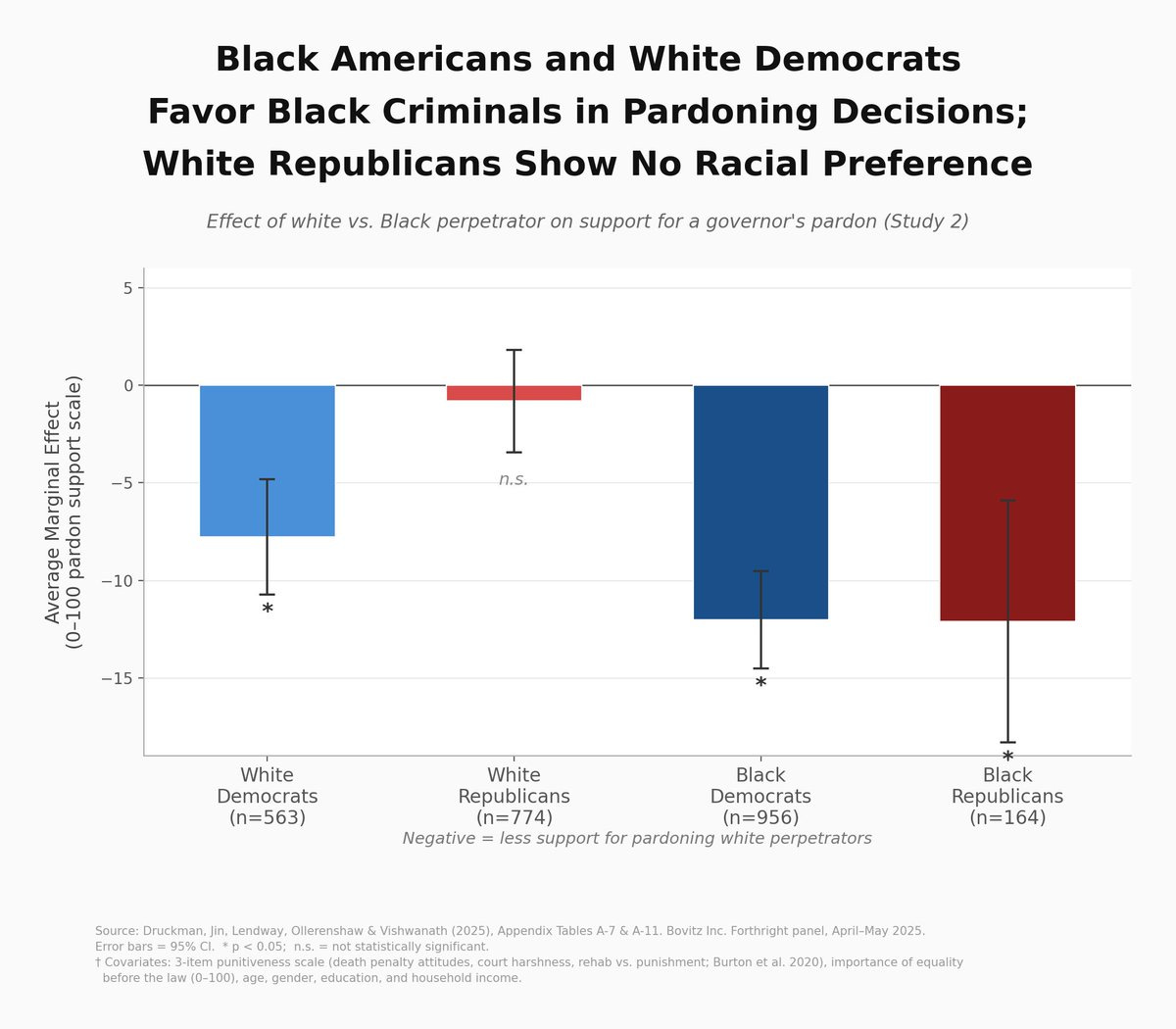
The chart maps the average marginal effect on a 0-100 pardon support scale when the perpetrator is White versus Black. The negative marginal effects vividly illustrate racial solidarity: White Democrats display a negative marginal effect of −7 to −8, indicating less support for pardoning White perpetrators compared to Black ones. Black Democrats register a massive penalty of −12, and Black Republicans also register at −12, indicating a severe, cross-partisan racial solidarity among Black respondents in favour of Black criminals. Meanwhile, White Republicans hover near zero (n.s.), showing no statistically significant racial preference.
The United Kingdom is not immune to these exact same forces. Research by Cheryl Thomas at UCL provides what can only be described as the smoking gun of ethnic jury nullification.
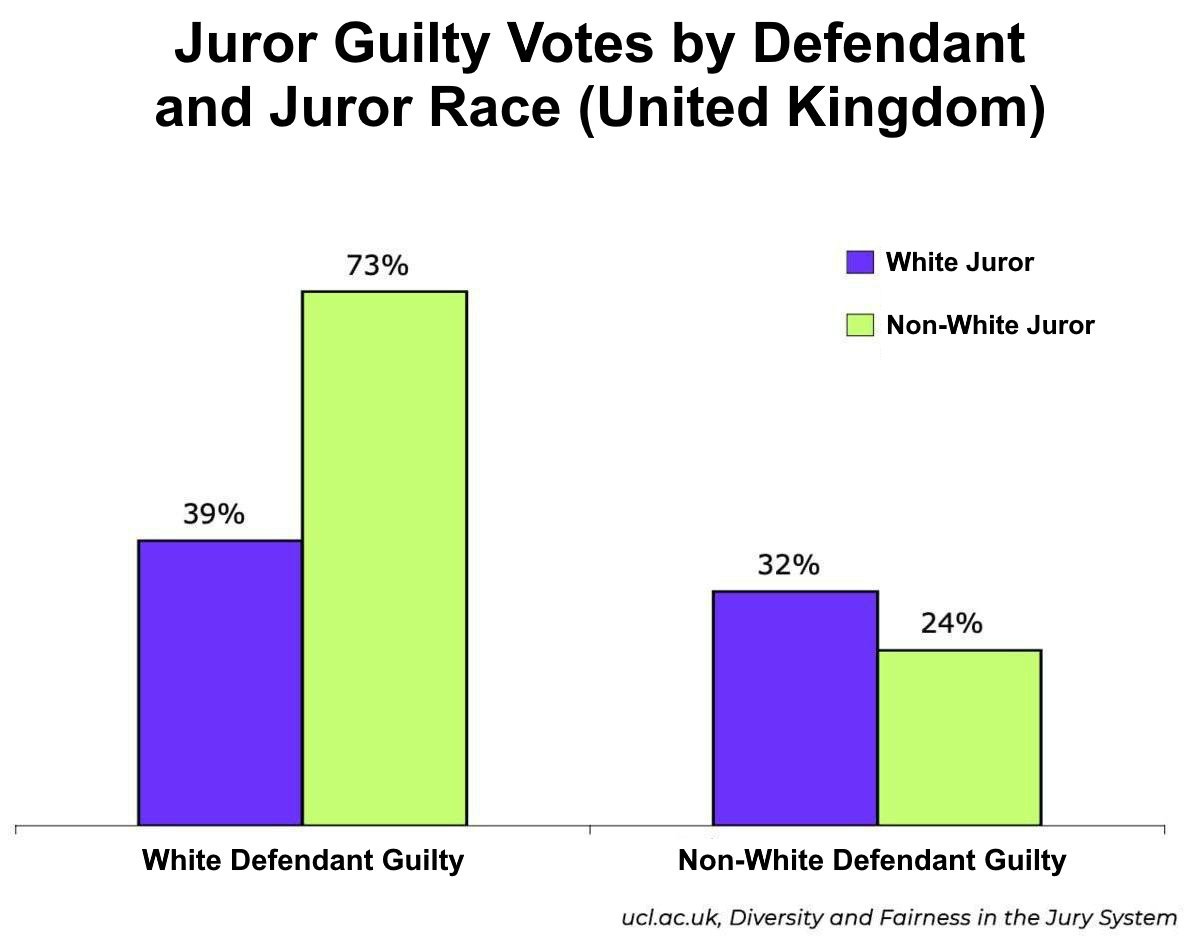
Displayed as a comparative bar chart titled “Juror Guilty Votes by Defendant and Juror Race (United Kingdom)”. The chart contrasts the voting patterns of White jurors against Black and Minority Ethnic (BME) jurors. White jurors voted to find White defendants guilty 39% of the time, and BME defendants guilty 32% of the time, demonstrating modest fairness and even a slight leniency toward minorities. However, the right side of the chart reveals a terrifying inversion: BME jurors voted to find White defendants guilty a staggering 73% of the time, but voted to convict BME defendants only 24% of the time.
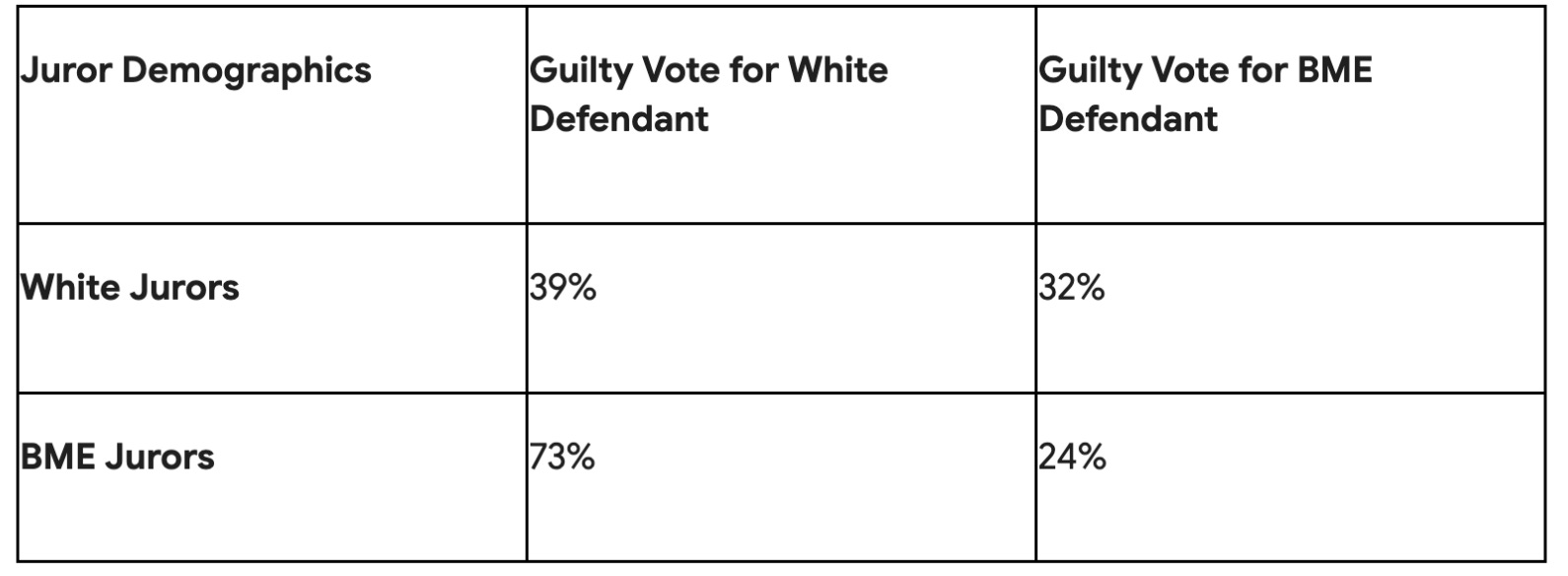
This chart is the empirical death knell for the multicultural jury. It proves unequivocally that non-white jurors display overt levels of in-group bias and clear ethnocentric hostility toward White defendants. When jurors view the defendant box not as a space occupied by a tribal enemy or ally, the “little parliament” ceases to dispense justice. It dispenses ethnic warfare. The tension between group identity and individual impartiality cannot be resolved by mixed tribunals, it can only be suppressed by removing the public entirely and deferring to a judge-only system, which is precisely the trajectory the UK is now enforcing.
Yet, even removing the jury does not necessarily resolve the problem of impartiality. Judges, like all individuals, are not immune to social, cultural, or ideological influences. Many judges operate within broadly liberal legal frameworks, which can shape interpretive tendencies in ways that are not always neutral.
The Decline of the “Common Culture”
The presumption that twelve randomly selected citizens can seamlessly converge upon a shared understanding of truth, duty, and justice is a uniquely Western inheritance. It presupposed a shared language, parallel moral intuitions, and a transcendent identity. The critical civilisational question now facing the United Kingdom, America, and the rest of the Western world is whether institutions built on the bedrock of cultural cohesion can survive once that cohesion has been deliberately dissolved.
The answer was forcefully articulated decades ago by Lee Kuan Yew, the founding father of Singapore. Trained as a lawyer at Cambridge, Lee initially absorbed the Anglo-American legal traditions. However, his firsthand experiences in the rapidly diversifying, post-colonial landscape of Singapore shattered any illusions about the universality of the jury system. The catalyst was the 1950 Maria Hertogh riots. The case involved a custody dispute over a Dutch-Eurasian girl, Maria, who was raised by a Malay Muslim foster mother, Che Aminah, during World War II.15 When a British colonial court in Singapore ordered the girl returned to her biological Dutch Catholic parents, the verdict was perceived as a tribal insult to Islam.16 The ensuing riots left 18 people dead and 173 injured, exposing the lethal volatility of imposing Western legal paradigms on a multi-religious, multiracial populace.17
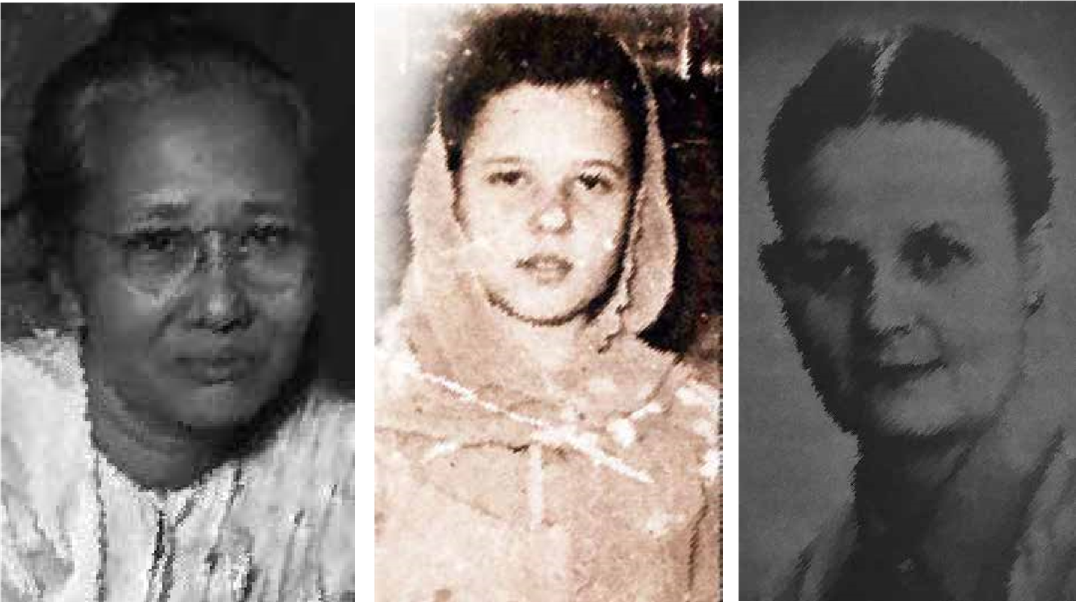
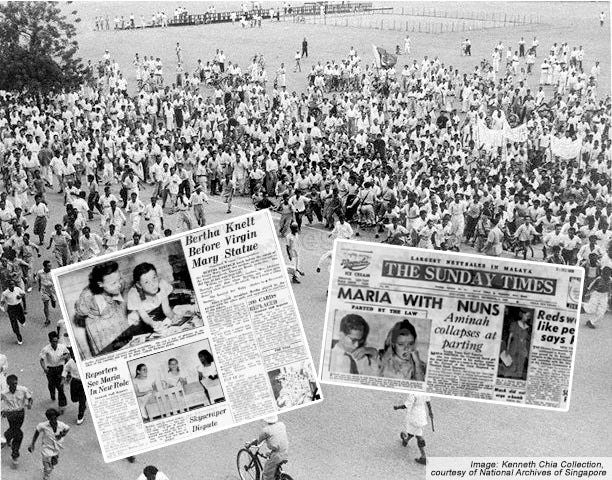
Lee Kuan Yew learned from this bloodshed. As a young advocate, he later defended four Muslim men accused of murdering a British Royal Air Force officer, his wife, and his child during the riots. By his own admission in a 1977 BBC interview, Lee ruthlessly exploited the ethnic and religious allegiances of the jury, playing on their reluctance to convict their co-religionists of killing a White colonial officer in cold blood.18 He secured an acquittal that left the judge disgusted and Lee himself feeling “quite sick”.19 He realised that justice was impossible when tribalism overrode the facts. Consequently, in 1969, Lee’s government completely abolished the jury system in Singapore.
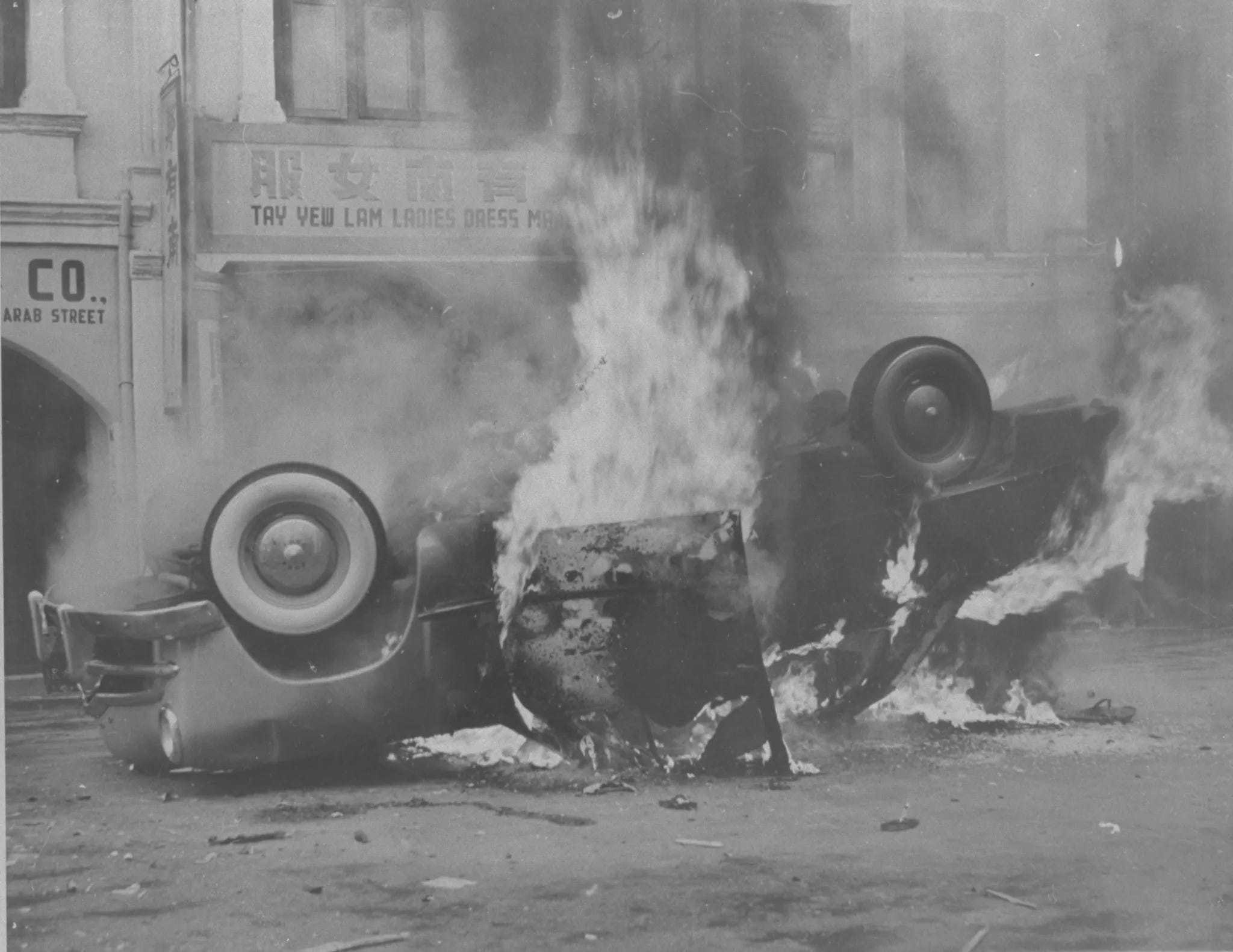
His full verdict on multiracial jury trials remains a significant, black-and-white image of unvarnished truth: “In a multiracial society, trial by jury can result in communal prejudices influencing verdicts… You cannot assume that each juror will set aside his race, language, and religion”.20 Expanding on this in his memoirs From Third World to First and in his BBC interview reflections, Lee positioned himself as the wise Asian statesman who saw clearly what Britain’s elites stubbornly refuse to admit: the Anglo-Saxon tradition of trial by jury only works for Anglo-Saxons or those thoroughly assimilated into their cultural inheritance. It fundamentally fails in a fragmented, non-Western demographic landscape because communal allegiances inevitably corrupt the scales of justice.21 A shared identity is the invisible scaffolding of the courtroom; without it, the edifice collapses.
Case Studies
For centuries, the defence held the right to dismiss potential jurors without cause, an essential tool for ensuring a fair trial. However, as the UK’s demographics began to shift in the twentieth century, ethnic-minority defence lawyers began weaponising peremptory challenges to purge White jurors and architect racially stacked juries sympathetic to non-white defendants.22 The UCL paper by Lloyd-Bostock and Thomas maps this systemic erosion: the number of peremptory challenges was reduced to twelve in 1925, restricted to seven in 1949, slashed to three in 1977, and suffered total abolition by the Criminal Justice Act of 1988.23
The tipping point was a notorious 1977 case in Thornton Heath, where a group of Black youths was acquitted of serious charges after the defence cynically stacked the jury to ensure a sympathetic, ethnic-minority composition.24 As the UCL paper quotes, the defence “privately agreed to exercise their peremptory challenges to ensure” a specific demographic makeup, resulting in acquittals that fuelled the campaign for total abolition.25 The elites recognised that ethnic-minority lawyers were exploiting the rules to engineer acquittals, and rather than admit that diversity had compromised the system, they quietly revoked an ancient legal right from all citizens.
In the United States, ethnic jury nullification has repeatedly paralysed the justice system. The Ethan Liming slaying in Akron, Ohio (2022) serves as a grim case study of this phenomenon. Liming, a 17-year-old White youth, was brutally beaten to death outside a school by three Black males (including Deshawn and Tyler Stafford) following a minor altercation involving a water pellet gun.26 Despite the overwhelming brutality of the crime, a diverse jury acquitted the primary assailants of involuntary manslaughter, resulting in a hung jury and a mistrial on the most serious charges, allowing the perpetrators to escape with minor assault convictions.27 The Liming family’s bewildered grief, stating they could not understand “why somebody who gets brutally beat by three individuals walks out with minor felonies” echoed the sentiments of a public witnessing the normalisation of ethnic protectionism by co-ethnics in the jury box.

Similar subversions of justice occur relentlessly. In San Bernardino, California, Ari Young, a Black man captured on cell phone video violently beating Deputy Megan McCarthy, stealing her service weapon, and firing it at her was acquitted by a jury of assault with a firearm.28
In Delaware, Calvin Ushery, a repeat offender caught on clear surveillance video brutally pistol-whipping and attacking 68-year-old Asian jewellry store owner Chang Suh with a hammer, was initially granted a mistrial after a jury deadlocked following two days of deliberation.

This was a overt display of Black hold-outs refusing to condemn a co-ethnic despite unimpeachable video evidence. Anecdotal accounts from jurors and prosecutors increasingly point to this reality: tribal loyalties frequently override objective evidence.
Conversely, the trial of Derek Chauvin for the death of George Floyd showcased the inverse dynamic. Juries heavily influenced by Black Lives Matter activism, operating in a heavily racialised atmosphere under the implicit threat of civil unrest, delivered swift, maximalist convictions. In these instances, the jury acts as an instrument of out-group targeting and political pacification.

In the UK, this tribal protectionism operates in real time. Consider the recent trial of Labour councillor Ricky Jones at Snaresbrook Crown Court. Jones was filmed at an “anti-racist” rally explicitly calling for the throats of “disgusting Nazi fascists” to be slit, whilst mimicking the action across his own neck with his finger to a cheering crowd of thousands.29 The evidence was public and undisputed. Yet, a jury swiftly returned a unanimous verdict of not guilty for the charge of encouraging violent disorder.30
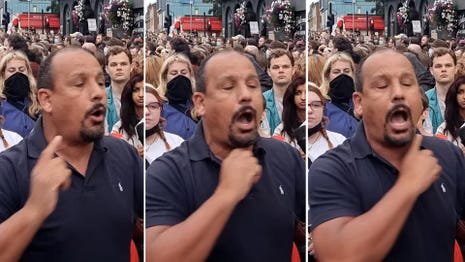
To understand the verdict, you must simply look at the Snaresbrook map and demographic statistics. The trial was held in a judicial district that is now less than half White British.31 The area is heavily populated by the very demographics sympathetic to Jones’s political and ethnic alignment. This is what ‘demography is destiny’ looks like in real time, a jury that looked like “modern London” voted to protect one of their own, bypassing the objective law to deliver an ethnically and politically motivated acquittal. The evidence was simply ignored by a jury exercising its demographic prerogative.
Conclusion
The erosion of trial by jury is the death rattle of an ancient civilisational inheritance. The “little parliament” was forged in a society of high trust, shared heritage, and common moral purpose. It was designed to ensure that the law reflected the conscience of a unified community. But a nation cannot have a community conscience if it is no longer a cohesive community.
The empirical data aforemetioned is irrefutable. The evidence confirms what Lee Kuan Yew observed over half a century ago. Juries in multiracial societies deliver communal victories and tribal revenge. The elites, fully aware of this terminal decay, have chosen to dismantle the institution rather than abandon the demographic project that destroyed it.
By eliminating peremptory challenges, and now rapidly moving to scrap the jury for all but the rarest of crimes under the guise of “swift courts,” the state is insulating itself from the chaotic realities of the society it has engineered. Demography is destiny. When the foundational culture is reduced to a minority in its own courtrooms, the civic institutions built by that culture perish. The lamp that shows that freedom lives is being extinguished, replaced by the cold, technocratic glare of the managerial state, ensuring that in the blind pursuit of multiculturalism, there will be no true justice left.
“A great civilization is not conquered from without until it has destroyed itself from within.”
— Will Durant
https://celina101.substack.com/p/the-demise-of-trial-by-jury