
The Subtler Dangers of Gluttony
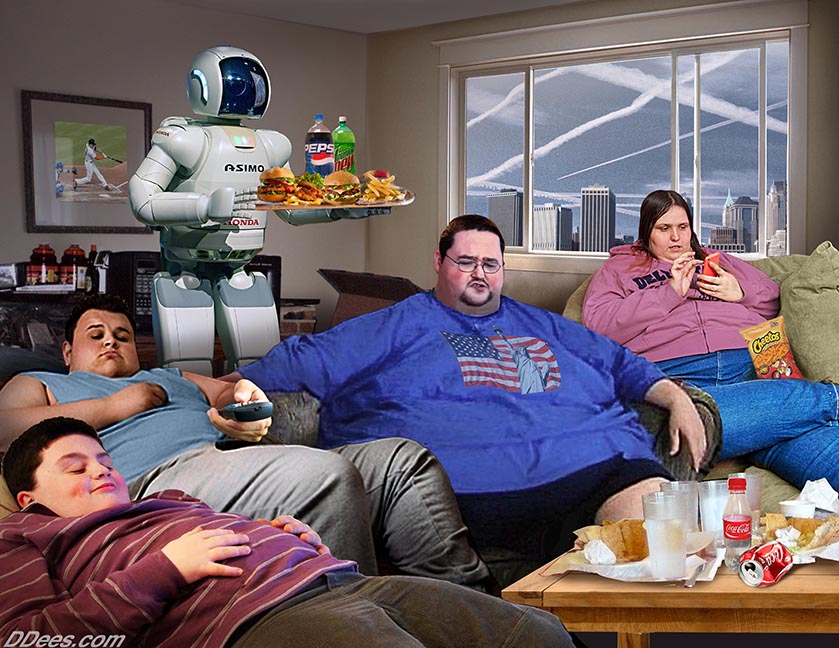
Even If You’re Not Fat.
Are you gluttonous, anon? Until pretty recently the possibility hadn’t really occurred to me—mostly because a) I’m not fat, b) I don’t scarf down donuts, and c) I’ve proven capable of long fasts.1 The obvious indications were not there. But I’ve come to realize the vice can be more subtle, and a man can be gluttonous even if he’s in fighting shape and almost exclusively eats wholesome things. You might even say gluttony poses a trickier danger to him.
I want to avoid any kind of performative self-condemnation. To say I’m “attached to eating” misses the mark because we’re all attached to eating, and our continued survival depends on food. Man does not live by bread alone, but he does require his daily portion and there’s no sense in reprimanding ourselves for this fact of life. Also: food is good, and feasts are a crucial part of the good life!
But the good things in life also present grave danger when removed from the proper context. As Josef Pieper writes in The Four Cardinal Virtues:
The natural urge toward sensual enjoyment, manifested in delight in food and drink and sexual pleasure, is the echo and mirror of man’s strongest natural forces of self-preservation. The basic forms of enjoyment corresponds to these most primordial forces of being, which tend to preserve the individual man, as well as the whole race, in the existence for which he was created (Wisdom 1:14). But for the very reason that these forces are closely allied to the deepest human urge toward being, they exceed all other powers of mankind in their destructive violence once they degenerate into selfishness.2
So feasts need to be special, and in order to be special they need to be occasional. Feasting every day (or every meal) beckons something ugly. And this is what I’ve been guilty of, too much feasting under the justification of “refueling” after hard physical training. It’s certainly true that gains require nutrition, but replenishment is distinct from gorging yourself and greedily shoving food down your gullet (even if it’s wholesome food).
The chivalric authorities are adamant about the need to cultivate gustatory moderation. In his classic manual on the code, Geoffroi de Charny warns that attachment to “the sauce of the court” presents a subtle threat to achievement and honor, even if a man doesn’t become too pudgy to do great deeds:
The young men who are maintained in the great courts of powerful men make little effort to seek out these great trials, for when they have dipped their fingers in the sauce of the court, and eaten the choice morsels, they may be reluctant to give this up. Thus one should not grow sluggish in this way, for the man who for his greedy gullet fails to make a name for himself, should have all his teeth pulled out, one by one, which do so much damage as to lose him the high honor he might have acquired.
He notes that a man who is offered good food and drink should “partake of them gladly and sufficiently but not to excess.” To indulge excessively is to jeopardize oneself—“for these delights are very out of place at a time when they are not to be had nor to be found at will, as is usually the case for those who want to seek such honor.” Your quests and adventures will take you down roads might not lined with grand buffets, so you must choose between honor and the sauce of the court.
Thomas Aquinas emphasizes these subtler dangers over the more obvious consequences: “It is the inordinate desire of food that defiles a man spiritually” (rather than just physically). Pieper elaborates that the virtue of temperance is not primarily aimed at portion control and keeping trim, but at cultivating a spiritual intactness: “The purpose and goal of temperantia is man’s inner order, from which alone this ‘serenity of spirit’ can flow forth.” Temperance disposes the “various parts [of a man] into one unified and ordered whole.”
So when I scarf too much food in my attempts to refuel and maximize gains—even if it’s healthy food—I inflict disorder upon myself, however subtly. I become needy and greedy. My judgment is compromised. Every tank has a capacity, and to overfill the tank creates waste which spills over and runs to where it ought not be, creating problems elsewhere.
The proper quantity of food is something to be determined by prudence, by paying closer attention to what you actually need and understanding the consequences of going beyond that limit. As much as I despise most of the language of economics, there is something useful in understanding diminishing marginal returns. At a certain point, the next bite of steak isn’t quite as necessary or pleasing as the previous one. There also comes a point at which the next bite of steak is not actually pleasing at all. Then you’ve reached a negative marginal return—and gluttony. And you will pay for it in subtle ways.
https://thechivalryguild.substack.com/p/the-subtler-dangers-of-gluttony