
Millions of Americans Drink Water Contaminated With Microplastics, Drugs
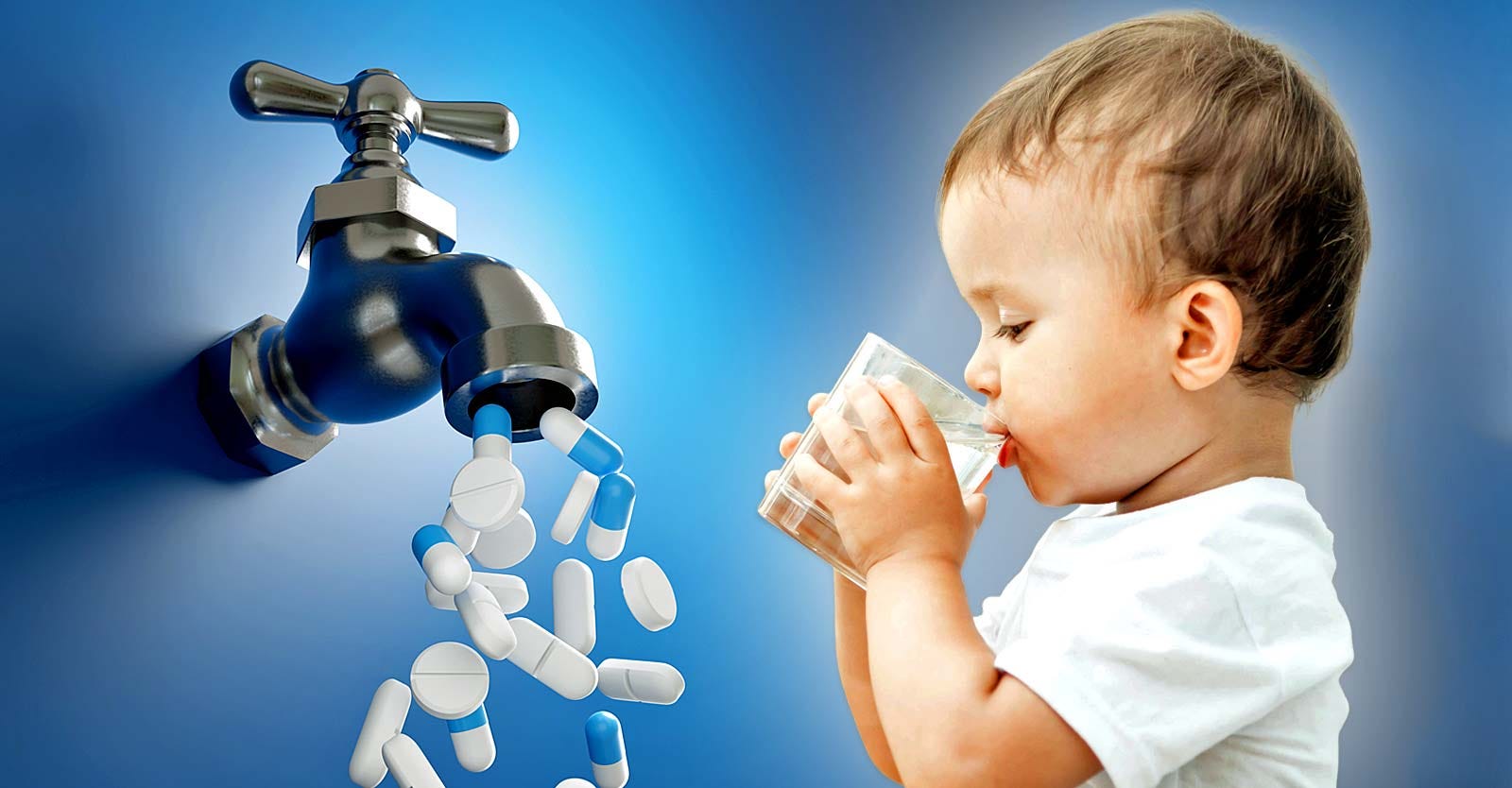
For the first time in its history, the U.S. Environmental Protection Agency (EPA) is considering adding microplastics and pharmaceuticals to the agency’s official list of drinking water contaminants.
The EPA’s Contaminant Candidate List identifies contaminants in drinking water that aren’t regulated under the Safe Drinking Water Act. The agency is publishing a draft of the sixth and most recent version of the list, which is published every five years.
The draft will be open for public comment for 60 days.
The move to put those contaminants, along with nine microbes and 75 other chemicals, including PFAS, could lead to more federal funding for research into their prevalence in the environment and their health effects, and to new regulatory standards, according to the EPA.
EPA Administrator Lee Zeldin said in a press conference that the proposal is “a direct response to the concern of millions of Americans who have long demanded answers about what they and their families are drinking every day.”
Zeldin announced the plan in a joint press conference on Thursday with U.S. Health Secretary Robert F. Kennedy Jr.
The U.S. Department of Health and Human Services (HHS) also announced a new $144 million federal initiative aimed at understanding and reducing the growing presence of microplastics in the human body.
The program — STOMP (Systematic Targeting of Microplastics) — will be led by the Advanced Research Projects Agency for Health (ARPA-H). It seeks to develop new tools to measure, study, and ultimately remove microplastics and nanoplastics from the human body, addressing what officials describe as a potentially significant public health concern.
“Americans deserve clear answers about how microplastics in their bodies affect their health,” Kennedy said in the announcement. He emphasized that the program will focus on identifying exposure sources and developing targeted solutions to reduce risks.
The EPA called the joint announcement a “major step forward in President Trump’s commitment to Make America Healthy Again.” The EPA and HHS plans drew praise from MAHA activists, many of whom have been critical of Zeldin, with some even calling for his removal.
Other environmental activists viewed the announcement with skepticism, noting that the Trump administration rolled back drinking water standards for some PFAS chemicals last year.
The administration also paved the way for more agrotoxins in the U.S. food and water system through a recent executive order aimed at boosting U.S. production of glyphosate, the active ingredient in Monsanto’s Roundup weedkiller.
Erik D. Olson, senior strategic director for environmental health at the Natural Resources Defense Council, told The New York Times, “This is smoke and mirrors. I would not hold my breath that this is going to amount to anything.”
‘Evidence that exposure begins before birth’
Microplastics — tiny particles up to 5 millimeters long that are ubiquitous in food, air and water — have been detected in oceans, animal organs, and in multiple parts of the human body, including lungs, arterial plaques and the brain.
Studies indicate that microplastics can harm the human digestive, respiratory, endocrine, reproductive and immune systems.
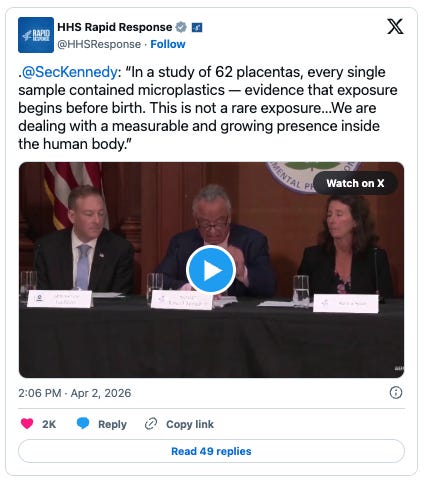
“We are not dealing with a distant or theoretical risk,” Kennedy said during the press conference. “We are dealing with a measurable and growing presence inside the human body.”
Kennedy said microplastics have also been found in the human placenta, providing “evidence that exposure begins before birth.”
While animal studies link microplastics to disease and human studies show correlations, scientists still lack definitive answers about their health effects.
One major challenge is measurement. Current techniques are inconsistent, making it difficult for researchers to determine how much plastic is present in the body and which types pose the greatest risk, according to ARPA-H Director Alicia Jackson.
“Microplastics are in every organ we look at … but we don’t know which ones are harmful or how to remove them.” Jackson said the field is still operating with significant unknowns.
Research also shows that people in the U.S. are often exposed to other toxicants in drinking water that the EPA is adding to the list.
For example, fluorinated pharmaceuticals, including medications such as Prozac and Flonase, have been identified in U.S. water supplies.
The drugs end up in water supplies after people excrete them into sewer systems. A host of drugs fed to livestock in industrial factory farms are discharged directly into rivers or groundwater.
Pharmaceutical factories also release drugs into water supplies.
The drugs, and the products they break down into, are classified as PFAS, or “forever chemicals,” which have increasingly been associated with a range of health concerns, including cancers, developmental delays and hormonal disruptions.
STOMP program will unfold in two phases
HHS said the STOMP program to research microplastics will include two phases.
During Phase 1 — measurement and mechanisms — researchers will develop standardized methods to detect and quantify microplastics in the body, including a clinical test to measure an individual’s “microplastic burden.”
The Centers for Disease Control and Prevention (CDC) will validate these methods to ensure consistency across labs.
Researchers will also attempt to classify different types of plastics based on their biological impact and create a system to rank risks. The system will guide future research and policy.
During Phase 2, scientists will build on the data from phase one to design targeted interventions to remove harmful microplastics from the human body. These approaches may draw on pharmaceutical and bioremediation techniques.
Officials said STOMP is designed not just for scientific discovery but for widespread public health improvement. The goal is to develop affordable, scalable tools that healthcare providers and public health agencies nationwide can use.
ARPA-H is encouraging multidisciplinary teams to propose research for program funding in the next month.
https://tdefender.substack.com/p/millions-of-americans-drink-water