
Curiosity Kills the Agenda
I remember a time in my long, eventful life when people were actually curious. Hardliners still existed, of course—quick to dismiss anything without ironclad proof—but it didn’t take divine intervention to get folks to at least peek at things from a different angle. People back then seemed more willing to entertain contrary evidence. If a long-standing belief came under fire, they might grumble or roll their eyes, but they’d often give it a fair hearing: read the piece, watch the film, or at least argue about it over dinner without immediately branding the conveyor of such contrariness a dangerous crank.
Take The Word as a prime example of different attitudes when I was a teenager. Irving Wallace’s 1972 novel (turned into a compelling 1978 CBS miniseries starring David Janssen) centers on the discovery of an ancient manuscript—an alleged lost gospel written by Jesus’ own brother James. This “Resurrection Two” document supposedly reveals previously unknown details about Christ’s life and challenges core pillars of the New Testament. A slick PR executive is hired to promote it as the foundation for a revolutionary new Bible, only to find himself caught in a whirlwind of controversy, institutional panic, and personal crisis of faith.
The story runs on the implicit assumption that if this evidence surfaced and held water, it could genuinely shake the foundations of Christianity—sparking worldwide debate, forcing institutions to adapt or crumble, and compelling millions to rethink what they held sacred. Viewers and readers in that era were invited to feel the gravity: “What if this is real? What if the truth actually got out?” Enough people still possessed the intellectual humility, or plain old curiosity, to at least entertain the possibility. They might not swallow it whole, but they’d engage. They’d debate. They’d wonder. Today, they wouldn’t even consider it.
That same spirit animated plenty of other stories from the era. In Capricorn One (1977), a faked Mars landing is exposed, revealing government and NASA collusion to maintain the illusion. The film bets that if the public saw the staged footage, the threats, and the human cost, trust in official narratives would erode and demand accountability. The China Syndrome (1979) dramatizes a corporate and regulatory cover-up of a nuclear plant near-meltdown; the clear message was that compelling evidence of wrongdoing would force real change. Even real-world parallels like All the President’s Men (1976) operated on the same faith in public curiosity—Watergate wasn’t just scandal; it was proof that persistent digging could topple a presidency because enough citizens still cared enough to pay attention.
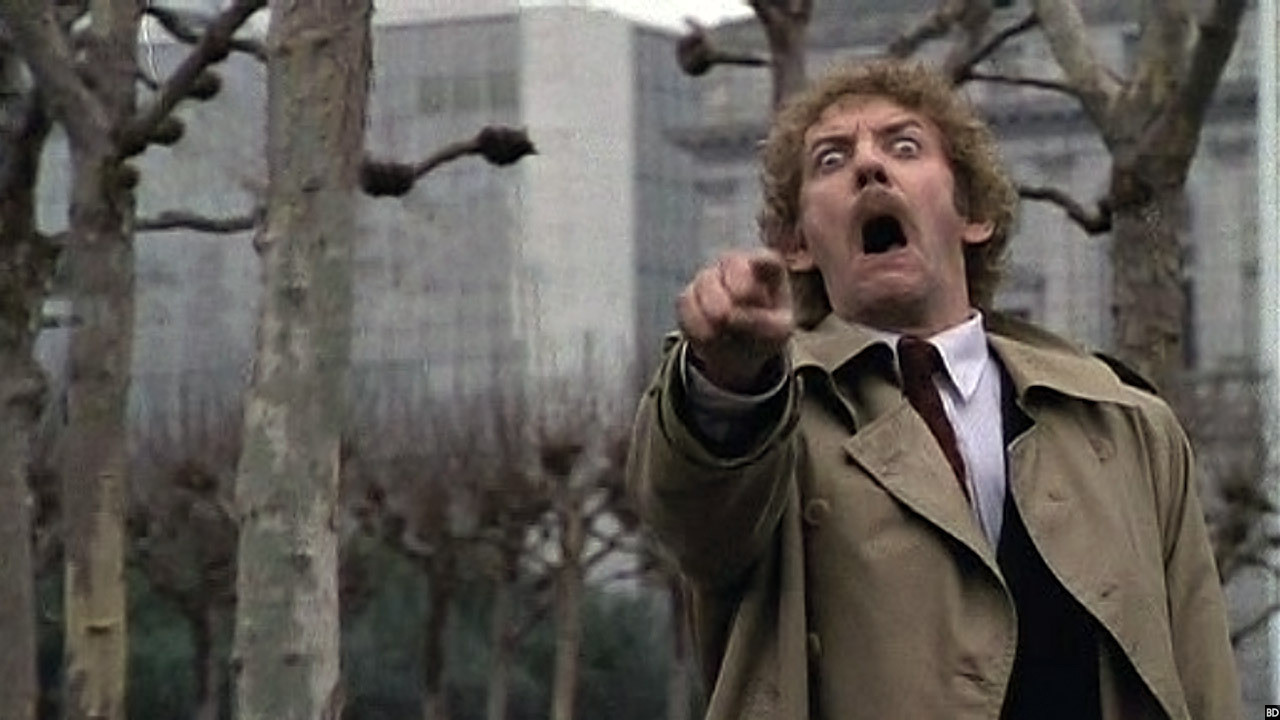
You could go further back with allegories like Invasion of the Body Snatchers (1956) or The Day the Earth Stood Still (1951), where hidden forces erode humanity or exert control from within. The unspoken pact with the audience was always: “If only people knew—if they saw the pods, heard the warnings, grasped the manipulation—they’d wake up and resist.” Filmmakers and authors bet on curiosity as a spark. They believed (or at least hoped) that truth, backed by evidence, had the power to shift minds, challenge power, and alter the course of events.
I’m not saying everyone back in the ‘70s or ‘80s was a wide-eyed truth-seeker. Remember the famous “Bat Boy”? That grotesque, pointy-eared, fanged half-human, half-bat creature “discovered” in a West Virginia cave and splashed across the front page of the Weekly World News in 1992? The tabloid ran with the story for years—Bat Boy escaping, being captured, helping the government, running for president, you name it. It became a pop-culture phenomenon, selling nearly a million copies on its debut and inspiring an Off-Broadway musical and Halloween masks. Or the endless Bigfoot sightings in the Pacific Northwest and the blurry photos of the Loch Ness Monster gliding through Scottish waters. Most people saw the untruths (or at least the exaggerations) in most of these tales—although even today, I believe there could be a kernel of truth in some of them! Plenty clung to their certainties then, too. But there was breathing room. A willingness to at least look. “Bat Boy” and Bigfoot were very popular! People did question, they were sometimes awestruck, and most were genuinely curious. They might chuckle at the absurdity while still wondering, “What if . . . ?”
Today, that space has collapsed. The machine doesn’t need to hide the evidence as desperately—it just needs to ensure that when it surfaces, no one bothers to examine it. Truth could slap people square in the face—complete with documents, whistleblowers, leaked data, and irrefutable patterns—and the response is often a shrug, a scoff, or an immediate pivot to the approved narrative. “That’s just conspiracy stuff.” “Misinformation.” “I trust the experts.” The curiosity that once fueled debate has been replaced by a reflexive dismissal. Evidence? Brushed off. Contradictory studies? Ignored or memory-holed. Personal testimony from those who’ve seen behind the curtain? Dismissed as anecdotal or tainted.
Why the shift? Part of it is the slow boil we’ve all been simmering in—the normalization of control, the weaponization of “trust the science” into dogma, the flood of information that paradoxically makes real inquiry feel futile. But deeper down, it’s a death of wonder. When curiosity dies, the agenda thrives. No need for heavy-handed censorship when people police their own thoughts and label anything uncomfortable as dangerous. The shrew’s piercing gaze gets called paranoia; the sheep’s blind graze gets called prudence.
Curiosity, it turns out, is lethal to the agenda. Because without it, even the most explosive truths will fizzle out, unnoticed, while the pot keeps boiling.
Obviously, this is all a huge problem. It is deeper than you think as well. The death of curiosity is fundamentally the death of the human in material form—without it, there isn’t much point in being a human. Everything dies then: creativity dies, all genuine advancements in technology and medicine die (which may not be a bad idea in our current technocratic fever dream), even love dies. Certainly meaning and purpose die. We would be living a life of dull, compliant repetition—breathing, consuming, obeying, and slowly dissolving into the gray uniformity of a managed existence, more automaton than soul.
From the agenda’s point of view there couldn’t be anything better. Without curiosity, we fall straight into the hands of the evil doers. If we question nothing, we become perfect livestock: docile, predictable, and endlessly exploitable. No awkward rebellions, no dangerous “what ifs,” no inconvenient searches for truth. Just obedient sheep grazing contentedly while the shepherds lead us exactly where they want—toward whatever shiny new control grid or biosecurity utopia they’ve cooked up next.
Our only real weapon against this slow-motion burial of the human spirit is to keep that spark alive in ourselves and, wherever possible, fan it in others. Poke, prod, question, wonder—even when it feels futile. Because once curiosity is truly extinct, the game is over.
Stay curious. It’s the last truly subversive act we have left.