
The People That Shall Be Named
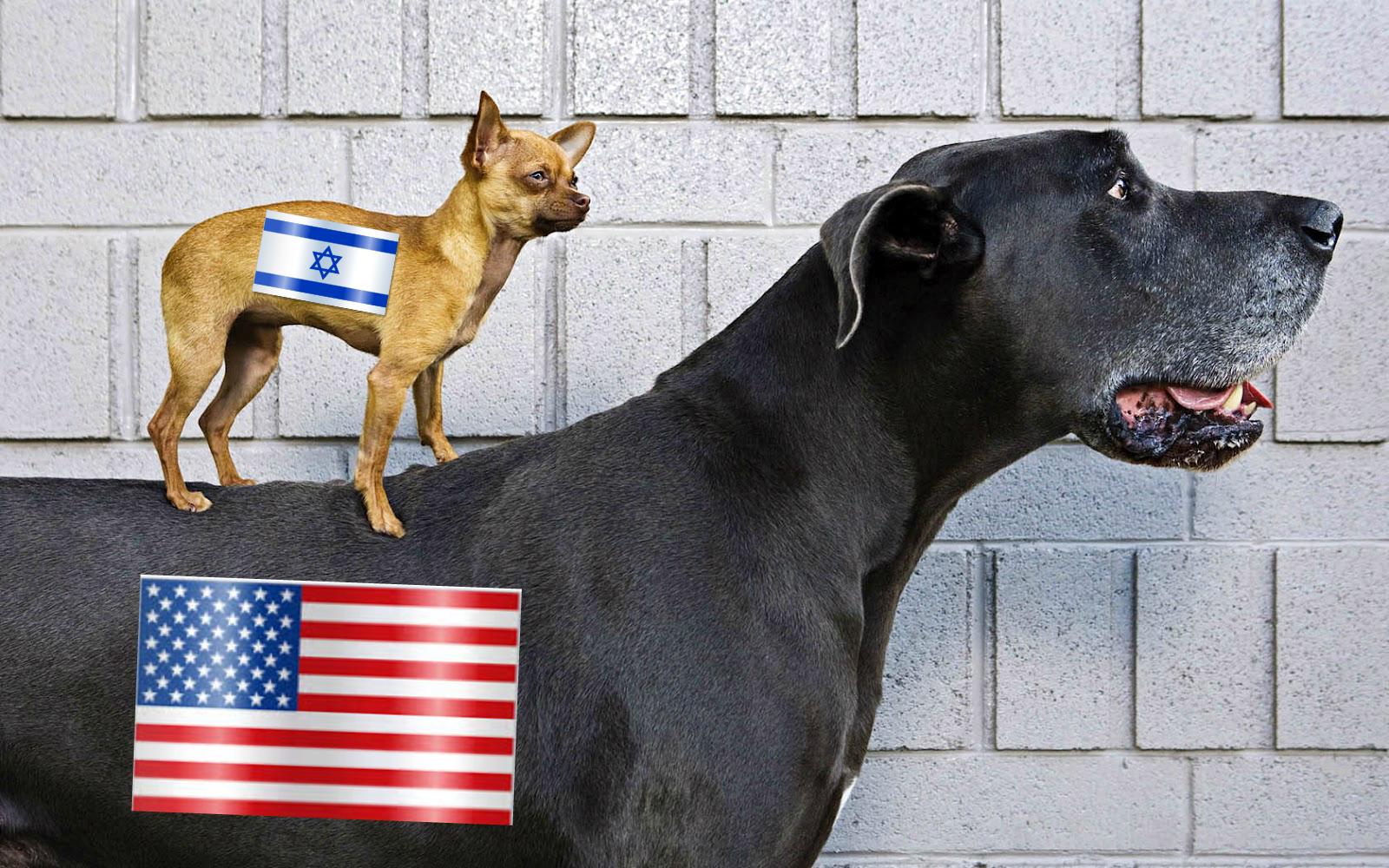
I recently watched an interview with John Mearsheimer discussing the Iran War in which he expressed his concern that the Jewish people, rather than merely the “Zionist Lobby”, will be blamed for the debacle. Mearsheimer’s now-famous book, The Lobby, detailed the extent and political power of Israeli-aligned power players in shaping American foreign policy objectives, and their sprawling network of censors and incentives to ensure that everyone stays in line and doesn’t ask too many questions.
Those questions are certainly being asked now. As I noted to Millennial Woes recently, we seem like squishy moderates on the issue compared to what people with far greater platforms than ours routinely say.
When I first began consuming content on the “JQ” around 2013, YouTube was a far freer, less restricted place, though actual white nationalist content didn’t amount to much more than perhaps two podcasts and five articles a week. William Luther Pierce’s monologues, mash-ups of Hitler speeches and documentaries questioning events in World War II, were commonplace. A documentary on the history of Hollywood and the content of the movie industry, called An Empire of Their Own, made an impression on me, as did Kevin MacDonald’s Culture of Critique.
There was a sense, to me at least, of taboos being broken, of forbidden knowledge being revealed, a sort of enlightenment. The obvious double standard of David Aaronovitch espousing the multicultural line for the native British while writing for his own people in The Jewish Chronicle rankled intensely. The pattern repeated itself before my eyes again and again.
Aaronovitch had the ability to air his views in both the Jewish press and ours. We (meaning the native British) were, in fact, disallowed from having any exclusive, in-group-centred media whatsoever, and Aaronovitch would be among the first to demand that we never should have.
To me, this state of affairs seemed grossly unjust and hypocritical, yet I found the pattern repeating itself all across the political and media spectrum.
In my private life, among family, friends and workmates, I found that people shied away whenever I tried to broach the subject. Usually, there was simply a blank stare; others would ask why I cared or if I was a Nazi now. Today, this behaviour would be flagged up as me having been “radicalised”. Yet, the fact remained that what I was observing with my own eyes was not being explained, regardless of social stigmas.
The general consensus was that such matters are awkward to talk about because of World War II. I remember walking along a beach with my dad and bringing up the subject, to which he replied, “It always seems to come back to them…” though I was never sure whether he was acknowledging its truth or commenting that I had been captured by some far-right ideology.
From my perspective, I was noticing a pattern of human behaviour that affected the material world, and almost nobody else could see it, or if they did, they refused to discuss it. The Pavlovian response instilled in people wasn’t enough to contradict what was clearly observable, yet it remained relatively solid regardless.
Of course, the “noticing” of these intra-group dynamics has exploded in recent years across the Internet and then leaked out into meat-space. Yet, it is not entirely related to the Zionist project writ large; if anything, it is more incendiary because it implies inherent group characteristics which are anathema to modern liberalism. It smacks of an anti-intellectual, peasant-tier antisemitism, low status, and ill-educated.
Alternatively, to be anti-Zionist has become a marker of high-status, left-leaning liberal values, and few have done more to mainstream this view and lend it respectability than John Mearsheimer. The problem that he sees on the horizon is that these two strands of discourse merge into antisemitism across the spectrum, like two pincers closing.
Nothing less than America’s newspaper of record, The New York Times, recently carried an article detailing the behind-the-scenes action that led up to the Iran War. In it, they write:
Mr. Netanyahu and his team outlined conditions they portrayed as pointing to near-certain victory: Iran’s ballistic missile program could be destroyed in a few weeks. The regime would be so weakened that it could not choke off the Strait of Hormuz, and the likelihood that Iran would land blows against U.S. interests in neighboring countries was assessed as minimal.
Besides, Mossad’s intelligence indicated that street protests inside Iran would begin again and — with the impetus of the Israeli spy agency helping to foment riots and rebellion — an intense bombing campaign could foster the conditions for the Iranian opposition to overthrow the regime. The Israelis also raised the prospect of Iranian Kurdish fighters crossing the border from Iraq to open a ground front in the northwest, further stretching the regime’s forces and accelerating its collapse.
Mr. Netanyahu delivered his presentation in a confident monotone. It seemed to land well with the most important person in the room, the American president.
The picture being painted here is one in which the American President is trapped within an information bubble tightly controlled by Zionists and Israeli intelligence. However, it is important to point out that Trump himself was more than eager to begin the operation against Iran.
Given that the strategies highlighted and then deployed against Iran have completely failed to meet a single stated objective, and that the world economy and energy supply chains now teeter on the edge of the abyss, sooner or later, the blame game will begin.
Why, exactly, is America in this debacle? The answer, online and offline, is increasingly “because of Israel”. However, with that come numerous connotations and implications, all of which are uncomfortable for the post-war consensus. How is it, for example, that the degrees of manipulation and corruption that brought about this disaster remained unchecked and uncurtailed for so long? It is, to be blunt, the very Pavlovian responses baked into the social mores of the West for decades. It is because to ask questions was to be slandered as an antisemite, as sick, as a Nazi.
Thus, what is usually perceived to be mainline antisemitism is always going to be downstream from opposition to the bloody, expansionist policies of the Israeli state because it requires breaking through the dominant cultural Third Rail.
As the anti-Zionist sentiment surges across the world, it is interesting and accurate to point out here that many of the loudest voices on the podcast and blogging circuit opposed to Israel are indeed Jewish. On panels shows watched by millions, Gentiles critical of AIPAC’s corruption and Israel routinely roll their eyes at allegations of antisemitism. Tucker Carlson won the antisemite of the year award and simply brushed it off. How then do Max Blumenthal or Jeffrey Sachs view this increasing indifference to the magic phrase?
Or, to put it another way, when does the heat begin to burn? What happens when the masses currently cheering on Iranian missiles are cheering, not because they want to see Zionism defeated, but because they want to see Jews being bombed? And have we already crossed that threshold?
I would say, yes.
https://www.morgothsreview.com/p/the-people-that-shall-be-named