
Has Hungary Gone Liberal?

As the MSM rejoices in the defeat of Viktor Orban, here’s an outline of what really happened in the Hungarian election.
Liberals the world over are rejoicing at the fall of Hungary’s Viktor Orban. They think Hungarians have voted out the ‘far-right’ and lurched to the left. Fortunately, this simply isn’t true. The country’s new Prime Minister may indeed be a Brussels puppet, but the people who voted for him are not.
They voted against the corruption which Orban (who several Hungarian friends have long told me has some gypsy ancestry) allowed to fester, and in disgust at a paedophile scandal against which Orban took action too late. The socialists and liberals stood down so that their voters would support the newcomer Peter Magyar and his Tisza party, but that doesn’t make the winner a leftist.
Truth is, no-one knows what Tisza is, other than a protest vehicle. Its leader beat Orban to the women’s vote simply by being much younger and better looking. He isn’t closely identified with Donald Trump, who has now become a giant orange albatross for politicians to whom he once lent a cachet of vicarious credibility. Magyar was helped too in various ways by the European Union’s long feud with Orban, but – to confound the liberal analysis – also won a lot of votes by taking a harder position against illegal immigration than the incumbent.
The turn-around was encouraged by the fact that Hungary has for some time been in the economic doldrums. That hasn’t been solely Orban’s fault. The country’s economic fortunes are closely linked to Austria, Germany and the rest of the EU, and the energy-suicide-by-Russia which Washington and Brussels have forced on the whole bloc has hit Hungary, despite Orban’s valiant efforts to make a stand for common sense and a decent relationship with Moscow.
Hungarians seem to have been prepared to turn a blind eye to the corruption within Fidesz while the country was doing quite well economically, but to see government cronies raking it in while most people were suffering hard times proved a very different matter.
Liberal commentators have made much of the fact that Tisza MEPs have supported the EU’s Migration Pact, complete with penalties for countries which refuse their quota of ‘refugees’. But this doesn’t put them in the liberal camp any more (or less) than Giorgia Meloni. The Italian PM has pushed Brussels to a much more migration-sceptic position than before and, having done so, is co-operating with the EU plan.
As I have noted before, Meloni’s position is against illegal migration and Muslims, but all for legal migration and Hindus. Much the same as Nigel Farage. Perhaps significantly, Magyar, like Farage and Meloni, is a fanatical free-trader. Like Maggie Thatcher before them, all these populists are laissez-faire, 19th century, classical liberals when it comes to economics.
Their sort of ultra-capitalist economics demands a constant inflow of cheap labour and plenty of young consumers. So, while they rail (and may even, to be fair, act against) illegal immigration and may be suspicious of large numbers of Muslims, they are all in favour of continued economic immigration from places like India.
But large numbers of Hungarian voters don’t know that. Like the millions of naïve Brits still planning on voting Reform next month and handing Nigel the keys to Number 10 in 2029, they heard the Tisza leader accusing Orban of letting in too many illegals and think that means that the new populist will do a better job than the old populist in keeping Hungary Hungarian.
Tisza also studiously avoided taking foreign policy positions which might cost votes. Magyar condemned alleged Russian interference in Hungarian politics (a surefire winner as the country approaches the 70th anniversary of the brutal Soviet suppression of the Budapest Revolution) and said that Ukrainian sovereignty should be maintained. But he has also said that Hungary should be pragmatic and have good relations and economic links with Russia. He is firmly in support of Orban’s agreement with Russia to expand Hungary’s Paks nuclear plant, citing the need for energy security.
Tisza has likewise stayed very quiet about the situation in Gaza and the Iran War. Orban’s close identification with Israel, and the ever-increasing number of Jews moving to and buying property in Budapest grated against the country’s old tradition of “antisemitism”, which was heavily topped up by the disproportionate number of Jewish Bolsheviks in the still oft-remembered and hated tyranny before and after the heroic rising of October 1956.
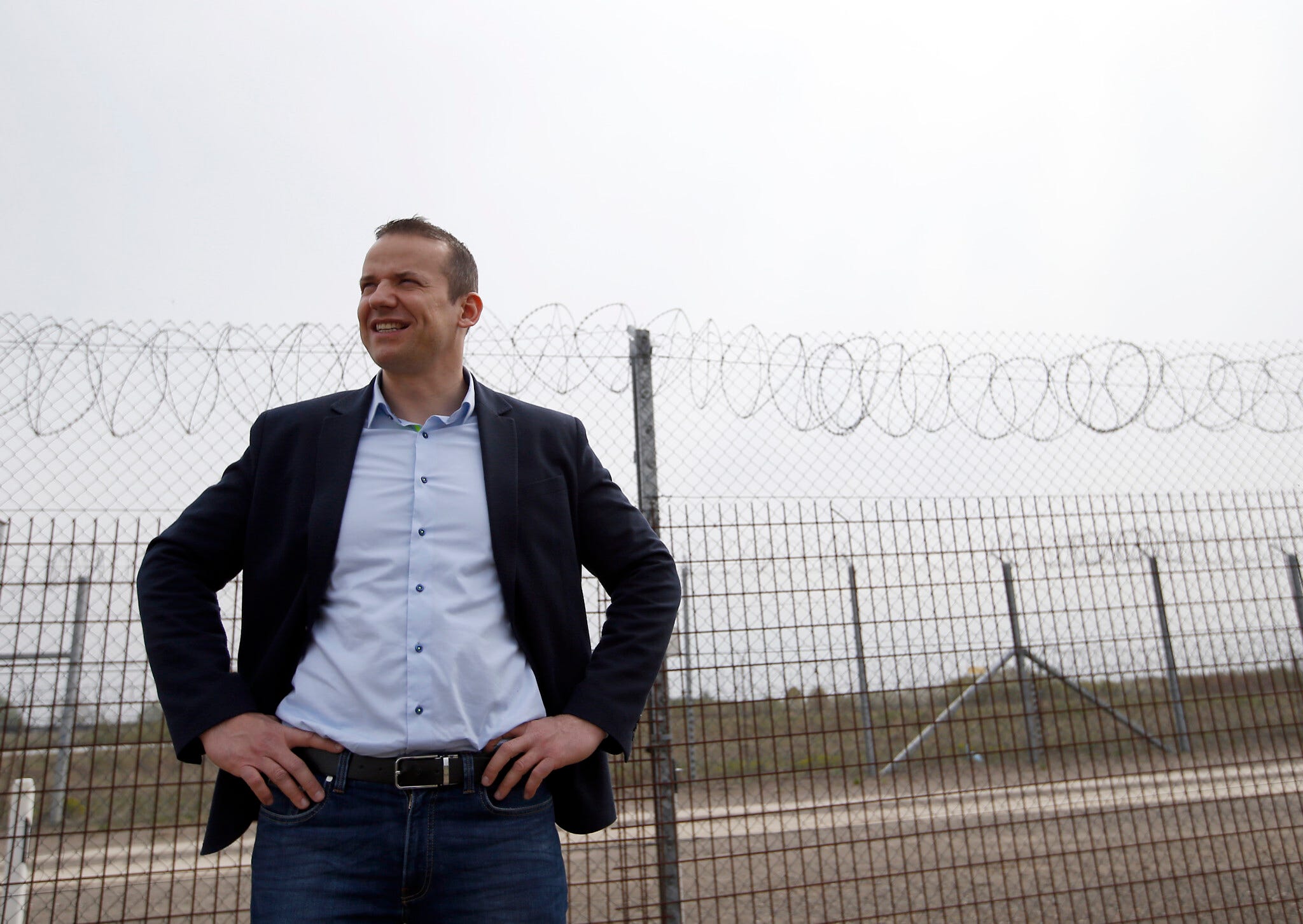
This probably influenced the near 6% who voted for Laszlo Toroczkai’s very openly ethno-nationalist and anti-Zionist party, Our Homeland. The talented young leader is a proper, principled nationalist. He insists that, as well as walls and immigration bans, the best way to keep Hungary and Europe safe from mass Third World immigration is to look for mutually beneficial ways to help Africa and Asia develop economically. Cut off the ‘push’ factor as well as the ‘pull’, he argues – logic which also informs his position against Zionist and US aggression against Muslim nations.
Laszlo has also criticised Orban’s natalist policies as insufficient and cack-handed, which is a fair summary. Full marks to Fidesz for trying, but their emphasis on keeping women in the drudgery of employment has done more to show how creating a sustained increased in the birth rate, while absolutely vital, requires a total change in culture rather than just having money thrown at the problem.
While the new Hungarian parliament does not contain any socialist or liberal party, Our Homeland now has six seats – and a springboard for the future if Tisza fail.
Thus, there is absolutely no basis for the Western liberal claim that Hungary has lurched to the left and rejected nationalist ideas. It has rejected Orban but, judging by the stance taken by Tisza during the election, it has not rejected Orbanism. The vote was a rebuke against corruption, not a demand for a radical change of direction.
Magyar certainly has a better relationship with Brussels and, having won power, he might indeed now move the country rapidly towards liberalism. Certainly, the LGBTQ lobby groups whose Open Society funding Orban tried to cut are hopeful that the incomer will be ‘gay-friendly’.
But gay-friendly, anti-Muslim, libertarian populism is by no means a comfy long-term bed-fellow for the liberal-leftists who rule the roost in Brussels. Meloni, Wilders, Le Pen, Vox, the AfD’s lesbian and Farage may yet emerge as the political tendency which just found themselves a new ally in central Europe, and their brand has rising appeal in other countries too.
The world’s richest man has declared war on the European Union, and he too is a libertarian capitalist. The liberals wished to be rid of Orban, and now they have got their wish. They may, however, find only a lesson that a wish granted often turns out to be a curse.
Especially as Tisza is doomed to be in charge as Hungary is hit by the global economic storm being unleashed by the gigantic demand destruction event in the Gulf. Whatever else the enigmatic Peter Magyar turns out to be (and my Hungarian nationalist friends say that he comes from a Communist family, betrayed his former boss Orban and that his wife – a former Fidesz minister – has also worked with Brussels to destabilise the Orban government) he is going to become a huge disappointment to voters who thought he might be a safe pair of economic hands.
Having led his party to electoral disaster, the ageing Orban is hardly going to make a comeback, so his party is likely to be hit by a debilitating bout of infighting over who is to replace him. Laszlo Toroczkai, by contrast, is firmly in control and has the sort of no-nonsense, principled nationalist programme which such times tend to favour. Reports of the death of Hungarian nationalism now being touted by assorted ill-informed Western media outlets are much exaggerated.
https://nickgriffin544956.substack.com/p/has-hungary-gone-liberal