
Markets May Prematurely Celebrate, But the Next Phase Likely Will Be More, Bigger War
We are entering upon a new stage to this war on Iran. It may not be what many expect (especially in financial markets). Yesterday Trump said inter alia that Hormuz was open and that Iran had agreed never to close Hormuz again; that Iran, with the help of the US, has removed, or is removing, all sea mines, and that US and Iran would work together to extract Iran’s highly enriched uranium (HEU). Trump wrote:
“We’re going to get it together. We’re going to go in with Iran, at a nice leisurely pace, and go down and start excavating with big machinery … We’ll bring it back to the United States very soon”.
The President said earlier on Friday that Iran had agreed to hand over Iran’s HEU stockpile.
None of these claims were true. Either Trump was confabulating (holding to fantasies, albeit believing them to be true); or he was manipulating markets. If the latter — it was a success. Oil fell and markets soared. Reportedly, 20 minutes before the claim that the Strait of Hormuz was open and would never close again, a $760 million short on oil was placed … Someone ‘made a pile’.
All this turbulence created much confusion. Trump also said a new round of talks and an likely agreement with Iran would happen very soon — even during this weekend. The likelihood of talks is false. Iran’s Tasnim News Agency reports that “the American side has been informed via the Pakistani mediator that we [Iran] do not agree to a second round [of talks]”.
From the beginning of the mooted Pakistani-mediated ceasefire, Iran was supposed to allow the daily passage of a limited number of ships. However, this was always subject to Iranian conditions for transit passage.
The net result of Trump’s manipulations has been to make Iran re-assert its existing conditions on Hormuz, on its stocks of HEU, and on its ‘right to enrich’ in tighter, less flexible definition.
The Islamabad talks had already showed Iran that its 10-point framework — initially affirmed by Trump to form a “workable basis” for beginning of direct negotiations with Iran — was no such thing. The Iranian framework was brushed aside towards the end of the day, as the US pivoted to its key touchstones for its intended victory roll: Iran abandoning uranium enrichment in perpetuity; relinquishing to the US its stock of 430kg of 60% enriched uranium, and the opening of Hormuz — free of tolls.
In short, the US position was simply a continuation of Israel’s long-established demands. The added experience of Friday’s US deceit will only have served to confirm Iran’s conviction to be continually on their guard and to view the contrived confusion as a possible US diversion from planned military escalation.
Iran, in refusing these key demands, triggered the US’ sudden, end of day, pulling of the plug on Islamabad, and thus pointed up the pivotal context behind the US ‘walk out’: Netanyahu was frustrated. Very frustrated.
“As [Netanyahu] tells it, ‘the media’, that convenient all-purpose ‘villain’, has managed to cement the narrative that Israel lost the [Iran] war”, Ravit Hecht has written in Haaretz:
“Not many people understand the power of short, sharp and unequivocal messaging – better than Netanyahu … With time running short and his international standing eroding – Netanyahu is desperate to deliver at least one unequivocal success story from the ambitious goals he proclaimed in the first week of the war – when hubris and adrenaline still seeped into every government briefing”.
“Regime change in Tehran? No longer on the table. The vague goal of “creating conditions” for such a change has evaporated. Ending Iran’s ballistic missile program now seems wildly unrealistic; Netanyahu’s ministers acknowledge that as well. As for Iran’s network of regional proxies, its influence may become subtler, but few believe it can be dismantled altogether”.
“That leaves one card still in play: uranium”.
“Netanyahu’s circle hopes that, as in past crises, mounting pressure might compel Iran to export its enriched uranium stockpile. Netanyahu is staking everything on that outcome – or, on the possibility that renewed war could still destabilise the regime”.
This is why Vice-President Vance — who was almost hourly taking instruction from the White House or Tel Aviv — wound up the talks prematurely. A short sharp victory messaging on which Netanyahu’s future clearly depends was not about to emerge from the talks.
US Constitutional US lawyer, Robert Barnes (who is a friend of Vance), reports in an interview that:
“Trump began exhibiting signs of early dementia in September 2025 … He frequently confabulates, he routinely loses his temper and unleashes screaming rants and he is incapable of doing critical thinking. And – according to Barnes, in this state – Trump genuinely believes that the US has vanquished Iran and does not comprehend the massive economic damage that the closure of the Strait of Hormuz is doing to the global economy”.
In short, Barnes says that Trump’s delirium that Iran is at the point of capitulation reflects his impaired mental state — an impairment of understanding ‘reality’ (a panglossian interpretation that Secretary Pete Hegseth does his best to reinforce).
Like Netanyahu, Trump likely believes too, that pressure and more pressure on Iran could yield the triumphant Victory trophy of (figuratively) waving aloft 430 Kg of enriched uranium — either compelled to be given up by economic pressure, or alternatively dramatically seized on the ground by US forces.
In the face of this crisis at the heart of the White House, Vice-President Vance reportedly (Barnes again) has been working feverishly behind the scenes to arrange a new meeting with Iran in Islamabad – despite the political process being deliberately impaired through massive Israeli air and ground attacks in Lebanon killing and injuring up to 1,000 persons (almost all civilians) during the ceasefire negotiations, as well as continued attacks since Trump supposedly “prohibited” Israel from attacking Lebanon at the start of the Lebanon ceasefire two days ago.
However, after much toing-and-froing by Pakistan, with messages flowing in many directions, “last night, an Iranian military official said that Tehran had issued a final ultimatum to the US that Iran was within an hour of starting a military operation and missiles strikes on Israeli forces attacking Lebanon, which [finally] forced Trump to declare a ceasefire in Lebanon”, albeit to great anger in Israel. Israeli officials were livid, complaining that they were only informed post hoc.
It is not at all clear whether Israel will abide by it (they have already violated the ceasefire). Netanyahu, all Israel’s opposition leaders and a large majority of the Israeli public are untied in their desire for continued war.
The Islamabad talks failed firstly, because the gaps between the two sides were unbridgeable in a single session; and secondly, because the parties held different, and contradictory visions of the ground reality. The US, seemingly entered negotiations from the ‘hypothesis’ that the other party already was militarily destroyed and desperate.
Iran, by contrast, entered the talks with the conviction that it had emerged stronger than after the 12-day war. In their reading, this meant that the effect of the control of Hormuz and the Red Sea had not yet reached the stage at which the balance of pain could be said to be decisively in Iran’s favour — and certainly had not reached the point at which significant concessions from Iran might be appropriate.
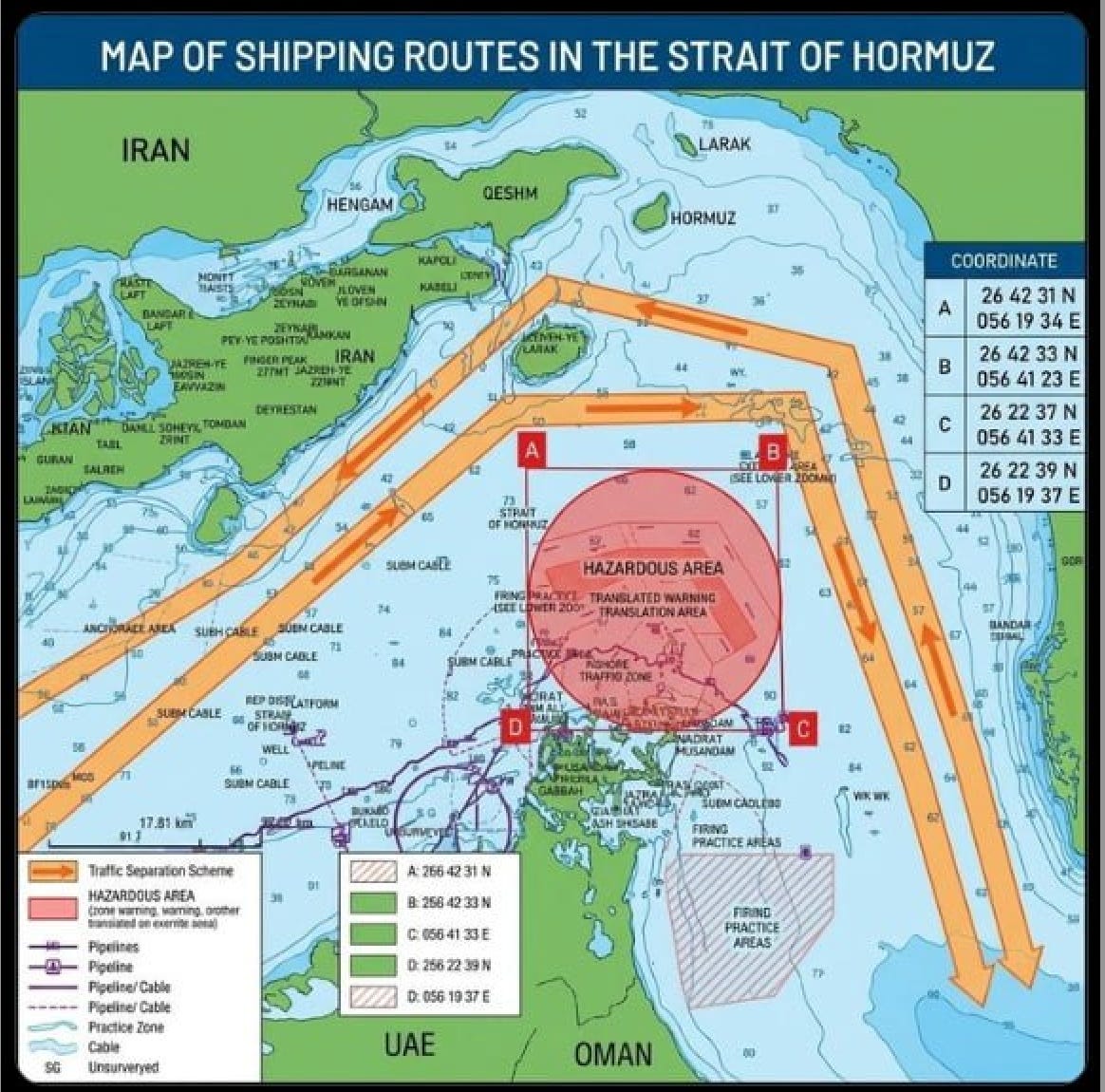
Source: Ebrahim Mazizi, Head of Iranian Parliament’s National Security Commission
What is likely to be the next stage? Well — more war. Bigger kinetic war with the focus likely to be on another massive series of missile strikes on mostly Iran’s civil infrastructure (since the Israeli/US target bank was never intended to outlast a few days of strikes).
On 14 April, Russia’s Security Council warned that “ceasefire negotiations could be a cover used by Washington to prepare for a ground war [too] … The United States and Israel can use the peace talks to prepare for a ground operation against Iran, as the Pentagon continues to increase US troop numbers in the region”.
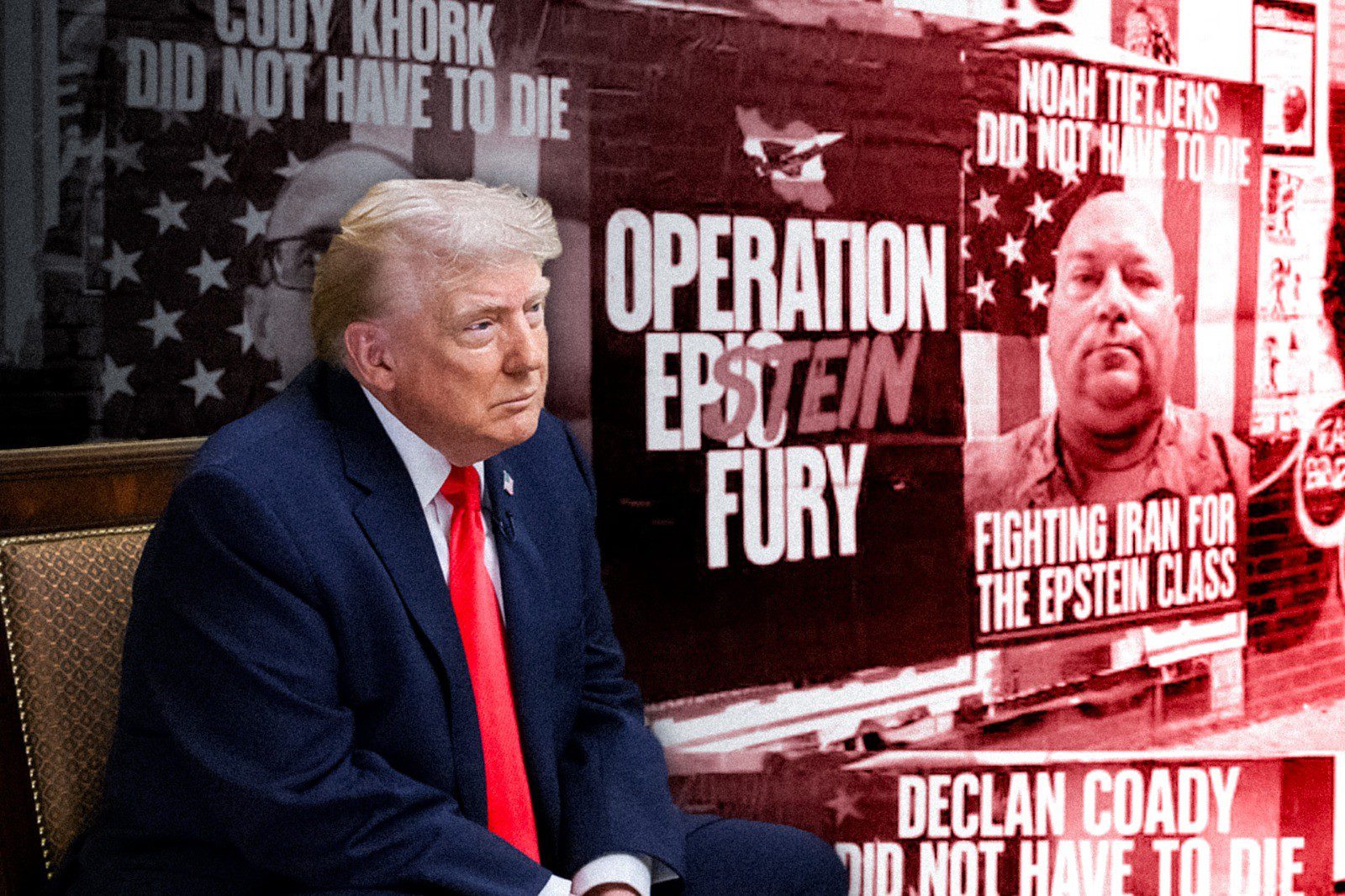
Trump has now added a new front, intended to further maximize economic pain on Iran via sanctions and blockades. China is the primary target because, as Treasury Secretary Scott Bessent avers, China has been Iran’s biggest customer for discounted oil. Bessent claims the new dimension to be the financial equivalent to the earlier US/Israeli kinetic (military) strikes on Iran. He called it part of “Operation Economic Fury” — aimed at cutting off Iran’s revenue streams, especially from illicit oil sales and smuggling networks.
Bessent also said that the US would impose secondary sanctions on any countries, companies, or financial institutions that continue buying Iranian oil or that allow Iranian money to flow through their accounts. He described this as a “very stern measure”. Bessent explicitly warned that if Iranian funds are proven to be moving through any bank’s accounts, the US will apply secondary sanctions.
If this announcement is intended to coerce China into strong-arming Iran to capitulate to Israel and the US, then it constitutes an egregious misreading of the ground in both Iran and China. It will likely backfire on Trump.
This will constitute another economic front in the war — and extend the economic war to a global level.
Is it likely that China and Russia will not understand this statement as anything other than another a US attempt (after the Venezuela blockade) to squeeze China’s energy supply lines. Hormuz still remains open to Chinese vessels. Trump’s blockade attempt was the initial squeeze — and now he threatens to sanction Chinese banks and trade.
Trump’s tariff war will be seen in retrospect to be peanuts to the threatened strike on China’s supply lines.
https://conflictsforum.substack.com/p/markets-prematurely-may-celebrate