
The Strait of Hormuz is Closed Again. . . Iran is Serious
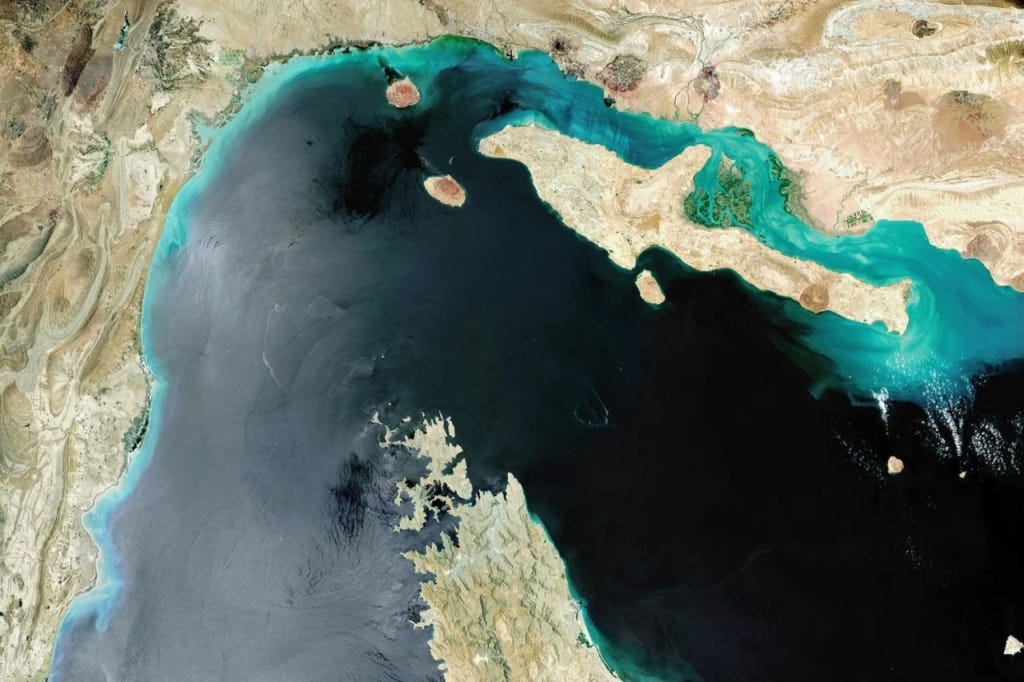
The two images above show the Strait of Hormuz when it was partially opened and now, when it is closed. For a brief moment on Friday, 17 April 2026, Donald Trump told a partial truth… The Strait of Hormuz was open for business, but only for ships that coordinated with and were approved by the Iranian Revolutionary Guard Corps. That all came to a sudden end on Saturday, 18 April, following Donald Trump inflammatory statements about blockading all Iranian ports. Iran made it clear to JD Vance during the final hours of their last meeting in Islamabad that Iran’s 10-point plan is non-negotiable.
The disruption of the global supply chain caused by Iran’s blockade is not fully grasped by most people. I liken it to radiation sickness… Assume that someone survives the blast of an atomic bomb but is bombarded with radiation. It may take days or weeks for the lethal effects to cause harm to the victim. In this case, the victim is the global economic, financial and industrial system. It will take months (for partial oil recovery) to several years (for full LNG, urea, and helium normalization) for Persian Gulf exports to return to pre-war levels. This is due to a combination of physical destruction, logistical bottlenecks, security risks, and policy overhang from the 2026 Iran war (February–April 2026). Let’s review the factors that will prevent an immediate return to the exports levels that existed on 27 February.
Extensive Physical Damage to Critical Infrastructure
- U.S./Israeli strikes and Iranian counter-attacks hit refineries, storage tanks, pipelines, oil/gas fields, and processing plants across at least nine Persian Gulf countries.
- The most severe damage occurred at Qatar’s Ras Laffan Industrial City (the world’s largest LNG hub). Iranian missile strikes in March 2026 knocked out 17% of Qatar’s LNG export capacity (12.8 million tons per year). QatarEnergy’s CEO stated repairs will take 3–5 years, partly because key components (e.g., turbines) are highly specialized and hard to replace quickly.
- This single facility also produces much of the region’s helium (a byproduct of natural gas processing) and affects urea/ammonia output.
Slow Demining and Security Verification in the Strait of Hormuz
- Iran laid extensive sea mines during the conflict. Even with US-assisted removal underway, professional mine countermeasures are inherently slow and require repeated sweeps for safety.
- As of April 18–19, 2026, shipping traffic remains minimal despite Iran’s “open” declaration. Major shipowners (including BIMCO and Norwegian associations) are still demanding proof of cleared routes, Iranian compliance, and reduced risks before committing vessels.
Insurance, Risk Premiums, and Shipping Logistics
- War-risk insurance premiums exploded (from ~0.125% to 0.2–0.4% of hull value per transit). Many insurers canceled Gulf coverage entirely during the height of the crisis.
- Tankers and crews were scattered globally; rerouting around Africa became standard. Rebuilding confidence, renegotiating contracts, and recalling experienced crews takes months.
Commodity-Specific Timelines
- Oil: Some wells can restart in days/weeks, but full Gulf system recovery (damaged fields + logistics) will take several months to 1–2 years.
- LNG: Dominated by Qatar; 3–5 years for full Ras Laffan repairs.
- Urea (fertilizer): Tied to natural gas feedstock; Gulf supplies ~45–46% of global seaborne urea. Restart + shipping delays mean months of tight supply.
- Helium: Qatar supplies ~30–33% of global production. Damage to Ras Laffan means 3–5+ years offline.
Global Economic Effects of the Supply Cutoff
The cutoff (peaking at ~20% of world oil, ~20% of LNG, plus major shares of urea and helium) created the largest supply shock in modern energy history and is rippling far beyond fuel prices.
- Energy Inflation & Stagflation Risk: Oil prices surged (Brent briefly over $120/bbl); LNG prices in Asia jumped >140%. Higher costs for transportation, electricity, and manufacturing feed into broader inflation while slowing growth.
- Food Price Spike via Urea Shortage: Gulf region supplies ~20–46% of global traded fertilizers. Shortages already forced plant shutdowns in India, Bangladesh, and Pakistan. Farmers in import-dependent countries (India, Brazil, parts of Africa) face reduced planting or higher costs → higher global food prices in 2026–2027.
- Tech & Healthcare Disruptions via Helium: Critical for semiconductor manufacturing (chip cooling/fabrication), MRI scanners (superconducting magnets), fiber optics, welding, and aerospace. Shortages are already hitting supply chains; healthcare delays and chip production slowdowns are expected for years.
- Broader Impacts: Supply-chain chaos, higher consumer prices (gasoline, groceries, medical procedures), reduced GDP growth in Asia/Europe (most exposed), and potential recessionary pressure in vulnerable economies. Even the US feels indirect effects through global commodity markets despite lower direct dependence.
In short, even if the US meets Iran’s demands and the Strait of Hormuz is opened for regular business on Monday, 20 April, the combination of war damage (especially at Ras Laffan), lingering security/insurance fears, and policy overhang means full export normalization is a multi-quarter to multi-year process—not a quick switch. The outlook for the global economy is not good, and will worsen the longer this war goes on.
https://larrycjohnson.substack.com/p/the-strait-of-hormuz-is-closed-again