
Will Maine Become First State to Block Data Centers?
Maine could become the first state to pause the rapid expansion of AI data centers, after lawmakers approved a bill freezing new construction through 2027.
Maine legislators on Tuesday passed a bill that would make the state the first in the nation to impose a moratorium on the construction of artificial intelligence (AI) data centers.
It is unclear whether Democratic Gov. Janet Mills, who is in a closely watched primary race for a U.S. Senate seat, will sign the legislation, despite public pressure. Mills has 10 days after the vote to veto the legislation, sign it into law or allow it to become law without signing it.
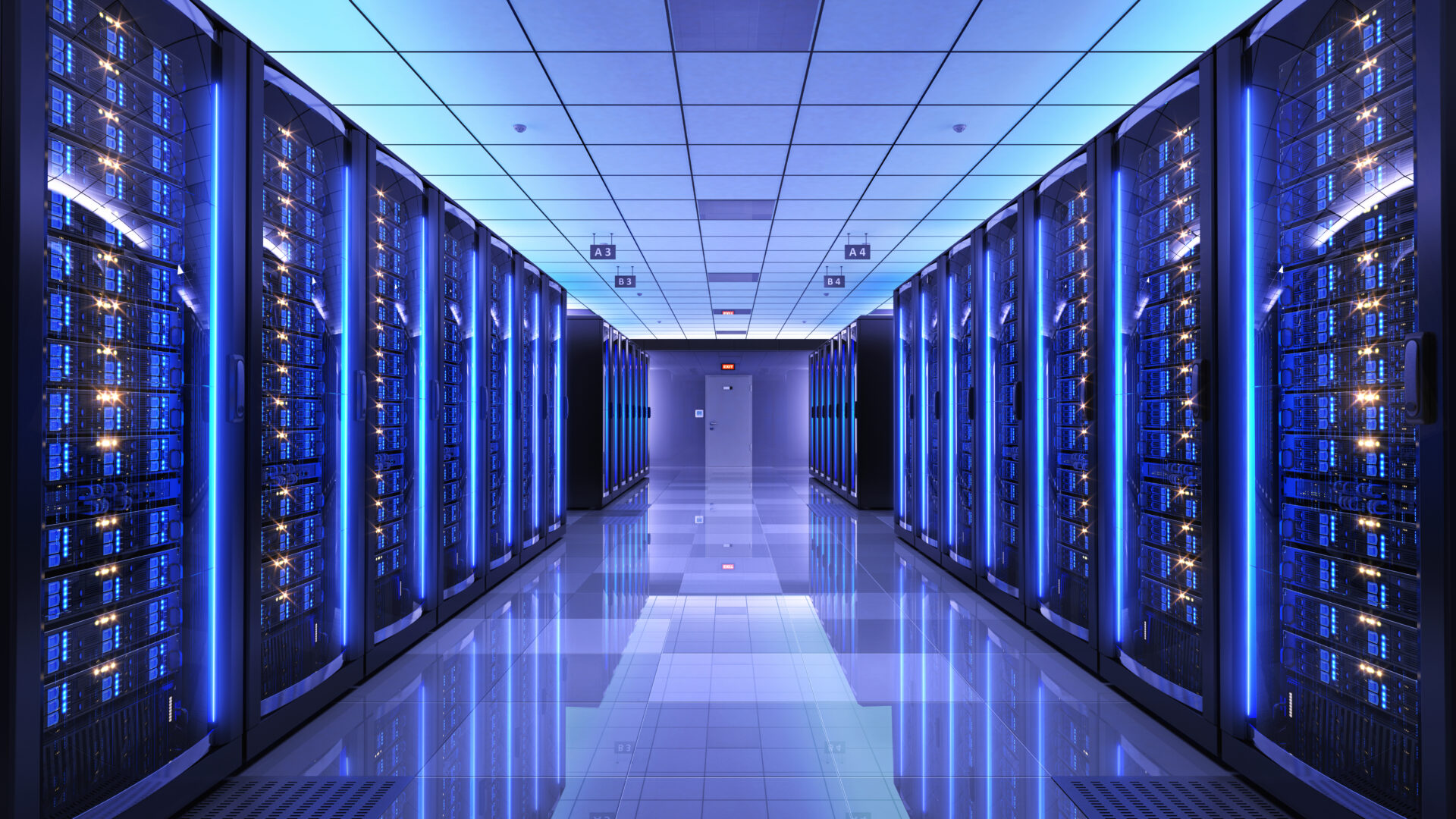
Data centers are large, energy-intensive facilities that house server farms powering the rapid expansion of AI, cryptocurrency mining and other internet functions. The facilities, which require substantial amounts of energy and water to function, have been rapidly expanding across the country — at a rate of more than two new centers per week, according to Business Insider — though there is no comprehensive accounting of how many exist or who owns them.
Maine is one of at least 13 states and 63 communities considering placing restrictions on data center construction, over concerns about water and energy use, pollution, the potential to increase reliance on fossil fuels, destruction of farmland, and broader social and political instability linked to AI.
The consumer advocacy group Food & Water Watch, which has called for a national moratorium on data centers, is behind many state efforts to stop construction.
“Great credit to the people and state legislators of Maine for being at the forefront of a large and swelling national movement to put a halt to the reckless, unchecked explosive growth of hyperscale AI data centers,” Mitch Jones, Food & Water Watch’s managing director of policy and litigation, said Tuesday.
Maine’s bill, LD 307, would halt construction of new data centers in the state until 2027, and establish a coordinating council to study the environmental and energy impacts of the centers and recommend legislative protections. The freeze applies to data centers that need at least 20 megawatts of energy to function, which is enough to power 15,000 homes, according to The New York Times.
Separate legislation would also limit some business tax exemptions for data centers.
Maine is a rural state facing economic hardship due to mill closures and other issues. Before the legislation passed, Mills indicated that she would sign the bill — but only if it included a carve-out for a $550 million proposed data center in Jay, a town that lost more than 200 jobs when a paper mill that had been the town’s largest employer closed down in 2023.
Jay in March approved the data center to be built at the former Androscoggin Mill site. Construction was set to begin in July.
“The people of Jay need those jobs, with appropriate guardrails on preserving water resources, electricity resources, local generation and all those things,” Mills said, according to Maine Public.
However, Maine lawmakers rejected an amendment to LD 307 that would have allowed the Jay data center to move forward.
Concerns over energy, water and public health fuel rising opposition
Opposition to data centers has been building nationwide as communities criticize higher electricity bills, stress on existing power grids and heavy water use.
Experts warn that the centers are proliferating faster than the generation and transmission infrastructure needed to support them. That, along with their unpredictable power usage, means that parts of the U.S. power grid could face reliability issues in the coming years if demand continues to surge.
People living near data centers also report health issues, including headaches and disrupted sleep. Research links electromagnetic field (EMF) exposure from the high-voltage power lines and electrical substations required by data centers to childhood leukemia and other serious health and environmental impacts.
Centers vary significantly in size, capacity and use, but they tend to be built in clusters, where there is access to sufficient energy and water, and also tax breaks. This means they’re often built near densely populated areas, like Santa Clara County, California, Maricopa County, Arizona, and Northern Virginia, according to Business Insider.
Big Tech companies, including Amazon, Meta, Microsoft, Google and QTS, use the most power in data centers across the country. They also use large amounts of water — a concern in rural areas for farmers faced with drought.
“The AI data center frenzy presents one of the greatest environmental and social challenges of our generation,” Food & Water Watch warns. “Energy demand and fossil fuel production are soaring, while water resources are draining. On top of this, AI threatens significant, long-term impacts on our society — from lost jobs to social instability to corporate consolidation.”
In 2020, data centers used an estimated 223 terawatt-hours (TWh) globally, equivalent to the energy use of 21 million U.S. households. The International Energy Agency predicts that global energy use will triple by 2030 due to the rapid development of AI and cryptocurrency mining.
Food & Water Watch reports that by 2028, data centers will account for 12% of U.S. energy demand. Much of this demand is linked to AI. For example, a query in ChatGPT uses 10 times the amount of energy as a simple Google search, and AI data centers use five times as much energy as their predecessors.
AI data centers rely on fresh water for cooling. By 2028, U.S. data centers could use as many as 720 billion gallons of water each year to cool AI servers — equivalent to the amount of energy used by 18.5 million households. Most of the freshwater they use is lost to evaporation and not discharged back into the environment.
The data center industry touts economic benefits for communities, promising job opportunities, and infrastructure and other investments in local economies.
Yet, long-term employment opportunities with data centers are limited. Instead, the centers bring higher energy costs and pollution from generators — and often require tax breaks and significant investment from local governments for any job creation.
https://tdefender.substack.com/p/will-maine-become-first-state-block-data-centers