
Erika Kirk: The Black Widow
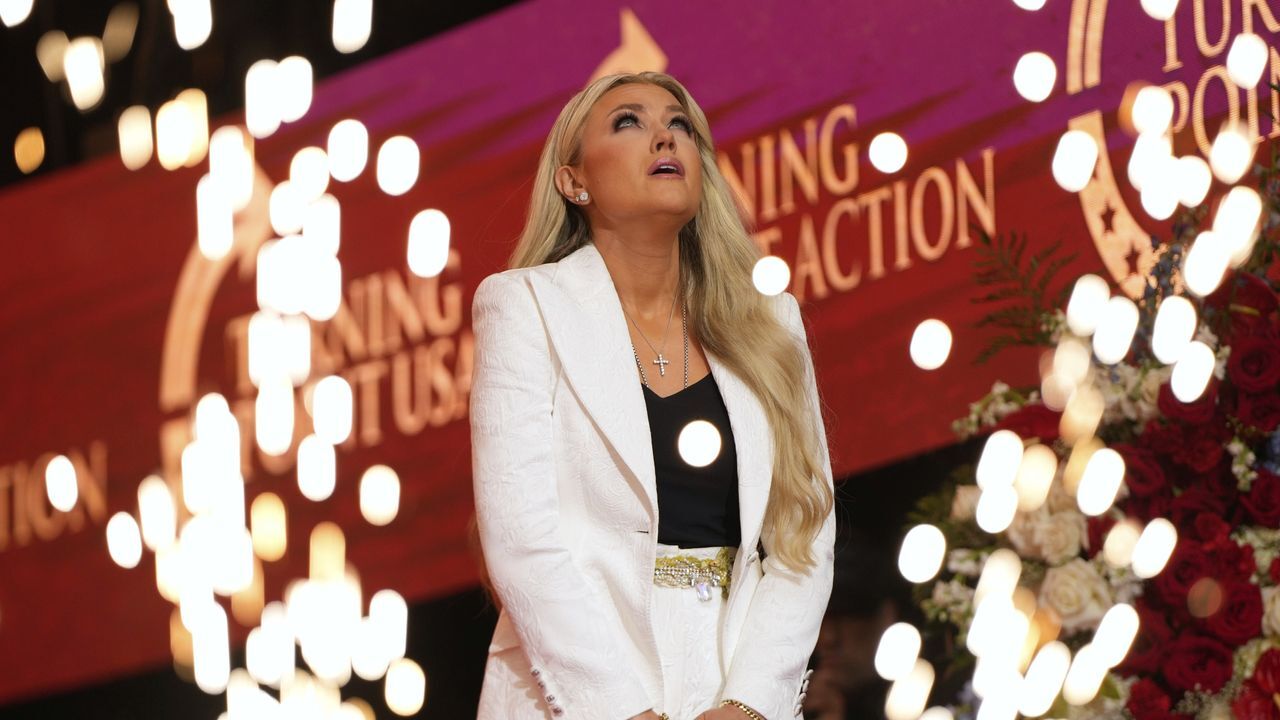
The ritual transfer after Charlie Kirk: how Georgia, Arizona, and Arkansas exposed TPUSA’s deeper crisis — and its submission to Israel and the wider Zionist project.
Erika Kirk is no longer surviving on grief alone. She is trying to stay relevant through drama, fear, borrowed martyrdom, and the dead authority of Charlie Kirk himself.
The pattern is no longer subtle. First came the “serious threats” narrative used to justify pulling out of a weak campus event. Then came the pivot to high school students, where parents and students immediately pushed back over safety, division, and extremism.
At the same time, a university chapter that had just encountered her leadership broke from TPUSA altogether and made clear it was disgusted by how Charlie Kirk’s death was being used inside the organization.
The Baʿal pattern in Scripture is not just open idolatry. It is deception in service of power — sacred language preserved, false allegiance concealed, and manipulation dressed up as moral purpose.
Erika Kirk’s problem, then, is not merely political. It is theological. She invokes a vague “Lord,” rarely centers Jesus Christ by name, and presents a Christianity that feels increasingly performed rather than confessed. In that light, the question becomes sharper: what if what we are witnessing is not only Baʿal above and Moloch below, but Black Widow in motion — grief converted into power, death converted into transfer, and the dead husband’s name turned into the machinery of succession?
What if Erika Kirk is not merely moralizing the machine, but feeding on Charlie Kirk’s broken legacy to keep it moving?
Erika Kirk and the Georgia Theater of Fear
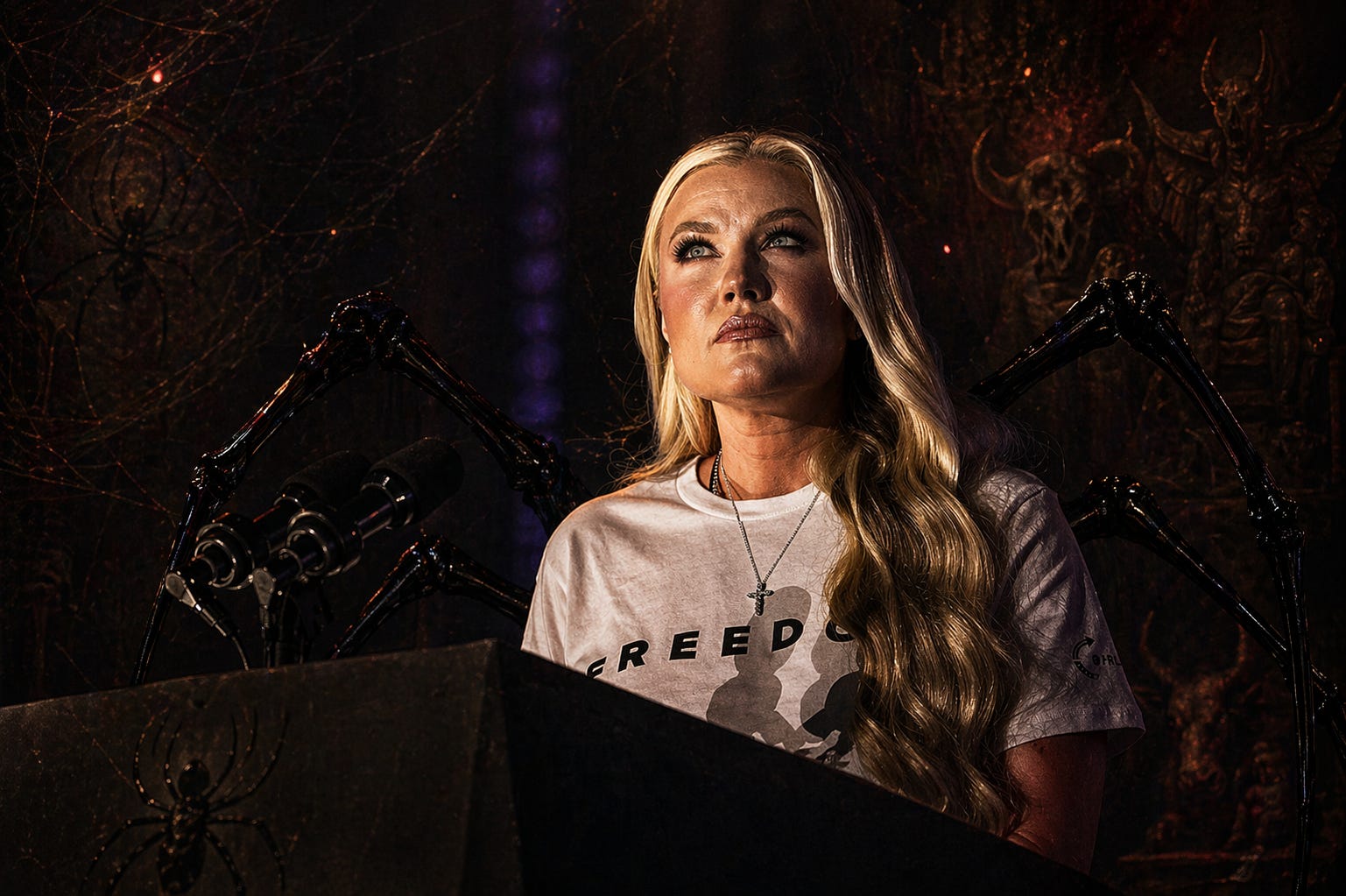
The first problem for Erika Kirk is simple: the public story no longer matches the visible pattern. She pulled out of the Georgia event under the banner of “very serious threats,” yet JD Vance still appeared. That alone damaged the claim. Then came the harder blow: the Secret Service determined there were no credible threats to the rally itself. Once that is on the table, the official explanation stops looking like caution and starts looking like cover.
More than that, the threat story was morally useful: it framed Erika not as overexposed, mocked, or losing control of the image, but as endangered, sympathetic, and upright.
A TPUSA insider cut straight through the performance: “If there were security concerns, the Vice President wouldn’t have gone.” That sentence breaks the whole narrative open. What was supposed to read as danger now reads as theater — a panic script wrapped around a weak event, a weak draw, and a story that could not survive contact with basic facts. That is what makes the Georgia episode more than a bad excuse: the fear language did not just hide weakness, it tried to convert weakness into persecution.
And the humiliation angle matters just as much as the security collapse. The same TPUSA insider made clear that the no-show was not only about threats and not only about ticket sales. It was also about Erika seeing the mockery land. “She is aware of how she is coming across. She’s not stupid… she’s seen the online comments. She gets it. It hurts.” The source went even further: “It wasn’t just ticket sales either. It was a mental exhaustion of like, ‘nothing I do will be right, people will make fun,’ so she cancelled.”
Georgia tore the script open. This was not a security withdrawal but a public-image retreat, with fear-language used to recode embarrassment as persecution.
The deception here was not only factual. It was moral: fear invoked, innocence implied, and weakness repackaged as persecution.
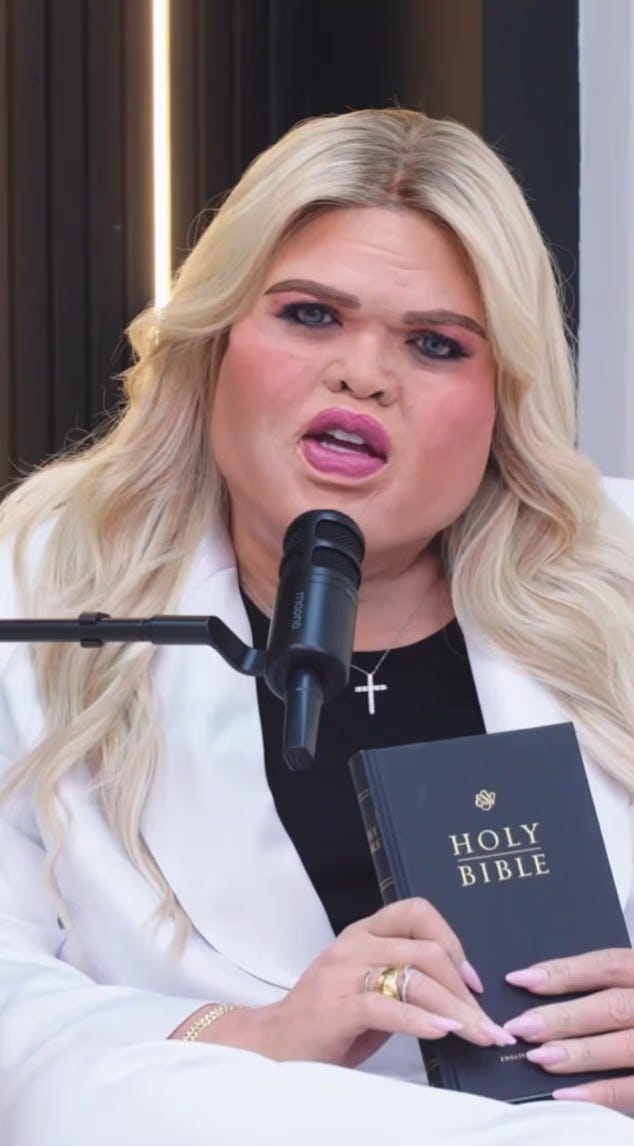
The Georgia collapse also clarifies what kind of problem Erika actually has. This is no longer just ideological opposition. It is aesthetic and emotional rejection. The insider said the Druski parody “showed her what people thought of her” and that she is “really hurt” by the mockery. That means Erika is not simply fighting critics. She is confronting the collapse of a persona that had been protected by staged suffering, managed urgency, and a moral script that no longer holds.
A University of Georgia student put the broader point simply: losing the creator and main face of the organization has changed it. That matters. Because what is replacing that lost center does not look like authority. It looks like strain. When fear becomes theater and sympathy becomes shield, what is being preserved is no longer truth. It is persona.
A figure who truly inspires does not need a security aura to manufacture significance. A figure in decline often does.
Erika Kirk and the Holy Appearance of Deception
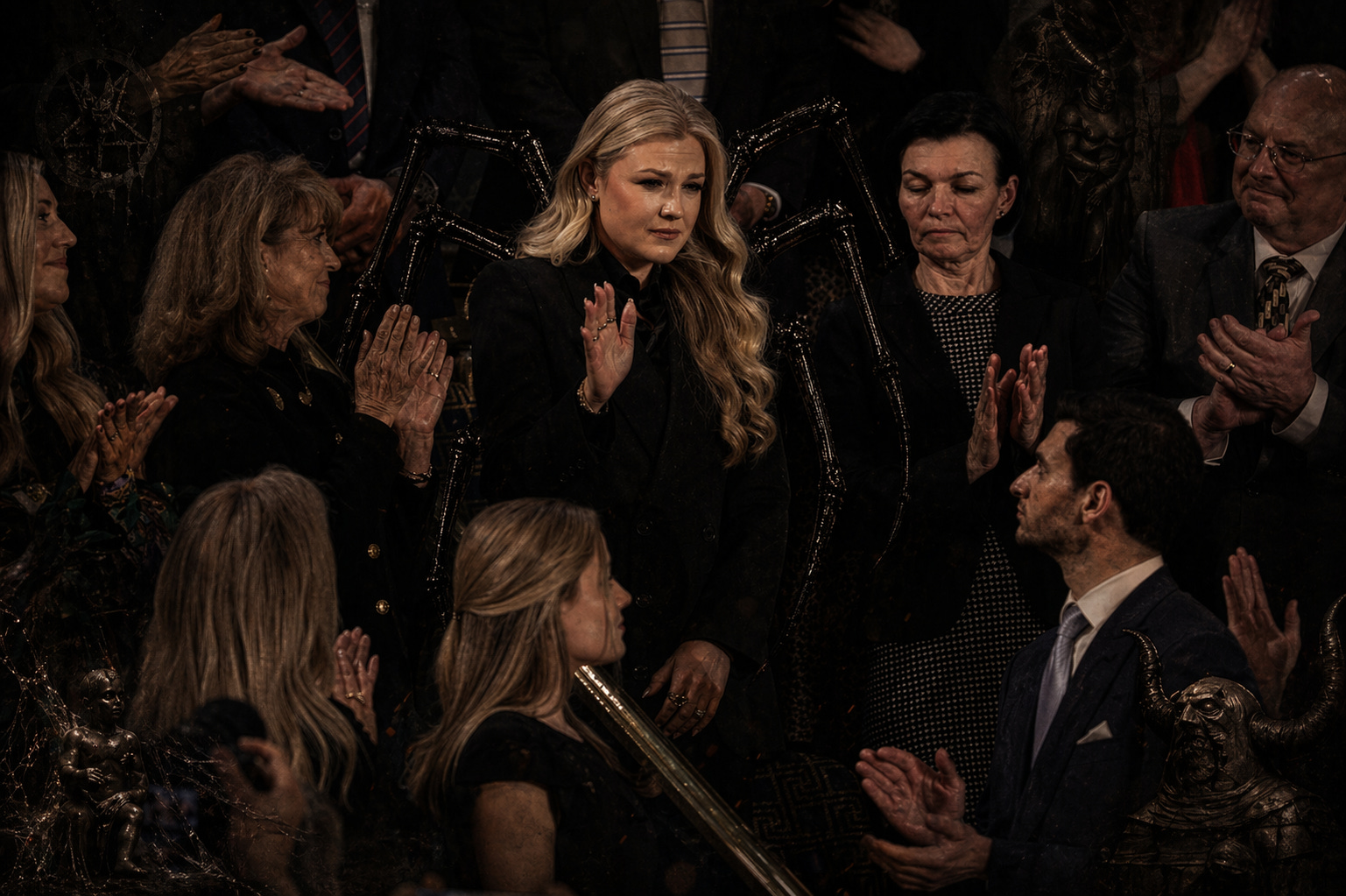
What Georgia exposed was not just a weak excuse. It exposed Erika Kirk’s method: fear invoked, innocence implied, and a damaged image shielded by moral language. That is where the present becomes legible through the past. The ancient altars are gone, but the pattern remains.
Deception still comes clothed in urgency, wounded innocence, charisma, spectacle, elite access, and the appearance of sacred purpose. Erika Kirk’s public role follows that pattern closely: not a clean confession rooted in truth, but a moralized performance of grief, faith, and persecution that keeps asking the audience to trust the light while ignoring the contradictions.
The danger in Erika Kirk’s pattern is not darkness announced openly. It is false light asking to be mistaken for truth.
And once that pattern is visible in the present, Erika Kirk’s older denials about Charlie’s final warnings — his fear, his threat messages, and the pressure coming from Israel and the Zionist Machine — stop looking like isolated confusion and start looking like the same deception pattern.
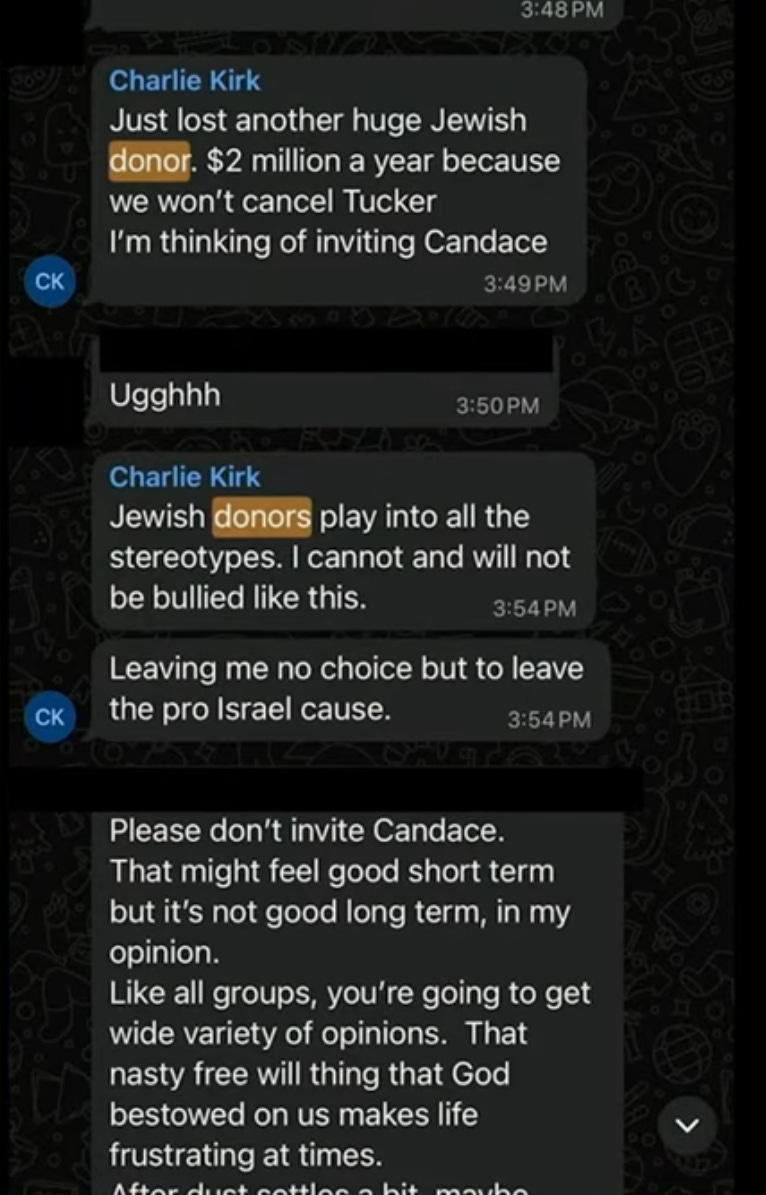
The final break came when the Zionist donor bloc, led by Zionist billionaire Robert Shillman, around Charlie Kirk issued its ultimatum: cancel Tucker Carlson or lose millions. He did not bend. Charlie Kirk said plainly that he had just lost $2 million because he would not cancel Tucker Carlson, that he would not be bullied, and that he was left with no choice but to leave the pro-Israel cause. Publicly, that was the break.
Privately, Charlie understood the cost. He told Dr. Frank Turek: “Please pray for me… I know they (Israel) want me dead.” That is not vague anxiety. That is a man telling people close to him that he believed the threat was real.
That is why Erika’s later public denial matters so much. She did not merely downplay the atmosphere around Charlie. She denied that he had warned anyone at all. She denied that the warning texts existed. She held that line publicly until she was confronted with the messages themselves. Only then did the denial retreat into a weaker fallback: the warnings had not been false after all, only somehow “missed.” That is not clarification. It is collapse.
And the Glenn Beck interview makes the pattern even more revealing. While denying Charlie’s warning threats from Israel and American Zionists, Erika Kirk framed the night before the assassination in prayer-language: “we said our prayers and asked the Lord to protect us and we asked the Lord that His will be done.” That is exactly where the theological issue sharpens. The problem is not prayer itself. The problem is prayer-language used to soften and sanctify a false public narrative. The denial came softened by devotion. The lie came dressed as witness.
As discussed earlier in this piece, In the Hebrew Bible, Baʿal could mean “lord.” The issue was never just the word itself, but the referent hiding behind it. The prophets were warning against exactly this kind of inversion: holy language retained, sacred language used to mask false allegiance. That is what makes Erika’s repeated vague use of “the Lord” so significant here. Erika Kirk deploys sacred language at the precise point where truth is being blurred, denied, and then only partially conceded after exposure.
The pattern is now too consistent to ignore: fear manipulated in the present, truth denied in the past, and prayer-language used to soften falsehood at the point where truth mattered most. That is why this is no longer just political deception. It becomes theological deception — not because the word “Lord” is forbidden, but because sacred language is being used to protect a false moral script.
The ancient pattern returns whenever power, deception, and sacrifice are fused against the order of God.
https://phantompain1984.substack.com/p/erika-kirk-the-black-widow