
AI Devils in the War Machine
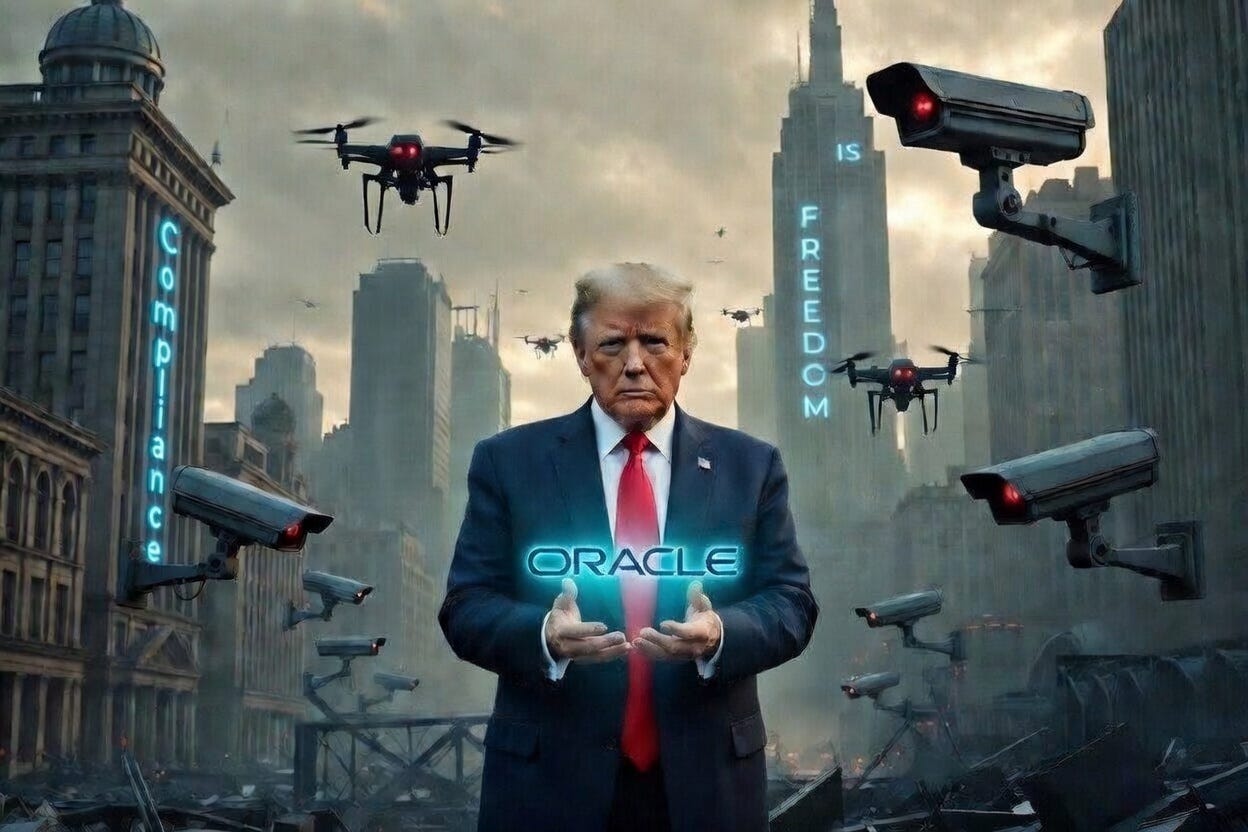
The Clash Between Anthropic and Open AI Sees Trump Side With the Accelerationists.
The Iran War can be read as the ultimate ‘accelerationist’ adventure. Unless the Israeli military contains a sufficiently powerful block of pragmatic realists to face down Netanyahu and his mad-as-a-box-of-frogs coalition partners, and to insist on buying time to patch up the Iron Dome, then the crisis will lead to the biggest economic, financial and humanitarian disaster ever created by human greed. As is the intention.
The drama has somewhat overshadowed another ‘accelerationist’ victory. The dramatic Pentagon shift from Anthropic’s Claude to OpenAI has been overshadowed by Trumps’ own pivot from MAGA rhetoric to MIGA reality, but the abrupt switch in providers for the super-brain supposedly being developed for America’s military was only really noticed in the industry and among investors.
Some saw the move as surprising, given that Claude provided the AI brains behind Trump’s technically perfect Venezuela coup. Many on the know-nothing right took heart from the fact that the President’s stated reason for dropping Anthropic’s was that the company was run by “leftwing nut jobs”.
Defense Secretary Pete Hegseth jumped in, labeling Anthropic a “supply-chain risk to national security after its CEO, Dario Amodei refused to drop the limited safeguards against computer recklessness or government abuse.
Anthropic’s built-in restrictions prohibited its use for fully autonomous weapons or mass domestic surveillance of Americans. Amodei highlighted hypothetical scenarios like nuclear strikes where unchecked AI could escalate conflicts disastrously. These were red lines rooted in the company’s stated commitment to responsible AI.
The Pentagon viewed these safeguards as an unacceptable intrusion into military command, demanding “all lawful uses”. This is an extremely wide category under a Caesar seemingly hell-bent on ditching all the checks and balances which the Founder Fathers put into the Constitution. The spat ended with Anthropic being blacklisted, effectively barring it from future deals and putting that all the Pentagon’s AI eggs in Sam Altman’s basket.
The rush to put AI at the heart of America’s military has really taken off since the start of this year. The Department of Defense – rebranded as the Department of War – has escalated its efforts to embed AI across every facet of military operations, from battlefield intelligence to cyber defense and autonomous systems.
Officially, this is driven by a fear of falling behind adversaries like China in what officials term an “AI arms race.” It isn’t merely about efficiency; it’s about achieving “AI overmatch,” where algorithms process vast data streams faster than human minds, closing kill chains in seconds and enabling decisions that outpace enemies and pierce the ‘fog of war’.
As always with matters involving the Military-Industrial Complex, however, it is also clear that the vast sums of money involved provide a massive incentive for rose-tinted analysis of bold claims for the latest technology. The new alliance between Big Tech and the MIC can be viewed by cynical observers as less like innovation and more like a reckless gamble based on greed and the bottom line of corporations who have procurement bosses and lawmakers in their pockets.
A staggering $13.4 billion is listed in the 2026 budget alone, a sevenfold increase from last year. This is being poured into unproven technologies which will automate and revolutionize warfare, but also amplify surveillance, erode human oversight, empower computers which place no value on human lives, and enrich private contractors under the guise of national security.
With such enormous sums involved, it should come as no surprise that Claude AI and Anthropic AI share many of the same investors. At least a dozen venture firms, including Sequoia Capital, Founders Fund, Iconiq, and Insight Partners, have backed both companies. BlackRock affiliates invest in Anthropic despite board ties to OpenAI.
Despite the overlap, there is a broad division between the two operations. Their rivalry traces back to a foundational schism in 2020, when key OpenAI figures, including the Amodeis, departed amid profound disagreements over the pace of AI development, safety protocols, and the influence of commercialization, particularly Microsoft’s multibillion-dollar stake that critics argue tilted OpenAI toward profit-driven acceleration over rigorous risk mitigation.
This split birthed Anthropic as a deliberate counterpoint, emphasizing “alignment research” to ensure AI systems adhere to human values. This is reflected in Claude’s “constitutional AI” framework, which embeds principles like harmlessness and helpfulness directly into model training. By contrast, Altman’s OpenAI embodies an “accelerationist” ethos, a hell-for-leather dash for AI dominance, regardless of the potential risks.
Anthropic has actively lobbied for stringent regulations, donating $20 million in early 2026 to Public First Action, a super-PAC supporting state-level AI oversight to counter existential risks from superintelligent systems. OpenAI favors rival lobby group Leading the Future, which has amassed $125 million to advocate for minimal restrictions, framing safeguards as stifling innovation and economic growth. This clash erupted publicly during the 2026 Super Bowl, where Anthropic’s ads attacked OpenAI’s “reckless” speed, prompting rebuttals from OpenAI president Greg Brockman.
It is worth noting that OpenAI’s head of robotics, Caitlin Kalinowski, resigned immediately after Altman’s victory, citing ethical concerns over “lethal autonomy without human authorization” and unchecked surveillance.
If this, combined with the presence of slimy Sam at the head of Open AI, inclines you to prefer Anthropic, remember that both operations use arch-Zionist Peter Thiel’s Palantir to handles their data integration, security permissions, and workflows. Whoever supplies the AI model, Palantir builds the systems that allow the government and defense agencies to apply such models to real-world data and operations.
We have seen how Palentir’s application of AI and data to chosing targets for smart missiles has already turned Thiel into an accessory to genocide. There’s a Manics song that comes to mind. Yes, if you tolerate this, you and your children will indeed be next.
Despite the broad Microsoft-OpenAI versus Amazon-Google-Anthropic ‘split’, both are part of the same globalist corporate hydra. Despite natural concerns about the future impact of its technology, it can be argued that the USA has no choice. China is investing heavily in similar capabilities and that failure to integrate AI rapidly could leave U.S. forces at a strategic disadvantage.
America’s military had to throw itself into the AI arms race, but it’s a sort of Faustian bargain. Trump and Hegseth had a choice of two devils, and handed the USA’s dark military-industrial soul over to the one who is somewhat more ‘accelerationist’ than the other.
From the standpoint of critics who distrust both Big Tech and the national security apparatus, the episode illustrates a familiar dynamic. A technology company attempts to impose ethical limits; those limits collide with the strategic ambitions of the state; another company steps in willing to be more accommodating; and the technology gets embedded in systems of surveillance, intelligence and warfare.
In this sense the conflict over Claude and the Pentagon’s subsequent embrace of OpenAI is a preview of future struggles. As artificial intelligence becomes more powerful, governments will increasingly seek to harness it. Technology firms will compete for those partnerships while attempting to maintain public trust by promising safeguards. The tension between commercial ambition, ethical restraint, and military and government demands will likely intensify.
The bottom line, however, is this: Trump’s Department of War is committed to ever more aggressive foreign adventures, Big Tech is going to make ever bigger profits from helping it happen, and your taxes – or a mountain of debt piled on your grandchildren’s shoulders – are going to pay for it all.
At the same time, the technologal manacles being created by the likes of Sam Altman and Peter Thiel only really need one ‘good crisis’ to become the perfect ‘solution’. The first victims of the people running the USA and their Zionist partners in crime may be Arabs and Iranians, but once they’ve plunged hundreds of millions in Africa and Asia into starvation, they’ll be coming for our freedoms and creature comforts in the West too.
Unless some AI devil in the war machine decides that a nuclear war would provide the Final Solution to the Human Problem.
https://nickgriffin544956.substack.com/p/ai-devils-in-the-war-machine