
The ‘Kill’ Switch
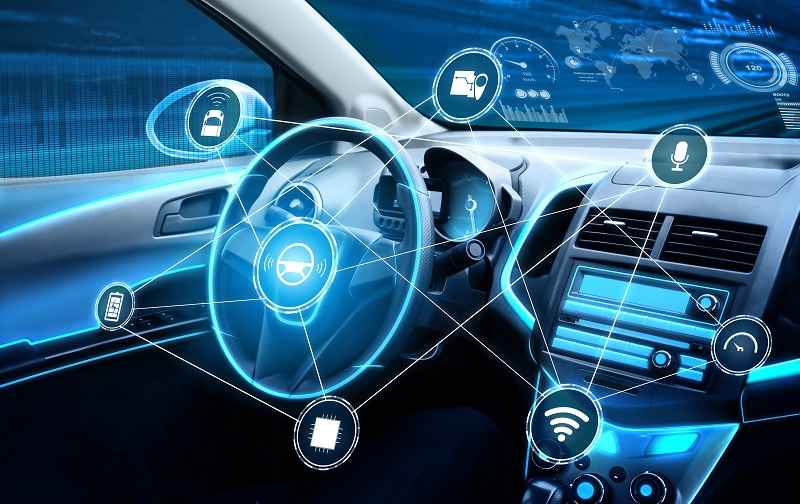
When software and the government control our daily lives.
In 2021, Congress passed an infrastructure law, and inside it sits a requirement that future vehicles include technology capable of detecting impaired driving. The stated goal is simple. If a driver is drunk or clearly unsafe, the vehicle should be able to prevent operation. That is the mandate. It does not authorize remote control, and it was signed by Joe Biden, not Donald Trump.
The way this shows up is not as a single device but as a stack of systems that already exist. Cameras inside the cabin track your eyes, your face, your attention. Sensors read steering inputs, braking patterns, and lane position. Newer systems are being built to detect alcohol passively through breath or even through your skin on the wheel. The car is no longer just a machine you operate. It is a system that watches you, evaluates you, and increasingly decides whether you are fit to use it.
Call things by their proper name. This is not a switch someone flips from afar. This is a shift from mechanical control to software governance. The car becomes an intermediary between you and your own mobility.
At first, it arrives quietly. It starts in higher-end vehicles and works its way down. It is marketed as safety, convenience, and common sense. Insurance companies offer discounts if you agree to monitoring. Most people say yes. Why not save a few hundred dollars? Over time, the discount becomes the baseline. Opting out starts to cost you. Driving an older car, free of monitoring devices, will cost you, or maybe even make you uninsurable. The “choice” remains on paper, but in practice it fades.
This is a slow ratchet. The frog put in a pot of water as the heat is slowly turned up. Before he knows it and can jump out, he has been boiled alive. Control does not have to be imposed directly when it can be engineered through incentives. If your premiums, your financing, and eventually your access to services and cars depend on how a system scores your behavior, then the system does not need a kill switch. It already has leverage.
Private companies are central to this. Insurers like Progressive Corporation and Allstate are already building models around continuous driver monitoring. Today, it is framed as a discount program. Tomorrow, it becomes a pricing standard. You are free to opt out in the same way you are free to pay significantly more. That is not coercion in the legal sense, but it is pressure in the real world. Is it just a matter of time before “vintage” cars require higher premiums or are even uninsurable?
This is where the constitutional layer matters, and also where many people misunderstand it. The United States Constitution and the Bill of Rights were designed to limit government power, not the reach of private corporations. If a manufacturer installs monitoring in your vehicle and you agree to it through a contract, you are not dealing with state action in the traditional sense. That means many of the Constitutional protections people assume are there do not apply in a straightforward way.
The Fourth Amendment protects against unreasonable searches and seizures by the government. It does not shield data that you have allowed a company to collect. That becomes especially important if that data is later accessed by law enforcement.
Courts have pushed back on warrantless tracking in some contexts, but the boundary between private data and government access continues to be eroded by Congress and the courts.
The Fifth Amendment raises a different issue. If your own vehicle is recording behavior that could be interpreted as impairment or unsafe driving, and that data is later used against you, the line between observation and self-incrimination begins to blur. Again, not settled law, but not a trivial question.
There is also a quieter risk that has nothing to do with policy and everything to do with data. Once you normalize continuous in-cabin monitoring and behavioral scoring, you create a stream of highly personal information that has value well beyond safety. That makes it a target. If that data is hacked, leaked, or sold, it does not take much imagination to see how it could be misused. Detailed records of where you drive, how you behave, and even how you look or react behind the wheel could be exposed publicly or used to pressure, embarrass, or coerce.
Even without a breach, interpretation is not neutral. A medical event, a panic response, or a real threat, such as a carjacking, can appear to an algorithm as impairment. Stress, confusion, or erratic movement under duress may be flagged as unsafe driving.
The deeper problem is not any single amendment. It is the gradual erosion of autonomy through systems that operate just outside the traditional constraints of the Constitution. You do not need a new statute to restrict behavior if you can shape incentives or even mandates, so that companies can get people to restrict themselves.
A great deal can happen through contracts, pricing models, and industry standards. Private actors can create a system where monitoring is technically voluntary but practically unavoidable. Where opting out carries a real cost. Where data collected for safety quietly becomes data used for pricing, for liability, for access.
The space between direct government control and pure private choice is wide, and it is in that space that this system is likely to evolve.
The fork in the road is still ahead. In a constrained version, these systems stay focused on clear impairment, and the data remains tightly limited.
In the more likely version, the data layer expands because it is valuable, and once something is valuable, it is rarely left unused or monetized.
The mistake is to look for a dramatic moment when control arrives. It does not work that way. It accumulates. A discount here, a requirement there, a default setting that most people never change. Over time, the relationship between you and your vehicle is no longer direct. It is mediated by software, data, and incentives.
The real question is not whether someone can flip a switch and stop your car. It is whether you still meaningfully control the terms under which you are allowed to drive it.
Representative Thomas Massie moved to force the issue directly, not with rhetoric or a direct overhaul of the bill, but with a funding cutoff. In January 2026, he introduced an amendment to the federal spending bill (H.R. 7148) that would have prohibited any federal funds from being used to implement or enforce the impaired-driving technology mandate buried in the 2021 infrastructure law. In plain terms, it was a defunding effort. No money, no rollout. The amendment failed, 164–268, which means the mandate continues forward on its current path.
What makes that vote politically revealing is not just that it failed, but who helped defeat it. Fifty-seven Republicans joined 211 Democrats to vote against Massie’s amendment and keep funding in place. Among the Republicans who voted no were names that span the party’s establishment wing, including Mark Amodei, Don Bacon, Stephanie Bice, Ken Calvert, Tom Cole, Mario Diaz-Balart, Brian Fitzpatrick, Andrew Garbarino, John James, Mike Kelly, Jen Kiggans, Mike Lawler, and Frank Lucas, among others. You can see the full official roll call here: House Roll Call Vote 43 (H.R. 7148 Amendment)
That vote tells you everything you need to know. The fight is not hypothetical. It is happening in appropriations bills and procedural votes, where programs live or die. And when push comes to shove, a nontrivial bloc of Republicans is willing to keep the funding stream intact, even for a program that is a step toward expanded monitoring inside privately owned vehicles.
The word RINO gets thrown around too easily. But here the line is not rhetorical. It is clear. Those Congresscritters who stand in the way of personal freedom are the same ones who treat the Bill of Rights as a relic instead of a constraint.