
The Nanny State Oversteps: What Congress’s In-Car Monitoring Mandate Means
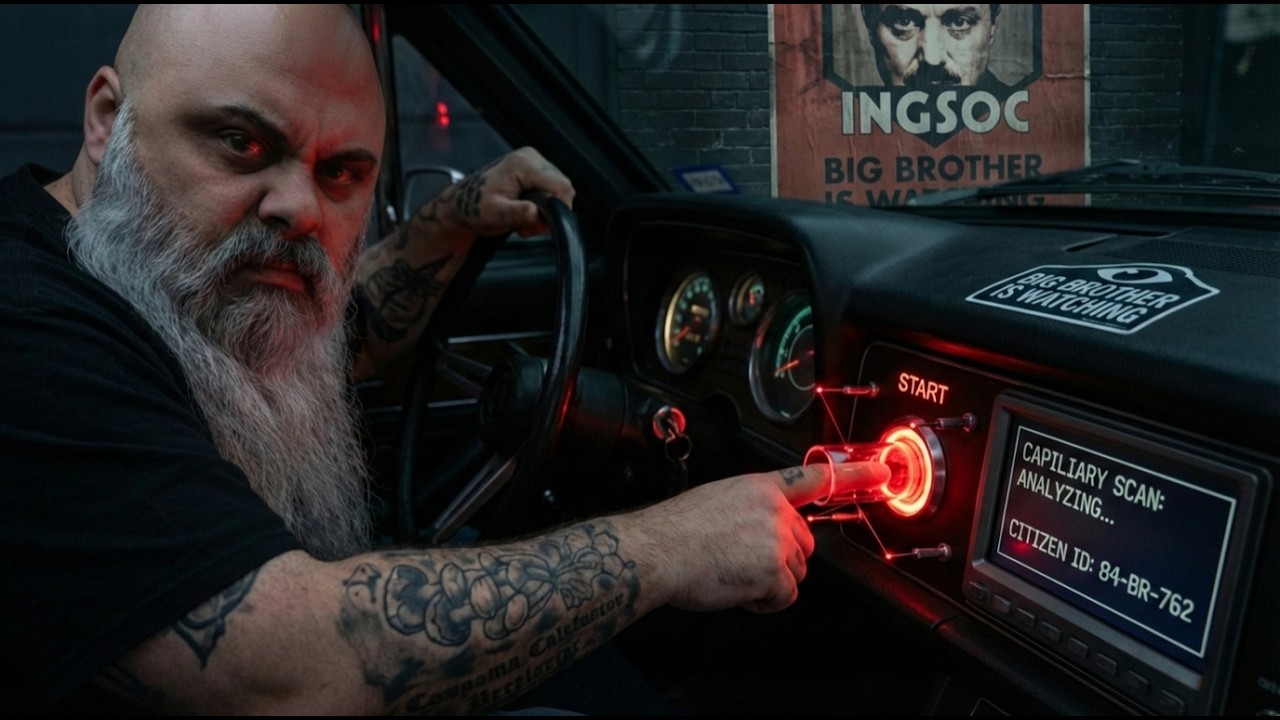
The technology in progress that can read your lips, and the cameras that will scan your pupils and other biometrics; plus, the Republican lawmakers who first proposed this Orwellian system.
This month, Ford Motor Company published notice of a pending patent for lip-reading and facial recognition technology for use in its cars. This patent joins a host of others the company has already filed for cameras, sensors, and monitoring devices in motor vehicles. The publication of these pending patents has sparked a wildfire of alarm on social media, as Americans drew a connection between these various patents and a bill passed through the U.S. Congress in 2021 that mandates car manufacturers implement “advanced drunk and impaired driving technology” into all cars in the very near future.
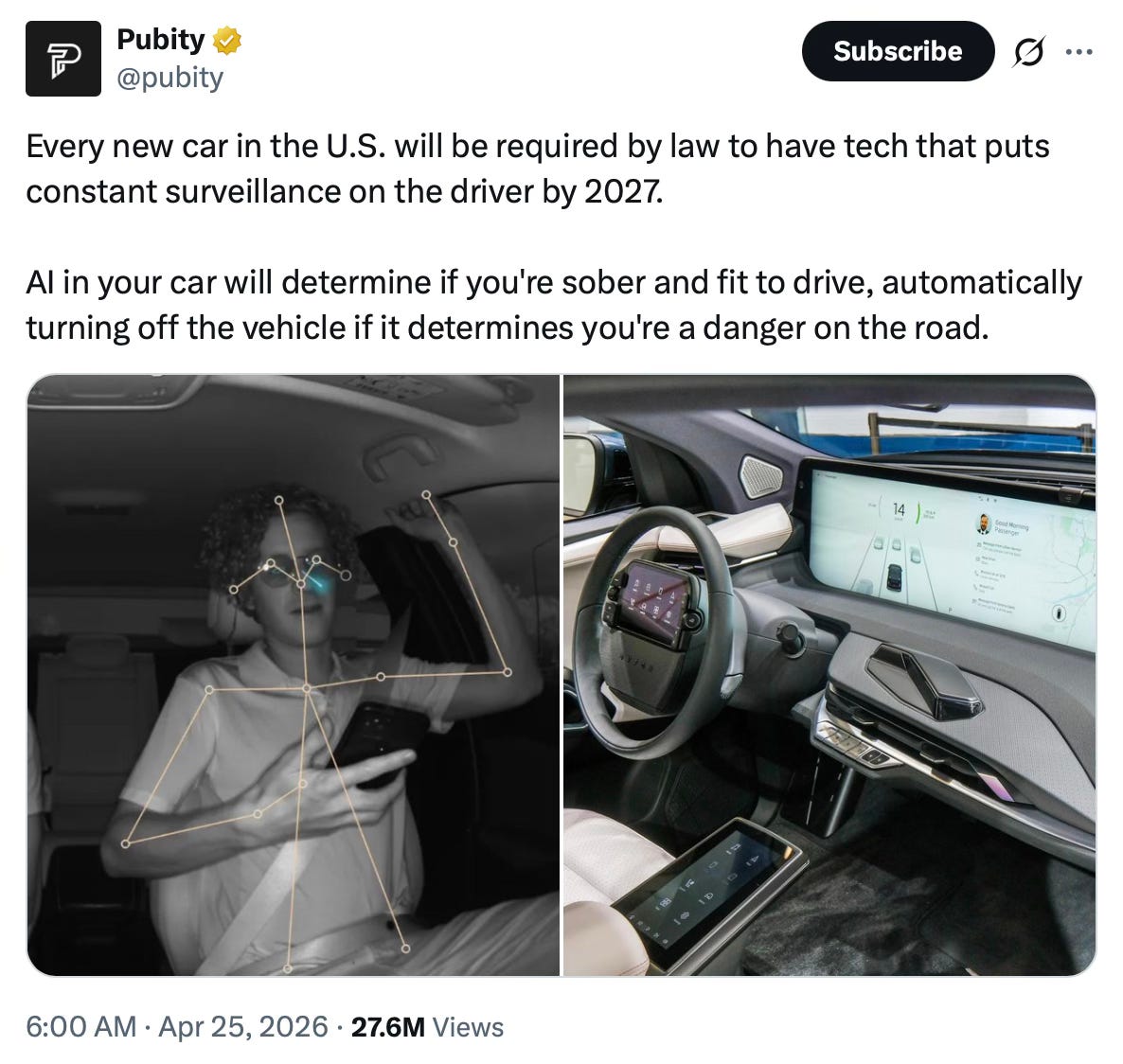
The Ford patent that flagged attention will utilize cameras and sensors to read a driver’s lips. Ostensibly, this is to help the car’s voice controls under circumstances where wind or other noise garbles the speaker’s commands. But, of course, it raises the specter of gross abuses of privacy, since the program will necessarily transmit and analyze a driver’s every conversation. As alarming are some of the patents Ford filed in 2024—patents for a biometric system that would include facial, fingerprint, and iris recognition, which could monitor fatigue and stress levels.
Although all of these technologies can be connected to a legitimate safety goal, the obvious problems and certain misuses should leap out at every freedom-minded American. When considered in relation to the passage of the Infrastructure Investment and Jobs Act (“the Act”), which was signed into law by President Biden on November 15, 2021, the real-world applications are crystal clear.
Section 24220 of the Act mandates that the Secretary of Transportation develop a new standard for American cars that requires each be equipped with “advanced drunk and impaired driving prevention technology.” The Secretary must issue the final rule no later than three years after the passage of the Act, and car manufacturers would have three years to comply.
The term ‘‘advanced drunk and impaired driving prevention technology’’ is defined as technology that can 1) passively monitor the “performance of a driver” to identify if he is impaired, and prevent or limit operation of the vehicle, and 2) passively “detect whether the blood alcohol concentration of a driver of a motor vehicle” is beyond the federal limit of 0.08% blood alcohol concentration, and prevent or limit operation; or 3) a combination of the two systems.
We should all ask, who introduced the language of this subsection, which is so obviously subversive to individual liberty and autonomy? The language originated with the “HALT Drunk Driving Act,” a stand-alone bill proposed in 2021 by Rep. Debbie Dingell, a Democrat from Michigan. The original co-sponsors were Representatives David McKinley (R-WV) and Kathleen Rice (D-NY). They were joined by Republican Representative Brian Fitzpatrick of Pennsylvania, along with a list of Democrat sponsors. David McKinley lost a primary in 2023 and is no longer in Congress.
The HALT Drunk Driving Act had a Senate counterpart bill—RIDE Act of 2021—which was introduced by Sen. Ben Ray Luján of New Mexico and originally co-sponsored by Senator Rick Scott of Florida. Scott, a Republican, was ultimately joined by a second Republican co-sponsor, Senator Shelley Moore Capito of West Virginia as well as another Democrat, Senator Gary Peters of Michigan. The language from these two bills was folded into the broader Infrastructure Investment and Jobs Act.
Every one of these lawmakers should be called on the carpet for sponsoring such an abusive and Orwellian system.
Moving forward, though, we must decide at what point we are unwilling to cede more liberty for greater convenience. Technology poses an especially dangerous terrain to navigate when it comes to balancing liberty and convenience. Advances in AI, biometric identification systems, and all forms of technology that can be used to surveil will ultimately be used for that purpose. A car, where every American has the expectation of complete privacy to talk to another passenger or make a private phone call, should not be invaded by monitoring systems. And we should certainly never be at the mercy of an AI system determining if our vehicles should function normally or cease to operate all together.
Heritage fought the passage of this bill in 2021, but, sadly, was unable to garner enough pushback. Hopefully the outcry now against this “tech advancement” will result in a repeal. We would do well to be more watchful in the future.
William Blackstone was an English jurist and a significant forefather in the American legal system. American lawyers will be very familiar with Blackstone’s Ratio in criminal law, which declares: “It is better that ten guilty persons escape than that one innocent suffer.” We must impose a similar rule when it comes to balancing laudable goals and restraints on liberty. Not all evils can be remedied if the remedy itself imposes intolerable limits on or abuses to our freedom. Americans can and should look for ways to limit the instances of drunk driving, but making every car in the nation a high-tech surveillance box with remote disabling capabilities is not only not the answer, it is an outrage to people who claim to be free.
https://mollymccann.substack.com/p/the-nanny-state-oversteps-what-congresss