
Turkey is Iran War’s Biggest Winner — Without Firing a Shot
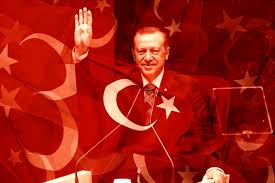
Ankara has leveraged the conflict to cement Gulf partnerships, Caucasus corridors and budding regional arms sales.
When US and Israeli aircraft struck Iran on February 28, killing Supreme Leader Ali Khamenei and decapitating much of the senior Iranian leadership, Turkey’s reaction was striking for what it withheld.
President Recep Tayyip Erdogan described the US-Israeli attacks on Iran as a blatant violation of international law, closed Turkish airspace to US forces and personally conveyed his condolences following the assassination of Khamenei.
At the same time, Ankara took care to distance itself from Tehran, openly criticizing Iran’s retaliatory strikes on Gulf states and blaming Iranian intransigence for the collapse of pre-war negotiations. The message was deliberate, and it has aged well: Turkey was against the war and was no one’s ally in it.
That posture, what Turkish officials privately describe as “active neutrality”, is now paying compounding strategic dividends. Two months in, with a Pakistani-mediated ceasefire fragile but holding since early April, the most consequential second-order effect of the war may be the elevation of Turkey to a regional position it has not enjoyed in modern times.
The mediator’s purse
Begin with the most visible gain: diplomatic centrality. The quartet of Turkey, Saudi Arabia, Egypt and Pakistan that convened in Islamabad on March 29 to coordinate de-escalation is, in substance, a Turkish-driven format.
Reuters reported on March 25 that Ankara had been a go-between for messages between Iran and the US, probing US positions while warning Tehran against widening the war. European Commission President Ursula von der Leyen publicly endorsed Turkey’s mediation efforts on March 1, and the personal rapport between Erdogan and Donald Trump, whatever its limits, has lent the role a credibility that Doha or Muscat alone cannot match.
Mediation matters not because Ankara expects to broker a comprehensive settlement (it does not) but because the role itself confers what diplomats call right of access: a permanent seat in the conversations that will shape whatever post-war regional order emerges.
A vacuum at Iran’s expense
The deeper structural shift is geographic. For four decades, Iran functioned as the institutional anchor of a “resistance” axis running through Iraq, Syria, Lebanon and the Gulf. Israel’s gradual dismantling of that network from 2023 onward, capped now by the joint US-Israeli decapitation strikes, has eviscerated it.
Combined with Russia’s weakened position after years of attrition in Ukraine and Iran’s degradation, the Russia-Turkey-Iran triangle that governed Syrian diplomacy through the Astana process has effectively collapsed, leaving Turkey as the sole functional broker in that format, a significant elevation of Ankara’s diplomatic weight that extends well beyond Syria.
The consequences are already visible on the ground. In Syria, where the Assad regime fell in late 2024, Turkish-aligned actors sit at the center of the post-war settlement, and Ankara’s quiet deconfliction channel with Israel is now the principal mechanism preventing direct collisions in Idlib and the northeast.
In Iraq, Foreign Minister Hakan Fidan has signaled that the “Syrian dossier” will expand to address the Qamishli–Sinjar corridor, where Iran-backed militias have lost the political cover Tehran once provided.
The $17 billion “Development Road” through Iraq, designed to link Europe and Turkey to the Persian Gulf, is suddenly viable in a way it was not a year ago. So is the Zangezur Corridor through the South Caucasus, which would connect Turkey to Central Asia while bypassing Iranian territory altogether.
Taken together, these corridors would re-route a meaningful share of East-West trade through Turkish-controlled space. That is not a tactical windfall. It is a generational realignment.
The defense-industrial dividend
The war is also accelerating a transformation in Gulf security thinking that began long before February 28. After watching Iranian missiles strike civilian infrastructure in Saudi Arabia, the UAE, and Qatar despite American patronage, Gulf monarchies are quietly diversifying their security partnerships away from sole reliance on Washington.
Turkey is the obvious regional alternative. Over the past decade, Turkey has evolved from a major arms importer into a self-reliant global exporter, with domestic production surpassing 80% by 2026, anchored by platforms such as the Bayraktar UAVs, the KAAN fifth-generation fighter and an expanding naval fleet under the MILGEM program.
Defense agreements quietly concluded throughout March suggest that Ankara is converting Gulf anxiety into long-term contracts and embedded political relationships. Add to this Turkey’s role as host of the July NATO summit, and the picture sharpens further.
Erdogan will arrive at that meeting with leverage he did not possess in January: the alliance’s most exposed frontline state, an indispensable mediator and a credible candidate for reintegration into Western defense-industrial frameworks from which Washington had previously sought to exclude him.
The risks beneath the rise
This is, of course, only half the story. Turkey’s position is strengthening structurally even as it deteriorates tactically. The Borsa Istanbul plummeted by 7% on the morning of March 2 as investors reacted to the US-Israeli strikes, and energy costs are eating into already brutal inflation.
Iran has historically supplied roughly 14% of Turkey’s natural gas imports, a structural dependency that war-driven disruptions have translated directly into domestic price pressure.
As of mid-March, three reportedly Iranian missiles aimed at Turkey were intercepted by NATO missiles, a reminder that geographic exposure cannot be diplomatically wished away.
More dangerous still, reports that Washington is exploring partnerships with Iranian Kurdish groups, particularly the Party for a Free Life in Kurdistan (PJAK), an offshoot of the Kurdistan Workers’ Party (PKK), strike at the most sensitive nerve in Turkish strategic thinking.
A Kurdish autonomous zone in western Iran would, in Ankara’s view, complete an arc of Kurdish empowerment from the Mediterranean to the Zagros that no Turkish government could tolerate. The fragile domestic peace process with the PKK, which began moving toward disarmament in 2025, would not survive it.
The Israeli factor compounds the danger. Speaking in February 2026, former Prime Minister Naftali Bennett described Turkey as “the new Iran” and warned of an emerging Turkish threat.
That language is not yet settled Israeli doctrine, but it is no longer fringe rhetoric. With Iran prostrate, the next great regional rivalry is being drawn on the map between Ankara and Jerusalem.
A conditional victory
The verdict, then, is provisional. Turkey is unambiguously stronger today than it was on February 27, but the gains are conditional on outcomes Ankara does not control: that Iran is weakened but not shattered, that Kurdish ambitions remain contained, that the post-war order rewards mediators rather than belligerents.
Erdogan’s task between now and the NATO summit is to lock in the structural advantages, including defense ties to the Gulf, transit corridors through Iraq and the Caucasus and mediation prerogatives in a leaderless Tehran, before the variables he cannot control reassert themselves.
For the moment, however, the paradox stands. The country that loudly opposed this war, refused to fight in it and worked to prevent it is the one most clearly emerging from it stronger.
https://asiatimes.com/2026/04/turkey-is-iran-wars-biggest-winner-without-firing-a-shot/