
A Negotiated Settlement for a Sovereign Iran is Nigh Impossible
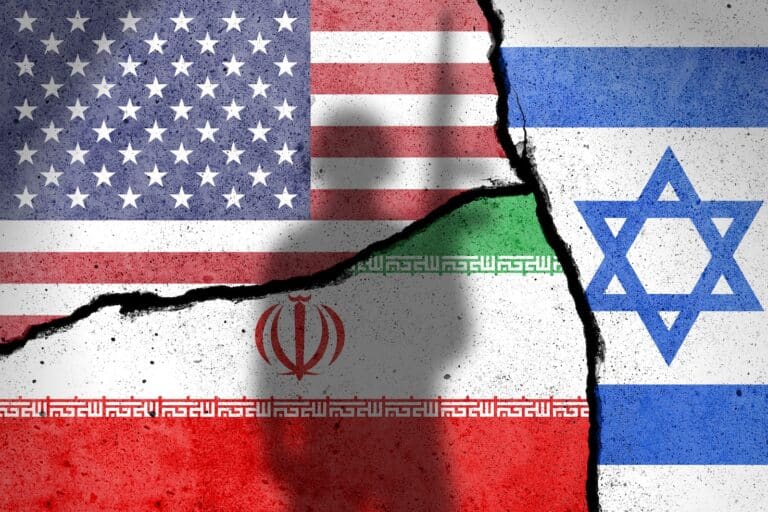
Putting two sides together — let alone three — who have wildly diverse chronicles of their histories and even less commonality in charting their future national trajectory was innately unlikely to reach to an agreed settlement. More likely in such ill-prepared encounters is often an ill-tempered recapitulation of the general lack of congruence.
This was the case in last month’s Islamabad ‘talks’ between the US and Iran — with Israel acting as third-party proxy for ‘collective forces’ trying to ‘force the end’ (a Greater Israel regional hegemony) — by demanding effectively massive (and unrestricted) regional territorial control for Israel.
For such talks to serve a purpose, they would have to concretise an underlying level of agreement between the parties — if such can be found. Otherwise, the best that may emerge will be informal arrangements that are never formalised, but may, in the instant, suit the interests of the parties involved. Such understandings last as long as they last. That’s it.
Esmail Baqaei, spokesman of the Iranian Foreign Ministry, noted that over these 47 years, deep distrust and suspicion have accumulated with the US:
“You should not expect that within a short period of time, after an extraordinarily bloody war, in which … Iran, having fought two regimes armed with nuclear weapons, two exceptionally ruthless regimes, whose brutality we witnessed over the past two and a half years in the crimes of Gaza and Lebanon, would quickly reach a settlement [with us]”.
Aurelien succinctly outlines the impasse:
“The US (present) and Israel (present by proxy) want to damage and if possible, destroy Iran as a functioning state. For the US, this is revenge for nearly fifty years of humiliation, dating from the storming of the US Embassy in Tehran and the disastrous failure of the subsequent rescue mission – as well as for Iranian attempts to frustrate US policies in the Levant. For Israel, the objective is to destroy the only country standing between them and their domination of the region. (The US also represents this objective vicariously). The Iranians obviously want to prevent all this, but they also want an end to sanctions and isolation”.
Esmail Baqaei adds:
“Our central concern is that we reach a point as soon as possible where we can say with confidence that the threat of war [against Iran] no longer exists”.
The new Supreme Leader, Mojtaba Khamenei, expands on the Iranian objectives by stating explicitly:
‘A new era has begun in the Strait of Hormuz, and American hegemony has come to an end’.
In short, Iran is determined to achieve a ‘breakout’ from the ‘cage’ of 74 years of US military encirclement — sanctions, siege and political isolation — and by so doing, as the Supreme Leader noted, to radically change the geopolitical complexion of the entire region.
Israeli military sociologist Yagil Levy, writing in Haaretz however, argues that Israel’s behaviour notably altered in the wake of the 7 October attacks, and in its aftermath is defined by the “adoption of a ‘hard’ version of Permanent Security … The latter was [in fact], perceived as already having been achieved [through] military superiority and of international tolerance”.
“Relative permanent security, the ‘soft’ version, was [contrasted] to a remnant of the security concept that made the [7 Oct] Hamas attack possible – even if the attack was caused by an Israeli omission and did not constitute a new real threat”.
“Permanent Security” — a concept originally coined by historian Professor Dirk Moses — was seen in Israel, post-7 October, as not only offering the the elimination of immediate threats, but also future ones:
“Striving for a permanent solution does not allow for compromise, whether political or deterrent, but rather involves the extermination, expulsion, or control of a population perceived as a threat to the security of the state”.
(Professor Dirk Moses has outlined that the term ‘permanent security’ in fact originates from Otto Ohlendorf, “a Nazi war criminal, who before being hanged … at Nuremberg by the Americans, [said that] … Jewish children would have grown up to become partisan enemies … [and that we] had to understand that the Germans didn’t just want regular security but permanent security: they were building a thousand-year Reich”).
Meron Rapoport and Ameer Fakhoury outline how the latest war on Iran,
“elevated the concept of “permanent security” to yet another level. It was no longer enough to strike hard at leaders, nuclear facilities, and military targets, as Israel did in June 2025. This time the objective was regime change— not merely neutralizing a perceived threat, but reshaping the political environment itself”.
Jewish historian and scholar, Gershom Scholem, we know had already predicted that religious Zionism operates as a “militant,” “apocalyptic” and “radical” messianic movement that tries to “force the end” [i.e. Redemption] by demanding the State engage in, for example massive territorial control.
In short, Scholem, widely regarded as a leading expert on Messianic Judaism, was predicting in effect Israel’s turn toward Permanent Security, not as a security measure alone, but as a tool of militant Zionist messianism.
At the present time, by any standards, Iran, America and Israel’s ‘deeper interests’ are about as distant from each other as one can imagine. Both Israel and Iran seek to transform fundamentally the political complexion of the Middle East. All that is in the realm of possibility with talks therefore is short-term, limited measures that might temporarily suit the US and Iran, but almost certainly will not be acceptable to Israel (nor to its lobbyists and mega-donors in the US).
The US desperately needs an exit-ramp — and negotiations would seem to be the normal mechanism for this. But negotiations in the traditional sense would lead effectively to a perceived US surrender, and if protracted, to a catastrophic economic disaster resulting from the consequences of Iranian control of the Hormuz.
Trump today seems torn between the prospect of ‘heavy’ military escalation (advocated by the Israeli-First faction) in the hope of securing an Iranian capitulation, and an extended Hormuz blockade (albeit porous), advocated by Secretary Bessent, speaks to the notion of yet another ‘forever war’. Neither option is without profound consequences.
Iran, on the other hand, has withstood the combined military pressure of the United States and Israel. Whereas Israel has failed to achieve any of its original (28 February 2026) war objectives, and thus seeks to pressure Trump to continue the war — in the “hope” that somehow the Iranian State will fall.
The fundamental problem for Trump in bringing the Iran war to termination (apart from his ego barring him from appearing to be ‘a looser’), is that it is not possible for him — beholden and captive to Israel and the big pro-Zionist donors as he is — to make credible commitments, short of full treaty status, regarding non-aggression against Iran — or sanctions-relief.
And treaty status is not politically realisable at present, given the diversity and nature of the factions who wield control of Congress.
How then might Iran be reassured of an end to conflict and an end to the threats of future wars? Iran might only be reassured if some way were to be found to tie American and Israeli hands in respect to further rounds of war on Iran — although how would Israeli hands be tied? Only (presumably) by cutting financial, munitions and intelligence support for Tel Aviv.
And that would imply firstly ‘revolution’ in the global US-Israeli structural relationship, and secondly, a different President.
Could an alternative be some sort of Sino-Russian guarantee of direct intervention were there to be further military escalation? Such a prospect would imply a new global concert of powers — an event that would seem premature at this juncture of time with the US engaged in hostilities of various types and on different planes with both China and Russia, which themselves are escalating and not diminishing.
https://conflictsforum.substack.com/p/a-negotiated-settlement-for-a-sovereign