
What Trump Hath Wrought
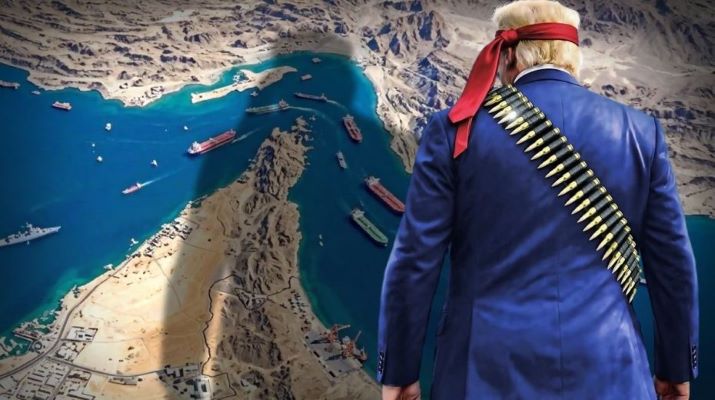
Yesterday I spent some hours, first listening to Danny Davis talking with economist Chris Martenson, then preparing a transcript/summary. The conversation was over 50 minutes long and somewhat dense—Martenson is an engaging presenter, but there’s a lot of info packed in. So I did a lot of editing, pruning, joining things together in ways that I thought helped a written presentation, adding words when I thought that would work better for my purposes. This is still Martenson, but I do highly recommend the entire video. Martenson lays out in accessible terms what we can expect from Trump’s crazy cave to Jewish Nationalist fantasies. Lots of food for thought in what follows, because this isn’t ending any time soon.
Before we begin, I came across this tweet this morning. I listened to the video and that’s a direct quote—what a disgrace:
Jimmy Dore @jimmy_dore
6h
Trump on the The U.S. navy currently seizing ships in the Middle East:
“It’s very profitable, we’re like pirates”.
Out loud admitting & even bragging that the U.S. is an international criminal organization. Wow.
Also, a heads up for the Martenson discussion that follows—the blockade, which IS an act of war—is likely to continue for some time. As you’ll see, that’s very bad news.
Chris Martinsen [sic]: The Consequence of the Iran War of Choice: an Oil Shock
DD: We often talk about the the war in Iran and how the process is going. Are we moving towards a resolution? Are we moving a ramping back up? Those are the things that are on the near term. But we are also have been talking all the way through because they’re inextricable. What is the consequence both to the global economy and to the US economy because of the stoppage in this dual blockade of the straight of Hormuz?
DD: Price of oil goes down, price of gasoline goes up–what’s going on?
Well, this is a very confusing time because, unfortunately, we have a very activist interventionist government. It’s pretty clear now that official sources have been monkeying around in what’s called the oil futures market. And big traders all over the world have been saying that someone just steps in and dumps huge amounts of oil all at once. What’s happening is somebody is coming in and seeking to set the price. In a single one minute trading window you might see as much as five or six million barrels of oil suddenly get sold, boom! and they’re highly coordinated with these press releases that come out, usually on a Monday or Friday, usually with some mysterious front-running by somebody which nobody’s investigating. But somebody knows these market-moving things are coming and they’re ready for that. And so that’s been the game. It’s been happening for a while, but it’s going to have a real cost. And I’m very worried about what this is going to lead to if they keep it up.
DD: Let’s just take a look at something President Trump said yesterday.
Trump: Venezuela was amazing, but now we’re we’re doing essentially—it’s larger—but we’re doing essentially the same thing in Iran. Can’t let Iran have a nuclear weapon. And their economy is crashing. The blockade is incredible. The power of the block blockade is incredible. They’re not getting any money from oil. And hopefully it can be worked out very soon.
This is nothing like the Venezuela situation. I think Iran has the upper hand at this point.
DD: Trump also claims that we’ll double oil production in a year and brags about all these empty VLCC tankers coming to the US because they can’t fill up in the Gulf. And he’s like, “Hey, this is really cool. we’re going to sell a lot of oil and make a lot of money.” But as Politico wrote yesterday, “if the price signals are right, US shale drilling operations can scale up relatively quickly, but that would still take 3 to six months to happen. In that time frame, the US might be able to add about a million barrels of oil a day. That comes nowhere near the roughly 10 million barrels of supply currently lost through the straight of Hormuz.” So is it a good idea for us to sell as much oil as we can and fill up those tankers?
This is a little bit complicated, but the details are worth it. And Trump is ignorant of the details. I don’t know why the energy secretary, Chris Wright, is just not doing his job. [Refers to chart from the first week of April.] What we can see here is that the United States is a net importer of oil. It’s axiomatic—an importer of oil is in no position to export oil. We import 6.3 million barrels, mostly medium and heavy grades of crude. Our refineries love that stuff. We produce a lot of this really light stuff because of the shale plays. We export 4 million barrels of that [light stuff] per day. 6 – 4 leaves you two. So, we’re a net importer of oil. That’s point one in this story. And point two is that if we are exporting oil, where is that coming from? What we’re doing is we’re taking our strategic petroleum reserve and we’re exporting that to the world. So, we are technically a net exporter of oil this past week, but that’s because we’re dipping into our inventories. There’s only so long you can do that before you have to stop doing that.
My understanding of what Martenson is saying runs like this: The US may currently be a net exporter, but it’s not a net exporter of current production. We’re a net exporter because we’re selling what’s supposed to be a strategic reserve to artificially keep prices down—in Europe, especially.
There’s a couple of risks here. First is that we’re going to get dangerously low on inventories and then we’re going to have to stop that. There’s only two ways you stop it. One, you close your oil markets down. You nationalize it or you just prevent exports, right? That’s a big problem if you’re going to tell companies, which are fairly powerful entities, ‘Hey, we’re not going to let you sell your oil at current prices for what what you could sell it for on the open market. We’re going to force you to sell it at this cheap price back here.’ That’s going to be fairly unpopular with a fairly powerful lobby for good reasons, right?
The second thing you could do is you could just let prices rise to sort of choke off that demand. That’s what’s should be happening. So, back in 2022, February, Russia invades Ukraine and its special military operation. Within weeks, oil vaulted all the way up to $120 and it bounced between $100, $120 for 5 months. And that was just on the prospect that the United States was going to sanction some Russian oil and keep a little bit off the market. This is five times larger than that could have possibly ever been right now. And we have to also include for some mysterious reason Russian oil and energy and fertilizer infrastructure is getting hit hard since the beginning of the Iran war, too. So that’s additive to anything we’re talking about the Gulf. Russia’s oil in the world is receiving daily drone attacks against its its key refineries. So, this is so much worse than 2022. It’s so much worse than 1973, ‘81. It’s worse than all of those moments put together. And yet oil seems to just want to be just under 100 in the US futures market, which is going to lead to trouble at some point.
To be clear, all these attacks on Russian refineries are enabled by US and NATO intel for targeting and guidance.
The real thing we have to look at–where countries begin to get a little nervous about things–is what inventories they have. Some countries have strategic reserves. Every country that imports oil has what we call commercial reserves, the tanks outside the refineries. And when you add those two together and you look at how much oil each nation is consuming on a daily basis, you divide one into the other and you find out how many days of inventory they have on hand. And when you get down near like 24 days, that’s where the panic starts to set in. If you got below 20, real panic sets in. We are already bouncing down at about the 22 day level here in the United States. So we don’t have that much longer.
This to me is the ticking clock in the story. People are like, “Oh, we’ll just blockade Iran and wait for them to fold.” Iran’s just sitting over here waiting for our days of inventory to dial down. That’s the game. And the clock is actually on Iran’s side at this point in time because when that panic finally sets in, all of a sudden we’re going to see what we call resource hoarding. Nations are going to say, “Can’t export this anymore. Russia’s already limited its exports. China did then released a few exports for some categories because I guess they had an abundance.” But if all of a sudden the United States gets the same religion, where’s Europe going to get its oil and gas from at this point in time? Where’s Japan going to get its oil and gas from? Where’s the whole Pacific Rim? The fact is it’s not going to be there. So, we could easily see oil prices $200, is that possible, $300, $500? These are all numbers that that become immediately possible given the scale of this. And all of this is predicated, on the idea that we get to some sort of peaceful resolution and some deal is struck and we begin trying to repair the output from the Gulf starting tonight. And and at least according to the latest news I saw on that front, everybody’s thinking that time is on their side.
If we look back to 2008, there was no war going on. What happened was out of six quarters, five of those saw just slight overages of demand relative to supply. Not a lot, half a million, 3/4 of a million barrels per day, but it was enough that we’re having slight supply disruptions because there just wasn’t enough coming out of the ground for various reasons. And that was enough to send the price in those terms, 2008 to $147 a barrel in July of 2008. In today’s dollars, that would be $228. This time we’re missing close to 14.5 million barrels a day so far, including from Russia. And we’re two months into this, right? So Goldman Sachs estimated, look, if peace breaks out tonight–rainbows, unicorns, it’s beautiful–It would take 6 months to get back to 88% of the normal flows out of the Gulf.
DD: Why will it take in six months to get back to 88%?
Three reasons. The first is logistics. The second is fixing whatever damage has happened. And the third is finding out what happens when they bring the oil fields back online that got shut down, and shut down kind of urgently–which is not the right way to do it. That could create damage. So first up logistics. All my contacts in the shipping business tell me there is this delicate choreography of ships coming and going that has been completely bolloxed up. Just unwinding that is going to be a month or two just just to get things back in shape. And of course, this requires the owners of those ships to trust that the peace is durable and real. Okay? So, you can imagine there’s going to be some hesitation for a while before everybody has the confidence that this is real. So, that that might be a month of confidence building alone. The second thing is I think even Goldman Sachs has to be doing some guessing here because one of the things the United States did early on was they asked the satellite companies not to provide pictures of the Middle East or Israel. So we don’t have a true damage assessment.
DD: How long can the fiction go on where we keep oil somewhere around $100 a barrel a day through all the manipulative means? At some point there’s just going to be a physically inadequate enough to conduct economy to conduct work to get things done and then you can’t mask that. But it’s been masked so far after 60 days. How long do you calculate that can continue?
Well, so far there’s there’s three big distillates that are really important in this. It’s kerosene or jet fuel, its diesel, and also it’s ship fuel or bunker fuel. The United States has been busy exporting its distillates. Europe needs them. If you look at a 5-year range of how much inventory we have, all of those are now at the bottom of the range and plunging through. So, we’re about to head into territory very soon–as far as I’m concerned, we’re already there–when we wake up and go, gosh, Europe, we’re really sorry, but we just can’t export any more jet fuel. Then all of a sudden European flights are going to have to physically shut down. They’ve been warning about this for a while. But if you actually run short on diesel, your country shuts down. Australia’s highly exposed. Japan’s highly exposed. Europe is highly exposed. And these attacks on Russia really aren’t helping because they were a heavy exporter of things like diesel and jet fuel. So it’s astonishing to watch our markets be this disconnected from what seems to me to be ground truth reality.
Energy is not like monkeying around with silver prices or gold prices or stock prices. Sure, you know, they can do that for a long time. Here’s oil. Very simple. We take it out of the ground. We do some things to it and we set it on fire. Because of that, we have this very simple situation where there’s only so long you can eat into these surface stocks. We started, we had both floating inventory [VLCC at sea] because that was those that conga line of ships coming and going as normal. That’s now gone as of April 20th. Now we’re eating into onshore inventories and those are going away. And the United States is doing about a million barrels a day out of its strategic petroleum reserve. Probably have about 410 million barrels left in there, but we’re pulling out at least seven a week right now. And there’s only so many weeks we can do that before we run out. And can’t go any lower because of issues.
I believe Martenson is referring to legal issues, that inventories from the strategic reserve can’t be depleted for these reasons below a certain point.
DD: So what’s your best guess before physical reality impacts paper reality and the price has to go up?
Probably about two weeks if we’re being normal. If we want to really be insane, it’s a whole month. That’s why I’m like, listen, we’re either going to have to negotiate–meaning honestly negotiate. We don’t just show up in Islamabad with a set of conditions and demands. We’re going to have to give some things up and Trump’s going to have to take a couple L’s [losses] or what feel like L’s in a normal negotiation. Either we get a negotiated outcome or you’re going to have to do something kinetic and attempt to force the Strait open. It’s a rock and a hard place for the United States right now.
DD: So tell me what you think it might look like, because it sounds to me like the longer we push that out, two weeks or four weeks, the longer we push that out and don’t get the resolution we’re looking for, then that increases the size of the spike that comes on the backside.
Let me put it this way. One of the most robust charts I have in all of economics is a chart that shows the GDP of countries on one axis and on the other axis is how much oil they’re consuming. And it’s a straight line [1:1 correlation]. Meaning that if you want to have more economy, you’re going to burn more oil. And this is just a it makes a lot of sense intuitively, right? Because we use oil to manufacture things, mine things, transport them. That’s what we call economic activity. So if you have more economic activity, you have more trucks, more planes, more ships, more mines, more everything. So okay, we’re missing 12.5 million barrels a day. How big was the world economy the last time it was organically burning 12 million barrels per day less? The answer to that is 2011. Second question, how big was the economy in 2011 compared to today? And the answer is it was 36% smaller. So if we deduct 12.5 million barrels a day from that, if that goes on till the end of the year, we’re going to be seeing a global depression. Because remember, the Great Depression was about a 20 to 25% hit to GDP. We’re talking something like 30 to 40%. And that’s obviously also coming at a time when the world, the West principally, is just saddled up to its eyeballs in debt. Lots and lots of debt. Federal debt, sure, but corporate debt, household debt. Debt does really poorly in an economic decline.
This is physics. All the other prior crises like the dot com crisis or the great financial crisis or any of those other ones. Those are basically human foibles, right? Oh, well, we made collateralized debt obligation paper or whatever. So, the Fed prints and covers it up. We’ve even had I think the Bank of England head just came out the other day and said, you know, we can’t adjust interest rates. We can’t adjust monetary policy. This is oil. We can’t print oil. They’re going to start figuring that out. The problem, I think, is that the United States has been living in this narrative fantasy land for so long that I’m not sure they really understand that this is physics at play. I think they think they can just continue to shape the narrative and it’ll all sort of pencil out. I just can’t see how that can happen.
DD: Now, one of the things President Trump says, apparently, he is aware of some of these dynamics. And he said a week or so ago, ‘Hey, don’t worry about it because a year from now, we’ll be doubling our oil output.’ But how exactly are you going to double our oil? Do you see the potential for us to meaningfully increase the amount of production in the United States in a year from now?
There’s a lot of analysts out there, people I talked to who really model this, saying that, yeah, there’s plenty of oil there, but we’re not going to get more out. So, for Trump to say we’re going to double, next question is where?
This breaking news, I saw a report the day before that said that as part of Trump’s prep for a renewed war he had called in the oil CEOs to the White House.
DD: This is breaking news. Exxon Mobile and Chevron have defied calls from the White House to increase production. They’re saying, No, we’re not going to do that.
I’m pretty sure what Exxon and Chevron said is, “Hey, there are operational realities here and we can’t just do that, right? Here’s why.” Because believe me, if they could pump more, they would. That’s their business. They’re trying to maximize capital, you know? So you got it, you pump it. But they have realities and so they have to manage things. So Exxon has a big footprint in the Permian. They bought up a lot of shale companies so their job is to try and optimize how do I get the most oil out of this? It’s very delicate and if they over drill it and reduce the pressure, they might end up damaging the field, getting less out. It’s a super complex business how they manage fields, pressures, and all that stuff, drill programs. And the other problem here is that there’s one more thing we have to talk about, the oil futures market. So, yes, if you see oil’s around $100 a barrel today, you’d say, “Wow, that’s going to be super stimulative for these companies. They should just go out and start drilling.” But they don’t drill for the oil price today. They look at the futures curve and they see what oil is selling for in a year when this well comes online. And there, it’s all the way back to $70 a barrel. It’s not worth it to them to drill faster at this point in time because for some reason the oil markets have decided that oil’s going to just go back in price a year from now. They don’t believe it. The head of Diamondback Energy said our futures market, oil futures market is lying to us. They know the reality on the ground.
They’re managing it like it’s just another market function that they can control. And the problem is that it sends the wrong signals, the wrong incentives. Oil companies aren’t going to expand their drilling. And we’re going to get into a severe shortage later on. It’s the most ignorant of reality that I’ve ever seen things be.
DD: Given the the proclivity to continue with magic or manipulation of the markets, but the physical reality is going to impose itself, what do you think August, September, will look like? What can we expect or what do you project the oil price will be in the magic scenario?
We clearly have to get somewhere between $200 and $300 to begin balancing supply and demand, maybe higher. By fall, we’re still going to be–best case–still short two to three million barrels a day because of all the damage and fixing stuff and all that’s going to happen. But the other thing I have to talk about here is that we’ve been talking about oil. Of course, LNG, liqufied natural gas, 20% of the world’s supply of that is missing. And the United States can’t make all that up. And Australia, the other exporters cannot possibly make it all up. So that’s also beginning to really bite. But it goes beyond that. I’m going to show a chart now. This is what’s been missing out of the straight of Hormuz. [Discusses with chart shortages of fertilizer, sulfur, aluminum, chemical products, chemical precursors for plastics, and on and on. And what that means for the world economy.]
Read and reread this next carefully:
The whole system is going to have to work through all of those disruptions and all of those key very upstream precursor chemicals and products that go into everything that we call our modern economy. We’ve never experienced a shock like this and across so many different vectors at once. So every one of those things I just mentioned could have its own entire analysis and would be its own crisis.
DD: Okay. Well, that’s scary because now we’re going to look at two other scenarios, because the magic [resolution tonight] is the least likely to happen. We all hope it does. It’s not zero, but it’s probably not very high. The other two scenarios are either, one, President Trump just says, Hey, you know what? Time is on our side. We can outlast them. So, if the blockade continues on and let’s say it’s a month from now, just one month from now. What does that do to September?
Well, it just makes it a lot worse. And as the blockade goes on, again, the pressure is building. The clock is ticking. And I believe it’s ticking more loudly on our side than Iran’s side. Iran’s pain tolerance is pretty high. They demonstrated that in the Iran-Iraq war. Iran is this close to their goal that they’ve been preparing for for 40 years. I don’t think they’re just going to back down because things got a little tight for them. They’re ready for this. I think our pain level is set around $5 a gallon national average price. And so the other ticking clock for Trump, of course, is the elections coming up in November, right? So, this has to be resolved soon.
And, you know, we’ve seen them come out with this wall of propaganda to say, “Oh, this is hurting Iran really badly.” They’re going to have to fold soon. Now, that sounds like a hope strategy to me. We hope that they’re going to fold soon because of this pressure we’re putting on them. Maybe, maybe not. Hope is a terrible strategy investing and probably in this situation. The other problem that we’re going to be facing here is that the wild card in all of this is Israel. We all know that there’s always the chance that Israel may just decide to get this all going in a kinetic fashion again. What Iran has said is like, well, we’re going to target several things here. First, American ships, but also the East West pipeline that is supplying 3 to 4 million barrels a day of relief crude coming out of Saudi Arabia to the Yanbu port in the Red Sea. They’re going to shut down the Fujaira pipeline and port. So if they did that, you can take whatever I’ve just told you and just double it because that would be another 10 million barrels a day that’s now missing in action.
So far, Iran has been engaged, as you know, in tit for tat, I think, pretty effectively, right? But they’ve promised that if this goes on again that this next tat is going to be very damaging and the gloves will come off, actually hitting the core of the refinery complex. If you hit the big tanks and they catch very dramatically on fire and make lots of black smoke, those are relatively easily replaced. But if you hit the cracking towers or the more sensitive pieces of the refining trains, then those can take a long time to rebuild. They’re all custom built and it would take a while to get all that done. It would probably take a year, but that’s under normal circumstances, not when you have to replace eight of them or 10 of them or hundred of them all at once, right? The capacity just isn’t there to really build those quickly. So if we get to openly destroying the direct infrastructure, I don’t think there’s any recovery from this. You have to measure it in years.
And then we have to start asking questions. What happens to our financial markets when we’re printing money like crazy, spending money like crazy, and there’s an actual shortage on top of that? It’s going to be the biggest inflation we’ve ever seen. And what does that look like in terms of an average person’s daily life in the United States? Is it just more when they fill up or what other impacts could that have? Well, the direct impacts are going to simply be anything that’s missing in action. Like we didn’t make enough plastic, so we don’t make enough plastic bags, so we couldn’t bag the potatoes in this harvest. Like there’ll be lots of food inflation, obviously. There’ll be regular energy inflation, gas at the pump, all of that. But those have these secondary effects that bleed into everything because, you know, oil is such an important component of the manufacturing and shipping. So pretty much everything just dials up. This gets wonky really quickly. We’re facing a situation where we could be heading into the high double digit inflation over the next two years under that scenario, where we get to 18-20% inflation. Everything, mortgages, auto loans, gets impacted at that point in ways that are almost impossible to predict. But we just had Jamie Dimon and Hank Paulson come out in the last week and both of them said, ‘Uh, you know, what’s happening in the bond market could be,’ and I’m quoting directly here, “terrible.” That’s kind of hyperbolic language for guys who are usually pretty diplomatic. There’s a lot of rumblings now that our credit markets could really get destroyed. That’s very sobering, and those are public statements. One can only imagine that behind the scenes in the White House there’s got to be alarm bells going off.
DD: I know that for the military side, all the way up to the joint chiefs of staff level, that all the commanders are of one voice saying, ‘Don’t restart this, just militarily because it can’t work. We can’t force the Strait open. You can’t militarily compel that. We don’t have the resources for it. Just doesn’t exist. So they’re saying, ‘Don’t try.’ But then there’s another whole group that are screaming, No, it will work! Trust me!’ And they’ll try that. But there has to be a similar kind of discussion going on economically. Do you have any knowledge or insight into what may be behind the scenes in the White House being told to him economically?
Again, read this next carefully, in light of all the reports we’re seeing that Russia is now seriously considering war on NATO in Europe, partly because of NATO’s attacks on the Russian oil industry.
No, I mean there was this Sy Hersh article that came out yesterday and he mentioned that from an Israeli contact that Trump suddenly has sort of realized maybe he didn’t get the best of information from BB or wherever he was getting his information. I think Trump thought it was going to be like Venezuela, just didn’t understand for some reason that Iran is totally a different beast from Venezuela. I mean completely different. So now he sort of figured that out and he has a tiger by the tail and he doesn’t know what to do. And the clock is ticking and he’s going to have to choose. Either he’s going to have to concede some things that I think from what I understand of him are going to be difficult psychologically to do, or he’s going to have to go hard against this. But he can’t just continue to wait this out and hope that they’re going to fold before we do, because actually it’s not just the United States on the line. It’s the whole world economy. And so China’s going to begin to have some have some things to say about this. Russia is going to have some things to say about this. All of the rest of the world is going to have things to say about this. And it’s been a little awkward watching Trump go, ‘Well, if we walk away we’ll let the rest of the world open it up. We’ll be fine.’ I’m not sure diplomatically that’s the right message to be sending when the rest of the world is facing the prospect of starvation, if not famine, based on the fact that 40% of the world’s nitrogen fertilizer went missing in action during the spring fertilizing season.
DD: If somebody from the White House were watching this show right now, they said, “You know what? Chris needs to talk to the president and give him some advice. If you could give Trump advice and he would just say yes to whatever you would say, what would you recommend as a course of action right now to get us back on a path to limit the damage for this fall?”
We would have to do whatever was required to make peace. We’d have to understand something that’s going to be very difficult, which is that Iran actually holds the cards in this story and we’re going to have to find out what their demands are. And they’ve been pretty clear about it, right? ‘Hey, we get control over the strait. We want reparations, right?’ That sounds like a giant L. You know, whoever pays reparations is usually the loser in the story, right? And they want the reparations to include the idea that all the sanctions get lifted, frozen assets get lifted and then they want guarantees that there aren’t going to be any more such attacks. I don’t know how you give that guarantee without putting a new leash on Israel, which no American president seems to have wanted to do since LBJ. That’s the wild card in all of this, because if the United States continues to arm and fund Israel in this story, I don’t know how you make a security guarantee because of their history in and how they’ve behaved. So, that’s probably going to be the hardest part about all of this–figuring out how to put Israel back in some sort of a box, which again, no president’s done in my lifetime. Sounds hard. Economic pain may have a way of introducing a way to to do that and just hope it’s not too late.
Martenson is actually treading rather carefully here, because everyone knows that Israel the country doesn’t control the US.
There’s one last sort of thing hanging out there that could happen, which is that if magically somehow Alberta’s output and Venezuela’s output and Mexico’s output were all combined with our output, we could sit on that for for a pretty good piece of time. But it means, of course, moving from that unipolar world to the multipolar world, when the dust settles, China now has access to that whole region with Russia. We have access to this region and we sort of have to content ourselves with with that arrangement. [discussion of difficuties, especially re Venezuela]
Valy @liderfiscal
17h
BREAKING NEWS The daughter of Republican State Senator Jay Block:
“Israel pays money to my father, and he spreads propaganda.
I am deeply ashamed of this situation. I believe my father has sold his soul to the devil.
https://meaninginhistory.substack.com/p/what-trump-hath-wrought