
The American Footprint in Germany: A Schnitzel-Fueled Alliance
Trump’s reported decision to withdraw 5,000 US troops from Germany is a curious symbolic gesture that has been greeted with alarm from many German politicians. The United States still maintains a robust military presence in Germany, with approximately 35,000–40,000 troops stationed across the country—primarily under US European Command (EUCOM) and US Army Europe and Africa (USAREUR-AF). This presence represents one of the largest overseas American military deployments, a strategic partnership forged in the aftermath of World War II and refined through decades of Cold War tension, NATO collaboration, and an inexplicable German efficiency that makes American logistics look like a high school group project. Did you know that Germany hosts more American military personnel than some American states have active-duty troops. I decided it is time to give you a detailed catalogue of the US presence. Ask yourself, does this still make strategic sense?
The Strategic Footprint

Why Germany? (Besides the Beer)
Germany’s geographic position in Central Europe makes it the ideal staging ground for:
- Rapid deployment to Eastern Europe, the Middle East, and Africa
- NATO coordination and collective defense operations
- Logistical support for European and African theaters
- Access to excellent bakeries and a transportation system that actually runs on time
The installations are concentrated in two primary regions: Bavaria (southern Germany) and Rheinland-Pfalz (southwestern Germany), with additional key sites in Baden-Württemberg and Hesse.
Major US Air Force Bases

Ramstein Air Base — Kaiserslautern (Rheinland-Pfalz)
The Crown Jewel of American Air Power in Europe
- Headquarters: US Air Forces in Europe – Air Forces Africa (USAFE-AFAFRICA)
- Significance: Largest US Air Force base outside the United States
- NATO Role: Critical airlift and logistics hub
- Local Economy Impact: Essentially keeps Kaiserslautern’s döner kebab industry afloat
Ramstein is the beating heart of American air operations in Europe. If you’ve ever wondered where all those C-130s are going, the answer is probably “through Ramstein.” It’s also home to the Kaiserslautern Military Community (KMC), which includes thousands of service members, their families, and an American-style commissary that somehow stocks ranch dressing in a country that has never heard of it. Most importantly, at least for wounded soldiers, sailors and Marines, the Landstuhl Medical Center is located adjacent to Ramstein.
Fun Fact: Ramstein hosts one of the largest Fourth of July celebrations outside the United States. Fireworks, hot dogs, and bald eagles (metaphorically speaking) in the heart of Europe.

Spangdahlem Air Base — Near Bitburg (Rheinland-Pfalz)
The Fighter Wing’s Home Away from Home
- Primary Unit: 52nd Fighter Wing
- Mission: Air superiority, close air support, and looking incredibly cool during takeoff
- Local Specialty: Proximity to the Mosel wine region (purely coincidental)
Spangdahlem serves as a forward operating location for tactical fighter aircraft. The 52nd Fighter Wing operates A-10 Thunderbolt IIs and F-16 Fighting Falcons, ensuring that the skies over Europe remain contested only by commercial airliners and the occasional confused goose.
Major US Army Garrisons & Installations

US Army Garrison Ansbach — Ansbach Area (Bavaria)
The Bavarian Aviation Hub
Key Sites:
- Barton Barracks
- Bismarck Kaserne
- Katterbach Kaserne
Primary Mission: Aviation support, including rotary-wing operations
Ansbach is home to the 12th Combat Aviation Brigade, which means helicopters. Lots of helicopters. If you live near Katterbach and hear the distinctive thwop-thwop-thwop of a Blackhawk at 6 a.m., congratulations—you’re experiencing freedom at high decibels.
US Army Garrison Bavaria — Grafenwöhr / Vilseck / Hohenfels (Bavaria)
The Training Powerhouse
Key Sites:
- Tower Barracks (Grafenwöhr)
- Rose Barracks (Vilseck)
- Hohenfels Training Area
Claim to Fame: One of the largest and most sophisticated military training complexes in Europe
This garrison is where soldiers come to train, sweat, and occasionally wonder why they signed up for this. The Joint Multinational Readiness Center (JMRC) at Hohenfels hosts rigorous combined-arms exercises, making it the European equivalent of the National Training Center—except with better beer and more castles nearby.
Reality Check: Grafenwöhr’s training area is so large that you could fit a small European country inside it. Liechtenstein, we’re looking at you.

US Army Garrison Kaiserslautern — Kaiserslautern Military Community (Rheinland-Pfalz)
The Mega-Community
Key Sites:
- Kleber Kaserne
- Daenner Kaserne
- Landstuhl Medical Center
- Various support facilities
Integration: Closely tied to Ramstein Air Base
The Kaiserslautern Military Community (KMC) is the largest American community outside the United States. It includes schools, shopping centers, medical facilities, and enough Taco Bells to make any homesick soldier weep with joy. The KMC is so expansive that it has its own radio station, newspaper, and probably a secret society of spouses who have mastered the German bureaucracy.
US Army Garrison Rheinland-Pfalz — Baumholder & Surrounding Areas
The Rural Stronghold
Key Sites:
- Smith Barracks (Baumholder)
- Additional regional support sites
Character: Small-town Germany meets American military efficiency
Baumholder is the kind of place where everyone knows everyone, the local Gasthaus serves both schnitzel and burgers, and the annual Volksfest is attended by equal parts Germans and Americans. It’s a microcosm of transatlantic friendship, lubricated by Bitburger beer.
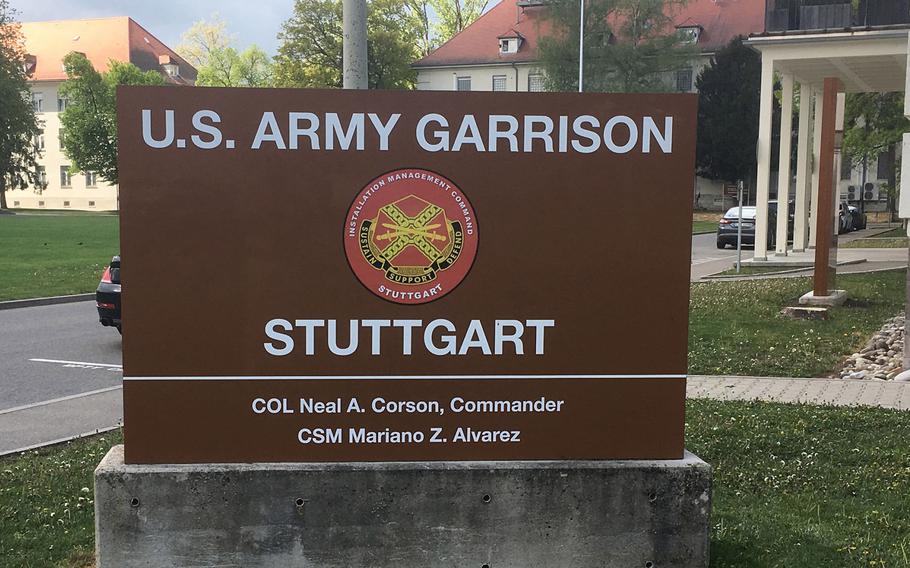
US Army Garrison Stuttgart — Stuttgart Area (Baden-Württemberg)
The Command & Control Nexus
Key Sites:
- Patch Barracks (EUCOM headquarters)
- Kelley Barracks (AFRICOM headquarters)
- Panzer Kaserne
Strategic Importance: Headquarters for two combatant commands
Stuttgart is where the big decisions happen. US European Command (EUCOM) and US Africa Command (AFRICOM) are both headquartered here, which means a lot of officers, a lot of PowerPoint presentations, and a lot of very serious meetings about global security. Also, Stuttgart is home to Porsche and Mercedes-Benz, so the parking lots are… aspirational.
Note: If you see a general walking around Patch Barracks, salute. If you see a Porsche 911 in the parking lot, admire from a distance.

US Army Garrison Wiesbaden — Wiesbaden (Hesse)
The USAREUR-AF Headquarters
Key Sites:
- Clay Kaserne
Command Role: Headquarters for US Army Europe and Africa (USAREUR-AF)
Wiesbaden is the nerve center for Army operations across two continents. It’s also a beautiful spa town, which means that high-ranking officers get to make critical strategic decisions while enjoying some of the finest mineral baths in Europe. Tough life.
Other Notable Sites

Garmisch-Partenkirchen — The Alpine Outpost
Key Sites:
- Artillery Kaserne
- George C. Marshall European Center for Security Studies
Unique Selling Point: Nestled in the Bavarian Alps, because why not combine national security with world-class skiing?
The Marshall Center is a premier institution for security studies, hosting military and civilian leaders from around the world. It’s also located in one of the most picturesque towns in Germany, which makes it the envy of every other military installation on the planet.
Pro Tip: If you get assigned to Garmisch, you’ve won the military assignment lottery. Enjoy the Zugspitze and try not to brag too much.
Cultural Exchange & The Schnitzel Factor

The American-German Symbiosis
The US military presence in Germany has created a unique cultural exchange:
What Americans Bring:
- Fourth of July barbecues
- American football (the kind with helmets)
- An inexplicable love of ranch dressing
- Enthusiasm
What Germans Teach Americans:
- Punctuality
- Engineering precision
- The proper way to recycle (it’s complicated)
- That bread can, in fact, be delicious
Shared Interests:
- Beer
- Sausages
- Complaining about the weather
- A mutual appreciation for efficiency
The Economic Impact
The US military presence contributes billions to the German economy annually. Local communities benefit from:
- Employment: Thousands of German nationals work on US installations
- Real estate: Off-base housing creates demand in local markets
- Retail & services: From car dealerships to restaurants, American spending power is significant
- Tourism: Military families explore Germany, boosting the tourism sector
Translation: American soldiers keep the local economy humming while simultaneously keeping the local bakery in business. That’s why Chancellor Merz is upset with Trump’s reported decision to start withdrawing US troops… The US represents one of the last centers of positive economic activity in Germany.
Strategic Significance in the Modern Era

DOES IT Still Matter?
With the breakup of the Soviet Union, the US military presence in Germany no longer makes sense.. But it does make cents, at least for the Germans. The real reason for the continued US presence in Germany is that Germany provides a strategic launch pad for US hegemonic adventures:
- Rapid response: Ability to project power quickly to the Middle East and Africa
- Logistics: Unmatched infrastructure for moving personnel and equipment
- Medical Care: Landstuhl Medical Center, which is located adjacent to Ramstein Air Force Base, is the first stop for US troops that are wounded in the Persian Gulf
The Bottom Line: These bases are historical relics, but they remain active components that enable US military adventures in the Persian Gulf, Afghanistan and Africa.
Conclusion: More Than Just Bases
The American military presence in Germany once was a testament to enduring partnership, shared values, and an emblem for leaders who embraced the myth that security is a collective endeavor. That era is dead and dying. Germany needs the US presence because of its economic stimulus to a decaying German economy. And the US needs Germany as a critical logistics hub for sustaining operations, like the current war with Iran.
The continued US presence in Germany is predicated on the belief that the US needs a forward location for staging troops and other military assets in preparation for attacking other countries. Washington politicians and policymakers continue to delude themselves with the lie that we are there to deter foreign aggression. However, the record of the last 66 years, starting with Vietnam, shows that the country that has been most active attacking other countries that die not attack the US is the US. I think it is time we come home and clean up our own domestic mess.
https://larrycjohnson.substack.com/p/the-american-footprint-in-germany