
The Fifth Year
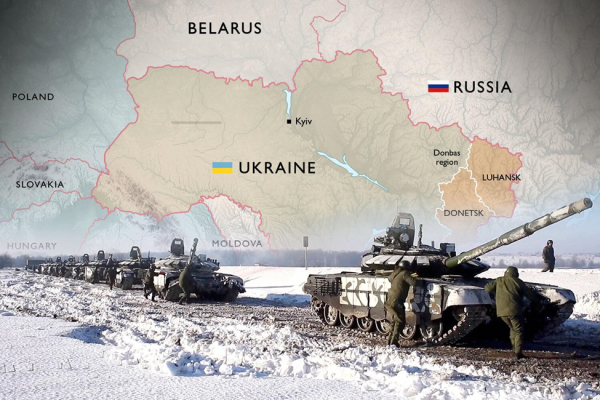
Russia’s Special Military Operation against Ukraine has entered its fifth year. No one anticipated that this conflict would last this long, or end up impacting global geopolitics to extent it has.
I have been travelling to Russia off and on since April 2023. Since that time I have made six trips (and have had a seventh blocked by the US State Department), during which time I have reported on what I call “the Russian reality”, all in support of a campaign I’ve entitled “waging peace.”
When I first started my travels, I was hosted by Alexander Zyrianov, a Russian businessman who served as the General Director of the Investment Development Agency for the Novosibirsk region. Alexander provided me an entree into not just the splendor and structure of Russia’s two main cities, Moscow and Saint Petersburg, but also the expanse of the Russian Federation itself, visiting places such as Novosibirsk, Irkutsk, Ekaterinburg, Izhevsk, Votkinsk, Kazan, Volgograd, Sochi, Grozny, Sevastopol, Donetsk, Lugansk and other locations in between.
The collaboration between Alexander and I came to an abrupt halt in June 2024, when in what appears to be a coordinated effort I was prevented from flying to Russia when the State Department seized my passport as I was preparing to board the aircraft that was taking me to Saint Petersburg, where I was scheduled to speak on two panels as part of the Saint Petersburg International Economic Forum, and Alexander was arrested by the Novosibirsk FSB on charges of corruption and bribery.
We are approaching the second year of Alexander’s detention. Five specific charges were levied against him, and all five charges have been argued before a judge. In every case, the witnesses brought forth by the prosecution confirm what Alexander has maintained since the time of his arrest—that he is innocent of all charges.
The real issue at stake is Alexander’s job as the General Director of the Investment Development Agency for the Novosibirsk region. Under Alexander’s direction, this agency spearheaded investments into Novosibirsk which helped transform the region into the fastest growing in all of Russia. Needless to say, Alexander’s work caught the attention of the Novosibirsk leadership, some of whom wanted to take control of what had become a very powerful instrument of wealth and influence.
Alexander ran a clean operation—too clean. He didn’t bribe the right people (he didn’t bribe any people!), or grease the right palms. And when the regional FSB came knocking in November 2023, telling him to step aside so a protégée of a senior Novosibirsk official could take over, Alexander told them to pound sand.
So they had him arrested on false charges of corruption and bribery—the very actions Alexander refused to engage in.
In a strange twist to this plot, the Moscow FSB launched a series of raids which resulted in a number of Novosibirsk criminal groups being arrested, accused of running call centers on behalf of the Ukrainian government which generated more than 210 million rubles ($2.8 million) in funds which were then transferred to Ukraine. In addition to the organized crime leaders arrested by Moscow, several local FSB officers were arrested—including those who were involved in threatening and eventually arresting Alexander. (The individual at the center of this scandal is named Magomed Tsadaev, better known as “Maga”. Two of the FSB officers who helped arrest Alexander, and who helped provide protection for “Maga”, today sit in the same prison as Alexander.)
In January 2024 Alexander and I toured the territories of Crimea, Kherson, Zaparozhia, Donetsk and Lugansk so that I could get a better “feel” for the realities associated with the ongoing Special Military Operation. The Ukrainian government condemned this visit, and put a target of both my back and Alexander Zyrianov’s back.
Alexander and I were scheduled to return to these territories as part of our cancelled June 2024 trip.
The same people involved in illegally raising money in support of the Ukrainian government in Novosibirsk are involved in orchestrating Alexander’s arrest.
And there is every reason to believe that the Ukrainian government put pressure on the US State Department to cancel my passport. When the FBI raided my home in August 2024, they did so on the basis of a search warrant whose affidavit of probable cause remains secret. There is reason to believe that this affidavit was sustained by information provided by the special services of Ukraine—the same ones behind the fabrication of corruption charges against Alexander Zyrianov—to the United States State Department and the FBI.
It is the Ukrainian government that took the lead in labeling me an agent of the Russian government, and the State Department and FBI acted on these false and unsubstantiated allegations.
There is no doubt in my mind that there is a connection between Alexander’s arrest, and the seizure of my passport and subsequent actions of the FBI in raiding my home, and that the forces behind the “Maga” scandal are responsible for both actions. Fortunately for me, a change in political leadership here in the US brought an end to the Ukrainian-directed attacks on me by the FBI—my passport was returned in July 2025, and I have been able to resume my journalistic work in Russia, much to the chagrin and angst of the Ukrainian government. Alexander, however, continues to languish in prison, an innocent man caught up in a political scandal he had nothing to do with.
When my passport was seized and my home raided back in the summer of 2024, I lamented what I called “my lost summer”, and set down my true motivation for travelling to Russia:
I took my inspiration from the words of President John F. Kennedy, who in a commencement address to American University delivered on June 10, 1963, implored the American people “not to see only a distorted and desperate view of the other side, not to see conflict as inevitable, accommodation as impossible, and communication as nothing more than an exchange of threats.”
I traveled to Russia because I wanted to inject hope into the American narrative about Russia.
“No government or social system,” Kennedy said, “is so evil that its people must be considered as lacking in virtue. As Americans…we can still hail the Russian people for their many achievements–in science and space, in economic and industrial growth, in culture and in acts of courage.”
I traveled to Russia to witness firsthand the virtues of the Russian people.
“It is an ironic but accurate fact,” Kennedy noted, “that the two strongest powers are the two in the most danger of devastation. All we have built, all we have worked for, would be destroyed in the first 24 hours. And even in the cold war, which brings burdens and dangers to so many nations, including this Nation’s closest allies–our two countries bear the heaviest burdens. For we are both devoting massive sums of money to weapons that could be better devoted to combating ignorance, poverty, and disease. We are both caught up in a vicious and dangerous cycle in which suspicion on one side breeds suspicion on the other, and new weapons beget counter-weapons.”
I traveled to Russia to prevent a Third World War.
“In short,” Kennedy declared, “both the United States and its allies, and the Soviet Union and its allies, have a mutually deep interest in a just and genuine peace and in halting the arms race. Agreements to this end are in the interests of the Soviet Union as well as ours–and even the most hostile nations can be relied upon to accept and keep those treaty obligations, and only those treaty obligations, which are in their own interest.”
I traveled to Russia to help prevent a new arms race.
So,” Kennedy concluded, “let us not be blind to our differences–but let us also direct attention to our common interests and to the means by which those differences can be resolved. And if we cannot end now our differences, at least we can help make the world safe for diversity. For, in the final analysis, our most basic common link is that we all inhabit this small planet. We all breathe the same air. We all cherish our children’s future. And we are all mortal.”
I traveled to Russia for the sake of my children’s future.
The Kremlin at sunset, January 2024
This motivation holds true today, and has been further reinforced by the birth of a granddaughter, Marceline Salome, who has brought new urgency to the cause of peaceful relations between Russia and the United States.
I returned to Russia in August 2025, and again in October 2025, November 2025, and March 2026, and each trip was dedicated to the principles and values codified in Kennedy’s American University address.
All of my prior trips were built on the foundational work done by Alexander Zyrianov and I during my first two visits in 2023 and 2024.
But it is now 2026.
To pretend that Russia has remained statis in terms of its economy, military posture, foreign relations and domestic political realities is a recipe for analytical disaster.
Russia is entering its fifth year of the Special Military Operation. Since the Special Military Operation began in February 2022, Russia has undergone significant changes in how it functions economically, diplomatically, militarily and politically—so much so that the Russia of today is unrecognizable to the Russia of early 2022.
As an observer and commentor on all things Russian, it is imperative that I keep pace with the present reality—especially if my mission in travelling to Russia is centered on the concept of “bringing the Russian reality to the American people.”
I will soon be undertaking my seventh visit to Russia.
It goes without saying that this visit, like all my visits, will be vociferously opposed by the Ukrainian government and its many supporters—including those agents of Ukraine, like “Maga”, who operate inside Russia.
For this reason, the specifics of my planned visit need to remain confidential.
But I can assure all those who follow and support my work that this visit will involve a comprehensive reappraisal of what constitutes the Russian reality today, and that my assessments will be reported in a manner faithful to the facts.
The US and Russia today struggle with the problem of how to align our respective national interests so that we can harmonize relations.
The good news is that both governments appear to have a genuine desire to pursue peace over war.
Here in the United States we have a system that has been corrupted over the course of many decades by the disease of Russophobia.
One of the basic tenets of Russophobia is disinformation. The proponents of Russophobia are masters of distortion, and can twist facts—especially those taken out of context of flawed in some superficial manner—so they mean the opposite of what reality mandates.
Anyone who tries to define the “Russian reality” from perspectives that are grounded in a fact base that is out of date and as such no longer accurate and relevant only feed the Russophobia of those who oppose any possibility of peace between Russia and the United States.
I have always maintained that one cannot solve a problem unless one first accurately defines the nature of the problem—otherwise, the solution that is pursued solves nothing.
We all should seek better, more peaceful relations between the United States and Russia.
This goal will be opposed by those who promote conflict based upon the lies that are promulgated through the practitioners of Russophobia.
The antidote for Russophobia is fact-based truth.
Statue of Peter the Great, Saint Petersburg
Russia is entering its fifth year of conflict with Ukraine and the collective West.
If we continue to assess Russian reality from a dated perspective using a fact set that has expired, we will find that we not only are incapable of solving the problem of how to improve US-Russian relations, but we are magnifying the problem by creating opportunities for Russophobes to exploit the resulting analytical miscues for their own nefarious objectives.
Sometime in the not so distant future I will be venturing back to Russia.
I will travel to Russia to inject hope into the American narrative about Russia.
To witness firsthand the virtues of the Russian people.
To prevent a Third World War.
To help prevent a new arms race.
For the sake of my children’s future.
And for the sake of the future of my newborn granddaughter, Marceline Salome.