
The Hidden History of World War II — and the System It Created
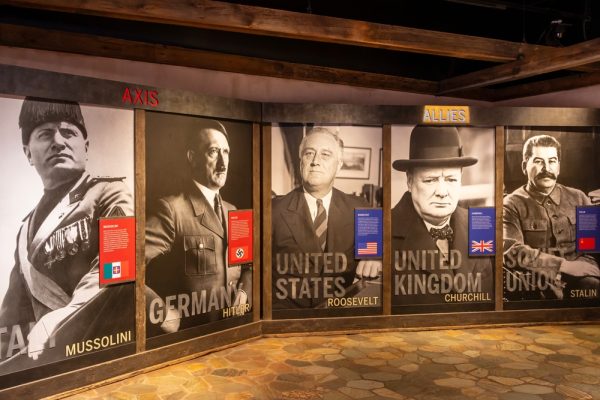
Who really won the twentieth century?
The standard answer is familiar: fascism was defeated, democracy preserved, and the United Nations created to secure peace. Communism, after shaping much of the postwar world, eventually collapsed decades later under its own internal pressures.
This is the schoolbook version. It is also inaccurate and leaves out a crucial dimension.
In a previous article, World War II Didn’t End in 1945 — It Changed Form, I argued that the war’s most important consequences were not confined to the battlefield, but continued through the systems that emerged in its aftermath.
This article extends that argument by examining a wider body of revisionist and marginalised historical literature that seeks to explain how those systems came into being.
The deeper story is not simply one of nations, ideologies, or battlefield victories. It is the story of financial power: the ability to create money, fund revolutions, finance wars, shape reconstruction, and then write the moral history of the conflict afterward.
World War II did not merely destroy Germany and Japan. It reorganised the world. It left Europe shattered, Britain indebted, America indebted and militarised, Eastern Europe under communist domination, and the newly created United Nations positioned as the institutional centre of a managed global order.
America emerged from the war seemingly victorious, yet was transformed into a more permanently militarised state—its economy shaped by wartime production and defence spending, its federal debt expanded to unprecedented levels, and its financial system increasingly centred on central banking. Political, corporate, and military institutions became more closely integrated into what would later be recognised as the military–industrial complex, with policy increasingly aligned to long-term geopolitical strategy. Meanwhile its financial system became more closely tied to the expansion of debt-funded military power.
In this sense, the war did not end mobilisation; it institutionalised it.
The victors were not merely states. The real victors were systems.
And above all, the real victors were those who controlled credit, debt, trade, reconstruction, and the postwar institutions.
To explore this more deeply, it is necessary to look beyond conventional accounts. A range of revisionist historians argue that the rise of communism, the financing of major conflicts, and the structure of the postwar order cannot be understood without examining the role of international finance, transnational institutions, and elite networks operating across national boundaries.
A number of these authors describe this in terms of Jewish-owned banks and organisations, secret societies, or religious-political orders. I examine controversial and marginalised accounts from over 60 authors in my book Censored History – A Survey of Marginalised Histories of World War II.
These interpretations are contested, and often dismissed, but they raise an important question: to what extent are modern conflicts shaped not only by nations and ideologies, but by systems of financial power that operate above them?
This article does not seek to settle these debates, but to highlight a number of interpretations—particularly those that sit outside the mainstream narrative.
One recurring theme across many of these interpretations is the role of war as an instrument of economic and institutional power. Smedley Butler, the decorated U.S. Marine Corps general, put the matter bluntly in 1935:
“War is a racket.”
Butler said he had spent much of his military career as “a high-class muscle man for Big Business, for Wall Street and for the bankers.”
Capitalism and Communism: Enemies or Instruments?
The twentieth century was presented as a struggle between capitalism and communism. But this framing hides a more disturbing possibility: that monopoly capitalism and state communism, despite their ideological differences, were not true opposites, but parallel management systems serving centralised power.
Free enterprise and monopoly capitalism are not the same thing. Local ownership, family property, independent farms, small businesses, and national sovereignty represent one model of economic organisation. Vast banking combines, multinational corporations, debt-based monetary systems, and managed economies represent another.
Communism destroyed private property from below.
Monopoly capitalism absorbed it from above.
The end result in both cases was concentration of economic power.
Communism concentrated ownership in the state. Monopoly capitalism concentrated ownership in corporations and banks. In both systems, critics argue, ordinary people became dependent on structures they did not control.
This is one reason why the supposed opposition between capitalism and communism has drawn scrutiny in some revisionist analyses. The Soviet Union, particularly in its formative decades, relied to a significant extent on Western finance, technology, industrial contracts, and technical expertise. As described in a recent article, Antony Sutton, in his studies of Western technology and Soviet development, argued that the USSR was built to a significant degree with the assistance of Western banking and industrial interests.
Such observations raise a broader question: if communism was presented as the principal ideological adversary and mortal enemy of capitalism, why did elements within the Western financial and industrial world support its development?
Some authors suggest that communism was never a threat to monopoly power in the way ordinary people were told. It was a threat to religion, property, family, tradition, and independence. But it was not necessarily a threat to concentrated economic power . From this perspective, communism may be understood as one route to centralised control, while corporate globalism is another. Different systems—but, in certain respects, converging tendencies toward concentration of control and power.
Whether one accepts this interpretation or not, the question it raises remains significant: to what extent were the ideological conflicts of the twentieth century also shaped by underlying structures of economic and institutional power?
I also note the words of author Louis Marschalko (1912–1980), a Hungarian journalist and writer. In his book The World Conquerors – The Real War Criminals, Marschalko asserts that behind communism, capitalism, world wars, and societal upheavals lies a single driving force he frames as “Jewish tribal nationalism.” He asserts in his writings:
“It is our vocation to rule the world,” proclaims this aggressive minority. “Either as American banker or as Soviet Commissar we form but one nation.”… Capitalism and Bolshevism, the two great ruling systems of our modern age, are not two opposing movements but that they rather present two different forms of expression of the same Jewish ambition to obtain world power… The attempt to bring about a conflict between Capitalism and Bolshevism is therefore a most terrible deception. The enmity directed towards Christians and Arabs proceeds from both these systems.”
“We are one nation”, stated Theodore Herzl, the founder of Zionism. “We are neither American Jews nor Soviet Jews, but only Jews!”
This perspective—that capitalism and communism are, in reality, tools of a single financial power operating behind political figureheads—is also presented in Eustace Mullins’s The $5 Trillion Cold War Hoax. In that work, he argues that the political stand-off known as the “Cold War” between the United States and the Soviet Union was largely a constructed narrative, sustained through corporate and media channels.
These views are controversial and remain outside mainstream historical scholarship, but they illustrate a strand of interpretation that sees ideological conflict as secondary to underlying systems of power.
The Bolshevik Revolution and the Question of Finance
The Russian Revolution is usually described as an uprising of workers and peasants against Tsarist oppression. There is some truth in this, but again, the textbook version is incomplete.
A revolution does not run on slogans alone. The Bolsheviks were not simply starving peasants with rifles. They were an organised ideological cadre whose success depended on money, logistics, printing, transport, propaganda, and international support.
Sutton’s work, along with other revisionist studies, examines financial links between Western banks and revolutionary Russia. His work points to alleged financial transfers from Western bankers, such as banking magnate Jacob Schiff, and revolutionary Russia. Whether or not one accepts all of these claims—the broader question remains: why did elements within the Western financial world support revolutionary forces that would supposedly become their ideological enemies?
One interpretation is that centralised regimes offered advantages to external financial and industrial interests. A fragmented, traditional, Christian, agrarian Russia was difficult to control. A centralised Soviet state, however brutal, could sign contracts, allocate resources, enforce labour, and provide monopoly access to vast territories.
For certain financial and industrial interests, Bolshevism may have looked less like chaos and more like opportunity.
Russia became a laboratory for centralised economic management. Millions suffered, but contracts were signed. Farms were collectivised. Churches were destroyed. Political opposition was liquidated. Labour was forced. Resources were reorganised.
The Black Book of Communism estimates the total death toll of communist regimes globally at roughly 100 million. The precise number is debated, but the scale of the catastrophe is not.
The twentieth century’s most destructive political system was not eliminated in 1945, but emerged from the war in an expanded position of power.
Within revisionist literature, a number of authors argue that communism was not primarily a Russian invention, but was launched and shaped by international financial interests and ideological movements. Within this literature, some writers go further, attributing a central role to particular networks and groups—often described in terms of Jewish or Zionist organisations. I explore a range of these authors and their arguments in Censored History – A Survey of Marginalised Histories of World War II.
The following commentators, from different periods, illustrate how these interpretations have been expressed:
“The Bolshevik leaders here, most of whom are Jews, and 90% of whom are returned exiles, care little for Russia or any other country, but are internationalist and are trying to start a worldwide social revolution.” – David R Francis, US ambassador to Russia, David R Francis in 1918 while he was in Russia
“As for anyone who does not know that the present revolutionary movement is Jewish in Russia, I can only say that he must be a man who is taken in by the suppression of our despicable Press.” – Hilaire Belloc. G.K’s Weekly, February 4, 1937
“Communism itself was regarded by the rising generation of Germans as a product not of Russia, but of a group of Jews who dominated the destinies of Russia… Communism, while barbarously opposed to every form of Christianity, made it a crime for any comrade to utter a single word of reproach against the Jews…
the 1917 list of those who, with Lenin, ruled many of the activities of the Soviet Republic, disclosed that of the 25 quasi-cabinet members, 24 of them were atheistic Jews… not religious Jews…. Throughout Germany antipathy towards all Jews, however grew rapidly… particularly in 1935 when the official disclosure made manifest that the central committee of the Communist Party, operating in Russia, consisted of 59 members, among whom were 56 Jews…” – from a book of essays by Reverend. Chas. E. Coughlin, a Christian minister, in 1938 and 1939.[i]
Some authors extend this line of interpretation further, proposing that secret societies and religious institutions—including the Jesuits—have played a significant behind-the-scenes role in global political and financial affairs, sometimes operating through multiple institutional identities. Such claims, however, remain outside the historical mainstream.
The Holodomor and the War Against the Peasantry
The Ukrainian famine of 1932–33, known as the Holodomor, remains one of the most devastating events of the twentieth century. Grain was seized, movement was restricted, and villages were effectively sealed. Millions starved in one of the most fertile regions of Europe. While some describe it as a catastrophic outcome of policy failure and mismanagement, others characterise it as a systematic war against independent rural life and a deliberate crime of the Soviet communist system.
The communist collectivisation of agriculture under Stalin was not merely an economic policy. Critics assert that the peasant, the family farm, the village church, and the local economy all stood in the way of communist control. Communism required their destruction.
From this perspective, the Soviet experience can be seen as an early example of large-scale economic and social centralisation. Some analysts draw parallels between Soviet communism and later global institutional management systems, noting recurring tensions between local autonomy and centralised power. Both communism and modern-day globalist institutions tend to break down traditional ways of living—local communities, family ownership, and independent livelihoods. Both are uncomfortable with dispersed ownership, and instead favour systems where populations can be counted, moved, managed, and planned.
The language changes, but underlying patterns of centralisation appear to persist.
Germany, Banking, and the Road to War
The rise of Hitler is usually explained through Versailles, inflation, nationalism, and economic crisis, but the financial dimension is often neglected. Germany in the early 1930s was economically broken. Unemployment was massive. Social order was fragile. Communism was a real and immediate threat from the east. Many Germans feared that their country would fall into a Bolshevik revolution.
Hitler’s regime pursued rearmament, public works, labour mobilisation, and forms of state-directed credit. Revisionist monetary writers have argued that Germany’s recovery challenged the orthodox debt-based financial system.
Ellen Brown, Stephen Zarlenga, and others have noted that states which attempt to finance development outside private debt structures often face intense opposition. Whether Germany’s economic model was sustainable is a separate question. But it did demonstrate that mass unemployment could be attacked directly through state-directed credit and production.
This would have posed a challenge to the established financial interests of private banking.
Not merely because of Hitler’s politics, but because the German example suggested that nations might escape the grip of international debt finance. The deeper issue was not simply fascism versus democracy. It was sovereignty versus financial control.
Some revisionist authors offer a more expansive interpretation. For example, Jon Bjerknes, in The Manufacture and Sale of Saint Einstein, argues that Adolf Hitler and Joseph Stalin were not independent actors but functioned within a wider system of financial influence, serving roles that ultimately advanced broader geopolitical objectives. He writes:
“Adolf Hitler and Joseph Stalin were both agents of the Jewish bankers and both performed the valuable services of segregating the Jews and increasing Jewish hatred of non-Jews. Hitler and Stalin, who were both Bolshevik Zionists, brought the German People and the Russian People into war with each other, and helped the Jewish bankers to discredit and ruin Gentile government and to move the world towards a universal world government led by Jews—towards the “New World Order” or “Jewish Utopia””
Such claims remain outside the historical mainstream. However, they reflect a recurring theme within revisionist literature: that large-scale wars are major debt creators, benefiting financial systems that operate across national boundaries, and ultimately resulting in the domination of nations via debt obligations. Some authors argue that conflicts may be shaped in ways that serve these banking interests, sometimes suggesting that opposing ‘sides’ are supported simultaneously.
Churchill, Roosevelt, Stalin — and the War That Remade the World
World War II is remembered as the “good war.” Yet even here, uncomfortable questions remain.
Why did Britain refuse serious peace exploration when Germany offered terms after the fall of France?
Why did Roosevelt manoeuvre an overwhelmingly anti-war American public toward intervention?
Why was Eastern Europe handed to Stalin? Why did Churchill and Truman agree to the post-war enslavement of Eastern Europe by the Soviet Union? Eastern Europe was handed over to the communists. Several countries and millions of people were enslaved.
Why did the war against tyranny end with half of Europe under one of the most murderous communist regimes in history?
Harry Elmer Barnes and other revisionist historians argued that the official account of WWII conceals Allied responsibility for escalating and prolonging the conflict. One need not accept every revisionist claim to recognise that the postwar settlement was catastrophic for millions of Europeans.
Poland, often cited as the reason Britain entered the war, did not emerge free. It was delivered into Stalin’s sphere. Eastern Germany, Hungary, Romania, Bulgaria, Czechoslovakia, the Baltic states, and much of Eastern Europe were absorbed into communist domination.
If the war was fought for freedom, why did it end with communist slavery over half the continent?
There was no clear strategic reason why this vast region should be enslaved by communism, except that Stalin ‘demanded’ it. Given the military might of Western Europe and the US, far smaller concessions were surely possible. The impoverishment, ideological restructuring, and indoctrination of half of post-war Europe raises broader questions about the motives behind these decisions—questions that are rarely addressed directly in mainstream accounts.
The Forgotten Victims of the Postwar Order
The suffering of German civilians after the war remains one of the most suppressed subjects in modern history.
The expulsions of ethnic Germans from Eastern Europe, along with widely documented accounts of mass rape during the Red Army’s advance remains among the most disturbing aspects of the postwar period. The deaths in forced labour, the starvation conditions, and the destruction of long-established communities are often given relatively limited attention in mainstream narratives.
I note the following quotes:
“It seems that the elimination of the German population of Eastern Europe – at least 15,000,000 people – was planned in accordance with decisions made at Yalta. Churchill had said to Mikolakczyk when the latter protested during the negotiations to Moscow against forcing Poland to incorporate eastern Germany; ‘Don’t mind the five or more million Germans. Stalin will see to them. You will have no trouble with them; they will cease to exist.’” – Senator Homer Capehart; U.S Senate February 5th 1946
“We were unable to go into eastern Germany because of the policies of the Russian Government, but from authentic reports received… loot, pillage, pestilence and rape, wholesale murder and human suffering form one of the most terrible chapters in human history.” – US Senator Eastland, Congressional Record
“The German population was put on a 1300-calorie starvation diet, 15,000,000 German civilians were forcibly deprived of their homes and property…” – Dr. A.J. App, an American authority on the Second World War
Alexander Solzhenitsyn also wrote of communist brutality with moral clarity. His work exposed the gulag system and the ideological machine behind it.
The postwar settlement was not simply liberation. For millions, it was dispossession, rape, deportation, hunger, and enslavement. This does not excuse Nazi crimes. But if civilian suffering matters, it matters universally.
The United Nations: Peace or Managed Sovereignty?
Out of this devastation came the United Nations.
The UN presents itself as the guardian of peace, development, human rights, sustainability, and global cooperation. But from another perspective, it represents the institutionalisation of postwar power.
The United Nations and its affiliated bodies play an increasing role in shaping national policy through international frameworks and agreements. Initiatives such as Agenda 21, Agenda 2030, sustainable development frameworks, and wider global governance networks provide structures through which policy priorities are coordinated across countries, and are often adopted with limited direct public scrutiny.
Many authors have written critically about organisations like the United Nations , which are often seen as part of a move toward centralised global control. Contemporary commentary from the postwar period also reflected this view, for example:
“The international government of the United Nations, stripped of its legal trimmings, is really the international government of the United States and the Soviet Union acting in unison.” – Commentary magazine in 1958
“The United Nations is also exposed as a front for Jews. A voluminous list of Jews in key positions is appended.” – Louis Marschalko
This interpretation reflects a broader critique within revisionist literature regarding the role of international institutions. This is not world government in a single dramatic moment. It is world management by increments.
One of the most revealing features of modern governance is that policies once associated with communist-style central planning now appear under softer language: sustainability, resilience, inclusion, equity, public-private partnership, stakeholder governance.
The vocabulary changed. The direction did not.
National sovereignty is increasingly treated as an obstacle. Private property is reframed as a social problem. Mobility, energy use, land use, food systems, and speech are all subjected to global frameworks.
The old communist dream of central planning did not disappear. It was rebranded.
Climate Policy as the New Control System
Climate policy is one of the clearest examples.
Whatever one believes about climate science, the political use of climate policy is undeniable. It provides a justification for controlling energy, transport, farming, finance, housing, industry, and consumption.
Through climate risk rules, ESG frameworks, carbon accounting, insurance pressure, and sustainability mandates, economic life can be redirected without open political debate.
If a government bans something, citizens may resist.
If banks, insurers, regulators, and global institutions make it unfinanceable, unaffordable, or uninsurable, the result is the same — but responsibility is dispersed.
This is governance without visible government.
It is the perfect postwar control model: not dictatorship in uniform, but administration through systems.
I explore this subject further in the book Climate CO2 Hoax.
The Real Meaning of the Twentieth Century
The twentieth century is often presented as a struggle between competing ideological systems—commonly labelled fascism, communism, and democracy.
It should be understood as the century in which older forms of rooted sovereignty were destroyed and replaced by centralised systems of management.
The First World War destroyed empires.
The Russian Revolution created the Soviet communist laboratory.
The Second World War destroyed Germany as an independent continental power.
The Cold War militarised the West while expanding the security state.
The postwar institutions globalised management.
The collapse of the Soviet Union did not necessarily end centralisation. Rather, some observers argue that aspects of it shifted into financial, corporate, technological, and supranational forms.
Communism is widely regarded as having failed as an economic system. However, some of its features—such as the centralisation of credit, identified in the Communist Manifesto—bear similarities to modern financial systems, where central banking plays a dominant role within a global debt-based framework. Some commentators further argue that elements of centralised planning have reappeared in modified forms within modern policy.
At the same time, monopoly capitalism absorbed the world through debt, trade, media, technology, and corporate consolidation.
The result is the strange hybrid we live under today: corporate communism from above.
Private ownership for the few. Managed dependency for the many.
Who Won World War II?
The ordinary soldier did not win.
The bombed civilians did not win.
The raped women of Eastern Europe did not win.
The Christians sent to gulags did not win.
The British public did not win. Despite Britain’s continued role within the postwar international order, the public was left with heavy debt and prolonged austerity.
The American people did not win either—over 400,000 were killed, while U.S. institutions emerged with unprecedented federal debt and a permanently expanded war economy.
Poland suffered catastrophic losses during the war, with an estimated 5.5 to 6 million people killed—around one-sixth of its population—yet did not emerge as a fully independent state in the postwar settlement, but became part of the communist sphere of influence.
The Germans did not win. The country and its major urban and civilian centres were devastated by sustained bombing, millions were displaced or expelled from Eastern Europe. An estimated 6–7 million German soldiers and civilians lost their lives during the war and its immediate aftermath, and between 12 and 14 million ethnic Germans were displaced or expelled from Eastern Europe, with many forced into occupied Germany while others were deported eastward into communist labour camps or used as forced labour.
With over 20 million deaths, the Soviet population—including Russians, Ukrainians, Belarusians, Baltic peoples, and others—certainly did not win, if by “victory” we mean the experience of the people rather than the outcome for the Soviet state.
The winners were the institutions that emerged stronger: central banks, military contractors, intelligence agencies, supranational bodies, ideological bureaucracies, and the financial interests able to profit from destruction and reconstruction alike.
The war did not end in 1945.
It changed form.
The battlefield shifted—from territory to finance, from armies to institutions, from open conflict to systems of management and global governance.
The old empires flew flags. The modern order operates through frameworks.
Institutions such as the United Nations matter not because they command openly, but because they reflect a broader postwar principle: that sovereignty is increasingly shaped, guided, and constrained through supranational structures.
If the earlier article argued that the war continued in a different form, the perspective outlined here suggests that the foundations of that continuity were laid earlier.
This is why the history of communism, World War II, and the modern global order cannot be treated as separate stories. They are chapters in the same book.
They are connected developments within a larger transformation of power.
Final Note
If you want to explore the sources, interpretations, and historical material behind this perspective in more detail, I’ve developed these ideas further in Censored History – A Survey of Marginalised Histories of World War II.