
Seven Years as a Slave
Did you know that in the early colonial period, a contract for indentured labor typically lasted seven years? People who were too poor to pay for their passage to the New World agreed instead to commit to servitude for a period of seven years, during which they paid off their debt.
Well, history tends to repeat itself. Probably because people forget it and therefore have to learn it again. How about a seven-year contract to pay off a car you are too poor to afford? writes Eric Peeters .

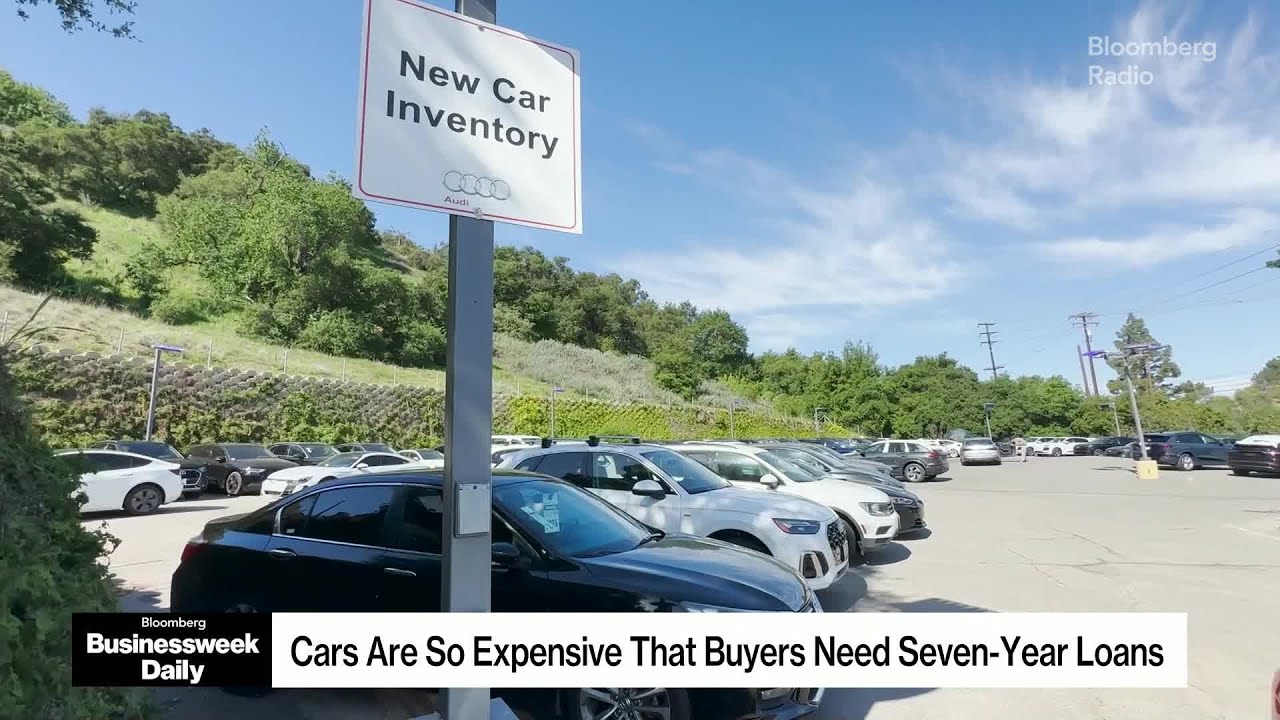
It is becoming the new normal – precisely for that reason. Increasingly, people can only afford a new car if the cost is spread over 84 months – seven years. That is understandable. By early May 2026, the average price paid for a new car will be just under $52,000 (an increase from about $50,000 just two years ago). There are several reasons for this, including inflation and the passed-on costs of Trump’s import tariffs, which are effectively taxes paid by the car manufacturer and subsequently passed on to the price of the car. (Some think that these import tariffs only make imported cars more expensive; this line of thinking assumes that domestic manufacturers, who do not pay import tariffs, will lower the costs of their cars. Of course, they do not. The only thing the import tariffs do is take the cheaper, imported alternatives to the more expensive, domestically produced cars off the market. Voilà! Now everything costs more.)
What does $52,000 a month amount to — not counting interest? Just under $600 a month. That is quite substantial. But what would it cost to pay off that same $52,000 car in five years? About $800 a month. Too much for most people. Now let’s go back in time to see what it would have cost to pay off this car in three years — which was quite common back when new cars were still available for $5,000.
That would be about $1,400 per month – and that explains why almost no one is able to pay off a new car in three or four years anymore.
There are a number of interesting aspects to all of this that go beyond the lease contract. The first thing that comes to mind is that, at the end of the term, the car will likely not even be worth half of what it originally cost. This depreciation is an additional cost of the lease contract. Half of $52,000 is $26,000 – and that latter amount is what it costs you in depreciation to pay off the car for 84 months. Add that to the costs of the lease contract. The total costs come to $78,000 – naturally, excluding the interest on the original lease contract. That is how much you will have to spend out of your own pocket after you have – finally – paid off the lease contract. At that point, you are the owner of a seven-year-old car that is probably no longer under warranty and will therefore cost you whatever it takes to have it repaired if it breaks down. You will probably need a new financing agreement for that as well – since you likely do not have the money on hand to pay it, because you have already paid $78,000 over the past 84 months.
Interest, insurance – not including petrol.
In the past, when people usually paid off a new car in three or four years, the car did indeed lose value too – but not as much, because the car didn’t cost that much in the first place. Yes, inflation. But it is not just inflation. To be precise: it is not just that more dollars are needed today to buy comparable things; it is that most of us have fewer dollars to buy things with today. If wages had kept pace with inflation , then inflation would not matter. With a hundred dollars, you could buy the same thing you used to pay ten dollars for. The problem is that you now need 200 dollars to buy the same thing, and that is why it doesn’t seem like things cost more.
That is indeed the case.
It is also true that, in the old days, a car paid off after three or four years was likely already starting to show signs of wear – because 100,000 miles on the odometer back then was comparable to 250,000 miles on the odometer today. And yet, there was a difference. The car from the old days was likely still repairable, both practically and economically. Even fifteen years ago – a blink of an eye – you could still buy a brand-new GM TH350 automatic transmission (a widely used transmission in millions of GM cars from the past) for about $600. A new/reconditioned engine might have cost $1,500. That same transmission costs nearly $2,000 today, and a modern automatic for a contemporary GM car costs more than three times as much. A new engine costs $10,000.
In the ‘old days,’ most people could afford $600 for a new or reconditioned gearbox. Nowadays, very few people can afford that. The difference between then and now was that, generally speaking, you could keep driving that outdated car for many years after it was paid off. That is why almost every teenager had a car before the early 2000s. It might have been an old clunker . But it was a car . Many people who are now well into their twenties do not have a car—because old clunkers fall outside their price range, and if such a clunker breaks down, it is not worth the effort to repair it.
So people enter into a new contract.
And – unlike their colonial ancestors – they may never achieve freedom.