
Kagan Strikes Again: Calls U.S. Paper Tiger Checkmated by Iran
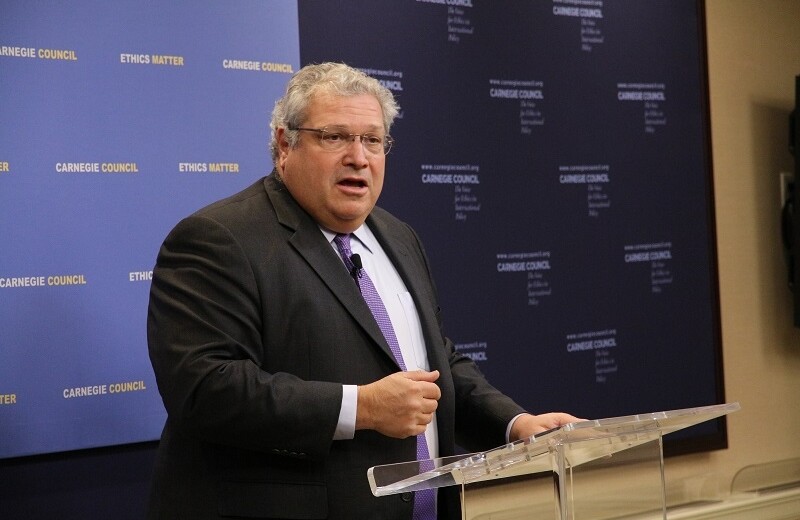
For the second time in as many months, neocon godfather Robert Kagan has penned an urgent denunciation of Trump’s ill-fated Iran war.
This latest written for the Atlantic is particularly damning as Kagan makes the argument that the unprecedented loss to Iran is the US’s worst military defeat, essentially, in history—eclipsing that of Vietnam for several key reasons he outlines.
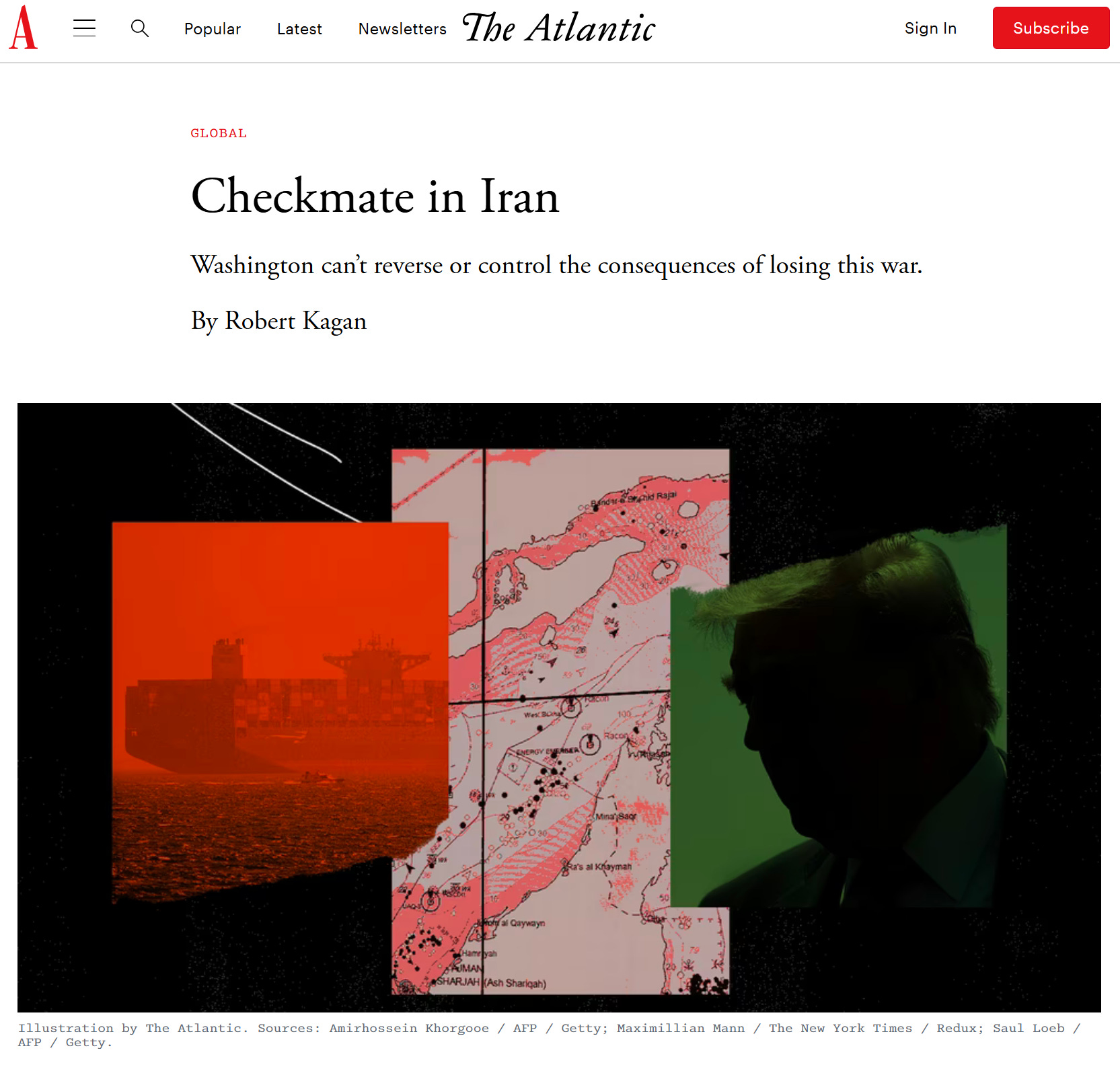
He chiefly argues that previous conflicts wherein US eked out sub-optimal outcomes, or outright losses, were ultimately to some extents salvaged by the auspicious fact these conflicts were removed from the theaters of main global competition.
He contrasts the Iranian defeat as follows:
Defeat in the present confrontation with Iran will be of an entirely different character. It can neither be repaired nor ignored. There will be no return to the status quo ante, no ultimate American triumph that will undo or overcome the harm done. The Strait of Hormuz will not be “open,” as it once was. With control of the strait, Iran emerges as the key player in the region and one of the key players in the world. The roles of China and Russia, as Iran’s allies, are strengthened; the role of the United States, substantially diminished. Far from demonstrating American prowess, as supporters of the war have repeatedly claimed, the conflict has revealed an America that is unreliable and incapable of finishing what it started. That is going to set off a chain reaction around the world as friends and foes adjust to America’s failure.
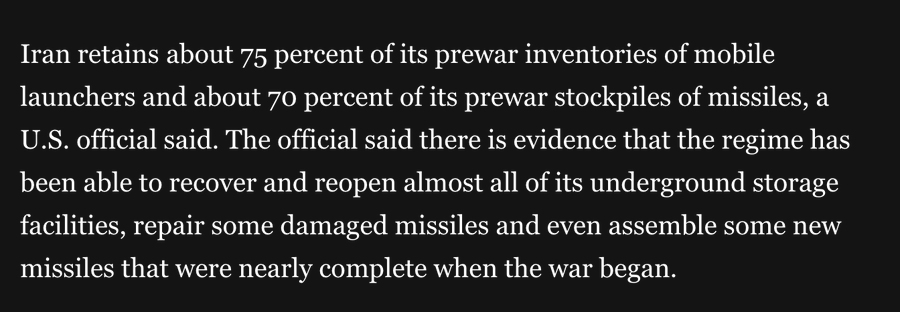
In the very next paragraph, he does make some grave errors—citing “official” Pentagon figures for the attrition of Iran’s military which are laughably wrong. As we’ve seen, revisions of Iran’s losses continue to pour in each day:
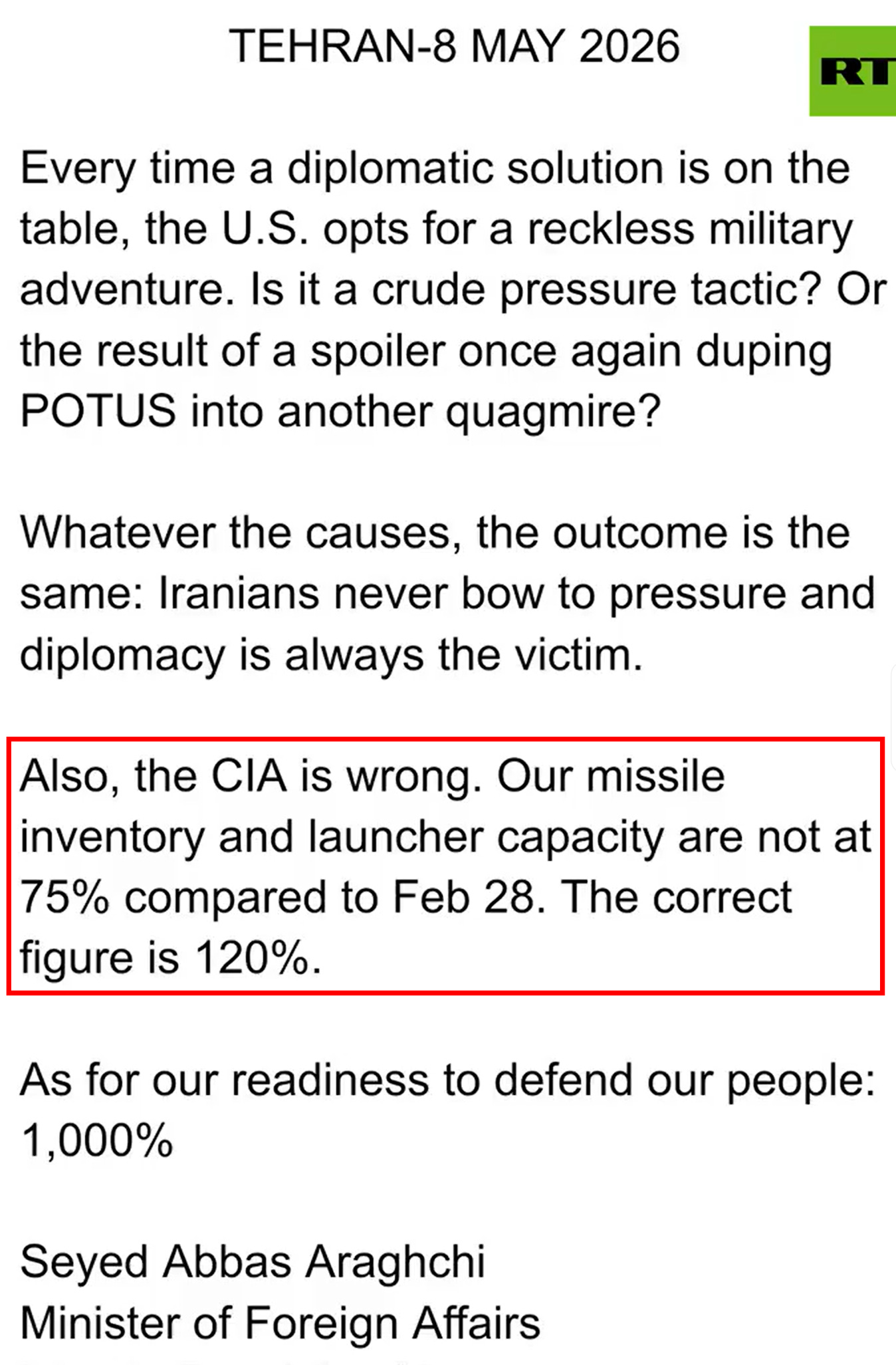
Iran’s Araghchi recently gave his own assessment, perhaps slightly tongue-in-cheek but likely closer to reality than US’s egregious tallies:
Today news even broke that would validate my own long-standing assertion that the vast majority of the Iranian airforce remains intact—now we know why:
According to CBS, citing U.S. officials speaking on the condition of anonymity, Pakistan, a key mediator in the ongoing but stalled U.S.-Iran negotiations, allowed Iran to reposition key aircraft on their bases, likely to avoid losing them to U.S. airstrikes. Per the report, both Pakistan and Afghanistan allowed them to do this. Iran sent one of its ISR aircraft, a converted RC-130 “Saba,” and other aircraft, both military and civilian, to Pakistan’s Nur Khan Air Force Base in the early days of the war.
At least Kagan has the right historiography on Trump’s panicked brakes on the Iran bombing:
The turning point came on March 18, when Israel bombed Iran’s South Pars gas field and Iran retaliated by attacking Qatar’s Ras Laffan Industrial City, the world’s largest natural-gas-export plant, causing damage to production capacity that will take years to repair. Trump responded by declaring a moratorium on further strikes against Iran’s energy facilities and then declaring a cease-fire, despite Iran’s not having made a single concession.
Kagan goes on to rightly identify Trump’s no-win position—even if he tried to go out “guns ablaze” in an effort to save face for the prestige-blown US military, it would lead to nothing more than disaster:
Even if Trump wanted to bomb Iran as part of an exit strategy—looking tough as a way of masking his retreat—he can’t do that without risking this catastrophe.
If this isn’t checkmate, it’s close.
Kagan then spells out what US’s defeat will look like in practice, worthily noting that Iran no longer has any incentive to let go of the strait even after the war’s conclusion:
Defeat for the United States, therefore, is not only possible but likely. Here is what defeat looks like.
Iran remains in control of the Strait of Hormuz. The common assumption that, one way or another, the strait will reopen when the crisis ends is unfounded. Iran has no interest in returning to the status quo ante. People talk of a split between hard-liners and moderates in Tehran, but even moderates must understand that Iran cannot afford to let the strait go, no matter how good a deal it thought it could get. For one thing, how reliable is any deal with Trump? He all but boasted of replicating the Japanese surprise attack on Pearl Harbor by approving the killing of Iran’s leadership amid negotiations. The Iranians cannot be sure that Trump won’t decide to attack again within a few months of striking a deal. They also know that the Israelis may attack again, as they never feel constrained from acting when they perceive their interests to be threatened.
He correctly notes that Iran will now collect tolls from the strait in perpetuity, and most countries will be forced to play to Iran’s hand one way or another, because they witnessed first hand the US Navy being exposed as incapable of shifting the calculus in any way.
The power to close or control the flow of ships through the strait is greater and more immediate than the theoretical power of Iran’s nuclear program. This leverage will allow the leaders in Tehran to force nations to lift sanctions and normalize relations or face penalties. Israel will find itself more isolated than ever, as Iran grows richer, rearms, and preserves its options to go nuclear in the future. It may even find itself unable to go after Iran’s proxies: In a world where Iran wields influence over the energy supply of so many nations, Israel could face enormous international pressure not to provoke Tehran in Lebanon, Gaza, or anywhere else.
The point above is rich: he cries that Israel will be unfairly—it is implied—“pressured” to not continue illegally genociding Lebanon and Gaza because Iran will have grown too powerful.
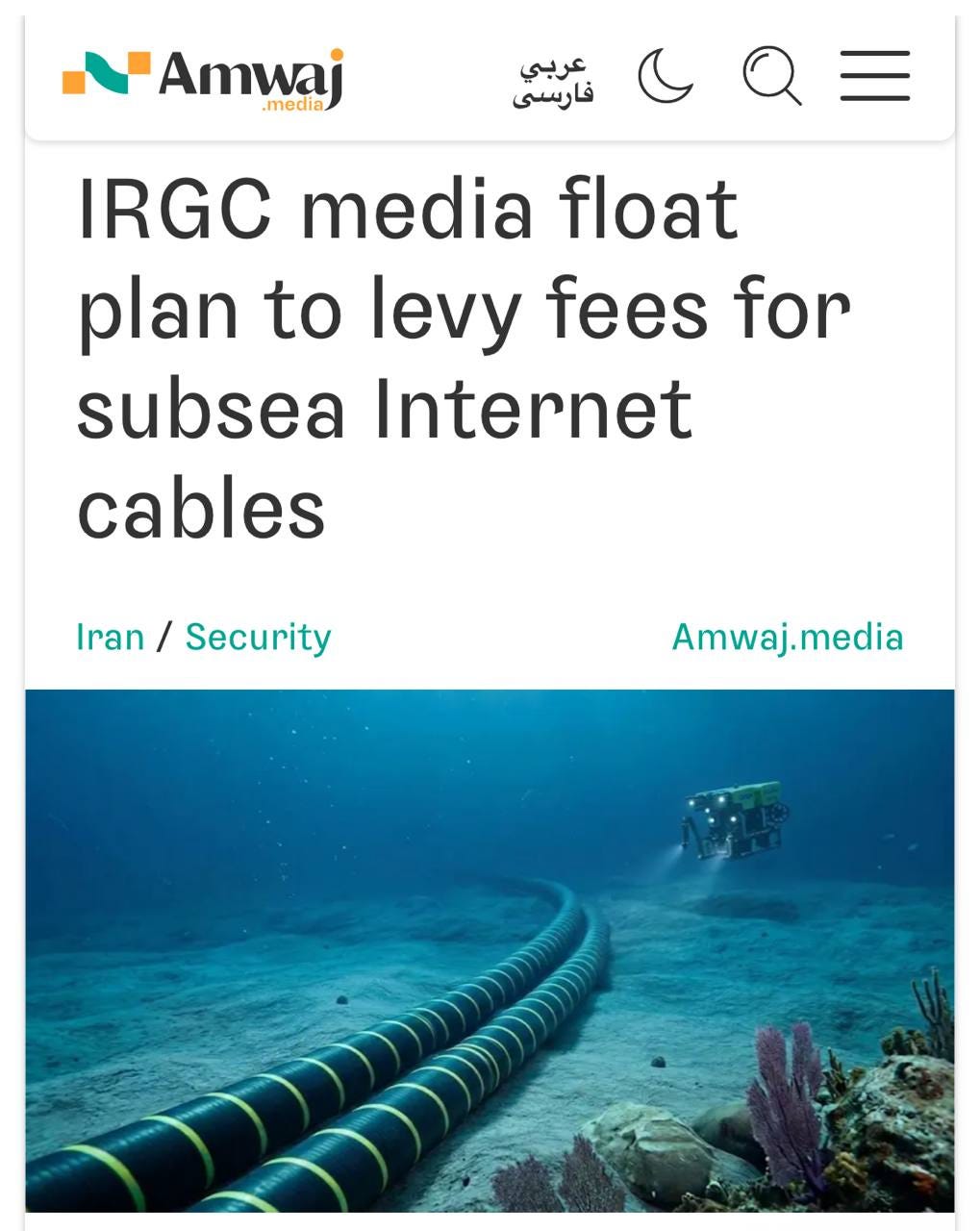
And in fact, the IRGC has suggested it may even begin collecting “tolls” for the critical international undersea cables which run under the strait:
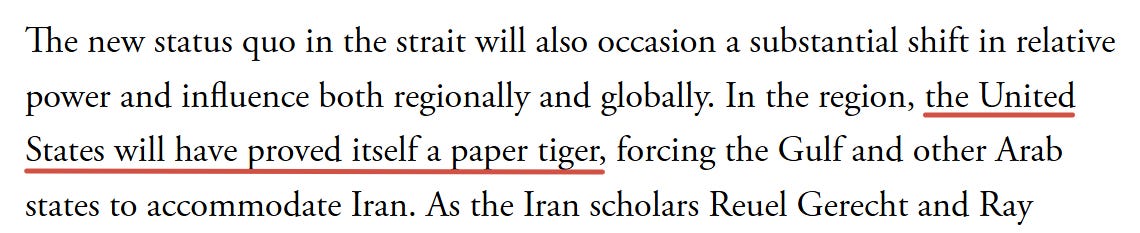
It’s interesting that in his last piece Kagan famously called America a “rogue superpower”, yet now acknowledges this “superpower” has been completely checkmated by Iran. I argued at the time that he was being deceptive in his choice use of the term “rogue”, and now we see he was similarly—to use his own word—syllogistic with the term “superpower”: to be a superpower and be “checkmated” by Iran are two mutually exclusive propositions. He even states America will now be considered a paper tiger, and rightfully so.
Checkmate.
Or better yet, shāh māt.
He ends the piece with a denouncement of America’s defeat to a “second-rank power”:
The American defeat in the Gulf will have broader global ramifications as well. The whole world can see that just a few weeks of war with a second-rank power have reduced American weapons stocks to perilously low levels, with no quick remedy in sight. The questions this raises about America’s readiness for another major conflict may or may not prompt Xi Jinping to launch an attack on Taiwan, or Vladimir Putin to step up his aggression against Europe. But at the very least America’s allies in East Asia and Europe must wonder about American staying power in the event of future conflicts.
The global adjustment to a post-American world is accelerating. America’s once-dominant position in the Gulf is just the first of many casualties.
Don’t you just love when they couch reality in such tepid ambiguities like “the questions this raises about America’s readiness”. There is no question whatsoever that has been “raised” by the US’s defeat which is not already answered in full: the US’s “readiness” is now fully and decisively known to be nonexistent against a true world power like Russia or China, as American weapons stocks would deplete in days and no manufacturing backbone exists to replace them; this is not a question, it is a concise and definitively established answer.
Q.E.D.
One is, however, left wondering what the point of Kagan’s polemic is, precisely: he offers no solutions, alternatives, or anything else of his own. He simply decries the current war as if to distance himself from what is a generational disaster. At least in the previous “Rogue Superpower” piece he prescribed various measures, such as for Western nations to rely more on each other in ‘weathering’ the calamitous Trump administration. Here he makes no such prescriptions, and simply proceeds to spell out doom for American hegemony in the Mideast. Is he genuinely out of ideas, or is there some other devious incentive we’re not aware of?
Amerikanets likely has the right idea:
I suggested something similar after Kagan’s previous piece: the neocons, it seems, have become pragmatists in their late desperate hour. They rather appear in opposition to “the cause” if that cause is in their eyes beyond saving. One may as well salvage as much credibility as possible in the purview of historical analysis: it can present a base of good will in any future attempts at reconstituting the “cause” in some nefarious new iteration.
One can imagine such neocons heavy-breathing on TV in 5-10 years: “We were against the disastrous Iran war, we are peace-lovers! But this time is different, America must protect its interests in [insert new country-to-be-bombed-and-imperially-subjugated here]”.
Why go down with the sinking ship?
And a sinking ship it is. Trump’s latest pronouncements have drawn even more disbelief and scrutiny than usual. Today Trump appeared to seriously suggest that Venezuela should be made the 51st state due to its abundance of oil.
https://simplicius76.substack.com/p/kagan-strikes-again-calls-us-paper