
Another Blow to Pentagon Hype: 90% of Iran’s Missile Sites Remain According to NYT Findings
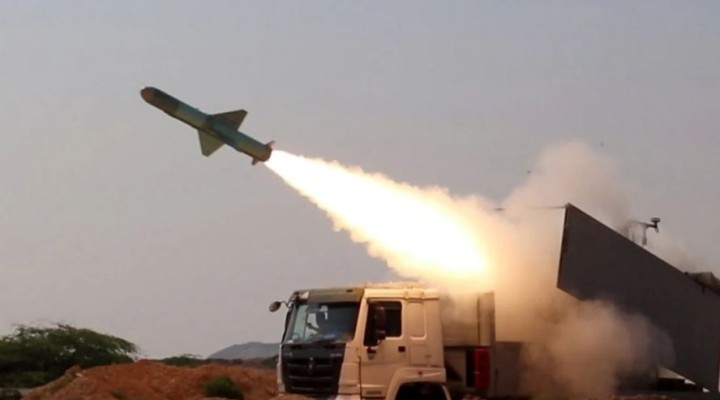
Another day brings us new revisions to Iran’s putative “losses” in the failed US war.
The New York Times now finds that 30 out of 33 Iranian missile sites along the Strait of Hormuz are still intact:
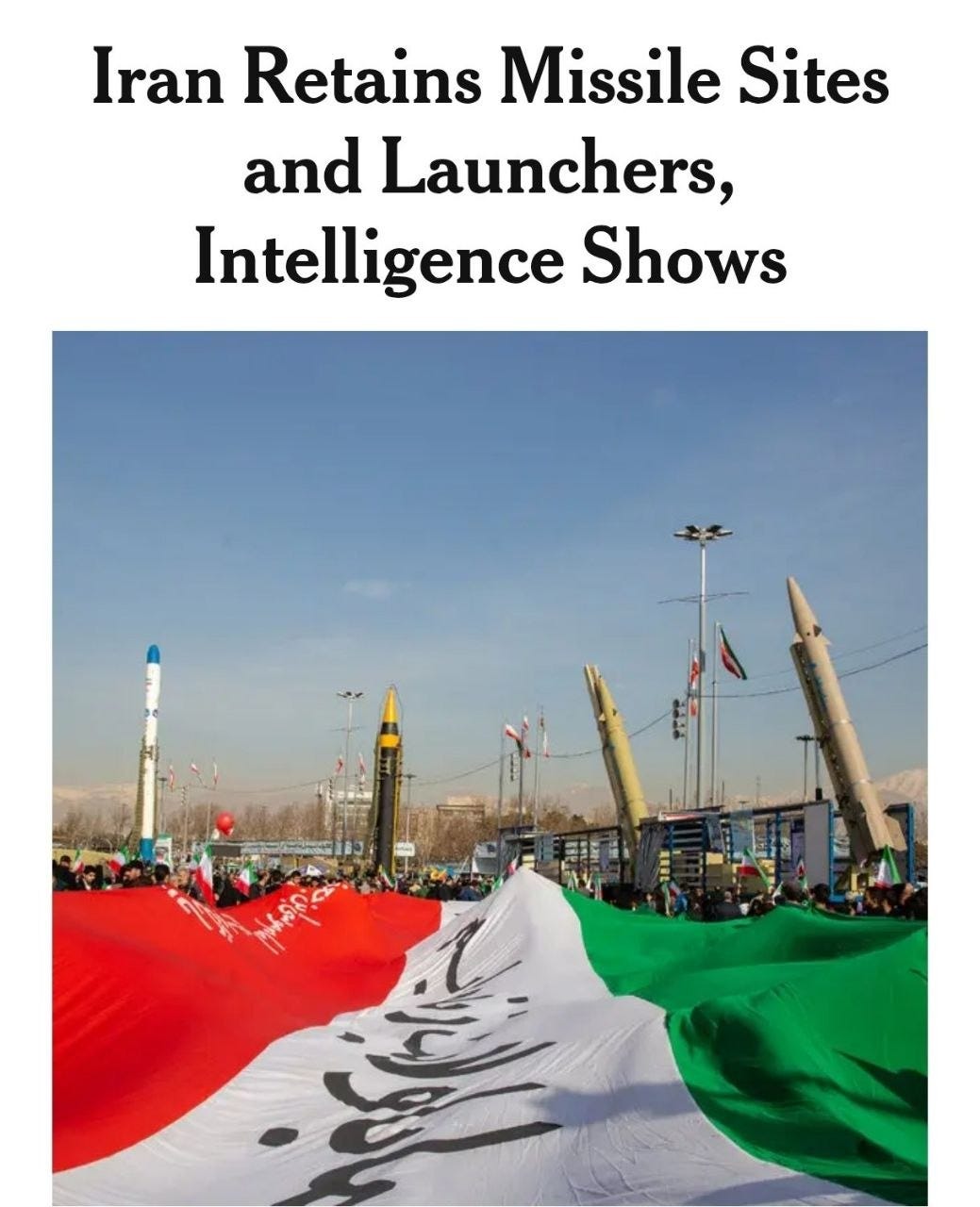
The Trump administration’s public portrayal of a shattered Iranian military is sharply at odds with what U.S. intelligence agencies are telling policymakers behind closed doors, according to classified assessments from early this month that show Iran has regained access to most of its missile sites, launchers and underground facilities.
Most alarming to some senior officials is evidence that Iran has restored operational access to 30 of the 33 missile sites it maintains along the Strait of Hormuz, which could threaten American warships and oil tankers transiting the narrow waterway.
The article elaborates that Iran plays a kind of shell-game—which we’ve long outlined here—moving its missile launchers around, popping them in and out of underground launch sites that make them effectively un-targetable by US strikes.
Several anecdotal stories about precisely this have circulated on social media:
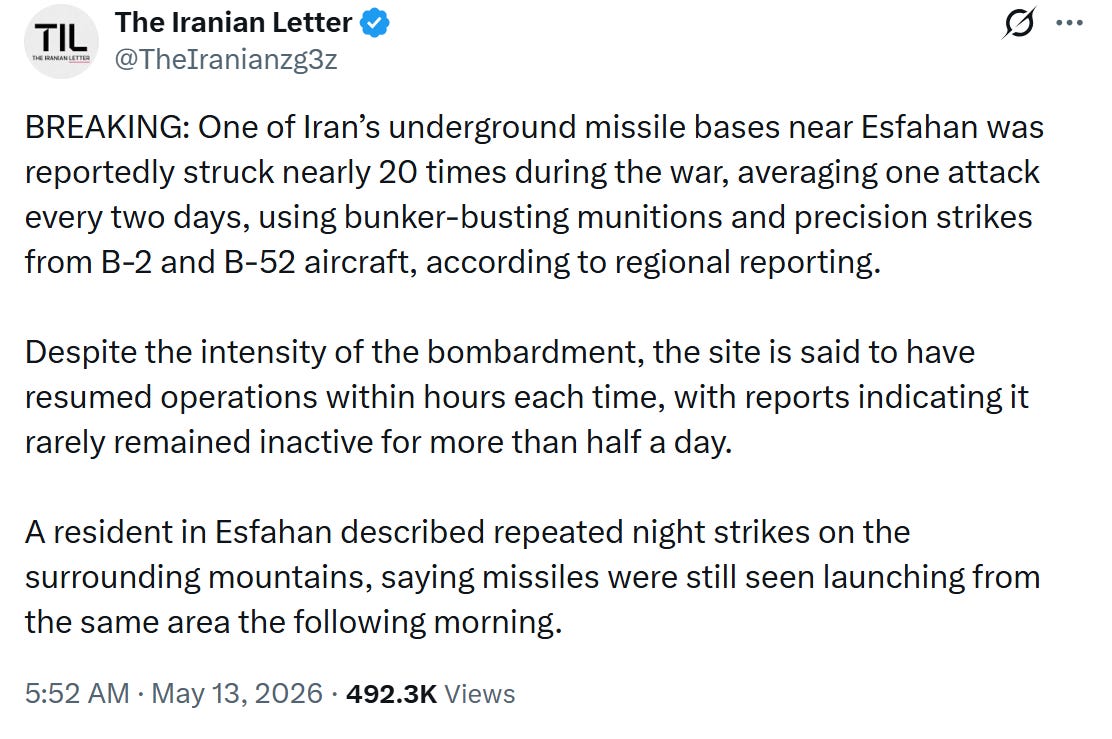
“There is a missile city in Shiraz I think that was hit 116 times. Locals reported cruise missiles hitting it every few hours or so and it kept launching missiles until the very end of the conflict. Still no signs of meaningful damage.”
(Also noted an Esfahan site bombed every 2–3 days but launching again within 6 hours.)
NYT goes on to note that Iran has regained access to 90% of its missile storage sites and launch facilities, which is creeping up quite close to my early war estimate of 95%, made at a time when the official figures claimed 70-90% of Iran’s stockpiles and launchers had been totally destroyed:
Military intelligence agencies have also reported, based on information from multiple collection streams including satellite imagery and other surveillance technologies, that Iran has regained access to roughly 90 percent of its underground missile storage and launch facilities nationwide, which are now assessed to be “partially or fully operational,” the people with knowledge of the assessments said.
It’s clearer than ever that it has been the US that has suffered far greater attrition relative to its own starting stocks than Iran:
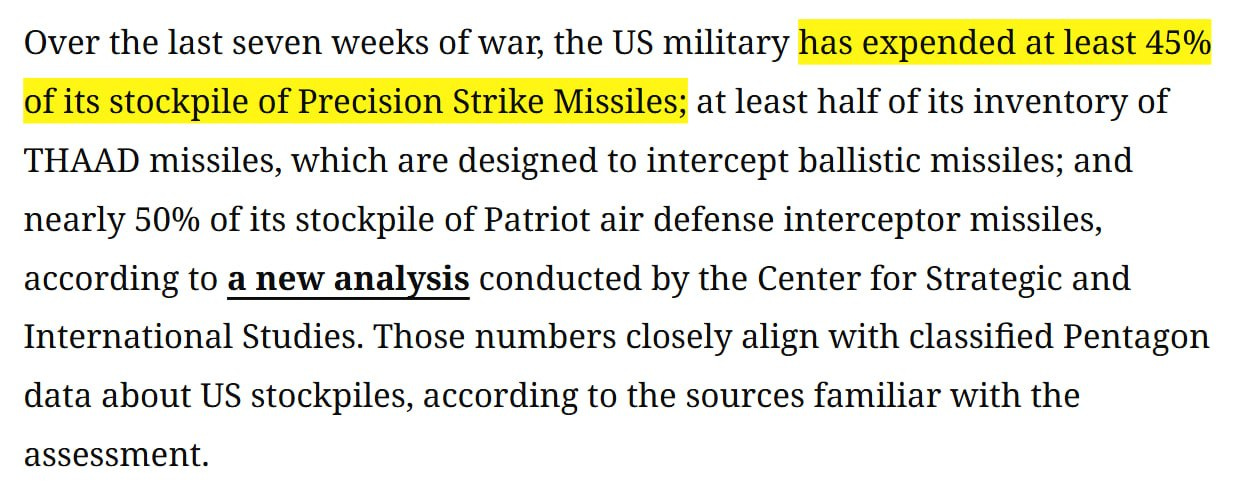
In short, our earliest estimates are slowly being proven true: that Iran has taken hardly any damage because it was able to salt everything of worth away and adjust its launch tempo such that a couple dozen undetectable launches per day were able to be carried out from randomized sites without risking the platforms; most of what was hit ended up being decoys or derelict old decommissioned junk. This forced US to play a difficult game of ‘whack-a-mole’ that, given the size of Iran’s territory, is certainly not favorable to the US.
Now, as Araghchi mentioned last time, Iran has been rebuilding and manufacturing more arms since the cessation of active hostilities, which means even the 90% has likely already been surpassed as the FM stated. Trump himself just admitted this yesterday, wherein he remarked: “Iran probably built up since then, but we’ll knock that out in about a day.”
Sure, knocking out in one day what he couldn’t knock out in two months sounds about as believable as this claim from weeks ago that Iran’s oil industry would collapse in just three more days:
After these latest reports favorable to Iran’s weapons stocks, Trump again flew into a spitting rage, accusing anyone disseminating such information of committing “treason”:
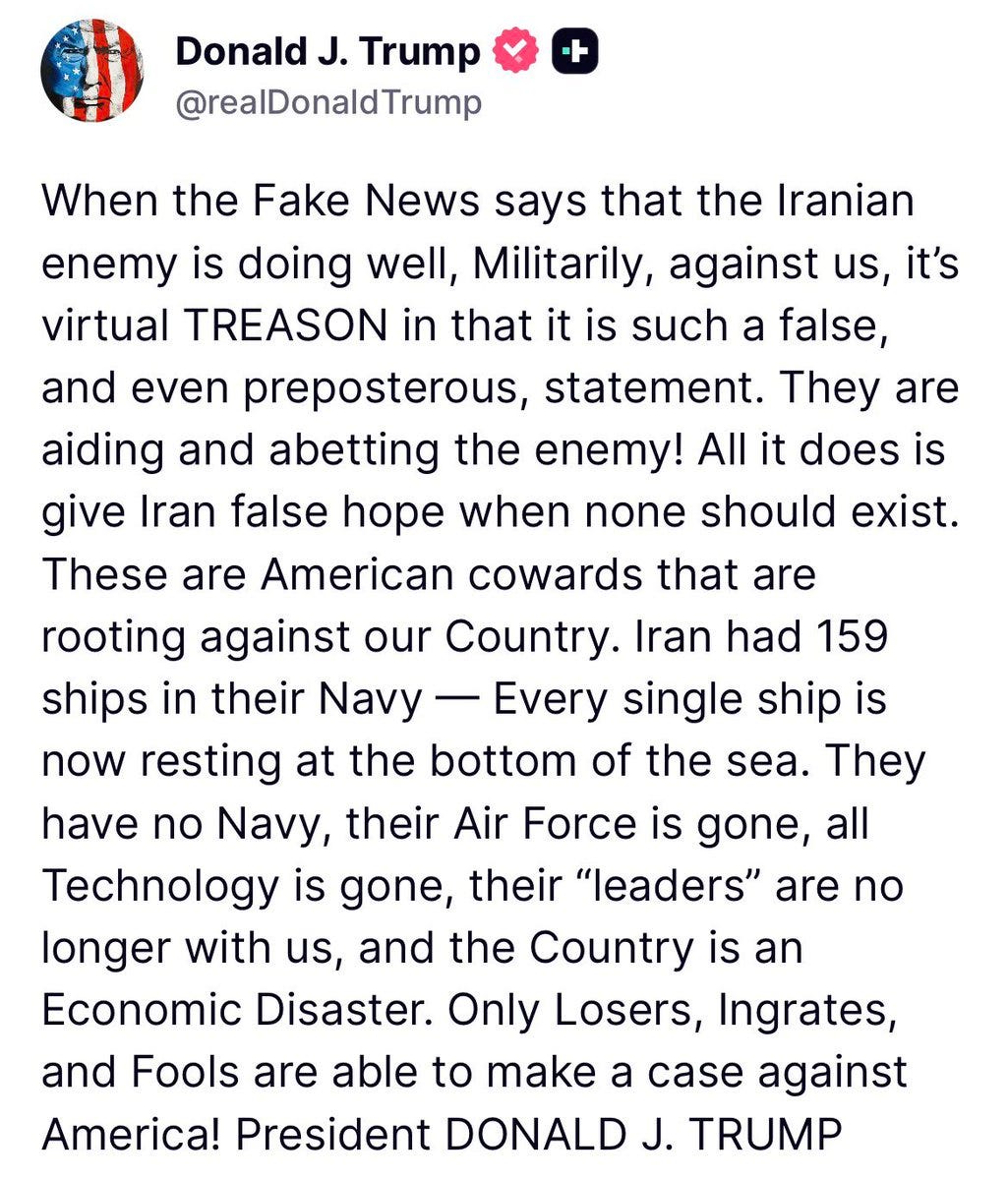
Well, I guess we are Losers, Ingrates, and Fools here, because that’s not quite how we see things going.
But hey, what do you expect from an administration that straight-facedly declares this as “American innovation”?

The NYT piece even acknowledges that the US was forced to “cut corners” in its strikes against Iran due to US’s own dwindling weapons stocks, which carried predictable results:
The intelligence assessments on Iran’s capabilities point to the consequences of a tactical choice made by U.S. military commanders.
When American forces struck Iran’s hardened missile facilities, the Pentagon, faced with limited stocks of bunker-busting munitions, opted to try to seal off many of the entrances rather than trying to destroy the entire sites with all of the missiles inside, officials said, with mixed results.
Some bunker busters were dropped on Iran’s underground facilities, but officials said military planners faced a difficult choice and needed to be cautious in using them because they needed to preserve a certain number for U.S. operational plans for potential wars in Asia with North Korea and China.
Recall how in the last piece I lampooned the “questions raised” about US readiness: it’s clear the real question isn’t even about US “readiness” for future wars, but rather even as regards the current one. The US didn’t even have enough bunker busters to truly prosecute the proper campaign against Iran, let alone having enough to fulfill some kind of doctrinal “readiness” for the future. Sealing entrances does nothing against a resourceful people that can quickly dig them out, or have many auxiliary entrances already good to go.
Now Trump continues to believe that Iran is under immense “pressure” and that the US can merely play the current status quo until Iran’s economy folds. But that won’t happen, as Iran is being propped up by various friendly countries in ways the US has no control over.
NYT laments that Russia has been supplying Iran with both drones and parts, as well as other goods that would have normally been sent via Hormuz, whinging that the US cannot interdict these shipments in the Caspian:
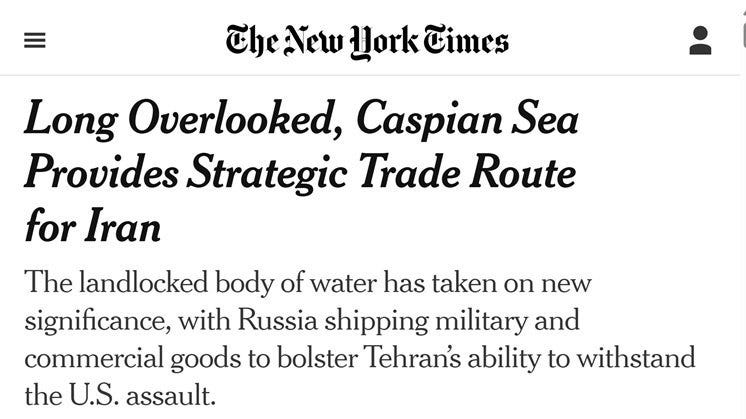
Iranian officials have said that efforts to open alternative trade routes are progressing rapidly, with four Iranian ports along the Caspian working around the clock to bring in wheat, corn, animal feed, sunflower oil and other supplies. Mohammad Reza Mortazavi, the head of the Association of Iran’s Food Industries, told the state broadcaster IRIB that Iran is actively rerouting essential food imports through the Caspian.
They write that Russian cargo to Iran via the Caspian may double this year:
Alexander Sharov, the head of RusIranExpo, which helps Russian exporters find Iranian buyers, estimated in an interview that cargo tonnage across the Caspian could double this year. Although Western sanctions made some major companies hesitant to ship through the Caspian, the Hormuz crisis might help overcome that, he added.
As a final addendum, the US Airforce just casually admitted via the official Airforce Times that the US has lost a third of its vital MQ-9 Reaper fleet in the Iran conflict.

They state that the Reaper fleet is now down to a historic low of 135 aircraft, and this being a shortfall of 54 of the “mandated floor” of 189 as established by Congressional authority. While they do not openly state all 54 were lost in Iran, they do mention that Operation Epic Fury as bearing responsibility:
The U.S. Air Force’s MQ-9 Reaper fleet has fallen to roughly 135 aircraft as combat attrition from Operation Epic Fury cuts into the service’s most heavily used remotely piloted asset, the deputy chief of staff for plans and programs told senators Tuesday.
A drop from 189 to 135 would represent a 29% loss of the entire fleet—whether this is all from Epic Fury, or also includes losses to the Houthis in recent times, it’s an unquestionably massive wipeout of one of the US’s key ISR fleets in fairly short order. And should we even mention each Reaper costs tens of millions?
Well, the Iran plan may have tanked, but there’s always hope elsewhere:
https://simplicius76.substack.com/p/another-blow-to-pentagon-hype-90