
Are Inequality, AI and Digital Life Undermining Society? Yes
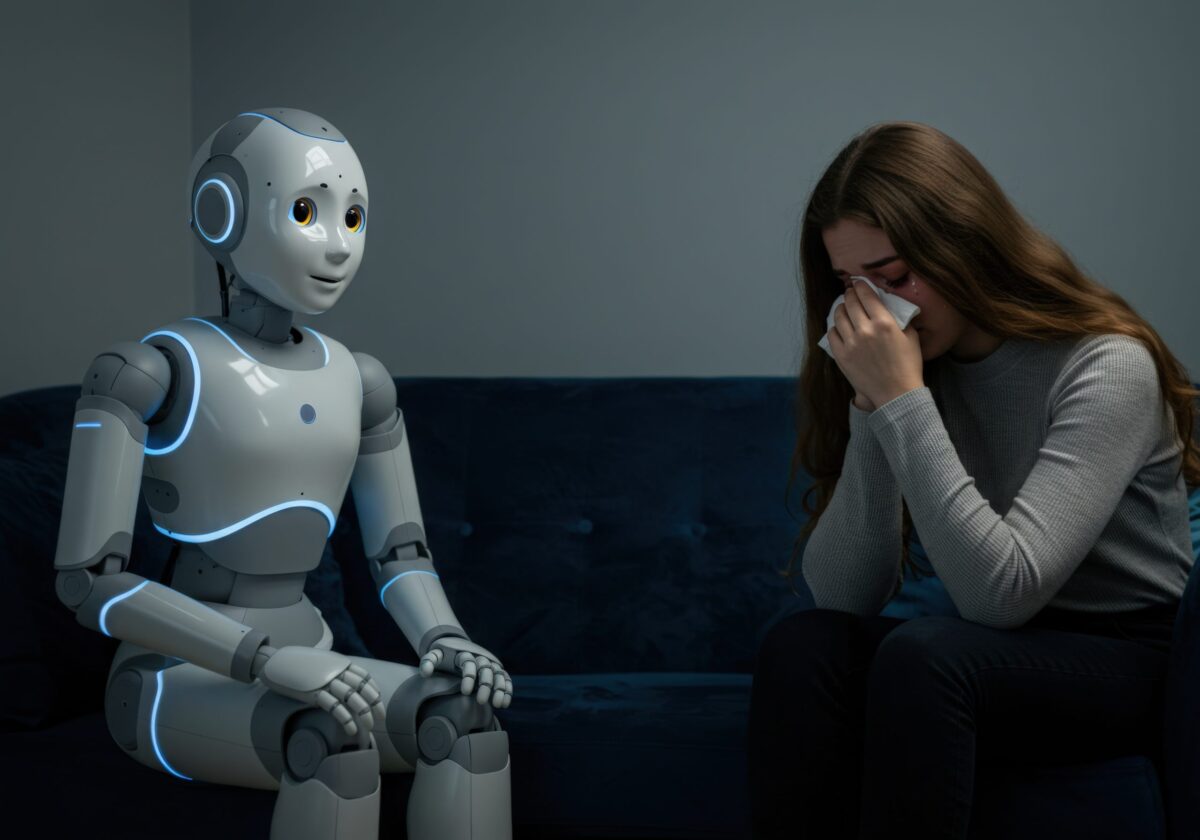
That society is on a terminal trajectory toward collapse is self-evident, as is our desire to evade acknowledging this distressing reality. I have curated four recent articles to establish the baseline argument: inequality, AI and social media are undermining society in mutually reinforcing ways.
The dynamics are scale-invariant: they undermine the cognitive, emotional, financial and social stability of individuals, families, communities, the economy and ultimately society, which includes the economy–not the other way around, as we’ve been led to believe: society doesn’t exist, the economy is everything. This claim is the ultimate source of the dynamics of system-societal collapse.
Let’s go through four accounts that lay out the dynamics of social collapse.
1. The undermining of identity, marriage, family, security and universally accessible positive economic-social roles.
Jaded with work and school, some young men are opting out. Meet the NEETs: not employed, in education or in training. (yahoo.com)
2. The globalization of inequality not just in wealth and income but in agency (control of one’s life) and opportunity to marry, establish a family, own a home and secure a positive economic-social role. What’s being globalized is anxiety, desperation and loneliness, not prosperity
The Shared Feeling of Being Harvested by the Future (nytimes.com)(via Richard M.)
I have spent years reporting and living in both the United States and China and wrote a book chronicling the history and evolution of the Chinese internet. Moving between the two countries, I’ve been struck by how they have come to mirror and resemble each other. There is a shared sense of precarity that lies beneath the envy and distrust: the technological future is taking shape at vertiginous speed yet its promise is not shared by all.
Researchers are courted with nine-figure salaries like N.B.A. stars, and roadside billboards call on residents to “Supercharge your A.I.” and “Stop Hiring Humans.” Tech workers have earnestly adopted China’s infamous “996” work schedule: 9 a.m. to 9 p.m., six days a week. They are hustling hard and “locking in” to ensure that they emerge as the rich and powerful victors of the A.I. gold rush. China’s tech hubs are driven by a similar sense of urgency.
“It’s a highly competitive environment right now,” a Shenzhen software engineer told me. “I feel like if I stop, I’ll be left behind.” His anxiety is not new. Unstable work situations and economic insecurity long predate the current A.I. boom. But A.I. has supercharged those anxieties and made them much harder to contest.
A parallel set of memes has emerged to capture the sense of powerlessness. In the United States, the Silicon Valley tech elite identify as “high agency,” while the rest of us are “bots” condemned to the “permanent underclass.”
“This is not ‘embracing the future,’” one disillusioned user on RedNote described the OpenClaw craze. “It’s ‘being harvested by the future.’”
In China, ordinary workers describe themselves as shechu (“corporate cattle”) and jiabangou (“overtime dogs.”) These same workers have long used the viral term “involution” to capture the feeling of being trapped in a cycle of meaningless competition. In both countries, those disaffected by A.I. identify with the gaming meme of the “NPC” or “non-player character.” They feel like the background role in someone else’s video game, existing only to fill the world but not to shape it.
The knowledge workers of both countries feel the surveillance presence of the technology. Outside the office, both Chinese and Americans have become enamored with A.I. as a source of frictionless companionship and emotional validation, with companies now monetizing emotional intimacy at scale.
In China, one survey found that nearly half of young Chinese had used an A.I. chatbot to discuss their mental health. A.I. companions have emerged as a quick fix to a growing loneliness epidemic. This year, the app “Are You Dead?” — which alerts a contact if a user fails to check-in — has been wildly popular.
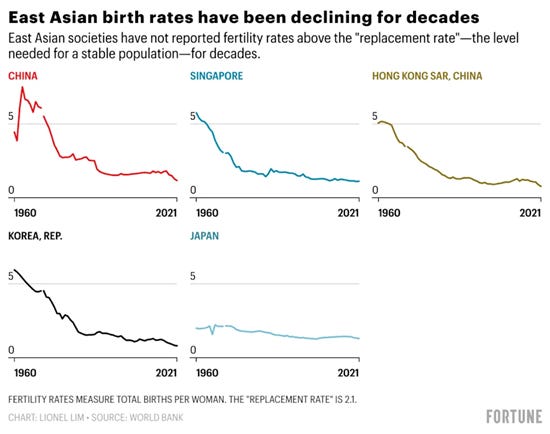
The people of both countries are turning toward the spiritual for solace and agency in a world accelerating out of their control. When the future loses its promise, the past becomes a refuge. Both societies have seen a surge of nostalgia, a longing for a time remembered as simpler and more stable.
Faced with such a system, the simplest response is to surrender: accept one’s fate, sink into the apathy of inevitable decline and, in the words of Chinese netizens, “let it rot.” It’s easy to flee the friction of the real world for the comfort of our feeds and to confide in chatbots rather than friends.
3. The undermining of the family, which is the foundational structure of the human experience and social order. Stability is being replaced by desperation, anxiety, insecurity, disconnection and profound alienation.
Meet the Sad Wives of AI: Are you married to a man who’s obsessed with AI? I’m so, so sorry.
There’s a strange and under-discussed side effect of the AI boom: what it’s doing to family dynamics. By which I mean: how it’s potentially destroying family dynamics. I’m sure this applies to all kinds of families, gay or straight, rich or poor, with any AI-pilled members. The technology is coming, has come, for us all.
Often it goes like this: He works in AI, and she does everything and anything else. Other times, it’s bleaker: He desperately wants to work in AI–or feels he must work in AI—and she wants him to do literally anything else. He’s off in another world, a world of prompts and benchmarks and epiphanies, while she’s firmly in this one.
Princess Diana famously said there were three people in her marriage. For the sad wives of AI, the third is a chatbot.
Neither of my friends’ husbands actually makes money from AI. Not yet. There is this sense, I offered, among people in AI–and people adjacent to it, and people who are pretty sure it’s coming for them–that this is their last chance. They’ve tried everything else, these men, from writing screenplays to investing in crypto. It’s AI or bust. Their partners, meanwhile, have quietly taken on a second job: emotional support. Chief Existential Officer, uncompensated. No one asked us if we wanted the gig.
This is the question I ask everyone: Has any part of the AI boom made things better at home? Could it ever?
4. The hollowing out of social mobility and stability by financialization, turning everything into a market that can be rigged and exploited.
The Profitable Rot of the Middle (Noel Johnson
Look around and you will see that the concept of ownership has radically changed. What we have now is licensing, a mere permission to use a thing or a service.
This is the matter of the profitable rot at the deepest level. The societal transformation from owners to tenants is the very center of the transition.
This propagates everywhere. It is the main principle of chokepoint capitalism.
The social contract is being broken down between generations. If the calculation shows the hardworking generation can’t get a house, health security or an honorable retirement anymore, then their attitudes change.
Instead of going for the traditional achievements, they are saying ‘nah’ and quietly dropping out of the rat race. This is often misinterpreted by the media as ‘quiet quitting’ or lack of ambition. The truth is that it is neither.
It is a highly rational reaction to a rigged casino. Why play a game where the rules are entirely dictated by the house and the house has explicitly stated its goal is to empty your pockets?
We are witnessing a powerful psychological shift. The constant stress and worry characteristic of modern life are pretty much the awareness that a single medical emergency, job loss or rent hike will send you into complete ruin.
The safety net has been privatized, sold off and financialized and the latter has been offered to us at an unaffordable price.
Every pillar which used to provide stability to the middle class has been turned into an extraction vector.
So what really makes us, us? What defines the modern working class? They shared a common understanding that the cavalry will not come to rescue it.
Why does it matter so much?
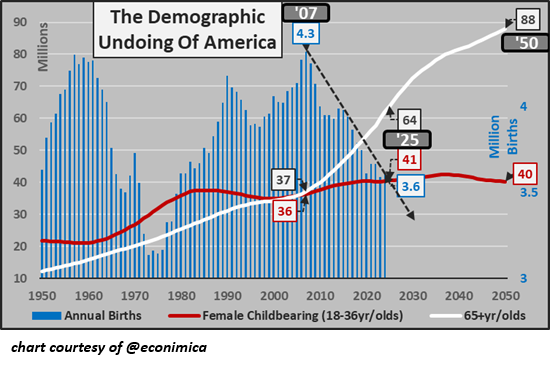
Because a society that has no middle class is by definition fragile. It’s a brittle construct incapable of withstanding systemic shocks. In the absence of social mobility avenues, the impoverishment of individuals is not the only thing that happens. The legitimacy of the very institutions erodes.
Whenever the distance between the rulers and the ruled gets too great and the social contract is voided by the elites at the top. History shows that the system does not end up simply incapable of resolving a state of permanent inequality.
The system breaks down completely.”
Will inequality, AI and Digital Life collapse society? Yes.
I have curated a list of my own essays that address society’s accelerating trajectory into collapse: How Things Break / Model Collapse that includes a summary:
I also have a curated list of my Essays on AI.
The real-world commons where people learned to socialize and gain their sea-legs as adults has been replaced by ultra-processed Digital Life: addictive digital technologies / phones / devices that don’t just enable surveillance, tracking and algorithmic entertainment, they monetize and incentivize these sources of addiction, disconnect, alienation, loneliness and isolation. Social anxiety is a “market” that invites profitable exploitation.
The real-world commons and sources of stability that are the foundations of social stability are eroding right before our eyes. AI is not the answer, it is one of the drivers. There are no simplistic economic or political answers to the decay and collapse of society, for the root causes include every aspect of Ultra-Processed Life, from addictive digital scrolls to addictive junk food to a pervasive desperation and anxiety as the ground gives way beneath our feet.
Will buying (or more likely, leasing) a household robot fix what’s broken, or is the fantasy that there is a profitable technological “solution” to everything the reason why everything of value is breaking down?
This is the core dynamic of what I call Anti-Progress: a profitable technology sold as “Progress” is actually the opposite of Progress, for what’s broken can’t be fixed by what broke it.
Avoidance, rationalization, denial–these coping mechanisms have very short half-lives. After Denial come Anger, and we’re unprepared for anything other than artifice permanently propping up denial. But there is nothing permanent about artifice or denial, as both are self-liquidating by their very nature.
Trying to convince ourselves that this is “Progress” and therefore it will all work out just fine isn’t the same as it actually working out just fine. The difference between the two is about to be starkly revealed as denial is replaced by anger.