
Paradoxically Fear is the Foundation of Stability; Deterrence Works
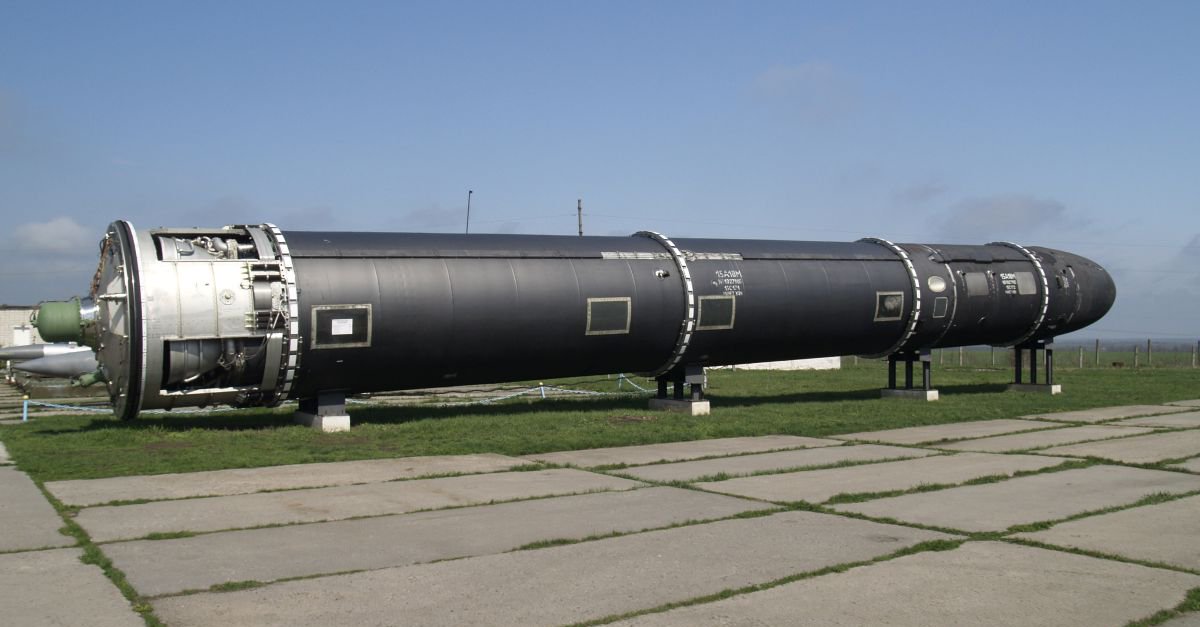
Professor Sergei Karaganov has written a paper — How to Win a World War — that advocates a limited nuclear strike on an adversary by Russia as the means of preventing a World War.
On the face of it, this may seem to be an oxymoron — a nuclear strike precisely done to prevent World War. A number of western commentators have reacted with unalloyed hostility, with Professor Karaganov being presented as a political outlier, advocating fringe policies that could open Pandora’s box to wider nuclear conflict.
Is it bluff or a revolutionary re-think of Russia’s defence strategy?
Yet, the West should take Professor Karaganov’s thesis very seriously for two reasons: Firstly, because it has substance, touching on the psyche underlying our era, together with the toxic societal contradictions it has birthed; and more directly, because his paper, and the many interviews arising from it, have produced a significant shift in Russian political and security thinking.
How then can this not be a matter for serious reflection, especially by Europeans whom it may affect directly?
At its core, is a very obvious proposition: Russia, after having been attacked by Germany and almost all of Europe had, with great effort, from the mid-1950s created a nuclear weapon “to ensure their sovereignty and security, and thus achieved nuclear parity … Without realizing it at the time, we thereby dismantled European/Western military superiority, the foundation of its colonialism and ideological domination”.
Russian deterrence had had its effect — fear of nuclear war began to tip the balance of power … for a while. The implosion of the Soviet Union in 1991, however, tilted it back.
But then, from 2000 onwards, as the US sought revanchism to revive its dominance, credence about the reality of Russian nuclear deterrence incrementally sunk. No western state truly feared Russia’s nuclear arsenal as western neo-cons loudly proclaimed it to be a bluff: that Russia would never dare to use it. The ‘bluff narrative’ of an overly cautious and weak Russia became embedded.
Professor Karaganov openly admits that Russia has some share of blame for the loss of deterrence. He elaborates on its passing, the mistakes made, and reflects on the reality that Russia has ended up with the imposition of a framework of economic and military attrition imposed on it through the West’s Ukrainian proxy.
This Ukrainian conflict nonetheless is but the visible surface part to an iceberg, whose submerged bulk is war — including the European obsession for fracturing and defeating Russia; constraining China; and the US-Israeli attempt at dismembering the Middle East.
Russia “needs a new policy”, Karaganov concludes.
Firstly, he notes as a prerequisite, it is necessary to recognise how this post-modern nihilistic era has undermined the ‘very essence of man’ and endangered human civilisation. Civilisations — that is — that reach beyond the material and which offer some moral architecture that provides meaning and stability to people.
Secondly, Professor Karaganov argues that a negotiated settlement with the West simply is not on the table — however appealing it may appear — so long as western hubris and arrogance remain intact. Deterrence requires that element of real fear. That Russia indeed might use nuclear weapons, in some limited way, has to be instilled, he argues, if the psychology of drowsy complacency that ‘Russia would never dare …’ is to be broken.
He notes:
“The use of nuclear weapons is a great sin. But the de facto refusal to use them is an unforgivable, deadly, and criminal sin, because it paves the way for the expansion and escalation of the world war unleashed by the West. If it is not stopped, it will most definitely lead to the destruction of humanity, including our own country. Vladimir Putin’s question, “And what is the point of a world without Russia?” remains relevant”.
Thirdly, Karaganov argues that this approach should be accompanied by a visible testing and uprating of the nuclear triad, whilst, at the same time, a new generation of “Burevestniks, Oreshniks, and other new hypersonic delivery vehicles should be developed in order to disabuse Americans and Europeans of “fantasies of imposing their will by force””. What Karaganov is advocating is that firstly European targets should be hit with conventional weapons — and only if this doesn’t work, to then use nuclear weapons. This is particularly relevant today with the European-facilitated drone attacks deep inside Russia that are seemingly out of control. It seems unlikely that Russia will countenance this state of affairs continuing.
Finally, Professor Karaganov suggests,
“We should make use of Iran’s experience in defending itself from aggression. Tehran hit the enemies’ weak points; they felt the pain and retreated … Europeans should know that they cannot sit things out in bunkers or on some islands. Our Defence Ministry recently published a list of European enterprises producing weapons for the Kiev regime; this is just a very small step, but in the right direction”.
The background (that cannot be ignored in Moscow) is the Europeans’ incessant refrain for war with Russia. The European public narrative is of war, war and war with Russia, by 2030, at least. King Charles of England too, in his recent unfortunate address to the US Congress, called for America to join Europe in preparing a war on Russia.
Yet Europe has neither the military, nor the financial means, for a big war with Russia. King Charles, likely sensing the approaching end to the Trump era, was laying the groundwork for Europe to attempt to pull a new US Administration firstly, back into Europe; and secondly, (repeating history), into war against Russia.
Certain European financial and permanent security state currents will never give up on this project.
“Now the Western elite pretends to fear us”, Karaganov says, “but does not actually do so, certain as it is that Russia will never punish them with nuclear weapons. We need [however] to instil primal fear in them. Maybe then they will back off, or their Deep State masters will expel them. Maybe societies will rise up”.
“Strengthening Russia’s nuclear credibility is also necessary to awaken European societies from their ‘strategic parasitism’―the belief that there will be no war and that everything will work out for the best. We must return a sense of self-preservation to those who have forgotten their past wars and crimes”.
So, no wonder Professor Karaganov’s colleague, Dmitri Trenin, recently appointed President of the Russian International Affairs Council, has written a new piece entitled, Strategic Stability Now Rests on Fear.
The Arms Control era, Trenin writes, often equated with strategic stability, “in fact expired long ago – with Washington’s growing unwillingness to remain bound by commitments made in a different historical context: the late Cold War and its aftermath” — “Now comes the real nuclear order”.
“In spring 2022”, Trenin writes,
“while New START was still formally in force, the US openly declared its aim of inflicting a strategic defeat on Russia in the Ukraine proxy conflict. At the same time, Washington proposed consultations on “strategic stability.” In effect, the US sought to weaken a nuclear superpower in a conventional war while preserving arms control mechanisms that shielded itself from the consequences of [such] escalation. That contradiction revealed the hollowness of the old framework”.
In tandem with Karaganov’s proposition — “Potential adversaries need to know that an arms race is senseless and even suicidal: Dialog, at least with the Americans, should be conducted on this matter” — Trenin concludes too that “sustained bilateral and multilateral dialogue, transparency measures, and permanent communication channels are required”.
Yet the core remains unchanged from half a century ago. Strategic stability ultimately rests on credible nuclear deterrence — a sufficient arsenal and the demonstrated readiness to use it if necessary. Intimidation, however uncomfortable the word may be, remains the foundation of peace among nuclear powers.
Is credible Russian nuclear deterrence then a European interest too? Yes, clearly so. Communication channels are essential — this needs to be managed well.
https://conflictsforum.substack.com/p/paradoxically-fear-is-the-foundation