
Why is Russia Not Bombing Kiev Into Oblivion?
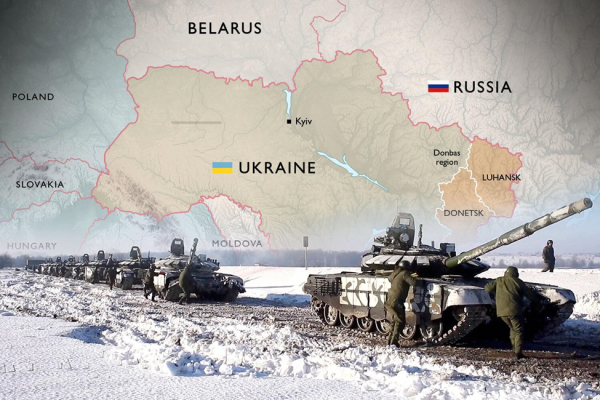
Yes, it is an invasion. We all know that.
It is also a provoked one. That part is less commonly said out loud in Western media. It is not a fringe position. Mearsheimer has said it. Walt has said it. Kissinger said it before he died. The post-Cold War expansion of NATO eastward, the broken assurances given to Gorbachev, the 2014 Maidan, the eight-year shelling of Donbass. Those things happened before February 2022. They do not make the invasion legal. They do make it predictable.
This article is not about whether the war should be happening. It is about a stranger question. A question almost no Western broadcaster will ask in plain language. A question almost no Russian state outlet will answer in plain language either.
Why is Russia not bombing Kiev into oblivion?
What Russia Actually Has
Before the question makes sense, the numbers have to be on the table.
Russia in 2025 to 2026 fields one of the three largest militaries on earth. Around 1.1 to 1.3 million active-duty soldiers. Around 600,000 deployed in or near Ukraine. Around 5,700 main battle tanks. Around 4,500 artillery systems. Around 3,400 combat-capable aircraft. A submarine fleet of 51 vessels including 12 ballistic missile submarines.
Military spending in 2025: approximately $145 billion at official rates. The Atlantic Council reports Russia “has demonstrated that it can fight and mobilize at the same time.”
Ukraine: roughly 880,000 active-duty personnel, more than 425,000 casualties through early 2025, around 1,100 tanks. The economy is sustained by Western aid that the United States paused in March 2025.
European NATO without the United States: collectively around 1.9 million active-duty personnel. The forces are spread across 30 countries with 30 separate procurement chains. Combined ammunition production does not match Russian production. Russia and Ukraine exchange around 200,000 artillery rounds per week. The entire EU aims to produce 160,000 rounds per month in 2025.
NATO with the United States included: 3.4 million active-duty personnel versus Russia’s 1.3 million. Conventional war winner: NATO. Most analysts agree.
But NATO is not fighting in Ukraine. Russia is. With this military. And this military has had three and a half years to do anything it wants to Kiev.
So why is Kiev still standing?
Russia’s First Strategic Advantage: Adapting Faster Than Anyone Expected
The Western narrative in February 2022: Russia is a rigid, hierarchical military culture incapable of adaptation. Hollow shell. Soviet-era doctrine. Will collapse within weeks.
Three and a half years later: Russia is the country setting the pace on the fastest-evolving battlefield technology in modern warfare. Drones.
Drone warfare at industrial scale. Russia entered the war buying Iranian Shahed-136 kamikaze drones. By summer 2023 it was building them domestically at the Alabuga Special Economic Zone in Tatarstan under the name Geran-2. By end of 2023: 2,738 units. First nine months of 2024: 5,760 units. By 2025: approximately 2,700 strike drones per month. Plus another 2,500 decoys to drain Ukrainian air defences. By April 2026: 144 strike drones launched per day on average.
Cost per Shahed: $20,000 to $50,000. Cost per Western interceptor missile fired to shoot one down: $150,000 to $500,000. The Russian theory of victory at the drone level is arithmetic. Lose 75% of your drones. Still win the cost exchange. Still saturate the defences. Still let some through.
The Lancet. Russia’s tactical loitering munition, manufactured by Kalashnikov’s ZALA Aero. 40 to 70 km range. Onboard AI for autonomous target recognition. Costs a fraction of what it destroys. Has accounted for thousands of Ukrainian armoured vehicles, artillery pieces, and air defence systems.
Lancet drone striking a Ukrainian tank parked in forest cover:
The Geran-3, Geran-4, Geran-5. Jet-powered variants now in serial production. 2,500 km range. Speeds of 550 to 600 km/h. Much harder to intercept than the slow Shahed. Russia plans to produce 60,000 long-range strike drones in 2026, plus another 50,000 decoys. 110,000 total.
Drones now inflict roughly 70% of casualties on both sides of the war. Russia learned this faster than Western militaries did. Russia is now adapting faster than Ukraine. Ukraine is the most drone-adapted military in NATO’s frame of reference.
What kind of army learns this fast?
Russia’s Second Strategic Advantage: A Battle-Hardened Force
In 2022 Russia invaded with a peacetime conscript army that had not fought a real war since Chechnya in 2009.
In 2026 Russia is fielding what is, by some assessments, the most combat-experienced ground force on earth. Junior officers who have led platoons through three years of frontline rotation. Sergeants who have used drones in combat tens of thousands of times. Soldiers who have trained on the actual battlefield, not in simulations.
The Atlantic Council concluded: “The Russian military is fighting better in Ukraine and seems more prepared and equipped than a year ago, though not up to Western training and equipment standards.” That “though not up to Western training” is the comforting clause Western analysts add. The harder fact: Russia is producing trained, battle-experienced soldiers faster than NATO’s peacetime training pipelines can simulate that experience.
There is no European army that has been through what the Russian army has been through since 2022. There is no Western unit that has used drones at the scale that Russian frontline units have. There is no NATO command structure that has had to adapt under live attritional pressure for three and a half years.
What does an army look like after three years of continuous combat?
Russia’s Third Strategic Advantage: Artillery, the Old Religion of the Russian Way of War
The Western army of the 21st century was built around precision air power. The Russian army of the 21st century was rebuilt around the Soviet doctrine that never went away: artillery is the god of war.
In Ukraine, Russia fires roughly 10,000 to 20,000 artillery rounds per day. Ukraine, even at its peak Western-supplied moments, has rarely matched half of that. The Hudson Institute calculated that Russia and Ukraine combined exchange around 200,000 artillery rounds per week. Russia produces the majority of them.
Why does this matter strategically? Because a war of attrition is not won by manoeuvre. It is won by the side that can continuously degrade the other side’s positions, soldiers, and infrastructure at lower cost than the other side can replace them.
Russia restored full artillery shell production by 2024. The European Union, by contrast, will not reach Russian production levels until 2027 at the earliest. Germany’s Rheinmetall is Europe’s largest shell manufacturer. It will not reach 1.1 million 155mm shells per year until 2027.
The war is being decided by the ratio between shells fired and shells produced. Russia is winning that ratio.
What kind of army wins a war by mathematics?
Russia’s Fourth Strategic Advantage: The T-90M Proryv
The Russian main battle tank is not as celebrated in Western media as the Leopard 2 or the Abrams. But the T-90M Proryv, which translates to “Breakthrough”, is the most modernised iteration of a platform that has been refined through decades of combat feedback.
Production at the Uralvagonzavod facility in Nizhny Tagil reached approximately 300 units per year by mid-2025, with planned ramp-up to 1,000 per year by 2028. By comparison: the United Kingdom, France, Italy, and Germany combined hold fewer than 900 main battle tanks total.
The T-90M features the following. The 125mm 2A82-1M smoothbore gun is capable of firing the 9M119M Refleks-M anti-tank guided missile through the main tube to ranges up to 5 km. This is a standoff capability Western tanks do not match. The tank carries Relikt explosive reactive armour, latest-generation. The Kalina digital fire-control system includes panoramic thermal sights. The V-92S2F diesel engine generates 1,130 horsepower. Anti-drone screens have been added after combat lessons in Ukraine. The three-man crew configuration via autoloader frees internal space. Combat cost is estimated at a fraction of the M1A2 Abrams or Leopard 2A7.
T-90M Proryv combat footage:
The T-90M has weaknesses. The carousel autoloader can produce the “jack-in-the-box” turret-blowoff effect when penetrated. Visually confirmed losses now exceed 200 T-90 variants. But its core design philosophy is mass-producible, combat-survivable, integrated with infantry and artillery rather than fighting alone. That philosophy is winning the production war.
What good is the most advanced tank in the world if you have 80 of them and the other side has 5,700?
Russia’s Fifth Strategic Advantage: The Iskander-M
The Iskander-M is the workhorse of Russia’s precision strike doctrine. Range: 500 km. Speed: Mach 6 to 7. Quasi-ballistic trajectory with terminal-phase manoeuvring designed specifically to defeat the Patriot system.
In spring 2025 Russia upgraded the Iskander’s guidance software. The result, documented by the Royal United Services Institute and the Financial Times: Ukrainian Patriot interception rates against Iskanders dropped from approximately 37% in August 2025 to approximately 6% in September 2025.
That is not a marginal improvement. That is software-defined warfare in real time. Russia identified the engagement geometry of the Patriot’s PAC-3 interceptor and retuned the Iskander’s terminal manoeuvres to arrive inside the Patriot’s look angles just as interceptors commit.
Production: Russia ordered 1,202 Iskander 9M723 missiles for 2024 to 2025 alone. The new Iskander-1000 variant has extended range to 1,000 km. It entered production in 2025. From Kaliningrad it puts most of Central and Eastern Europe inside its reach.
The Iskander has hit over 1,400 targets in Ukraine according to the Russian MoD. Western air defence has not stopped it.
If a missile system from 2006 is defeating the most advanced Western air defence in 2025, what does that say about the technology gap that was supposed to exist?
Russia’s Sixth Strategic Advantage: The Oreshnik
On November 21, 2024, Russia struck the Yuzhmash defence facility in Dnepropetrovsk with a missile that had never been used before. The Oreshnik.
Intermediate-range ballistic missile. Speed: Mach 10, approximately 3 km per second. Range: up to 5,500 km. Multiple independently targetable reentry vehicles, MIRVs, each carrying submunitions. Impact temperature: roughly 4,000 degrees Celsius, nearing the surface temperature of the sun.
Putin’s framing: “Everything within the explosion’s epicentre is reduced to fractions, elementary particles, essentially turning to dust.” A sufficient number of Oreshniks “practically eliminates the need to use nuclear weapons.”
The exact moment of the Oreshnik strike on Dnepropetrovsk, November 21, 2024:
Compilation of all known Oreshnik strike footage from 2024 to 2026:
Western response was split between two narratives. The first: the Oreshnik is a repurposed RS-26 Rubezh, not new technology, Russia is bluffing. The second: even with inert warheads, as in the Dnepropetrovsk strike, the kinetic energy from MIRVs travelling at Mach 10 produces destruction comparable to small nuclear weapons.
Both narratives miss the point. The Oreshnik was not deployed for destruction. It was deployed as a message. The message: Russia possesses a weapon that Ukraine’s air defence cannot intercept, that NATO’s air defence cannot intercept, and that places every European capital within reach from launch sites inside Russia.
Putin announced serial production on August 1, 2025. The first batch was delivered to the Russian Strategic Missile Forces. A second Oreshnik strike hit Lvov in January 2026.
What does it tell you that a country accused of military weakness can deploy a weapon that no air defence system on earth has demonstrated the ability to intercept?
Russia’s Seventh Strategic Advantage: Hypersonics, the Weapons the West Only Talks About
The United States has been developing hypersonic weapons since 2003. As of 2026, the US has not deployed a single operational hypersonic system in combat. The Air Force’s Air-Launched Rapid Response Weapon was cancelled after multiple failures. The Army’s Long Range Hypersonic Weapon has been repeatedly delayed.
Russia has three hypersonic systems in active combat use right now.
Kinzhal (Kh-47M2 Dagger). Air-launched ballistic missile carried by MiG-31K interceptors and Tu-22M3 bombers. Speed: Mach 10. Range from launch aircraft: 460 to 480 km. Combined with the aircraft’s combat radius: 2,000 to 3,000 km. Operational since December 2017. First combat use: February 2022. By 2025, over fifty Kinzhal launches recorded in the Ukrainian theatre. Russia ordered 44 missiles in 2024 and 144 in 2025. Cost per missile: approximately $10 million.
Kinzhal hypersonic missile launch from MiG-31K, explained:
The Kinzhal has been intercepted by Patriots. First in May 2023, then several times since. Western commentary jumped on those interceptions as proof that Russian hypersonic weapons are overhyped. The harder fact: a Mach 10 missile reaching its target from the air takes minutes. Patriots can sometimes intercept. They cannot intercept enough.
Zircon (3M22 Tsirkon). Sea-launched hypersonic cruise missile. Speed: Mach 9. Range: over 1,000 km. Launched from Admiral Gorshkov-class frigates, Yasen-M class nuclear submarines, and the Admiral Golovko. The Golovko is the first Russian warship designed from the keel up to carry Zircons. First combat use: January 2024, against targets in Ukraine. Demonstrated again at Zapad 2025 exercises in September 2025, with a Zircon launched from Admiral Golovko hitting a target in the Barents Sea.
The Zircon was primarily designed as an anti-ship missile. Its deployment in a land-attack role in Ukraine is, in part, free combat testing. Putin’s framing: “Zircon hypersonic missiles have the guaranteed ability to bypass any existing or prospective air defence systems.”
Avangard. Hypersonic glide vehicle. Speeds claimed: Mach 20 to 27. Mounted on RS-18 and eventually RS-28 Sarmat intercontinental ballistic missiles. Designed to penetrate any existing or planned missile defence system through extreme velocity and unpredictable flight path. Operational since December 2019. Estimated inventory: approximately a dozen units. Designed for strategic, not tactical, use.
The Sarmat. Russia’s new heavy ICBM is the RS-28 Sarmat, NATO designation SS-X-29. Range: 18,000 km. Capable of carrying multiple Avangard glide vehicles or up to 15 MIRV warheads. Tested successfully in April 2022. Multiple test failures and delays since. Putin announced “experimental combat duty” in late 2023, but analysts assess that no Sarmat missiles were operational as of early 2025 due to technical setbacks. The system represents what Russia is aiming for. The Avangard represents what Russia already has.
The Oreshnik. Covered in the previous section. Worth restating here: Mach 10, multiple independently targetable warheads, no air defence system has demonstrated the ability to intercept it. Combat tested November 2024 and January 2026. In serial production since August 2025.
Russia announced a production target of 1,000 hypersonic weapons per year by 2025. The actual production rate is lower. Machining facilities capable of the required 3 to 4 micron precision are limited. But the gap between aspiration and reality on the Russian side is far smaller than the gap on the American side, where the technology exists in PowerPoint presentations and test failures.
When Joe Biden was asked about the Kinzhal in March 2022, he confirmed Russia was using hypersonic missiles in Ukraine and added: “It’s almost impossible to stop it. There’s a reason they’re using it.”
When the United States deploys its first operational hypersonic weapon, sometime in the late 2020s if current schedules hold, Russia will have been firing them in combat for nearly a decade.
Why is the country supposedly losing the technology race the one with the operational hypersonic arsenal, while the country supposedly leading it has cancelled program after program?
Russia’s Eighth Strategic Advantage: The S-400 and S-500
While the West has focused on Russian offensive systems, Russia has spent the same period building what is arguably the most sophisticated layered air defence network on earth.
The S-400 Triumf. Operational since 2007. Range: 400 km. Altitude coverage: 30 km. Engages up to 80 targets simultaneously across an eight-battalion deployment. Four interceptor types tailored to different threat profiles. 360-degree radar coverage. Operating in 100+ countries.
S-400 Triumf live-fire exercise footage:
By comparison: the US Patriot PAC-3 has an aerodynamic engagement range of around 160 km and lacks the ability to intercept intermediate-range ballistic missiles. The European SAMP/T NG has under 150 km. The S-400 has a deeper and wider engagement envelope than either.
The S-500 Prometey. Operational since 2021. Range: 600 km. Altitude coverage: up to 200 km, exo-atmospheric. Designed to intercept hypersonic weapons, ICBMs in terminal phase, and low-orbit satellites. Speeds claimed for the 77N6-N and 77N6-N1 interceptors: Mach 15 to 20.
The S-500 represents a category of system the West does not field as an integrated air defence platform. The closest US equivalent is THAAD, which is a dedicated ballistic missile defence system, not a multi-role air defence platform.
These systems have limitations. Ukrainian drones have struck S-400 radar components in Crimea. The S-500 failed to fully prevent damage to the Kerch Bridge in 2024. No system is impervious.
But the layered Russian air defence network is real. S-400 at long range, S-300V at strategic depth, Buk at medium range, Pantsir for point defence, Tor for tactical coverage. It has successfully denied Ukrainian airspace to the Russian Air Force’s enemies, and has done so for over three years.
If Russia could not defend its own airspace, how has Ukraine not been able to use its F-16s to break the Russian air defence umbrella over the front line?
What Russia Is Actually Doing
Now look at the targeting pattern with all of this capability in mind.
Energy infrastructure: hit hard. Repeatedly. Systematically. Particularly in winter. The Russian goal is visible from the targeting itself. It is to make Ukrainian society function poorly enough that political pressure on Kiev mounts, without making it impossible to function at all.
Military logistics: hit hard. Rail nodes. Depots. Command centres. Defence industry facilities, including Yuzhmash, struck by the Oreshnik.
Residential Kiev: not hit systematically. Drone barrages exist. Civilian casualties exist. But compare this to what a country with thousands of Iskanders, an Oreshnik in serial production, 2,700 Shaheds per month, hypersonic weapons in active combat use, and an air defence network that denies Ukrainian airspace could do in three years if mass civilian destruction was the goal.
Compare it to Aleppo. Russia and Syria together turned a city of two million into a memory in eighteen months. Compare it to what the United States did to Falluja in 2004.
Kiev is intact. The metro runs. Cafés open. The government district functions. Three and a half million people live there.
If a country can do what Russia did to Aleppo, and chooses not to do that to Kiev, what does that suggest about intent?
The Integration Logic
Russia does not see Ukraine the way the United States saw Iraq.
The United States went into Iraq with no intention of integrating it. The plan was regime change, basing rights, oil access. The country could be destroyed and reconstructed as a US-aligned client state. If reconstruction failed, that was a secondary concern.
Russia sees Ukraine differently. Or at least sees the parts it claims as historically Russian as territory it wants to keep. To absorb. To integrate.
Can you integrate a population whose cities you have turned into rubble?
Can you govern people who watched you kill their families on television?
Can you extract economic value from a region you have systematically depopulated?
Can you present a coherent narrative, even to your own population, that the people you are bombing are your fellow Slavs, brothers, lost relatives of the Russian world, while simultaneously bombing them like a foreign enemy?
The Russian framing of the war is specific. Ukrainians are not really foreign. Kiev is the mother of Russian cities. Odessa and Kharkov and Mariupol are Russian historically. That framing requires a different kind of war than Iraq or Afghanistan or Vietnam.
What does that different kind of war actually look like? And is it the war we are watching?
The Hardliners’ Mistake
Igor Girkin. Former FSB officer who led the Donbass separatists in 2014. The man Dutch prosecutors charged with the downing of MH17. He demanded the Kremlin escalate. He was jailed in 2023 for extremism. The charge was used for the first time in modern Russia against a hardliner rather than a liberal. From prison: “If our Kremlin elders do not change their tactics, we will be seeing catastrophic defeats.”
Yevgeny Prigozhin. Wagner founder. Called for ferocious escalation. Marched on Moscow in 2023. Died in a plane crash two months later.
Ramzan Kadyrov. The Chechen leader. Demanded full mobilisation. Threatened to escalate the war himself.
The Angry Patriots. Telegram channels with millions of followers calling for what they call “the total destruction of Ukraine.”
They want what would feel emotionally satisfying. Total destruction of the enemy capital. They want what they imagine the Soviets did to Berlin in 1945.
But Berlin in 1945 was the capital of a defeated enemy whose population would be split between four occupation zones. The Soviets did not need Berlin to function. They needed it to surrender.
Kiev in 2026 is not Berlin in 1945. The hardliners want a war of annihilation. The Kremlin appears to be fighting a war of acquisition. If those two logics are incompatible, which one is the Kremlin actually pursuing? And why was Girkin sent to prison the moment he asked the question too loudly?
The Western Mistake
The Western commentariat made a different error. Watching the slow pace of Russian advances and the relative restraint on Kiev, they concluded that Russia was militarily incompetent. That the army was a hollow shell. That a real military power would have taken Kiev in days.
Some of this was accurate. The opening phase of the war showed real Russian failures, particularly in logistics and command.
But by 2024, the pattern was clear. Russia was not failing to destroy Kiev. The Iskander could find targets in the city. The Oreshnik could obliterate them entirely. Yet the residential districts remained mostly intact. The government district functioned. Three and a half million people kept going to work.
Three and a half years in, what has happened to the “Russia is weak” thesis? Russia controls roughly 20% of Ukrainian territory. Ukrainian manpower is genuinely strained. Western political will is fracturing. The economic war that was supposed to collapse Russia in 2022 produced a Russian economy that grew faster than most of Europe in 2024.
Was it weakness? Or was it something else that was easier to call weakness?
What the Kremlin Sees
Putin and his inner circle came up through Soviet intelligence services. They studied Vietnam. They studied Afghanistan, their own Afghanistan. They studied the American failures in Iraq and Afghanistan.
They also studied Chechnya. Twice. The first Chechen war (1994 to 1996) was a Russian military failure. The second Chechen war (1999 to 2009) used massive force against Grozny. The consequence was a brutally pacified Chechnya governed by a strongman whose loyalty had to be purchased at enormous ongoing cost.
What lesson would a Kremlin planner draw from that? That brute force works? Or that brute force creates the kind of victory that requires permanent occupation, permanent subsidy, permanent vigilance against insurgency?
If that lesson was learned in Grozny, how would it shape the war in Ukraine?
What This Means for You
This article is not a defence of the Russian invasion. The invasion was a choice. Hundreds of thousands of people have died. Ukrainian cities have been hit. Ukrainian families have been destroyed. The war is a war. Wars kill people.
The point is to ask what is actually happening. Rather than what either the Russian hardliner camp or the Western moral-outrage camp wants you to see.
If you believe Russia is weak because Kiev still stands, what happens to that belief if the Russian army keeps advancing for another two years?
If you believe Russia is restrained because Putin is reasonable, what happens to that belief if the Kremlin concludes that integration is impossible and shifts targeting?
What does it tell you about your media diet if neither possibility is being seriously discussed where you get your news?
Closing
The question that begins this article, why is Russia not bombing Kiev into oblivion?, is asked from two opposite directions.
The hardliners ask it because they think the answer is weakness, and they want strength.
The Western commentators ask it because they think the answer is weakness, and they want confirmation.
What if the answer is neither? What if Kiev is still standing because Russia wants it standing, and not because Russia cannot bring it down?
Pull the camera back.
What does the frame around the frame look like from there?
Sources
Capability comparison and military balance:
Comparing the Size and Capabilities of the Russian and Ukrainian Militaries. Council on Foreign Relations, June 2025: https://www.cfr.org/in-brief/comparing-size-and-capabilities-russian-and-ukrainian-militaries
NATO vs Russia military comparison. Statista / Global Firepower, March 2026: https://www.statista.com/statistics/1293174/nato-russia-military-comparison/
How NATO Without US Stacks Up Against Russia. Newsweek, March 2025: https://www.newsweek.com/nato-without-us-military-russia-comparison-2040393
NATO Is Not Ready for War. Hudson Institute: https://www.hudson.org/security-alliances/nato-not-ready-war-assessing-military-balance-between-alliance-russia-can-kasapoglu
NATO-Russia dynamics: Prospects for reconstitution of Russian military power. Atlantic Council: https://www.atlanticcouncil.org/in-depth-research-reports/report/nato-russia-dynamics-prospects-for-reconstitution-of-russian-military-power/
Drones and Shaheds:
Russia increases Shahed drone production to 2,700 per month. IRIA News, September 2025: https://www.ir-ia.com/news/russia-increases-shahed-drone-production-to-2700-units-per-month-ukrainian-intelligence-reports/
The Evolution of Shaheds: How Russia Scaled Its Drone Warfare. VGI: https://vgi.com.ua/en/the-evolution-of-shaheds-how-the-enemys-weapon-developed/
Drone Saturation: Russia’s Shahed Campaign. CSIS, February 2026: https://www.csis.org/analysis/drone-saturation-russias-shahed-campaign
Drone Warfare in Ukraine: FPV Drones, Lancet, Shahed. MissileStrikes.com, February 2026: https://missilestrikes.com/guide/drone-warfare-in-ukraine/
Russia Wants to Significantly Scale Up Jet-Powered Geran Drone Production. Defence-UA, May 2026: https://en.defence-ua.com/news/russia_wants_to_significantly_scale_up_jet_powered_geran_drone_production_how_many_are_produced_now-18497.html
T-90M Proryv:
Russian T-90M Tank vs. German Leopard 2A8. Army Recognition, July 2025: https://www.armyrecognition.com/focus-analysis-conflicts/army/defence-security-industry-technology/exclusive-analysis-russian-t-90m-tank-vs-german-leopard-2a8-in-future-european-battlefield-scenario
Russia increases T-90M production to 300 yearly with target of 1,000 by 2028. Army Recognition, July 2025: https://www.armyrecognition.com/news/army-news/2025/alert-russia-increases-production-of-most-modern-t-90m-tank-to-300-yearly-with-target-of-1-000-by-2028
T-90M Proryv tank boom defies sanctions. Bulgarian Military, June 2025: https://bulgarianmilitary.com/2025/06/26/russias-t-90m-proryv-tank-boom-defies-sanctions-eyes-nato/
Iskander:
9K720 Iskander. Wikipedia: https://en.wikipedia.org/wiki/9K720_Iskander
Iskander: An Improved Russian Missile Tests Ukraine’s Air Defence. RUSI: https://www.rusi.org/explore-our-research/publications/commentary/iskander-improved-russian-missile-tests-ukraines-air-defence
Russia upgrades Iskander and Kinzhal missiles to overwhelm Patriot. Army Recognition / Financial Times, October 2025: https://www.armyrecognition.com/news/aerospace-news/2025/russia-upgrades-iskander-and-kinzhal-missiles-to-surpass-ukraines-patriot-defense-success
Iskander Missile Range Boost: 1,000 km from Kaliningrad. UNITED24 Media, December 2025: https://united24media.com/world/russia-is-mass-producing-1000-km-iskander-missiles-that-can-reach-most-of-europe-leaks-reveal-14383
Oreshnik:
Oreshnik (missile). Wikipedia: https://en.wikipedia.org/wiki/Oreshnik_(missile)
FACTBOX: Oreshnik ballistic missile. TASS, December 2025: https://tass.com/defense/2060635
What we know about the Russian Oreshnik missile strike on Ukraine. France 24 Observers, November 2024: https://observers.france24.com/en/what-we-know-about-russian-oreshnik-missile-strike-ukraine
Putin Announces Serial Production of Oreshnik Hypersonic Missile. Eurasian Times, November 2024: https://www.eurasiantimes.com/putin-announces-serial-production-of-oreshn/
Hypersonics:
Kh-47M2 Kinzhal. Wikipedia: https://en.wikipedia.org/wiki/Kh-47M2_Kinzhal
Kh-47M2 Kinzhal profile. CSIS Missile Threat: https://missilethreat.csis.org/missile/kinzhal/
Russia’s Hypersonic Missile Strategy. Defense Watch, November 2025: https://thedefensewatch.com/military-ordnance/russias-hypersonic-missile-strategy/
The U.S. Military’s Big Mach 20 Fear: Russia’s Hypersonic Missiles. 19FortyFive, March 2026: https://www.19fortyfive.com/2026/03/the-u-s-militarys-big-mach-20-fear-russias-hypersonic-missiles-wont-be-easy-to-shoot-down/
Russia showcases hypersonic weapons during Zapad 2025 drills. Aerotime, September 2025: https://www.aerotime.aero/articles/zapad-2025-russia-hypersonic-posture-zircon-kinzhal
Russia confirmed World’s first ever combat test of hypersonic glide vehicle. Modern Diplomacy, March 2024: https://moderndiplomacy.eu/2024/03/06/russia-confirmed-worlds-first-ever-combat-test-of-hypersonic-glide-vehicle/
Russia’s Nuclear Posture in 2025. DEFCON Warning System, May 2025: https://defconwarningsystem.com/2025/05/20/russias-nuclear-posture-in-2025-real-threat-or-strategic-bluff/
Kinzhal, Oreshnik, Zircon: Russia announces production of 1000 hypersonic missiles per year. Meta-Defense, April 2026: https://meta-defense.fr/en/2026/04/01/kinzhal-hypersonique-russe-1000-an/
Ukraine and the Kinzhal: Don’t believe the hypersonic hype. Brookings, 2023: https://www.brookings.edu/articles/ukraine-and-the-kinzhal-dont-believe-the-hypersonic-hype/
S-400 and S-500:
S-400 missile system. Wikipedia: https://en.wikipedia.org/wiki/S-400_missile_system
S-500 missile system. Wikipedia: https://en.wikipedia.org/wiki/S-500_missile_system
Russian S-400 Air Defense Can Engage 80 Targets Simultaneously. Army Recognition, 2025: https://www.armyrecognition.com/news/army-news/2025/intelligence-russian-s-400-air-defense-can-engage-80-targets-simultaneously-and-intercept-3-500-km-range-missiles
S-400 vs S-500: Russia’s Advanced Air Defense Systems comparison. Defense Watch, October 2025: https://thedefensewatch.com/comparison/s-400-vs-s-500-russias-advanced-air-defense-systems-comparison/
Why Russia’s S-500 Beats the S-400. Raksha Anirveda, December 2025: https://raksha-anirveda.com/what-makes-the-russian-s-500-more-effective-than-the-s-400-a-comprehensive-analysis/
Russian hardliner camp:
Putin told to declare full war on Ukraine as Kremlin hardliners despair. The Telegraph / Yahoo, June 2025: https://www.yahoo.com/news/putin-under-pressure-declare-war-050400164.html
The Internal Forces Pushing Putin’s Escalation. Washington Institute: https://www.washingtoninstitute.org/policy-analysis/internal-forces-pushing-putins-escalation-war-ukraine
Igor Girkin: rebel Donbas leader turned Kremlin critic. France 24: https://www.france24.com/en/live-news/20230829-igor-girkin-rebel-donbas-leader-turned-kremlin-critic
Western realist position:
Structural realism, classical realism and Putin’s war on Ukraine. International Affairs: https://academic.oup.com/ia/article-pdf/98/6/1873/47659084/iiac217.pdf
How Western Experts Got the Ukraine War So Wrong. Geopolitical Monitor: https://www.geopoliticalmonitor.com/how-western-experts-got-the-ukraine-war-so-wrong/
The Russia-Ukraine conflict: A critique of realism. The Hill, January 2026: https://thehill.com/opinion/international/5669163-russia-ukraine-war-realist-critique/
Research collaboration: Claude (Anthropic)
https://zlatti71.substack.com/p/why-is-russia-not-bombing-kiev-into