
Lies My Government Told Me
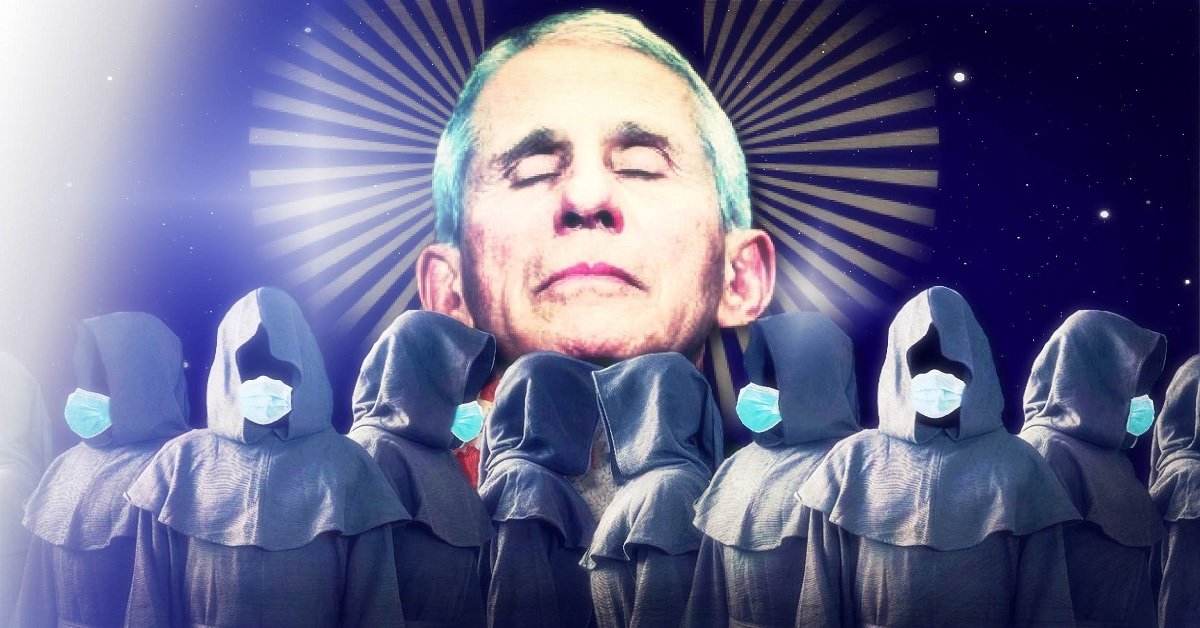
What time has revealed about the Covid era, and why the silencing of dissent was the most consequential failure of all.
Here is the argument in plain English, so you know where this is going.
During COVID, public health officials repeatedly spoke with absolute certainty about things they were, in reality, guessing at. Time and again, they chose the most alarming number instead of the most honest one, the most dramatic framing instead of the most grounded. And they delivered those claims with the full weight and authority of government behind them.
When people pointed out the holes, they were mocked, censored, throttled on social media, stripped of professional standing, pushed out of jobs, and in some cases driven out of the very agencies they had served. Then, when the claims started falling apart, the corrections arrived late, quietly, and usually without apology.
This is not the story of one giant lie. It is the story of a pattern. A habit. Manufacture certainty. Punish dissent. Revise the record later, once the public has moved on.
What follows is a brief tour through the evidence: a fatality estimate that seemed to change depending on who was asking the question, a vaccine statistic selected because it sounded more impressive than it actually was, a six-foot distancing rule nobody can produce real science for, a drafted warning about heart inflammation that was quietly shelved, and a more sophisticated vaccine safety monitoring system the FDA had access to but chose not to use. Add to that the court records and internal government emails showing officials pressuring social media companies to suppress dissent and “manage” inconvenient voices online.
None of this requires belief in some grand conspiracy. It only requires comparing what these officials said privately with what they said publicly. The gap between those two things reveals just how badly people were duped.
And I will be honest about the other side too, because doing otherwise would be committing the exact same sin I am describing here. Some critics got things wrong. Some overreached. Some made claims that did not hold up either. The issue is not whether one tribe was perfectly right and the other perfectly wrong.
The issue is that the institutions we were told to trust broke the most basic covenant with the public: tell people the truth, including the parts they are uncertain about, and allow open debate instead of crushing it.
Let me show you what happened.
Two numbers, two audiences, eleven days
Start with the cleanest example, because it captures the whole pattern in miniature. In early 2020, Anthony Fauci, then the most trusted health voice in the country, described how deadly the new virus was. He did it twice, to two different audiences, eleven days apart. The two descriptions are difficult to reconcile, which is a polite way of saying they don’t match.
First, the doctors. On February 28, 2020, Fauci and two colleagues wrote an article in the New England Journal of Medicine, the most respected medical journal in America. Talking to fellow physicians, they were cautious. If the real number of infections was much higher than the confirmed cases, they wrote, which they expected, then the death rate “may be considerably less than 1%.” They even said the virus might end up “more akin to” a severe flu season.1
Notice the hedging: may be, might end up, more akin to. That is how careful people talk when they do not yet know. Fair enough. The virus was barely two months old.
Then, the public. Eleven days later, on March 11, Fauci testified before Congress on national television. The hedging was gone. He told the country that the flu kills about 0.1 percent of the people it infects, and that this virus was “ten times” more deadly than that.2
Ten times deadlier than the flu. No “may be.” No “less than 1%.” Just a clean, terrifying number that ran on every front page in the country. So, which was it? Privately, to the experts, “probably milder than it looks.” Publicly, to everyone else, “ten times the flu.” Same man, same week, two very different messages aimed at two very different rooms.
And the scary number had a flaw baked into it. That “ten times” claim compared the new virus to the flu’s 0.1 percent. But a later peer-reviewed analysis caught the problem: the flu’s 0.1 percent counts deaths against everyone infected, including the millions who barely notice it. The COVID numbers being thrown around counted deaths against confirmed cases only, which skews sicker. He was comparing two different things and calling it one. Do that, and the new virus automatically looks worse than a fair, apples-to-apples comparison would show. The cautious journal version had quietly avoided this trap. The scary public version walked right into it.3
The public got a hard, simple “ten times.” The experts got “may be considerably less than 1%.” If the real worry was the math of mass spread of a virus slightly worse than the flu, then that is what the public deserved to hear, in plain words. Instead, they got a number built to frighten. The confidence got dialed up or down depending on who was listening. That is the whole pattern, and it happened in a single week, from a single person, in his own words. Fauci’s strategy was a confidence game.
The same trick, pointed the other way. Here is why that example matters so much: the same move appears again later, except this time it makes the vaccine look better rather than the virus look worse. You have heard the vaccines were “95% effective.” That 95% is a relative number. It means the vaccinated group got sick about 95% less often than the unvaccinated group during the trial. But because hardly anyone in either group got sick during that short window, the absolute change in your personal odds, the number that answers “how much does this actually lower my chance of getting sick right now,” was about eight-tenths of one percent. Both numbers are real. They answered different questions, but only the more impressive ones were put before the public.21
I want to be just as fair here as I was with Fauci, because this one is close but not identical. Reporting the relative number has long been the typical way to describe a vaccine trial, not some COVID-era invention. So, this was not a flat-out math error like the flu comparison was.
The fair complaint, and it was made at the time by researchers in The Lancet and the BMJ (both of which actually supported vaccination) is simpler: show people both numbers. Let them see how strong the protection is and how big the underlying risk was to begin with. That second number mattered because it fed straight into the bigger fights this essay gets to later, about how far the government should have gone in pushing and eventually mandating the shot.
Put the two side by side, and the real problem comes into view. One number made the virus appear more dangerous. The other made the vaccine appear more effective. Neither was fabricated. In both cases, someone reached for the more dramatic of the two honest numbers and didn’t mention the more conservative one.
If the bias ran in random directions, it would be an unremarkable error. But it ran in the same direction every time: toward more fear of the disease and more confidence in the cure. That consistency is what separates an honest mistake from a thumb on the scale.
It happened over and over
Once you spot the move, you see it everywhere. There is a real unknown. Behind closed doors, people know it is an unknown. But the version that reaches the public drops the hedges and hands you a flat rule, a hard number, or a firm promise. Then the facts shift, and the walk-back never gets the same volume as the original claim.
The six-foot rule. For two years, the six-foot rule ran American life: the stickers on the supermarket floor, the spaced-out school desks, the half-empty restaurants. It felt like hard science. Then, in 2024, under congressional questioning, Fauci said the six-foot rule “sort of just appeared” and admitted he knew of no study behind that specific distance. A rule that reorganized daily life for tens of millions of people had, by the account of the man most associated with it, simply turned up one day, fully formed, like a foundling on the doorstep. To be fair, the rule came from the CDC, not from Fauci personally, and he never claimed to have invented it. But that is a thin defense. A rule sold to the public as settled science turned out to have almost no science underneath it.4
“The vaccines stop you from spreading it.” In 2021, senior officials said flatly that vaccinated people did not catch or pass on the virus. This was not a throwaway line. It was the whole logic behind the mandates and the vaccine passports: if the vaccinated could not spread it, then the unvaccinated were a threat to everyone else, and you could justify forcing the issue. Even worse, the president of the United States went even further, stating:
“You’re not going to get COVID if you have these vaccinations.” -Biden, July 2021
“If you’re vaccinated, you’re not going to be hospitalized, you’re not going to be in an ICU unit, and you’re not going to die.” -Biden, December, 2021.
Except it was not true. The vaccines did cut severe illness and death (probably in part due to IgG4 class switching), which is genuinely important – particularly for the elderly with limited immunological function, but they did not reliably stop infection or transmission, and that was clear to the mainstream by late 2021. This was a huge coercive machine that was built on lies.5
“Two weeks to flatten the curve.” For about two weeks, this slogan was honest, which, by the standards of the period, was a respectable run. The original idea, spelled out plainly at the time, was about hospital capacity: slow the spread so that, even if the same number of people eventually got infected, it would happen gradually rather than all at once, and the hospitals would not collapse. It was a timing plan. This strategy openly admitted that roughly the same number of people would ultimately catch the virus.6
The dishonesty was not in the science. It was in the deadline. “Two weeks” sounded like a specific, limited request. It was not limited at all. The real goal quietly slid from “do not overwhelm the hospitals” to “keep this locked down indefinitely,” and nobody ever told the public the deal had changed. People signed up for one thing and got another. The lockdowns in some instances lasted for months or even years.
COVID-era lockdowns and economic disruptions that they caused pushed roughly 100–150 million additional people into hunger/undernourishment globally. The UN estimated global hunger rose by about 118 million people in 2020 and by about 150 million since the outbreak of COVID-19 by 2021. Africa had about 282 million undernourished people in 2020, roughly 21% of the continent. These are not small numbers.
During COVID, children paid a staggering price for policies public health officials labeled as “following the science.” Prolonged school closures caused massive learning loss, especially among poor and working-class children who lacked tutors, stable internet, or parents at home. Math and reading scores fell sharply across the United States and much of the world, while rates of anxiety, depression, loneliness, obesity, and behavioral problems climbed. At the same time, young children were forced to spend critical developmental years staring at masked faces, despite remarkably weak evidence, as in no evidence, that masking children, particularly with cloth masks in school settings, meaningfully reduced transmission of the disease. Teachers know that children learn language, emotional cues, trust, and social interaction by watching faces. Instead, the government normalized fear, isolation, and silence in classrooms for years while imposing measures that showed no benefit for children themselves, who were already at very low risk from severe COVID illness. The long-term educational and psychological consequences of these policies may outlast the virus itself.
The “conspiracy theory” that was not. Perhaps the most damaging move of all was the effort to brand the lab-leak hypothesis as a “debunked conspiracy theory” almost from the start. In early 2020, a statement published in The Lancet and signed by 27 scientists condemned what it called “conspiracy theories” about the virus’s origin, while presenting the natural-origin explanation as essentially settled science. It worked. For a long time, the discussion was effectively shut down.
Then the emails emerged. The statement had been organized and drafted by the head of EcoHealth Alliance, an organization with a direct financial stake in the outcome because it had funded coronavirus research involving the very lab under scrutiny. Efforts were reportedly made to present the letter as the independent judgment of neutral scientists, without obvious ties back to the people involved. Some collaborators even chose not to sign specifically to avoid the appearance of self-interest.
Today, the lab-leak hypothesis is treated as a legitimate possibility by multiple U.S. intelligence agencies, and the CIA now says it leans toward a laboratory origin. Recent whistleblower testimony and congressional investigations have further undermined the claim that the issue was ever “settled science. A genuine open scientific question was publicly framed as closed by people with a stake in the answer, and those who continued asking questions were smeared, censored, or dismissed as cranks .89
The role of senior U.S. public health officials, particularly Anthony Fauci, is again nefarious. Released emails showed that, early on, several scientists privately raised concerns with Fauci and others that the virus could have originated from laboratory research. Yet within weeks, the public messaging hardened around the claim that a natural origin was effectively settled science. Fauci repeatedly cited papers such as “Proximal Origin” as evidence against a lab leak, even though internal communications later suggested the authors themselves initially viewed the issue as uncertain. As the NIH had funded the research in China and even helped design the experiments, the decision to hide the lab leak theory reeks of a cover-up. The problem was not a scientific debate. The problem was presenting uncertainty as certainty while quietly working to marginalize dissenting views.
The silencing was the heart of it
Everything so far could just be a story about a government getting things wrong under pressure, which happens, if not for one thing. The people who caught these problems as they were happening were silenced. That is the part the first edition of this book was really about, and it is the part the record now backs up.
This is not a hunch anymore. In the case that became Murthy v. Missouri, a federal judge reviewed an extensive record of internal documents and found that government officials had likely “coerced” or “significantly encouraged” social media companies into suppressing views the government disfavored, to the point that the companies’ decisions could fairly be attributed to the government itself. An appeals court largely agreed. The Supreme Court then dismissed the case on narrow procedural grounds: it ruled that these plaintiffs could not establish the standing required to sue, and it pointedly declined to rule on whether the underlying conduct was constitutional.10
That distinction was widely lost, and the ruling was reported as an exoneration. It was nothing of the kind. The Court did not find that the government had behaved properly. It found that the wrong parties had brought the suit. The factual record of the pressure campaign, much of it drawn from the government’s own emails, remains intact. The Supreme Court’s own majority opinion describes White House officials publicly and privately pressing the platforms to do more about “misinformation,” and notes that the Surgeon General, the CDC, the FBI, and the federal cybersecurity agency were all in contact with the platforms about what to remove.11
This is precisely the arrangement the first edition warned about. The government never had to arrest anyone. It only had to lean on the handful of private companies that now control most of the public conversation, and let them do the silencing. What made the arrangement so effective, from the government’s standpoint, was its deniability. Officials could call it “flagging,” a word doing an extraordinary amount of work, while doctors, scientists, and ordinary citizens who questioned the six-foot rule, or natural immunity, or the transmission claims, the very things later quietly conceded to be shaky, found themselves throttled, labeled, or removed from the platforms altogether.
And here is the trap, the part that makes it a closed loop. The official line is called settled science. Anything that disagrees with settled science is, by definition, misinformation. Misinformation can be removed. So, the disagreement gets removed, the official line goes unchallenged, and it keeps looking settled. Round and round. The censorship did not just sit next to the false certainty. It was the thing that kept the false certainty alive by killing off the corrections before they could land.
A case study: the heart problem they chose to ignore
If you want the clearest example of how this worked, look at myocarditis, the heart inflammation now officially recognized as a risk of the mRNA vaccines, particularly in young men.
Start with what was knowable early. Israel launched mass vaccination in December 2020, and after reports of heart inflammation began appearing, its Ministry of Health started actively tracking myocarditis cases in February 2021. That timeline is documented in the New England Journal of Medicine itself. Israeli officials also alerted their American counterparts that same month about a concerning signal in younger vaccine recipients.
Now compare that to what the American public was told. On April 27, 2021, the CDC director stood at a White House briefing and claimed “we have not seen” reports suggesting vaccine-related myocarditis. But internally, by the end of March, the CDC had already accumulated well over a hundred myocarditis reports in VAERS, along with additional reports in a second federal monitoring system. The public statement and the internal data did not match.
Then came the CDC’s own paper trail. On May 17, 2021, the agency’s vaccine safety work group acknowledged in publicly archived meeting materials that myocarditis cases were clustering in young men, typically after the second dose and usually within days of vaccination, while still insisting the rate remained within the expected range. But one week later, on May 24, the language changed in a way that could no longer be spun away: the CDC’s own documents stated there was “a higher number of observed than expected” myocarditis cases among 16-to-24-year-olds. By late May, the agency had internally acknowledged the signal in its own words.
According to records later described in a 2024 congressional investigation, the CDC even drafted a formal Health Alert Network warning, its official mechanism for urgent public-health alerts, to notify physicians and the public about the myocarditis risk. The CDC director reportedly received that draft on May 23. The alert was never issued in that form. Instead, the first public acknowledgment came days later, on May 27, wrapped in carefully reassuring language, roughly three months after Israel first raised concerns and after American reports had already accumulated. The World Health Organization formally recognized the myocarditis signal in July.
What makes this episode so troubling is not simply that myocarditis occurred. It is the pattern. Flat public denials while reports were already piling up internally. Private acknowledgment of the problem weeks before clear public disclosure. A drafted warning that was quietly shelved. And a months-long gap between the first international alarm and the first straightforward admission to the American people.
During that gap, physicians, parents, and researchers raising the exact concern the CDC was privately investigating were dismissed as alarmists or branded as “misinformation” spreaders. They were censored on line. Licenses were threatened. Yet today, myocarditis is listed in the FDA-required safety warnings for these products. The people warning about it early were not inventing the signal. They were simply ahead of the official narrative.
The better tool they left on the shelf
The heart-inflammation story raises an obvious question. If we had early-warning systems, why did they keep failing to go off? A congressional investigation released in 2026 offers a partial answer, and a disturbing one. Note that these findings are investigational, not settled facts.
It centers on Dr. Ana Szarfman, a longtime FDA medical officer who helped build the agency’s safety monitoring system (with who I actively collaborated from 2020 to 2023), and Dr. William DuMouchel, the statistician who designed the mathematics behind it. The technical issue is real and predates COVID. The FDA’s standard tool has a known blind spot called “masking”: when one product generates a very large number of reports for a given side effect, the math can hide that same side effect for other products. DuMouchel had built a better method specifically to correct for this. On March 1, 2021, Szarfman presented it to FDA leadership as a state-of-the-art upgrade.
According to the report, when the better method was run on the COVID vaccine data, it produced what one analysis called “49 examples of extreme masking,” (masking in this case does not refer to things you wear on your face, but rather the statistical impact of algorithms comparing different data sets) including roughly two dozen genuine safety signals the old system had missed, among them sudden cardiac death, Bell’s palsy, and pulmonary infarction, a clot in the lung. Other analyses she shared pointed to elevated signals for heart attack, blood clots, and sudden death. The report says senior officials declined to adopt the better method, and it quotes their emails, including the FDA’s top vaccine official warning that her work could “create erroneous conflicts that feed in to anti-vaccination rhetoric,” and a later instruction that she “hold off” on sending her reports. A separate 2022 message has an official suggesting the weekly reports be stopped in connection with public-records requests.20
But boil it down to what the documents flatly show. The agency had a better tool. The man who helped build its systems told them to use it. They did not. And the reasons they wrote down at the time were not about statistics; they were about how the findings would look and what they might “feed.” That is the same move as everywhere else in this essay, just one floor down: not silencing outside critics this time, but silencing the agency’s own people, by bosses who seem to have weighed the optics of a safety signal right alongside, or above, the signal itself.
The other side of the ledger
If I only went after the government here, I would be committing the same sin I am criticizing: selling one side as the entire truth. So let’s state the other side plainly.
Not every bad call was a lie. Pretending otherwise weakens the arguments that actually hold up. The shifting death counts (largly based on modeling, not actual data), the wildly inaccurate early models, the confusion over dying “with” COVID versus “from” COVID, much of that was honest error made under pressure, not deliberate deception. Calling every mistake a conspiracy only helps the people who want to dismiss all criticism, because they can knock down the weakest claim and use it to discredit the stronger ones beside it.
And yes, some critics trafficked in their own brand of false certainty. Predictions of mass vaccine deaths on an apocalyptic scale never materialized anywhere near the levels claimed. Some allegations, such as the idea that the vaccines contained “nanobots” for tracking or mind control, or that graphene oxide was secretly added as part of a covert technological scheme, were unsupported by credible evidence and often veered into outright fantasy. Certainty was oversold by more than one side. Admitting that does not weaken the case against the government. It strengthens it, because it separates exaggeration from documented fact.
But there is a fundamental difference between citizens speaking in a chaotic public square, even wrong or opportunistic citizens, and the government itself. The government holds power. The government can coerce, censor, regulate, punish, close businesses, remove livelihoods, and restrict movement. And during COVID, many of those powers were exercised based on claims that officials presented as settled science when they knew the evidence was uncertain, incomplete, or in some cases directly contradicted by their own internal data. That is not the same thing as random people shouting bad takes on the internet. Not even close.
And for the record, many of the claims censored most aggressively are the ones that aged the best. The myocarditis risk, dismissed in 2021 as anti-vaccine fearmongering, now appears in FDA-required safety warnings. Meanwhile, the pandemic relief programs turned into one of the largest fraud bonanzas in modern history. Federal auditors estimate that more than $200 billion in relief funds were stolen or fraudulently claimed, at least seventeen cents of every dollar spent. In any normal era, that alone would have been a national scandal. Instead, it was buried beneath the avalanche of everything else.
Many of the people raising those concerns early were mocked, censored, or branded as misinformation spreaders. Time has not been especially kind to their critics..12 13 14
What we lost
So if this was not one grand, tidy conspiracy, then what exactly was the lie?
The lie was the manufactured certainty, and the censorship used to protect it. It was taking “we do not really know yet” and translating it into “the science says” before mandating lockdowns, masks or vaccines. It was presenting provisional guesses as settled fact, suppressing dissent from qualified people who challenged the narrative, and then quietly rewriting the story later when the evidence changed.
Again and again, the public was treated not as free citizens worthy of honesty, but as a population to be managed, nudged, frightened, and steered. Even when the experts themselves were often operating on incomplete data, assumptions, and educated guesses.
And this matters far beyond any single statistic, mandate, or policy mistake. Trust is the one thing a public-health system cannot manufacture in the middle of a crisis. It can only spend the trust it has already earned. And the fastest way to burn through that trust is to project absolute confidence, silence critics, get caught being wrong, and then issue the correction in a whisper months later or never at al. Do that often enough, and eventually they will create exactly what we have now: a country that instinctively distrusts official certainty, even in moments when the authorities may finally be telling the truth. That may prove to be the most damaging legacy of the entire pandemic era.
The solution is almost painfully old-fashioned. Tell people the truth, including the parts you are uncertain about. Say, “This is our best estimate right now, and it may change as we learn more.” Allow disagreement, especially when you feel most certain, because any claim that cannot survive open challenge was never solid science in the first place. Correct mistakes as loudly as you made them. Treat the public like adults capable of handling uncertainty and nuance.
Because the alternative, treating citizens like children who must be shielded from dissent and managed through fear and selective information, does not ultimately protect public health. It protects institutional authority, right up until the moment that authority collapses under the weight of its own contradictions.
What would actually fix the problem
Diagnosis without a remedy is just complaint. None of these failures were inevitable. They came from the way these institutions are built, and what is built can be rebuilt. And here is the important part: none of these fixes require assuming anyone acted in bad faith. Every one of them would help even if every official meant well, which is precisely why they are worth doing.
Use the best safety tool you have or explain why you didn’t. The data-mining failure has a straightforward fix. When a better method exists and your own statisticians are recommending it, you either adopt it or you publicly explain, in plain terms, why you did not. A regulator running vaccine safety on a tool it knows has a blind spot, while a corrected tool sits unused, should have to defend that choice in the open. And the methods themselves should be reviewed by someone outside the agency, not just the results.
Make the safety data public and searchable, in close to real time. The heart-inflammation delay only worked because the public could not see what the agencies could see. The raw, anonymized safety reports should be open by default, and the analyses run on them should be posted on a regular schedule, not pried loose through lawsuits and records requests years later. Transparency should not be something you have to sue for. When officials are caught discussing whether to stop internal safety reports because someone might request them, the incentives are pointing exactly backwards.
Separate the agency that promotes a product from the one that polices it. A great deal of this trouble flows from one built-in conflict: the same institutions charged with promoting vaccination were also charged with detecting and announcing its harms. When the people who would have to sound the alarm are also measured by how many doses get administered, the temptation to soften, delay, and reassure is built into the organization itself. Vaccine-safety monitoring should sit in a body that is independent of the people responsible for uptake, with its own authority to tell the public what it finds. Also, consider whether promotion of a medical product by the government is necessary or useful. Regulatory capture has become all to common and must be avoided at all costs.
Give people the real range, not a fake-confident number. The fatality-rate fiasco, masking, long-term lockdowns, shutting down of schools, and the six-foot rule have the same root: estimates and guesses got handed to the public stripped of the doubt behind them. Official guidance should come with its confidence level attached and should say plainly what would change the advice. “Our best guess is X, it could reasonably be anywhere from Y to Z, and here is what we are watching” is not weakness. It is the only honest way to talk when you do not fully know, and it is the only way to keep any credibility when the number later moves.
At the population level, Guidance should be guidance: It should not be mandated and not forced.
Draw a clear line between the government and what you are allowed to read. The censorship worked because no one ever defined the boundary between a government “request” and a government order. Agencies should be required to log and publicly post their communications with platforms about specific posts (such as threatening violence or harm), so that “flagging” cannot quietly become coercion in the dark. The question the Supreme Court declined to answer on procedural grounds, Congress can still answer with legislation: clear limits on officials pressuring platforms, and a workable way for ordinary people to challenge it when it happens.
Protect the whistleblowers inside the building. In nearly every episode in this essay, someone on the inside saw the problem early and was sidelined for saying so. An agency scientist who raises a safety concern through the proper channels should be protected, not treated as an obstacle. You can measure the health of these institutions with a single question: what happens to the person who turns out to be right too early? Lately the answer has too often been that they are managed, silenced, pushed out, or deplatformed (as I am still permanently banned on LinkedIn). Change that answer, and most of the rest follows.
None of this is exotic, and none of it depends on relitigating any single scientific fight. They all rest on one idea: institutions earn trust by being correctable, and the machinery of correction, open data, independent safety review, protected whistleblowers, and a free public argument, is exactly what got switched off during the years this essay describes. Turn it back on, and good faith will return – slowly, but it will return.
That is the big lie my government told me. Not that the virus was this or that. The lie was that anyone – and particularly government officials- in those first frightening months, was as certain as they sounded, and then the decision to silence everyone who said otherwise. Maybe they all thought it necessary to project certainty to avoid mass panic. But I prefer to believe that if these court intellectuals had been more honest and less arrogant, and had trusted the public to be able to process the truth, we would be in a much better place today.
The point does not just apply to COVID.
To this day, government public relations specialists and press officers continue to spin and mislead, just the same way that corporate PR people do. But in 2026, the internet sees through everything, and information gaps are rapidly filled in with a range of alternative interpretations.
Rather than constantly spinning convenient half-truths, maybe they should try just leveling and speaking truth with American citizens?
Wouldn’t that be a refreshing change.
https://www.malone.news/p/lies-my-government-told-me-updated