
‘When the Collapse Comes’ . . . Where Will You Be?
Britain’s “far-right” is a time-wasting Soap Opera. Our people deserve better.
“When the Collapse comes….”. The idea that a future economic and social catastrophe would create the conditions needed for revolutionary change has been at the heart of the hopes of radical Brits – left and right alike – since the 1930s. From Mosley to Tyndall, from Harry Pollitt and (the great) Douglas Hyde to the SWP, generations of fascists and communists have reassured their supporters that great pain would one day awaken the masses, driving them to sweep the faithful to power.
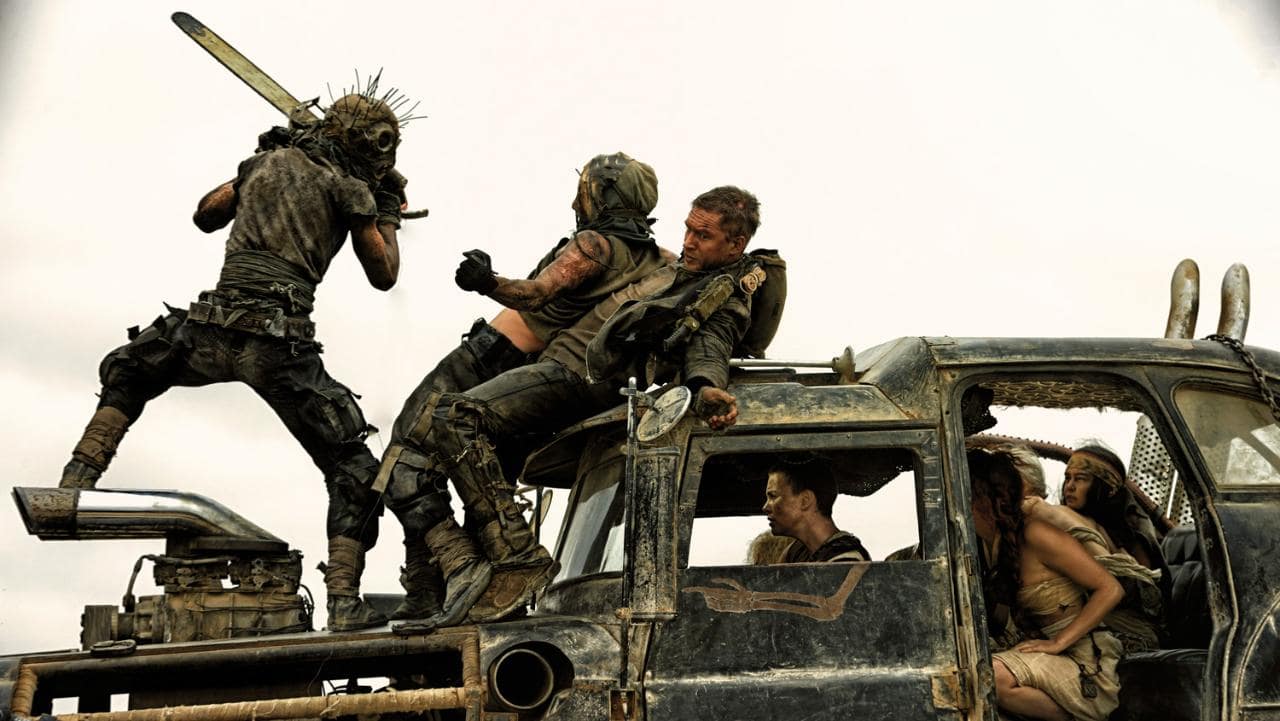
The image of “Collapse” as something extremely dramatic and clear cut has also been promoted by popular entertainment. Social collapse in cinematic terms involves burning cities, total lawlessness, armed gangs roaming empty highways and the complete disappearance of ordinary life.
It is, of course, possible that it happens that way. My Substacks about the falling apart of the two communities in Northern Ireland in the sixties and seventies, provide a stark warning as to how the mainland’s multicult Utopia could be reduced to burning, blood-stained rubble almost overnight. Indian Partition, Rwanda, the former Yugoslavia – you can take your pick; there’s no shortage of examples.
Yet recent history in several parts of the world also gives us another vision of “Collapse”. The experiences of Russia after the fall of the Soviet Union, Albania in the 1990s, and Argentina during its repeated financial crise, show something rather different. Real collapse, in modern societies with existing infrastructure, memories of order, and overall ethnic cohesion, usually looks less like Mad Max or Assault on Precinct 13, and more like a shabby, anxious and degraded normality.
Shops still open – although ordinary people have to cut back on what they buy – buses still run sporadically, schools continue in diminished form, people still go to work if work exists, and governments continue to issue decrees even as their authority weakens. The true danger is not instant apocalypse but the slow corrosion of trust, competence, security and hope. When it comes to population reduction, it’s less about mass premature death, and much more about young couples deciding they can’t afford to have children.
Albania’s collapse in 1997 came after the implosion of nationwide pyramid schemes in which a huge proportion of the population had invested their savings. The state lost legitimacy almost overnight. Army depots were looted, criminal gangs flourished and parts of the country fell outside effective government control.
Yet even there, life did not become permanently anarchic. Families still gathered, local loyalties still mattered and communities improvised systems of exchange and protection. The state became unreliable rather than entirely absent. The most dangerous places were often not remote villages but atomised urban areas where trust had already decayed.
Russia in the 1990s was a similar mix of the mundane and the extremely uncomfortable. The Soviet Union collapsed politically in 1991, but the deeper trauma was social and economic. Hyperinflation destroyed savings. State industries collapsed or were looted by well-connected oligarchs.
Life expectancy fell sharply, particularly for men. Organised crime became deeply entangled with business and politics. Corruption penetrated everyday life, with former Communist apparatchiks and strongmen alike exploiting the vacuums left as the Party withered away.
Yet Moscow still had theatres, universities, cafés and functioning public transport. Most people continued trying to live ordinary lives amid insecurity and humiliation. The collapse was experienced less as constant violence than as chronic instability, fear and exhaustion. Pensioners sold possessions in the street. Skilled professionals drove taxis. Families survived by barter, gardens, side jobs and informal networks.
Argentina’s repeated financial crises, especially the collapse of 2001–2002, perhaps offer the clearest example of what advanced social decline looks like in a literate urban society. Banks froze deposits. The middle class saw their savings evaporate. Unemployment surged. Political legitimacy collapsed so rapidly that the country went through multiple presidents within weeks.
Riots, multiple presidential turnovers in weeks, and widespread protests marked the peak, yet much of daily commerce adapted through barter clubs, alternative currencies, and neighbourhood organising.
Even at the worst moments, Buenos Aires remained recognisably a modern city. Restaurants still operated, newspapers still published the lies, and many institutions persisted. The real transformation lay in insecurity. People no longer trusted banks, politicians, police or official statistics. Informal economies expanded.
Families doubled up in shared housing. Barter clubs emerged. Theft increased. Middle-class professionals scavenged for income. Daily life became narrower, meaner and more improvised. neighborhoods organised soup kitchens and security watches. With more comfortable years between them and the crisis, veterans sometimes even reminisce fondly about how close people became.
Lesson to Learn
The central lesson from these cases is that collapse in developed societies is rarely absolute. Infrastructure lingers. Bureaucracies stagger onward. Electricity often continues, though less reliably. The internet may still function, although Just-in-Time deliveries are less likely.
What really changes is the quality and predictability of life. Collapse is usually experienced as the erosion of systems people once assumed were permanent. Savings disappear. Laws become selectively enforced. Corruption is normalised. Public services deteriorate. Violence becomes more unpredictable but not necessarily universal. A society under severe stress often resembles a poorer and more cynical version of itself rather than a post-apocalyptic wasteland.
In every case, isolated individuals are generally more vulnerable than people embedded in families, neighbourhoods and local networks. The limitations of the conventional ‘prepper’ mentality are brutally exposed.
Isolated preppers with stockpiles often found themselves vulnerable to theft, social isolation, or the inability to maintain complex systems alone. In contrast, tight-knit neighbourhoods, extended families, and local mutual aid groups fared better by sharing resources, skills, and defence
Those who survived best were rarely the most heavily armed or self-sufficient in a wilderness sense. Instead, they were people with trusted relationships, practical skills and reciprocal obligations. Grandmothers with gardens, mechanics with useful tools, local shopkeepers, nurses, priests and teachers, often became more valuable than aggressive individualists stockpiling weapons.
Again, it is worth remembering that Argentina and Albania were blessed in going through such hard times as essentially mono-ethnic societies, while even in Russia, the ethos and power of ‘Russianness’ tended to overawe potential minority troublemakers. Britain, France, Sweden, etc are very different kettles of fish, with far more serious ethno-religious faultlines to complicate any “Collapse”.
Britain has several all too realistic slippery slopes to Failed State status. Andy Burnham looms high on the list, but provoking and losing a war with Russia is another.
So it pays to remember that human beings survive social collapse far better together than we do apart. Food, childcare, security, information and emotional resilience are all easier to sustain collectively than individually.
During Argentina’s crisis, neighbourhood assemblies, barter systems and extended family support networks became crucial. In post-Soviet Russia, the dacha culture — small family garden plots — prevented genuine famine for many urban households. In Albania, kinship structures often replaced absent state authority. The recurring pattern is clear: cohesive communities degrade more slowly than atomised societies.
Certain buildings and institutions repeatedly emerge as critical anchors during periods of stress. Local churches and chapels often become centres not only of spiritual support but also practical aid distribution and mutual trust. Schools matter because they provide continuity, information exchange and social structure even when formal education deteriorates. Britain’s mosques and Gudwaras are way ahead of our churches, but we’ll catch up soon enough when the need really bites.
Libraries and community halls can become hubs for communication, heating, charging devices and distributing supplies. Small local shops are often more resilient than centralised retail chains because they adapt quickly and maintain personal relationships with customers.
Local farms, allotments and food-growing networks become strategic assets. Tradesmen like electricians, mechanics, carpenters and plumbers gain importance because repair replaces replacement in poorer societies. Pubs and cafés can even serve valuable functions as informal centres of news, trust and negotiation, provided they remain relatively orderly. In every historical collapse, places where people can meet, exchange information and reinforce social norms become vital.
But the most important institution of all is local trust itself. A neighbourhood where residents know one another’s names, skills and vulnerabilities is dramatically more resilient than one where people remain strangers. The greatest danger in a stressed society is not merely poverty but atomisation.
Once people stop trusting neighbours, institutions and shared rules, every interaction becomes exhausting and defensive. This destroys the cooperation upon which civilised life depends, and the spirit of brotherly identity and unity which is the foundationstone of nationalism.
Hence, a practical preparation plan for responsible nationalists should focus less on fantasies of armed retreat to the proverbial hills, and more on quietly strengthening local resilience before crisis arrives. A resilient community thinks in terms of interdependence rather than merely protecting the strongest.
The first step is social rather than material. A small group of dependable people should get to know one another through ordinary civic activity rather than overt “collapse preparation”. Quite apart from fitting with the realities of “Collapse”, it is also very much safer legally.
Gardening groups, volunteer organisations, church activities, local history societies, sports clubs and neighbourhood improvement projects all create familiarity and trust without attracting unnecessary attention or paranoia.
Where does this leave nationalists and traditionalists? It should be obvious, but I’ll spell it out once again. Rather than putting faith in Nigel and All the King’s Horses being able to catch Humpty Dumpty before he hits the ground, or in Rupert and All the King’s Men managing to put him back together again once he has, it’s time to decide what YOU are going to do.
Then find a little group of like-minded people – Restore is at present a very good place to look – and get on with the job. Don’t ask for anyone’s permission. Don’t wait for anyone’s orders. Just do it.
If you don’t know what to do, spend an evening reading my What Is To be Done? series, particularly the essays below. The good news is that there are so many constructive things that you can do, right now, that the biggest danger is getting confused by the choice.
So once your little group are all up to speed with the theory and examples I’ve given you, have a meeting. Resolve right at the start that you’re not leaving the room without agreeing exactly where to start, setting your deadlines and initial targets and establishing exactly who is going to do what.
It is clear from the controversies now swirling around Rupert Lowe that the Restore soap opera is going to have some quite dramatic twists and turns between now and the aftermath of the Makerfield by-election on June 18th. But however you view the current developments, you need to understand that watching them, whether to applaud, laugh, jeer and howl in anger, is quite pointless.
Because neither Nigel nor Andy nor Rupert, nor any other politician is going to help you, your family, your neighbours or your community, as Britain lurches further down the road to WTSHTF. You, on the other hand, can make a real difference. If not you, then who? And if you won’t start now, when?
https://nickgriffin544956.substack.com/p/when-the-collapse-comes-where-will