
Artificial Intelligence — Sucking Us Dry?
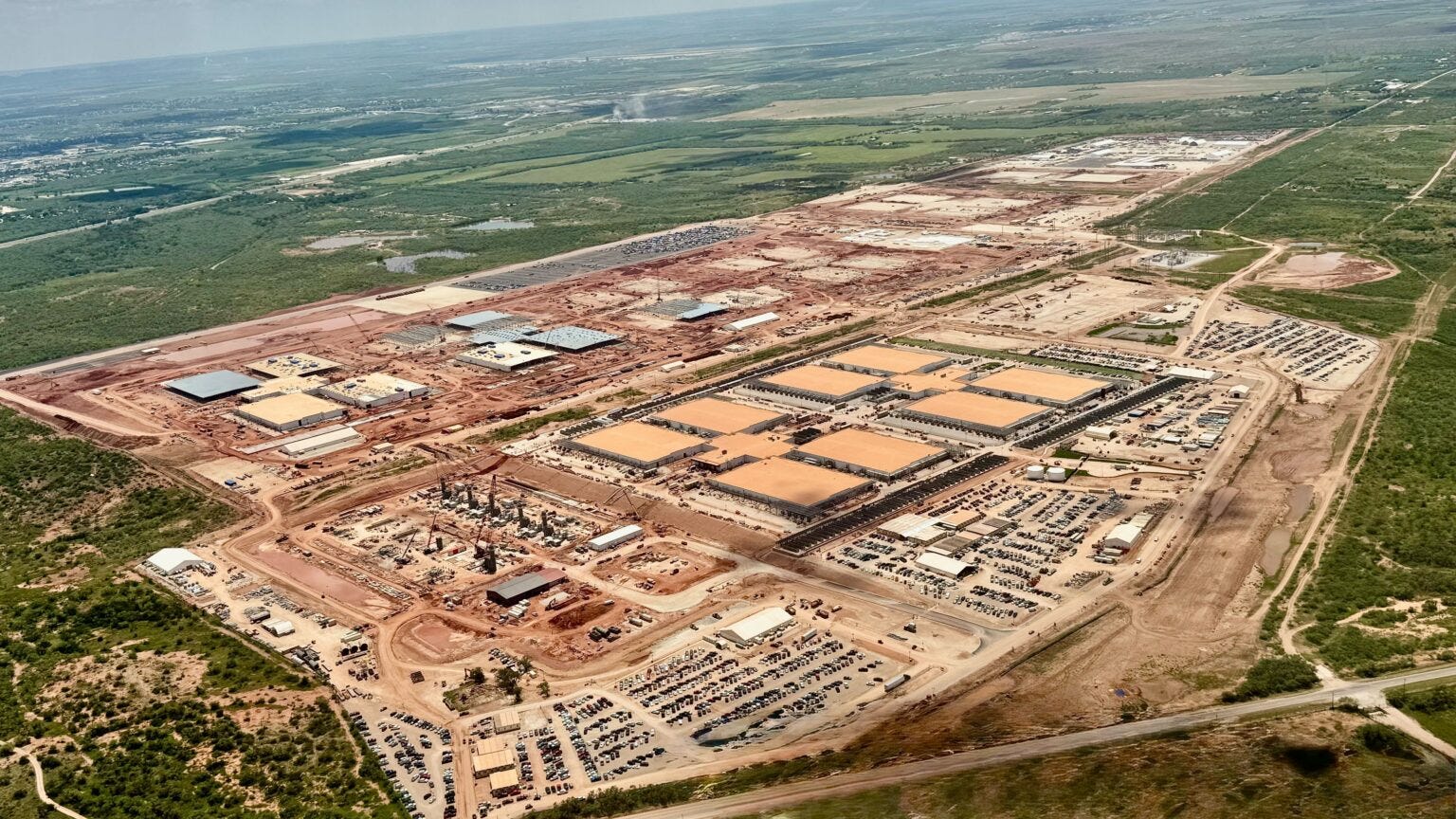
How the AI Explosion is Straining America’s Electricity and Water Supplies.
Artificial Intelligence. When the rising technology first burst into public consciousness, the chief concerns were fears of job losses, anxieties about surveillance and data security, or speculative worries about autonomous systems becoming hostile to human interests. But it is now clear that the rapid expansion of hyperscale data centres across the United States is creating a set of practical, material and political problems that are distinct from the more familiar public debates about artificial intelligence itself.
These very concrete and immediate concerns focus on electricity grids, water supplies, land use, tax policy and public finances, local democracy and environmental strain. These are not futuristic worries, but immediate disputes arising from the physical infrastructure required to sustain cloud computing and large-scale AI systems.
Hyperscale AI facilities are enormous industrial complexes, built to house tens of thousands of servers and networking systems. Their growth has accelerated sharply because generative AI models require vastly greater computational power than earlier internet services.
These facilities, often exceeding 100 megawatts in power draw, with thousands of servers in vast new buildings, are exploding in size and numbers. While vital to support cloud computing and AI training, their expansion is imposing major strains on many communities.
Companies such as Amazon, Microsoft, Google and Meta are now competing to secure sites with access to electricity transmission, fibre-optic infrastructure and cooling water. The result has been an unprecedented wave of data-centre construction concentrated in states such as Virginia, Texas, Arizona, Georgia and Iowa.
The most immediate issue is electricity consumption. Hyperscale AI facilities consume astonishing quantities of power, because modern AI workloads require dense clusters of specialised processors operating continuously. Data-centre growth is becoming one of the principal drivers of rising electricity demand in the United States.
U.S. data centers consumed approximately 176 terawatt-hours of electricity in 2023 – roughly 4.4% of national usage. This is predicted to rise to 325–580 TWh by 2028, perhaps up to 12% of total electricity consumption.
Northern Virginia, often called “Data Center Alley”, has become emblematic of this problem. Hundreds of facilities there already consume large portions of regional electricity capacity, over 20% of power in some counties. Oregon, Iowa, and Nebraska are also reeling under demands for hundreds of gigawatts in extra power.
This increase in electricity demand has direct consequences for ordinary consumers. Utilities frequently recover infrastructure costs through higher electricity prices distributed across the broader customer base. Households are indirectly subsidising hyperscale operators through rising utility bills and publicly financed grid upgrades.
Water consumption has become an equally contentious issue, especially in drought-prone regions. Modern hyperscale centres generate enormous heat and therefore require intensive cooling systems. The quantities involved can be immense. Hyperscale facilities can consume millions of gallons per day, particularly during summer peaks. Google alone reportedly consumed over 8 billion gallons of water globally in 2024, with a single Iowa facility using around one billion gallons in a year.
Mid-to-large facilities using hundreds of thousands to 5 million gallons per day – equivalent to the needs of small towns or cities of up to 50,000 people. Nationwide data center water use already reaches tens of billions of gallons annually and is projected to grow sharply.
Northern Virginia data centers alone consumed nearly 2 billion gallons in one recent year, with Loudoun County drawing around 900 million.
Roughly two-thirds of new data centres announced since 2022 are located in areas facing high water stress. Researchers warn that projected data-centre demand could require new water capacity on a scale comparable to the daily supply needs of major American cities.
This raises problems of aquifer depletion, well failures in nearby communities, and strained municipal supplies during droughts. Farmers are particularly worried about the competition for irrigation water. While innovations like closed-loop or air-cooling offer partial mitigation, such efficiency comes at a price which AI corporations often choose to avoid.
In Georgia, residents in Fayette County complained about weak household water pressure during drought conditions. Investigations later revealed that a major Quality Technology Services facility had consumed nearly 30 million gallons of water through industrial-scale connections that were either unreported or improperly metered.
Tax incentives represent another major source of criticism. Many states offer enormous subsidies to attract hyperscale operators, including sales-tax exemptions on servers and equipment, discounted land deals and publicly funded utility infrastructure. Critics argue that these arrangements often lack transparency and transfer substantial public wealth to already powerful technology firms.
Non-disclosure agreements between local authorities and technology firms are common during negotiations. Residents sometimes discover the scale of proposed projects only after agreements are already in place. In Wisconsin, public anger over tax incentives and secrecy surrounding major AI data-centre projects became intense enough to contribute to a referendum requiring voter approval for large subsidies.
Environmental concerns extend beyond electricity and water. Hyperscale facilities require enormous quantities of concrete, steel and diesel-powered construction equipment. They may also occupy large tracts of rural land, alter landscapes and generate persistent noise from cooling systems and backup generators. In some regions residents complain that industrial-scale server complexes are replacing farmland or woodland while offering little integration with local economies.
Another source of unease concerns the fragility and uncertainty of the AI boom itself. Some economists and planners worry that states are granting vast concessions based on optimistic projections that may not materialise. If AI demand fluctuates or technology changes rapidly, communities could be left with partially completed infrastructure, stranded utility investments or oversized industrial developments.
The United States, together with every other advanced nation on the planet, is now in a bind. On the one hand, to fall behind in the AI race would be economically and militarily disastrous. On the other, in addition to longer-term worries over misanthropic AI, it is now clear that the sheer scale of the technology involved is placing very serious strains on regional and national infrastructure and environments.
It needs very wise political leadership, armed with the ability to compel giant corporations to consider the national interest as well as the bottom line when making development decisions. Just what are the chances of that?
https://nickgriffin544956.substack.com/p/artificial-intelligence-sucking-us