
The Murder of Henry Nowak Marks a Crucial Turning Point in Public Opinion
The race-obsessed British state is now paying the price.
It was one of the most disturbing images I had ever seen. Two Metropolitan Police officers were manning the cordons at a protest in central London, organized by the Black Lives Matter (BLM) movement in the aftermath of the murder of George Floyd. However, these officers were not focused on their duties. Instead, they had both knelt down – a deliberate gesture to show that they stood on the side of the protesters. The officers had become part of the demonstration they were supposed to be watching.
Anyone who believed that the ‘thin blue line’ existed to enforce the law impartially – and particularly in monitoring high-profile political demonstrations – might well have been dissuaded from that notion at that moment, writes Paul Embery .
Or perhaps that happened a few days later, when police officers in Bristol deliberately refused to intervene while BLM protesters vandalized a statue of Edward Colston and threw it into a river.
Or perhaps on the countless occasions that uniformed officers were filmed dancing and skipping around during Pride parades. Or when a deputy police chief released a video on the occasion of ‘International Pronouns Day’. Or when countless citizens were arrested for things they said or did – for example, reading from the Bible in public – that were considered an insult to modern “progressive” [i.e., left-wing] ideology.
Such scenes confirmed that police officers, alongside their role as occasional enforcers of law and order, had by then also become political activists—specifically for the most fashionable social issues. Nowhere was this more clearly visible than in the realm of racial politics, where the police’s stance often differed little from that of some of Britain’s most radical anti-racist action groups.
Just as it was for the police, so it was for the greater part of the public sector, where a new ‘lanyard class’ of white ‘liberal’ [i.e., left-wing] middle-class managers, armed with university degrees and guilt complexes, now held sway, proclaiming hardline ‘progressive’ [i.e., left-wing] dogmas and claiming to bring harmony and unity, while increasingly doing exactly the opposite.
As someone who has worked in the emergency services for nearly 30 years, I have witnessed this phenomenon up close. A well-intentioned and justified desire to eradicate prejudice began to mutate into something entirely different—namely, a ruthless political crusade that encouraged employees to view themselves as members of either a privileged or an oppressed group, bombarded them with lectures promoting the new religion of ‘diversity, equality, and inclusion,’ and made career advancement dependent on the ability to preach that specific gospel on demand.
And all this was supported by the Equality Act 2010, which – read Part 11 of the Act if you don’t believe this – made it perfectly legal for certain workers to be treated more favourably on the basis of their ‘protected characteristics’ (of which race is one).
For the police, the road to this new politicized world began with the horrific murder of Stephen Lawrence and the subsequent Macpherson Report, which labeled the police as ‘institutionally racist’ and for which senior officers have since seemed to have spent most of the time desperately trying to atone. This has led them to quite dark places. It is, for example, the current position of the National Police Chiefs’ Council, as set out in its “race action plan,” that its desired goal of “racial equality” means “responding to individuals and communities based on their specific needs” and that “it does not mean that everyone is treated ‘the same’ or that one is ‘colorblind’.” So much for equality before the law!
The same document also pledges to “put an end to racial inequalities” in the results of police work, including “the likelihood that people are criminalized by the police”—seemingly without regard for the divergent crime rates among certain groups. The document reads as if it were written by the most militant BLM activist.
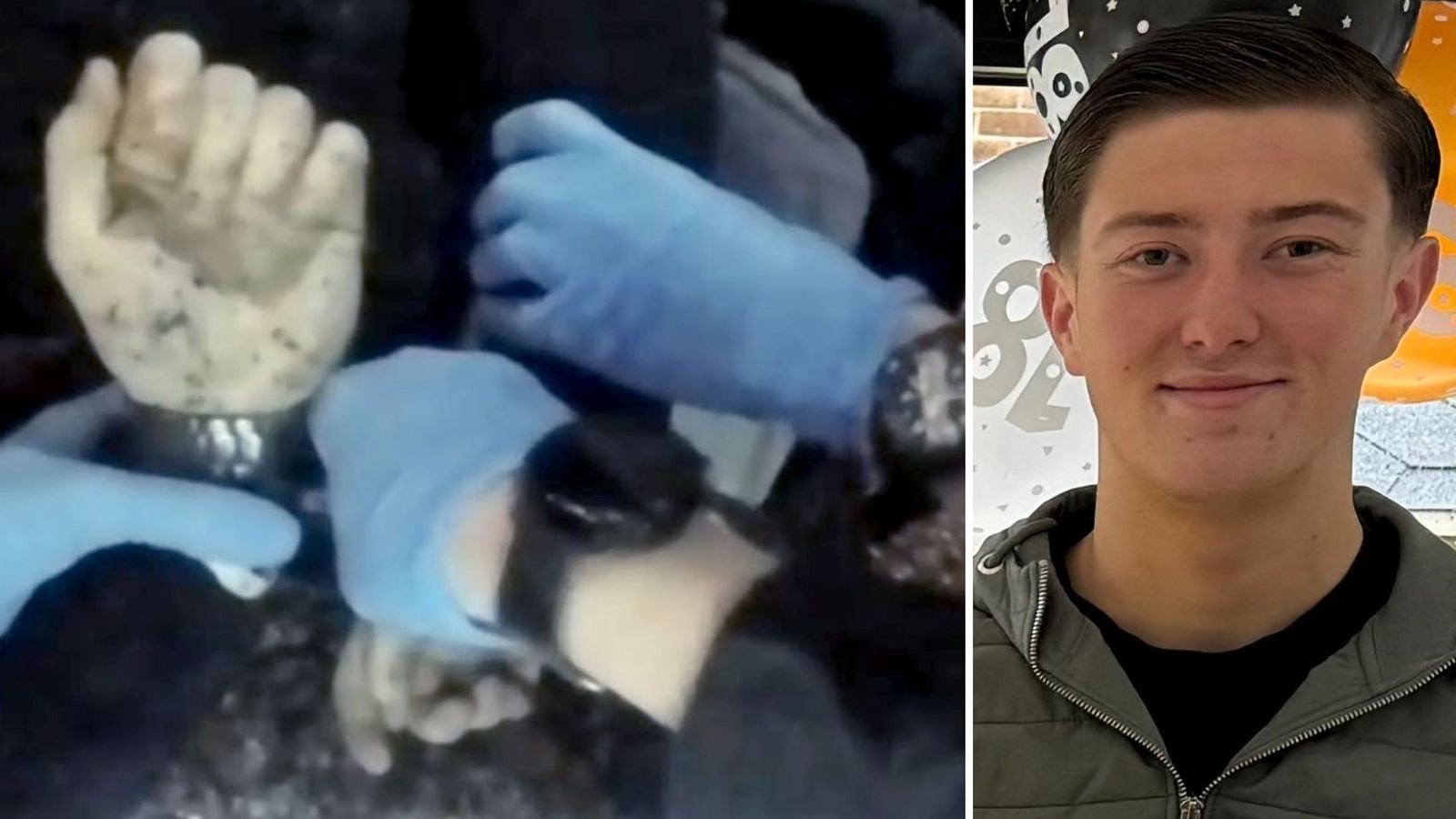
You can probably already guess where I am going with all this. Against the backdrop of this ongoing race-based education and propaganda, police officers arrived on Belmont Road in Southampton last December after being called to an incident. Henry Nowak was lying bleeding on a driveway. The man who had stabbed him nine times, Vickrum Digwa, stated to the officers that Henry had racially insulted and attacked him. Henry was lying on the ground, gasping for breath, and told the officers several times that he could not breathe. He also said that he had been stabbed.
But that did not matter. After all, the main accusation had already been made. The other man had alleged racism. That was enough to set off all the warning lights and alarm bells in the officers’ heads and activate their intensive conditioning. Undoubtedly, Digwa made this claim in the full awareness that it would have the desired effect.
Henry’s protests were ignored. He was handcuffed and shortly afterwards he left this world. As the father of a boy, just like Henry, in his first year at university in an ordinary English town, I cannot express how affected – and angry – I was when I saw images of the incident.
I do not know if the officers were specifically motivated by anti-white prejudice. But I think it is very likely that their actions were influenced in some way by the ethnicity of the perpetrator and his claim that he was racially insulted and attacked.
Given all the dogmas regarding diversity, equality, and inclusion (“DEI”) that have been forced upon police officers over the past quarter century, it is hard to imagine that it could have been otherwise. The focus on training regarding racial prejudice within the police forces in question—Hampshire and Isle of Wight—is so intense, in fact, that a number of officers have reported feeling “controlled and pressured” by it. The same police force has publicly stated that “being anti-racist, ethical, and inclusive is at the top of our agenda.” You would think that preventing and detecting crime would be the primary priority for any police force. You would be wrong.
In this context, it is not difficult to understand why police officers feel obliged to walk on eggshells when dealing with minority communities, or why they look the other way when, for example, evidence emerges that groups of Pakistani Muslim men are systematically raping young white girls in cities throughout England. Get it wrong, and there goes your career. So you’d better keep your mouth shut.
The reaction of the “progressive” [i.e. left-wing] elites to the murder of Henry Nowak is also very instructive. When [the criminal] George Floydwas murderedWhen he died, politicians and celebrities lined up in large numbers to express their outrage and support the protests that swept the US and Great Britain. The “anger against the system” was apparently justified then. But now we only receive calls not to “politicize” the murder of a young man or “to inflame tensions.”
Do you remember Rhiannon Whyte? She was the hotel employee who was brutally murdered in 2024 by an asylum seeker from Sudan. Her mother, Siobhan, has revealed on social media that political leaders have shown no interest whatsoever in engaging in dialogue with her, despite her approaching them multiple times. Is any of us really surprised by that?
The elites are playing with fire. The public sees through their double standards, and they do not like that. People also realize that the anti-racism campaign has gone way too far and that this leads to serious injustices and inconsistencies.
If even Jack Straw, the Home Secretary at the time of the Macpherson Report, states that the police’s anti-racism policies have gone too far , we are obliged to listen.
Ultimately, this is not just about the tragic final moments of a university student on a street in Southampton. It is about everything connected to it, in particular the glaring differences in priorities between a “liberal” [i.e. left-wing] ruling class and a large part of the population that increasingly feels that the state machine is turned against them.
For that reason, I have the feeling that the murder of Henry Nowak, just like the Southport massacre, will be seen in the coming years as a crucial moment that brings about a decisive shift in public opinion. I suspect that our politicians sense this as well. That may explain why they are so desperate to suppress the growing public outrage.
I fear they are too late. The anger and disagreement are lasting.