
The Vaccine Fog
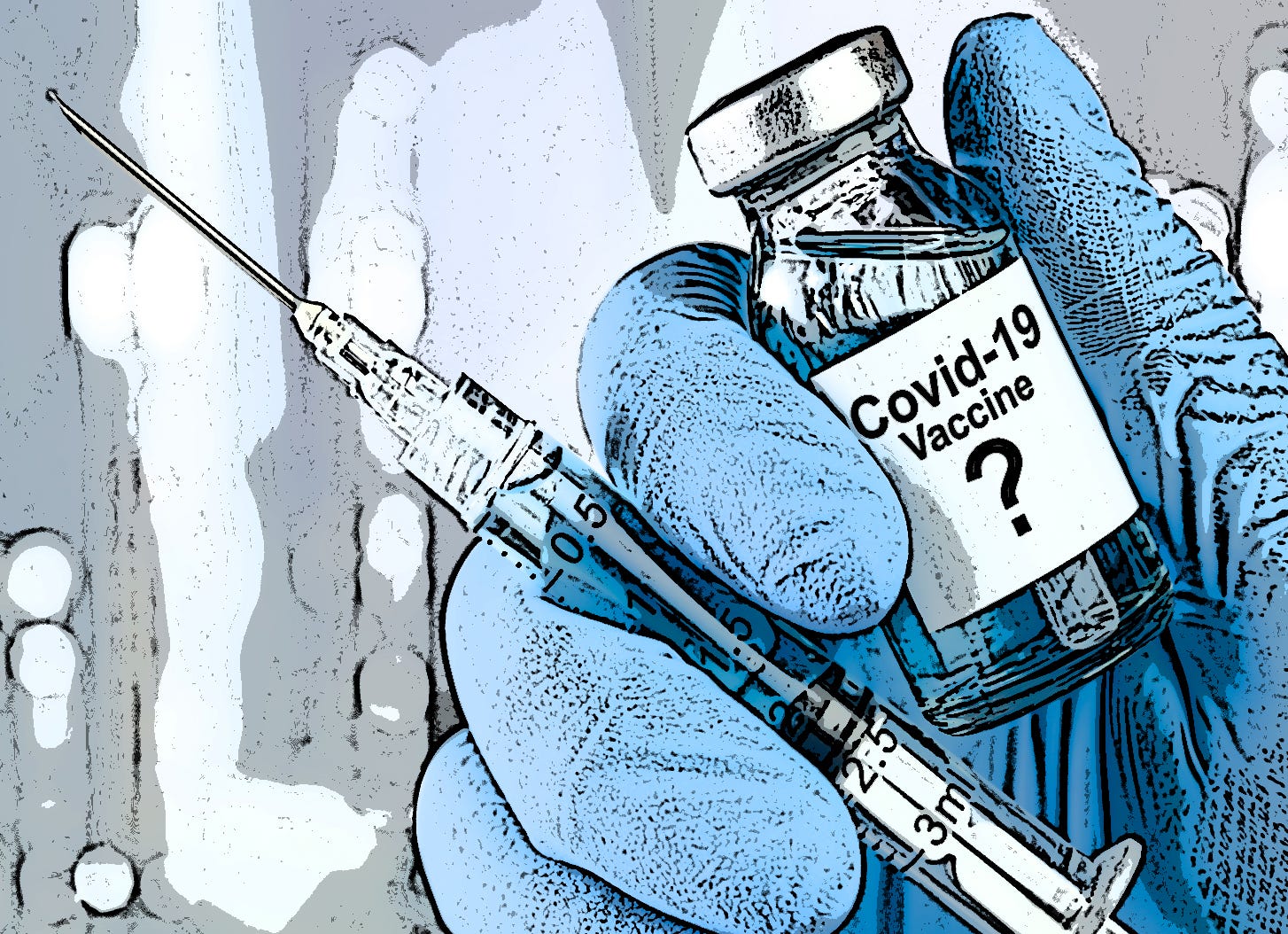
In my years as a psychotherapist, I have sat with hundreds of people trying to make sense of their lives, their relationships, and the world around them. Over the past several years, something has changed. Conversations that used to allow room for disagreement now often collapse into anger, rigid certainty, and outright dismissal of any opposing view. I notice it in clients, in family talks, and across the culture: an intense, almost obsessive hatred toward Donald Trump and anyone who supports him, a refusal to consider alternative perspectives, contradictory beliefs held without any apparent awareness, and a growing disconnect from basic logic and common sense. This pattern seems especially strong among those who strongly embraced the mainstream COVID narrative.
We are told this is just politics as usual, or the result of social media echo chambers, or simple cultural divides. Maybe those things play a role. But what if there is a deeper, biological factor at work? A recent medical paper raises serious questions about potential links between the COVID mRNA vaccines and problems with brain function, thinking, and emotional balance. It does not claim to explain everything, but it offers a plausible piece of the puzzle—one that deserves honest consideration rather than automatic rejection.
Let me be upfront. I am not a neurologist or vaccine researcher. I am a practicing psychotherapist who has spent decades observing how people think, feel, and behave. My approach is shaped by clinical experience, personal reflection, and a determination to question official stories that do not add up. This essay is written for those who value clear thinking over conformity—for the “shrew pack” that refuses to follow the herd when it leads away from reality.
Spend time watching public discourse, whether on social media, in the news, or in everyday conversations among committed progressives, and the pattern stands out. Take the Trump-hate situation as an obvious example. Trump is not seen as a flawed politician with policies one might disagree with. He is portrayed as pure evil, an existential danger who must be opposed by any means. His supporters are labelled as ignorant, dangerous, or morally defective. Any evidence challenging progressive positions—on borders, economics, education, or government overreach—is brushed aside as “misinformation” or conspiracy theory.
The thinking often becomes contradictory and detached from reality. Freedom is praised while past support for mandates is ignored. Diversity is celebrated as long as dissenting opinions are silenced. Science is treated as sacred until data contradicts the preferred narrative. There is a striking lack of empathy for those with different views and an inability to hold nuanced positions. Critical thinking appears impaired. Common sense seems in short supply.
In my practice, I hear clients—many of whom received the COVID shots—describe subtle but persistent changes: mental sluggishness, trouble focusing, increased irritability, or a strange emotional flatness. Some report feeling less connected to their own thoughts and feelings. Not everyone experiences this, of course. Many vaccinated people remain sharp and open-minded. But the cultural trend is unmistakable. The most vocal advocates of extreme progressive positions often display a rigid, emotion-driven style of thinking that resists evidence and dialogue.
A group of independent researchers, including experienced physicians and a psychiatrist, published a paper in June 2025 examining reports of brain and mental health problems following COVID-19 vaccination.[1] They looked at data from the government’s Vaccine Adverse Event Reporting System (VAERS), comparing COVID shots to older vaccines like the flu shot over much longer time periods.
The findings were striking. Reports of cognitive issues—things like confusion, memory problems, brain fog, mental impairment, and even dementia-like conditions—appeared at much higher rates after the COVID vaccines. There were also elevated signals for psychiatric problems, including anxiety, agitation, delusional thinking, and aggressive behaviour. These differences were large enough to stand out dramatically against background rates from other vaccines.
The paper highlights the biological features of the mRNA shots. These vaccines use tiny fat particles designed to deliver instructions throughout the body, including the ability to reach the brain. They prompt cells to produce the spike protein, which can trigger inflammation and has been shown in some studies to persist longer than expected. The authors point to possible mechanisms: ongoing inflammation in the brain, disruption of normal cellular energy processes, and interference with how proteins function in nerve cells. These effects could plausibly contribute to the kinds of thinking and emotional changes we see playing out in public life.
This is not wild speculation. Other studies mentioned in the paper have reported links between COVID vaccination and faster progression of Alzheimer’s-type issues, sudden cognitive problems, and persistent spike protein in brain-related tissues. The scale of the rollout—billions of doses—means that even modest effects across the population could shift the overall tone of public discourse.
Consider what happens when brain function is subtly impaired. The ability to weigh evidence, hold conflicting ideas, and think flexibly depends on clear executive function—the mental processes that let us plan, focus, and regulate emotions. If these are dulled by inflammation or other disruptions, people may become more prone to black-and-white thinking, emotional reactivity, and resistance to new information.
This could amplify existing tendencies. During the pandemic, fear and constant messaging encouraged compliance and simplified narratives. Many people locked into certain beliefs. If the vaccines added a layer of cognitive fog or emotional blunting for some, it would make it harder to step back, reconsider, or empathize with opposing views. Hatred toward political opponents becomes easier when nuance and self-reflection are compromised. Contradictory positions feel consistent because critical examination is impaired.
The result is a population segment more vulnerable to ideological capture—more likely to repeat slogans, demonize dissenters, and ignore inconvenient facts. This is not about intelligence in the traditional sense. It is about the day-to-day capacity for clear, independent thought. The paper’s authors express concern about broader impacts on population-level cognition. If even partially accurate, this has major implications for society.
To be responsible, we must avoid claiming the vaccines explain everything. Polarization has many causes: decades of media bias, social media algorithms that reward outrage, economic pressures, declining trust in institutions, and simple human tribalism. The intense fear cultivated during the early pandemic made many people receptive to one-sided narratives. Educational and cultural shifts toward identity-based thinking were already underway.
Still, it would be foolish to dismiss a potential biological contribution simply because it is uncomfortable. These were novel products, developed and deployed at unprecedented speed under emergency conditions. Coercion was widespread—jobs, travel, and social participation tied to vaccination status. The lipid nanoparticles were engineered to spread widely in the body. Persistent spike production and brain effects were not anticipated in public messaging, yet evidence continues to emerge.
In Canada, where I live, the fervent anti-Trump sentiment and alignment with certain globalist positions may also reflect this shared exposure. The patterns of rigid thinking and emotional intensity look similar across borders.
First, we need transparency and honest investigation. The full scope of vaccine side effects, including long-term cognitive and psychiatric impacts, must be studied without political interference. Continued use of these products should be reconsidered in light of accumulating data. Support for those experiencing issues is essential.
On a personal level, protect your mind. Seek out diverse sources of information. Practice stepping back from emotional triggers and examining your own assumptions. Spend time in nature, maintain physical health, and nurture real-world relationships not centered on politics. If you or someone close to you notices persistent mental fog, irritability, or difficulty thinking clearly after vaccination, consult knowledgeable health professionals and document changes.
For society, recovery requires rebuilding the habits of clear thinking and good-faith dialogue. We cannot function as a healthy culture if large segments are operating with impaired discernment. Questioning authority, demanding evidence, and refusing conformity when it conflicts with reality—these remain essential.
In my own life and work, I continue to see the value of respectful conversation even across deep differences. Many vaccinated people I know show no apparent lasting effects and remain fully capable of independent thought. But the broader patterns are too consistent to ignore.
The mRNA vaccines may have contributed to a subtle but widespread fog that has made extreme woke liberalism more entrenched. By affecting cognition and emotional regulation in vulnerable individuals, they could have amplified the worst tendencies of groupthink and ideological rigidity. This is not about blame or conspiracy. It is about facing reality and its consequences.
We are capable of more. Clear minds, open eyes, and honest conversation can cut through the fog. The “shrew pack” has always been about seeing what others miss and speaking plainly about it. Let us continue that work—one clear thought at a time.