
The Trial of Citizen Vigilante
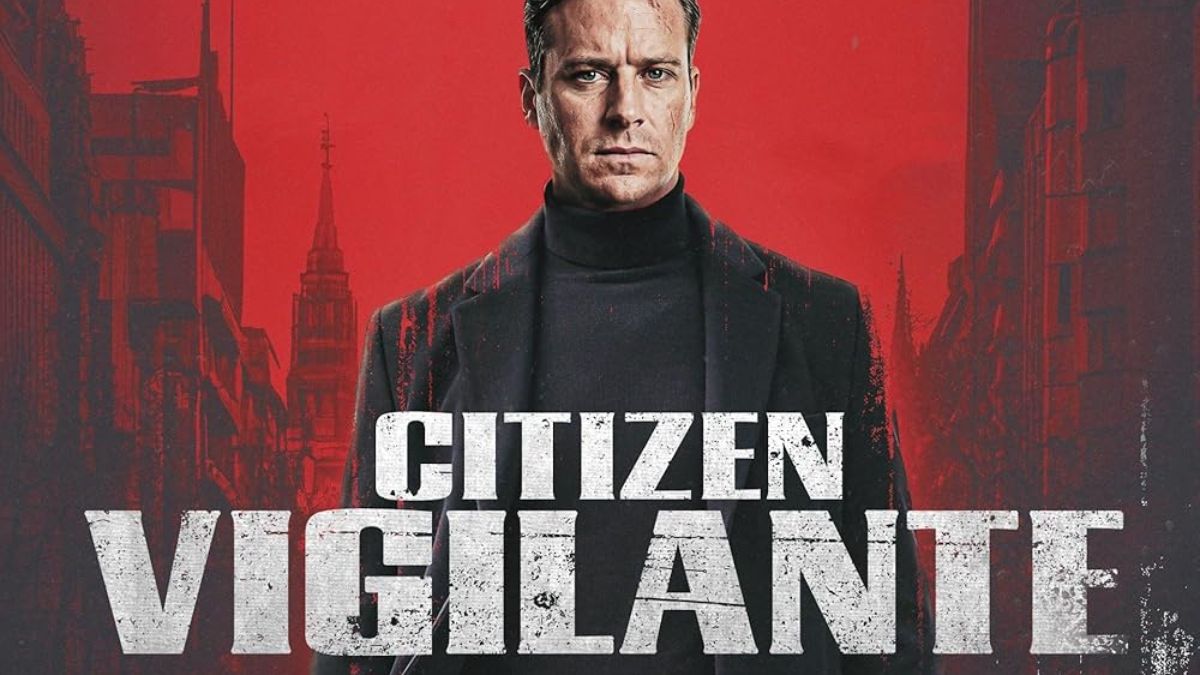
When every exit leads back to the same office.
I watched Citizen Vigilante because someone informed me that it was necessary, although no one could explain who had issued the recommendation. I have since become convinced that the film itself belongs to the same vast administrative apparatus that had arranged my viewing of it. It presented itself as entertainment, yet every scene carried the peculiar precision of an official memorandum whose true author could never be identified. The notorious Hamburg gang-rape case appeared not as the beginning of the story but as a document already stamped, catalogued, and placed upon the proper desk. The assault, the suspended sentences, the carefully measured attempts to “humanize” the perpetrators, each seemed less like historical events than exhibits selected to produce a predetermined emotional response. Outrage was not permitted to wander freely. It was escorted down a corridor towards a destination prepared in advance.
This destination became increasingly apparent as the film unfolded. At the very moment when the great offices governing the Western world appear to be losing their unquestioned authority, when distant capitals meet without requesting permission and nations once accustomed to obedience begin speaking in unfamiliar voices, the film patiently reconstructs the old map. Civilizations are separated into opposing files. Islam occupies one folder, the West another. The conflict between them is presented as ancient, inevitable, and sufficient to explain everything else. The timing is almost too perfect. Just as confidence in this arrangement begins to weaken beyond the walls of the building, another clerk quietly restores it to the archive, stamps it “Current,” and places it back upon the public counter.
Even the film’s denied certification in Germany acquires the character of an official procedure whose purpose exceeds prohibition. A film that cannot be approved acquires a different authorization. Its absence functions as another form of advertisement, while discussions about integration failures remain confined within carefully measured boundaries. One receives the impression that every apparent obstacle has already been anticipated somewhere in the building. Nothing escapes the process. Even dissent arrives bearing the proper paperwork.
The deeper machinery remains conspicuously absent. The vigilante pursues criminals through streets that appear increasingly empty of everyone except criminals themselves. Yet the institutions that profit from the conditions producing these streets never enter the frame. The corporations requiring endless reservoirs of inexpensive labor, the financial interests benefiting from deregulated markets, the officials designing immigration policy without bearing its consequences, all remain in offices whose doors the protagonist never attempts to open. His anger is directed with admirable energy, but always towards those already standing in the corridor. The building itself remains untouched.
Later, the protagonist delivers a confident lecture on the incompatibility between Islamic culture and Western democracy. The speech is received almost gratefully by a gullible audience, as though an uncomfortable inquiry has finally been concluded. Yet I could not suppress the memory that Western civilization itself spent the overwhelming majority of its existence without democracy. Somewhere, one imagines, there must exist an archive containing those centuries, though it is rarely consulted. Whenever a visitor requests access, a courteous official explains that the relevant files have been relocated, misclassified, or perhaps never existed in quite the form remembered. Democracy appears less as an inheritance than as a recently issued certificate, immediately declared timeless.
By the conclusion, the film reveals its peculiar efficiency. Every genuine anxiety generated by immigration, crime, institutional failure, and public distrust is acknowledged, but only after the exits have been quietly locked. The audience is permitted to blame cultural enemies, ideological accomplices, or incompetent officials, yet never the anonymous machinery whose operations extend beneath every visible institution. The spectacle creates the comforting sensation of rebellion while ensuring that no one reaches the offices where the directives originate. One leaves believing that hidden truths have been exposed, only to discover that the path has led back to the same reception desk from which the journey began.
https://www.eurosiberia.net/p/the-trial-of-citizen-vigilante