
Keir Starmer Machine Ran a Secret Campaign to Demonetize Opposition Outlets
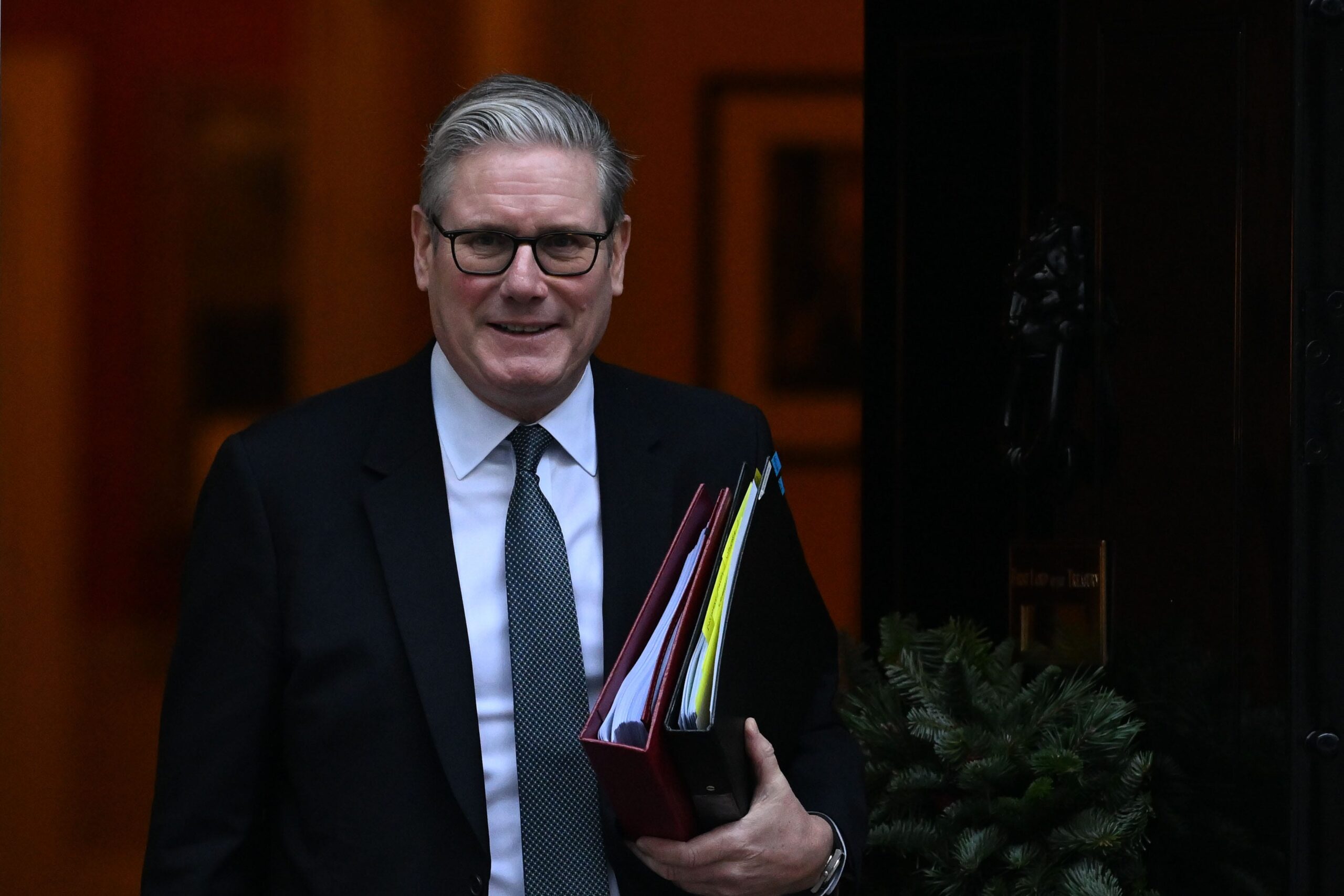
Starmer’s current chief of staff, Morgan McSweeney, served as the head of a machine that targeted media outlets on the left and right, foreshadowing the UK’s crackdown on dissent.
From our vantage point looking across the pond at the United Kingdom, it truly does seem like the country decided to put an end to itself rather than allow public anger to be channeled by the one-time Labour leader Jeremy Corbyn. With hindsight, and thanks to a new book by investigative journalist Paul Holden, author of today’s article below, we can now see clearly that the destruction of the Labour Party at the hands of a corporate, pro-Israel faction within the party was quite calculated and deliberate.
One piece of that strategy involved destroying the journalistic outlets that had organized themselves around the Corbynist energy, and to do so, the faction created astroturf organizations that claimed to be objectively rooting out “fake news.”
That faction eventually succeeded in electing Sir Keir Starmer prime minister, but doing so required political deception on a historic scale, resulting inevitably in his historic unpopularity. The right-wing takeover is not a matter of if, but when, and Starmer may wind up being the last Labour prime minister ever.
Along the way, Starmer’s faction also waged a secret war on conservative news outlets, as well. The censorship campaign targeting political opponents has morphed into an alarming attack on speech rights in the UK, focused on critics of Israel but broadly encompassing a wide range of expression.
Holden lays out just how it happened in his piece below, which is adapted from his book—get a copy here—and expanded with additional reporting.
Keir Starmer Machine Ran a Secret Campaign to Demonetize Breitbart News and Other Opposition Outlets
Story by Paul Holden
As Keir Starmer rose to power in Britain, the political machine responsible for his rise ran a behind-the-scenes campaign to demonetize the U.S. news outlet Breitbart. The attacks on Breitbart were part of a targeted campaign against media outlets on both the left and right considered hostile to the centrist faction of the Labour Party, according to a trove of documents that expose the operation. Many of the documents were revealed for the first time in my recent book – called “The Fraud: Keir Starmer, Morgan McSweeney and the Crisis of British Democracy” – and are expanded on significantly there.
The campaign succeeded in effectively destroying the left-wing British outlet The Canary, which is only now recovering. Breitbart News persists.
The project was run through an organization called Stop Funding Fake News (SFFN). SFFN was incubated and resourced by a think-tank called Labour Together under the guise of fighting misinformation and “fake news.” Between 2018 and 2020, the anodyne-seeming think-tank received £739,000 in donations that it failed to report to the UK Electoral Commission, in violation of electoral law. Labour Together was found guilty and fined in September 2021 for the offense.
Morgan McSweeney, now Sir Keir Starmer’s chief of staff, was Labour Together’s company secretary during this period. He also listed himself on LinkedIn as Labour Together’s “Managing Director.” In October 2024, the prominent UK journalist Andrew Marr commented that McSweeney held a position “of unparalleled power in Labour Party history.”
Before it was unmasked as a partisan political project, SFFN claimed to be organized by an anonymous group of concerned citizens who were inspired by a project in the United States called Sleeping Giants, a demonetizing campaign launched against Breitbart by workers in the U.S. tech industry in 2016.
Neither McSweeney nor Labour Together responded to questions sent to them in 2023 and 2024 about how Labour Together’s resources were used to incubate SFFN and a sister outfit called Center for Countering Digital Hate, or CCDH, which now hosts SFFN’s campaign. It is also not known whether all of Labour Together’s directors were aware that Labour Together’s resources were used to create SFFN. Jon Cruddas, one director, was flummoxed when I asked him about CCDH in 2023. Two other directors, Sir Trevor Chinn and the MP Lisa Nandy, have not commented. But it is known that at least one other director of Labour Together was aware: Steve Reed MP, now a senior member of Starmer’s Cabinet.
Stop Funding Fake News
With this pot of unlawfully undeclared funding, McSweeney and his allies blew up British politics, with a blast radius that extended across the pond to the United States. They did this in three ways.
First, they launched an undeclared war on the Labour Party under Jeremy Corbyn. A primary vector of this attack was to covertly inflame the “antisemitism crisis” that dogged Corbyn’s leadership for years.
The second was to incubate the leadership of Sir Keir Starmer, who, with McSweeney’s guidance, became Corbyn’s successor. Labour Together has claimed credit for helping Starmer win the leadership of the Labour Party in April 2020. McSweeney served as Starmer’s campaign chief for the Labour leadership campaign in 2020 and was appointed to a series of senior positions in Starmer’s office and the Labour Party thereafter. Three months after Starmer was elected prime minister in July 2024, McSweeney was appointed his chief of staff.
The third was to launch an astroturf campaign that mounted a ferocious attack on non-conformist media and free speech on both sides of the Atlantic. The campaign was catalyzed by a desire to demonetize and delegitimize outlets who reported sympathetically on factional opponents of McSweeney and his allies, or which were seen as important parts of the information networks that sustained support for Corbynism. It then mutated into a broader campaign against U.S. outlets linked to the alt-right.
That campaign directly sought to “cancel” outlets reporting favorably on Nigel Farage and the Brexit Party. It also made several ad-hominem attacks on U.S. President Donald Trump personally and sought to ensure that Breitbart was barred from receiving any advertising at all from the UK’s Cabinet office.
This was all conducted behind a veil of misdirection and secrecy. SFFN refused to reveal the identities of any of its controlling minds, claiming fear of reprisals. Instead, SFFN confected the image that it was a campaign run by “friends” and activists, strongly implying that it was a grassroots campaign of ordinary people. In reality, SFFN was set up by well-connected political actors with the purpose of elevating Starmer, including McSweeney, mobilizing resources provided by millionaire and pro-Israel donors.
The previously undisclosed attack on Breitbart was launched before Donald Trump returned to the presidency. His restoration presents a new political challenge for Starmer in the wake of the role played by Starmer’s chief of staff in creating SFFN. It also comes on the back of a furor about how the BBC, the UK’s state-run broadcaster, had edited clips of a speech Trump delivered on January 6, 2021. That furor has led to a number of high-level resignations at the organization. Trump has threatened to sue the BBC for a billion dollars in damages.
It has been widely reported that McSweeney was central in the creation of SFFN, which flowed from his political ambitions to defeat the left-wing of the Labour Party and the media ecosystem that supported it. But since then, attempts have been made to distance McSweeney from CCDH and SFFN’s murky history.
In 2024, Matt Taibbi and Paul Thacker reported on emails leaked from within CCDH. They showed that, for over a year, CCDH’s internal team meetings included the action item: ‘kill Musk’s Twitter.’ ‘This is war,’ Musk posted in response. In the furor that followed, The Guardian was told that McSweeney had played no operational role in CCDH, which now claims ownership of the SFFN project. Imran Ahmed, who later claimed credit for both SFFN and CCDH on Twitter, claimed that McSweeney had simply gifted him a “shell company” (Brixton Endeavours) that was then converted into CCDH, and which later absorbed SFFN . The response was canny in not stipulating whether McSweeney had any operational role in SFFN.
Even so, the idea that McSweeney played no “operational role” in CCDH is odd. Between 2018 and September 2019, McSweeney was the sole director of the company called Brixton Endeavours, which was subsequently renamed CCDH. He remained a director of CCDH until April 2020, a role in which he did things like sign off on CCDH’s accounts to the UK’s business registry, Companies House. He also listed himself as a CCDH director on LinkedIn for years. CCDH was registered to the same address as Labour Together. Imran Ahmed, now the CEO of CCDH, also literally worked alongside McSweeney in Labour Together’s small South London office while they were both creating SFFN.
Breitbart News
Breitbart became a focused target of SFFN in October 2019.
On October 2, 2019, a now-deleted X user Slaro Vekonai (@slarethestoic) tagged the UK Parliament’s Twitter account. “You may not know it, but you advertise on Breitbart, a toxic and extremist American site. Can you please adjust your programmatic ad buy so your ads don’t show up there due to retargeting? Thank you! @slpng_giants @SFFNews.” SFFN picked up the allegation and amplified it shortly thereafter, posting a short evidentiary thread accusing Breitbart of being a “bigoted, conspiracist fake news site.” As the original account no longer exists, it has been impossible to establish if Slaro Vekonai was a real person or a sock puppet account.
Within hours, a Press Association journalist contacted Parliament, citing the thread. Parliament announced it was suspending the ads. Two days later, an anti-Corbynite Labour MP, Mary Creagh, wrote to the Tory MP Jacob Rees-Mogg, then the speaker of the House of Commons, demanding that Parliament agree to suspend advertising on Breitbart, which she called a “home to misogyny, homophobia, anti-Semitism, islamophobia [sic], racism and wild conspiracy theories.” Creagh cited how other advertisers had already pulled their advertising from a list of websites – all of them SFFN targets. ‘Fantastic news that @UKParliament have paused their advertising,’ SFFN tweeted.
Two weeks after its success with the parliament, SFFN claimed another win in demonetizing Breitbart and other sites. On the 18th of October 2019, SFFN posted that they had contacted an unnamed journalist about how the UK’s Cabinet Office was advertising on its target websites. The journalist found out that the Cabinet Office “now implemented a ‘whitelist’ meaning the government now only advertises on pre-approved websites. The Canary, Evolve, Rebel, Politicalite, Breitbart etc no longer receive government advertising.” The post ended with three handclap emojis. “Good to see government use its authority to set an example against these dishonest & hateful websites.”
SFFN bookended its thread with an animated GIF of Al Gore asking, ‘What were you thinking?!?’ Indeed.
The attack went far beyond government spending. In June 2020, a booster of SFFN’s campaign tagged Ford’s UK twitter account, noting that its ads were appearing on Breitbart. Ford UK’s twitter account responded that it was “investigating the ad placement” and confirmed that Ford “does not share the views expressed on the website.” By 2021, SFFN expanded to target Breitbart’s YouTube account. “Breitbart, who have: consistently denied climate change, promoted sexism, published racist conspiracy theories have a monetised YouTube channel,” SFFN complained in July.
SFFN encouraged advertisers generally to block their ads from appearing on Breitbart’s YouTube content. In order to scale up its demonetization campaign, SFFN hosted an excel spreadsheet “blocklist” on its website for years. It listed the URLs of “fake news” websites that advertisers could import into their Google AdSense profiles to block sites en masse from receiving their advertising. This included Breitbart and a host of other alt-right and conservative U.S. sites such as Zero Hedge, The Federalist and American Thinker from 2020 onwards, alongside The Canary and Evolve Politics. SFFN also provided a handy “how-to” guide for advertisers and brands, walking them through how they could add SFFN’s targets to their own personalised blocklist. By December 2020, the list had expanded to include 28 sites, including two platforms linked to the far-right British agitator, Tommy Robinson, most notably Rebel News.
Another of SFFN’s initial targets was the right-wing UK website Westmonster, which had been set up and funded by Arron Banks, a controversial pro-Brexit campaigner. SFFN accused Westmonster of being a “propaganda channel” for the Brexit Party and its leader, Nigel Farage. The Brexit Party was renamed Reform UK. On current polling, Reform is set to form the next UK government with Farage as leader. SFFN claimed that Westmonster’s coverage of Farage and the Brexit Party was disproportionate. The campaign’s evidentiary threads included allusive imagery of Farage standing with Trump, accusing Trump of peddling “toxic post-truth politics.” In one remarkable thread from May 2019, SFFN urged readers not to vote for Brexit Party candidates in the UK’s upcoming European Parliament elections.
SFFN also accused Westmonster of fueling “anger & hatred” towards migrants by “publishing a stream of scare stories about immigrants in other European countries [which] deliberately create the impression of hordes of violent foreigners on the doorstep of Britain.” In April 2019, SFFN said Westmonster “stoke[d] fear of migrants” because it included stories about Channel Crossings – journeys made by asylum seekers on make-shift boats across the English Channel to seek refuge in the UK.
This could open McSweeney and the Labour government up to charges of hypocrisy: just two weeks ago, Starmer’s government, with McSweeney said to play a prominent role, introduced punitive reforms to the UK’s asylum system, citing reducing Channel Crossings as a key objective.
Astroturfing
This is, without hyperbole, an extraordinary situation – and a huge political gift to the likes of Reform, Farage, Trump, and Tommy Robinson. Because it is now incontrovertible that an astroturf campaign set up by the current chief of staff to the UK Prime Minister was responsible for “cancelling” news websites reporting sympathetically on their views.
Stop Funding Fake News was launched in March 2019, although preparatory work had started earlier. Its website domain was registered in January 2019. In February 2019, Morgan McSweeney and Imran Ahmed hosted a visit from Rachel Riley, the flaxen-haired mathematics brainiac on the popular quiz show Countdown. She was brought to Labour Together’s office in South London by Adam Langleben, a leading light in the Jewish Labour Movement (JLM), an affiliate of the Labour Party that had previously been largely dormant before being reactivated to challenge Corbynism. McSweeney would end up working closely with JLM.
McSweeney and Ahmed asked if Riley would front a campaign to tackle The Canary. She agreed “with alacrity,” according to an account by two Sunday Times journalists. Her celebrity endorsement lifted SFFN out of obscurity and powered its success. She would later become a patron of CCDH and now lists herself on X as an “ambassador” of the organization.
SFFN launched on March 5, 2019 on Twitter, supported by a barebones website. It would explain to Twitter readers that it sought to tackle “fake news” and hate, especially antisemitism and Islamophobia. In a helpful exchange, SFFN explained that “fake news… means lies & deliberate misleading, particularly when designed to fuel hate.” It was a plainly defamatory allegation to make of anyone, let alone media outlets whose success was predicated on reader’s trust.
But SFFN were protected from legal challenge, or any sort of scrutiny, by a veil of anonymity. SFFN refused, for the first year of its operation, to reveal the identity of the individuals who ran it. Its website explained that ‘we would like to be open about our identities, but doing so could put our activists at risk.’ It thus presented itself as a group of anonymous activists inspired by Sleeping Giants.
It was an impression burnished by fawning interviews. In April 2019, for example, SFFN was profiled in the Jewish News, described as a “small group of friends” and “activists.”
But SFFN was, itself, a form of fake news. It was about as far away from a simple group of grassroots activists as could be imagined. Instead, it had been formed by McSweeney, now the most powerful unelected official in British politics; Ahmed, a former Labour Party spin-doctor; and endorsed by Steve Reed, a sitting MP. It was also launched with resources provided by Labour Together, which was, at the time, being generously funded by millionaire donors with a history of donating to figures from the Labour Party’s right-wing, and whose sizeable donations were not being reported to the Electoral Commission in violation of electoral law.
One of Labour Together’s two major donors during this period was Sir Trevor Chinn, a major advocate for Israel. ‘I spent my entire life working for Israel,’ Chinn told a 2013 meeting of Labour Friends of Israel, a lobby group linked to the Labour Party. In 2024, Chinn was awarded the Israeli Presidential Medal of Honour by Isaac Herzog, the country’s highest honour. The medal is given to individuals who have made a significant contribution to the state of Israel ‘or humanity.’ Chinn was appointed a director of Labour Together in March 2016, a position he held until September 2024.
As noted above, it is not known if Chinn was aware that Labour Together resources were being used to help set up SFFN or CCDH, despite being a director of Labour Together. What is known is that in 2020, Steve Reed’s personal Parliamentary assistant, Owain Mumford, drafted a briefing setting out ‘Steve’s Record in Fighting Antisemitism’, which was intended to be given to a journalist from the Jewish Chronicle for a profile of Reed that ultimately never materialised. Mumford’s briefing claimed that Reed had personally sought advice from the Jewish Leadership Council (JLC) in setting up CCDH. Chinn was the Vice-President of the JLC, which had been fiercely critical of Corbyn.The JLC did not respond to questions about the accuracy of Mumford’s briefing when I put it to them for an article for Taibbi in 2024.
SFFN was a quintessential example of astroturfing. As a useful academic article from 2019 explains, astroturfing involves “a centrally coordinated disinformation campaign in which participants pretend to be ordinary citizens acting independently.” Astroturfing can ‘influence electoral outcomes and other forms of political behaviour.’ SFFN was thus an astroturf campaign of disinformation tackling disinformation.
SFFN’s methodology was simple. It posted lengthy threads of ‘evidence’, mostly made up of screenshots of article headlines, that were pieced together in an effort to prove that its target websites were spreading ‘lies’ designed to foster ‘hate.’ Most attention, however, was focused on The Canary.
The Canary
Despite much sneering from more mainstream outlets at its tabloid tone, The Canary was a serious media outlet: it was one of the few outlets fact-checking the “antisemitism crisis” narrative that undermined the credibility of the Labour Party under Corbyn. It was independently regulated by Impress, the only media regulator to be approved by the Independent Press Review Board, which had been created by royal charter to fulfil the recommendations of the Leveson inquiry. By the time SFFN had launched, The Canary had published its 10,000th article.
SFFN repeatedly accused The Canary of antisemitism. But Impress would later clear The Canary of being antisemitic, having instituted an investigation following public pressure. It confirmed that The Canary was “not sensationalist” and did not use language “likely to provoke hatred or put a person or group in fear.”
The Canary dropped its advertising-based funding model (although this was also at least in part due to changes to Facebook’s algorithm). A bustling and diverse newsroom of muck-raking journalists was pared back. SFFN bragged about its role in this financial catastrophe, both at the time and in cloyingly self-congratulatory conference speeches.
The plaudits raining down on SFFN, and the associated snide commentary about The Canary from online influencers, had toxified the brand. The Canary staff who were there at the time recount, with a still-fresh sense of injury, how the rest of the left commentariat rushed to distance themselves. I have little doubt that one of the best metrics of the success of the SFFN campaign was that it isolated The Canary from the “respectable” mainstream left. They were, in the wretched parlance of the Labour left, rendered as cranks.
One insider at The Canary told me of how, prior to the SFFN campaign, The Canary was in talks with at least one major broadcaster about joint projects. It would have been a major breakthrough, both in terms of reach and credibility. The insider wondered whether SFFN campaign’s lurid portrayal of The Canary had made the brand toxic to mainstream partners.
SFFN’s successes were soon celebrated. In December 2019, in the wake of Boris Johnson’s crushing victory over Jeremy Corbyn, the commentator Ian Dunt wrote about the threats to the “values that liberal internationalists hold dear” in the New European, a flagship pro-EU magazine. Dunt believed that these values were due to come under a unique five-year assault under Johnson. Dunt urged “resistance” while also highlighting campaigns that deserved support, including SFFN.
“Stop Funding Fake News uses a shoestring budget to put pressure on advertisers to distance themselves from fake news outlets on the left and right, to extraordinary effect,” Dunt enthused. “Their work has seen many of these sites go out of business altogether and helped reaffirm the sense of shared objective reality in politics.”You read that right: “objective reality in politics” was being restored by an astroturf campaign created by political operatives, and backed by a sitting MP, which was attempting to demonetize a legitimate, regulated media outlet. When one right-wing SFFN target, Politicalite, hit back with a cease-and-desist letter, the group responded by crying poverty. SFFN claimed their scant resources meant they were unable to respond to the counter attack.
Politicalite’s letter clearly had not passed the desk of a competent lawyer; nor was it served on any person, as there was no public information as to who was behind SFFN. “We’re not scared,” SFFN nevertheless bravely puffed, “but we’re just a group of activists with no legal support.”
The fundraiser, live for a single day, raised £2,090. Donors were told it would establish a legal defense fund that would “pay for legal advice on the merits of any threat” and “defend against threats and take action against vexatious harassers.”
I contacted Jordan James Kendall, the editor of Politicalite, in 2023. He confirmed that he had not received any response to his letter.
In fairness to Dunt, at the time he wrote those words and backed the SFFN fundraiser, there was no indication that SFFN was anything other than what it said it was – a group of well-meaning grassroots activists tackling hate. It would take another two months for any relationship between SFFN and CCDH to be acknowledged.
On the 4th of May 2020, SFFN discreetly added a note to its website saying, “From May 4, 2020, SFFN has been a project of CCDH.” The timing was telling – it was the same day that electronic forms were filed with Companies House indicating that McSweeney had resigned from CCDH on April 6, 2020.
As a result, SFFN, whose connection to CCDH was hidden for over a year, could now be integrated into its heroic retellings. In May 2020, CCDH’s updated website pompously explained that it was a “not-for-profit NGO… that seeks to disrupt the architecture of online hate and misinformation” that was fuelling a “digital counter-Enlightenment.” SFFN was cited as an example of one of CCDH’s “practicable, efficient and scalable strategies and tactics to counter hate and misinformation globally.” Ahmed’s contemporaneous biography celebrated how Ahmed “frequently appears in the media as an expert in online malignant behaviour (identity-based hate; misinformation; extremism; fake news; trolling; and social media).” No, I don’t know what that means either.
In October 2020, Ahmed was invited to attend a U.S. State Department conference on antisemitism to tell CCDH’s story of activism. Ahmed’s speech was useful, in that he confirmed that “we”—as in, CCDH—”put together a program called stop funding fake news” designed to tackle sites like The Canary that were, in Ahmed’s retelling, “just racist misinformation repackaged for a new generation.”
“And we thought, well, what are the weak points in each of these?”Ahmed explained. “The weak points in the news sites was that they’re expensive to run, and so they relied on advertising.” SFFN undermined that advertising revenue, Ahmed explained, so that “within a couple of months, you can completely eviscerate the economic base of a website.”