
Europe’s Unending Tragedy
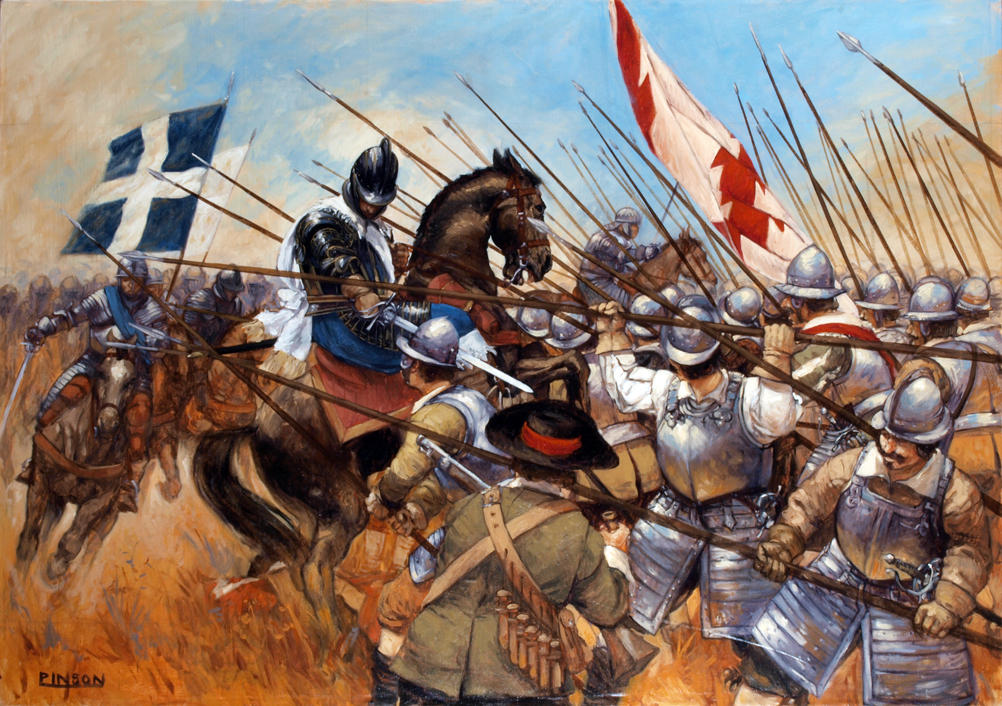
There are times when Europe succumbs to an urge for self-destruction that defies rational explanation. The Thirty Years’ War provides a particularly tragic example. It went on long after its early instigators and key participants were all dead. Rational actors could have brought it to a close well before it entered its most destructive phase in the 1630s, yet the leaders’ ability to strike a balance between ends and means was lost to audacity, fear, greed, and fanaticism.
That war became infamous for its violence even before the Peace of Westphalia. In subsequent decades, Europe experienced several armed conflicts, but they were limited wars for limited objectives, fought within the balance-of-power system by adversaries of similar temper and mindset.
A new pancontinental carnage played out to the beat of “La Marseillaise” in 1792. Revolutionary levée en masse produced the first million-strong army—turning France into a veritable “nation at arms”—and the first modern-era genocide, in the Vendée. The mayhem took at least 7 million lives before it ended at Waterloo, 13 years later.
The ensuing peace lasted, with some adjustments and five localized wars, until 1914. Thanks to the skill of the four key players at the Congress of Vienna, the long 19th century brought Europe 99 years of unprecedented flourishing across all fields of human endeavor. It was truly the golden age of European civilization, perhaps of all civilization in all times. It ended, abruptly, in a new nightmare.
The “Second Thirty Years’ War” started with the lights going out all over Europe in 1914. It ended in 1945, with the continent in ruins, physically and spiritually. Its subsequent economic recovery was impressive, but the old intellectual and moral vigor was gone. This is especially evident in the low quality of the political class. No European leader of our time comes even close to the stature and vision of Charles De Gaulle or Konrad Adenauer, or even of their early successors. As a result, eight decades after the Red Army marched into Berlin, Europe’s politicians are displaying the same old mix of audacity, fear, greed, and fanaticism. It has the potential to result in a new, truly final, catastrophe.
After President Donald Trump started America’s gradual disengagement from what he has termed Biden’s war, the European Commission in Brussels and the governments in Berlin, Paris, and London formed the “Coalition of the Willing,” an ad hoc alliance effectively devoted to defeating Russia. Its major protagonists—German Chancellor Friedrich Merz, French President Emmanuel Macron, and British Prime Minister Keir Starmer—present the conflict with Russia as an existential test of resolve. “Ukraine’s future is our future,” Starmer said in October.
The coalition maintains that Ukraine must be restored to its late-Soviet-era borders, including the Crimea; that Russia must pay for its reconstruction, with the EU and Britain preparing to seize its frozen funds under their control; that Kiev should be free to join NATO and to bring foreign troops to its territory; and that alleged Russian war criminals must be brought to “international justice.” These demands are presented as nonnegotiable, with the implication that eventually Moscow will be compelled to sign on the dotted line by force of arms.
By insisting on what amounts to Russia’s surrender, the EU and major European governments are painting themselves into a corner. The resulting mindset was epitomized by Merz, who declared last September that “we are not at war, but we are no longer at peace, either.” Last May, he pledged to make the Bundeswehr the “strongest conventional army in Europe.” Germany’s defense expenditure rose by 28 percent last year to $90 billion, making it the world’s fourth-largest military spender. Annual spending is planned to double to at least $175 billion by 2029.
A new word has entered Germany’s common vocabulary: Kriegstüchtigkeit (“war-preparedness”). Next year, a military service law will make conscription mandatory if too few people volunteer during a time of crisis. Municipalities are preparing for war by identifying key infrastructure and protecting it from sabotage.
In the same vein, European Commission President Ursula von der Leyen insists on the urgency of rearming Europe in response to “a clear and present danger.” EU countries have five years to prepare for war, according to the Commission’s Defence Readiness Roadmap 2030, which was unveiled in October. The document asserts that “a militarized Russia poses a persistent threat to European security for the foreseeable future.” In November, the Council and the European Parliament agreed to implement ReArm Europe, a $920 billion initiative to bolster the EU military. It includes a landmark decision to associate Ukraine with the European Defence Fund, effectively drawing it into Europe’s defense industrial base.
The war fever coincides with the German economy entering a chronic crisis. Industrial production has been particularly hard hit, especially in the key automotive sector, which has lost hundreds of thousands of jobs since 2022 and has seen as much as a third of its production volume decline since 2018. The key machinery sector has fallen by 22 percent over the past five years, and the electronics, energy, and construction sectors also saw major declines.
It may appear reckless for Merz to expand military spending on a grand scale while the country is in economic decline, but there is more to that decision than meets the eye. Germany and other EU countries benefit from the prolonged war in Ukraine because it offers a rationale for a massive injection of borrowed cash into their economies. Market demand is not an issue for European arms makers, who are experiencing an unprecedented windfall. There is hardly any competition, thanks to no-bid government contracts. Pricing is arbitrary, and the high cost of energy and labor that is killing other sectors is more than offset by sky-high profit margins.
In other words, EU leaders are using the war in Ukraine as an excuse to apply Keynesian stimulus to increase aggregate demand, and thus to ameliorate the historic economic downturn. The formula is reminiscent of the way Hitler’s deficit financing made a massive rearmament program possible in the 1930s, eliminating unemployment. This also may explain why the leaders of the Coalition of the Willing have a powerful incentive to claim that “a militarized Russia poses a persistent threat to European security for the foreseeable future.”
This claim is incongruous. The war was caused by the cumulative effect of NATO’s eastern expansion—with the stated objective of admitting Ukraine and Georgia into the alliance—and by blatant Western disregard for the Minsk I and II agreements, and the parallel decision to use the time thus gained to weaponize Ukraine against Russia. Had Ukraine remained a neutral buffer zone, there would have been no war.
The notion that if Russia prevails in Ukraine, it will march westwards in relentless pursuit of territory and plunder has no basis in reality. The Russian army is still holding roughly the same one-fifth of Ukraine it initially occupied in the spring of 2022. After many costly battles over secondary objectives (Mariupol) and eminently minor ones (Bakhmut, Pokrovsk, etc.), it is still unable to advance to the Dnieper River or recover Kherson, let alone to occupy the whole of Ukraine.
It is ludicrous to claim that the Russian army has the operational capacity, or that the Kremlin leadership has the political will, to expand the war by attacking the three Baltic republics, let alone Poland or Romania, and then to march across the Oder and the Pannonian Plain. To point out the absurdity of this claim in public, however, invites the accusation of “spreading disinformation” and acting as “Putin’s puppet,” with dire consequences for the culprit, especially in Germany. The cynically manipulated war fever thus becomes a handy tool not only to pump fiat money into increasingly sluggish economies, but also to solidify an already oppressive mechanism of control over public discourse.
For the same ruling elite, it is equally heretical to claim that a community must possess a high degree of ethnic and cultural homogeneity to be able to aspire to “democracy” of any kind. European elites demonize any attempt to encourage and maintain social cohesion based on a common ethnic origin as a “racist” relic of the past. Their visceral hatred of Russia is at least partly due to its refusal to submit itself to the Western ethos of demographic and cultural self-annihilation.
In the task of erasing ethnic homogeneity, Eurocracy has defined two main enemies. The first is the traditional family, the basis of biological and cultural survival of every nation, the transmitter of collective memories, emotions, and loyalty. The second is resistance to unfettered immigration. The essence of politics, as differentiating friend from foe, is demonized as “racism.” Brussels encourages the disappearance of national communities in favor of groups of citizens as consumers of goods and atomized lifestyle-based “communities” promoted by powerful lobbies. Any criticism of the EU from the standpoint of a nation’s interests indicates “right-wing populism,” ergo fascism.
It is in the American interest, and in the interest of the endangered European nations and their wounded civilization, that the EU project collapses over Ukraine. The irrationality of the leaders of the former European great powers preparing a new Drang nach Osten (“eastward thrust”) may hasten the unraveling, even if at a high price. That is still preferable to the long road to nothingness.
It is possible that the EU will continue on its current course for a long time without collapsing, but it is not likely. The pace of history is accelerating, and too many variables are entering the equation. When the economic foundations of the German-led Brussels project collapse—which seems more likely today than at any time since the signing of the Treaty of Rome in 1957— the credibility of the entire EU apparatus will collapse along with it.
Serious resistance may then begin to arise among many Europeans who had been willing to tolerate the ideological agenda of the ruling elite, provided that their personal material prosperity and the parallel welfare-state safety net were not called into question. Under the circumstances of a deep, chronic crisis of the system, we may see that there are still hundreds of millions of Europeans who will not go gentle into that good night.
The alternative is the eternal Now of Eurocratic totalitarianism, devoid of politics, sterile and pointless in equal measure, with no light at the end of the tunnel. Faced with that option, an honorable European faithful to his heritage will fight with body and soul for any other outcome.
https://chroniclesmagazine.org/columns/europes-unending-tragedy