
Is Christianity the Whore of Israel?
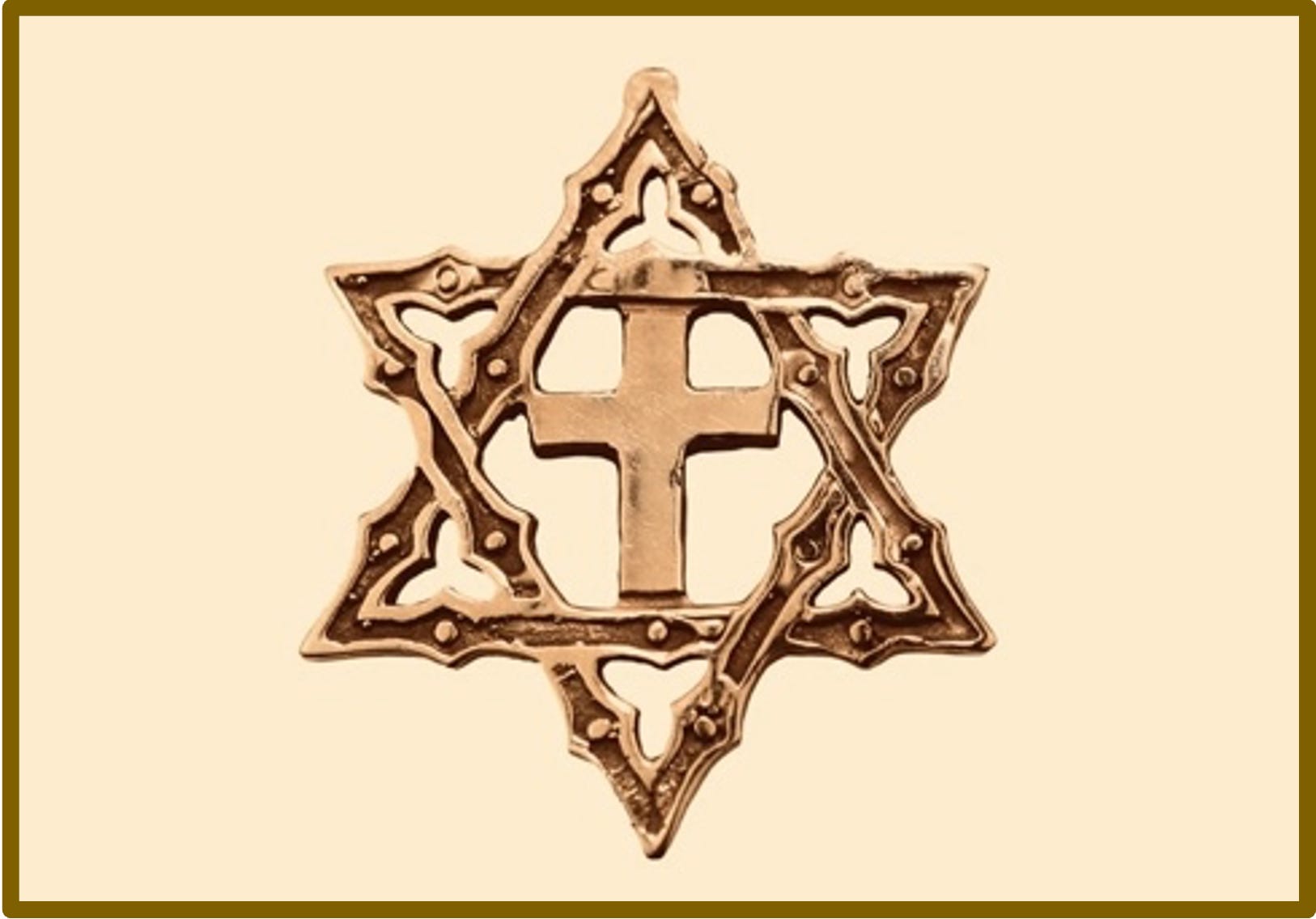
As Christianity became the official and exclusive religion of the Roman Empire under Constantine’s successors, while all traditional cults were banned, and temples expropriated or destroyed, Romans couldn’t fail but notice that only one non-Christian religion remained legal and protected: Judaism, the religion of those held responsible for the death of Christ. What a strange situation! Augustine justified it by his “witness theory”:
The Jews who killed him and who refused to believe in him … were dispersed all over the world … and thus by the evidence of their own Scriptures they bear witness for us that we have not fabricated the prophecies about Christ… It follows that when the Jews do not believe in our Scriptures, their own Scriptures are fulfilled in them, while they read them with blind eyes. . . . It is in order to give this testimony which, in spite of themselves, they supply for our benefit by their possession and preservation of those books, that they themselves are dispersed among all nations, wherever the Christian Church spreads. (City of God xviii,46)
Like Cain who murdered his brother Abel, Augustine added, the Jews are under the protection of God, who vows seven-fold vengeance on their murderers. Thus until the end of time, “the continued preservation of the Jews will be a proof to believing Christians of the subjection merited by those who, in the pride of their kingdom, put the Lord to death” (xii,12).[1]
Augustine’s “witness theory” is convoluted. It is easy to understand the argument that the Jewish scriptures bear witness to the truth of Christianity. But how do the Jewish people bear witness to the Christian truth, when they reject it on the ground of their scriptures? Would not the disappearance of the Jews as a nation be a better proof that God has shifted his providence to the “New Israel”?
Augustine is a trained sophist. What he is doing here is obfuscating the obvious opposite reality : it is Christianity which bears witness to the Jews’ outlandish claim of being chosen by God as the instrument of the world’s salvation. No educated Roman ever took that claim seriously before Christianity endorsed it. That Jews, by their very existence, bear witness to the truth of Christianity is a disputable claim at best. That Christians bear witness to the truth of Biblical Judaism is more than an indisputable claim: it is a premise of Christianity. Christ means Messiah, and presupposes Israel’s special role in God’s dispensation. So while Jews tell Christians that they are wrong, Christians tell Jews that they were right.
The rise of Jewish Power in Christendom
As the only people allowed to have their own non-Christian religion in the Roman Empire from the time of Theodosius (379-95), the Jews survived and multiplied as a nation dispersed throughout the Roman world, amid Christian hostility but under government protection. Laws forbidding Christians to marry them or even to eat at their table (Council of Elvira in the early 4th century) reinforced Jewish identity and cohesion, because endogamy and ritual purity are the most important commandments in the Torah. In return, hostility to Christ and Christianity was a fundamental tenet of Rabbinic Judaism from the third century CE, and this antagonism between the only two lawful religions within Christendom became a structural character of both. The great Jewish scholar Jacob Neusner goes so far as to claim that “Judaism as we know it was born in the encounter with triumphant Christianity” (“encounter” is a euphemism) and suggested that Jewish identity would likely have disappeared without its Christian nemesis.[2] Christendom, therefore, fully deserves to be called Judeo-Christian in the sense that Judaism and Christianity were the only two legal religions, and existed in a kind of dialectical opposition necessary for both: Jews were the witness people for Christians, and Christians were the witness people to Jews, as well as the new face of Haman. Islam was never allowed to be part of the game in Western Europe until the eighteenth century: synagogues yes, mosques no.
Forced baptism of Jews was theoretically forbidden, although it happened in times of crisis. Gratian of Bologna, in his collection of “canon” law compiled in the 1140s (the Decretum), cites a letter of Pope Gregory the Great (590-604) and a decree of the Fourth Council of Toledo (633), confirming that Jews were not to be forcibly converted but only persuaded “by gentle means rather than by harsh means lest adversity alienate the mind of those whom a reasonable argument would have been able to attract.”[3] Voluntary conversion of Jews to Christianity happened on an individual basis, but remained rare.
Unlike Christian heretics, Jews were never chased by the Inquisition and never tortured or burned on the stake—unless they had received baptism and became suspected of still “Judaizing” in secret. This happened, of course, since Jews who converted (generally to avoid exile) were asked to stop being Jews but not to stop reading their Bible. They moved into the Church with their Jewish cultural luggage, while being freed from all the civil restrictions imposed on their non-converted brethren. And when they rose in Church hierarchy, as did the bishop of Burgos Alonso Cartagena (1384-1456), son of the great rabbi of the same city, they bragged that they were better Christians than Gentiles because they shared Jesus’ Jewish blood, and they claimed that they did not really convert but only deepened their Jewish faith.[4]
The Christian sanctification of the Jewish Tanakh has discouraged Jews from questioning their scriptures and breaking free from its mental conditioning. Any Jew who rejected the divine inspiration of the Torah was not only banned from his Jewish community, but found no shelter among Christians: this happened to Baruch Spinoza and many others. Christians have prayed that the Jews would open their heart to Christ, but they have done nothing to free them from Yahweh.
John Chrysostom (c. 346-407), the most influential Greek theologian of his time (as important to the Orthodox as Augustine to the Catholics), blamed the Jews for not following their Torah enough when they should have, and for following it now that they shouldn’t:
When there was need to observe the Law, they trampled it under foot. Now that the Law has ceased to bind, they obstinately strive to observe it. What could be more pitiable that those who provoke God not only by transgressing the Law but also by keeping it? (First Homily Against the Jews ii,3)
Such “damned if you do, damned if you don’t” kind of argument could only confirm to the Jews that Christianity is absurd. More importantly, it is a great deception played on Christians, who are thus prevented from understanding the root of Jewish antisocial behaviors. On the one hand, the Jews are told that their Yahweh is the true God and that their Bible is holy, but on the other hand, they are criticized for behaviors they have learned precisely from Yahweh and their Bible. They are accused of plotting to rule the world, although it is the very promise that Yahweh made to them: “Yahweh your God will raise you higher than every other nation in the world” (Deuteronomy 28:1). They are seen as having only contempt for others’ nationalities, but they have learned that contempt from their god: “All the nations are as nothing before Him, for Him they count as nothingness and emptiness” (Isaiah 40:17). They are blamed for their materialism and their greed, but in that also they imitate Yahweh, who dreams only of plunder: “I shall shake all the nations, and the treasures of all the nations will flow in” (Haggai 2:7). Above all, they are rebuked for their separatism, although this is the very essence of Yahweh’s message to them: “I shall set you apart from all these peoples, for you to be mine” (Leviticus 20:26).
Worst of all, the sanctification of the Old Testament and of ancient Israel has led Christians to look up to the Jews as a metaphysically superior race, and to Judaism as God’s original religion. The same John Chrysostom complained that many Christians “join the Jews in keeping their feasts and observing their fasts” (First Homily i,5).
Is it not strange that those who worship the Crucified keep common festival with those who crucified him? Is it not a sign of folly and the worst madness? … For when they see that you, who worship the Christ whom they crucified, are reverently following their rituals, how can they fail to think that the rites they have performed are the best and that our ceremonies are worthless?” (First Homily v,1-7).
To John’s horror, some Christians even get circumcised. “Do not tell me,” he warns them, “that circumcision is just a single command; it is that very command which imposes on you the entire yoke of the Law” (Second Homily ii,4).
Christianity has granted the Jews an extraordinary symbolic power, which they transformed into effective power. There were periods when Jewish prestige was very high among the ruling elite, and the Jewish lobby had great political influence. In the mid-9th century, the bishop of Lyon Agobard complained to the emperor Louis the Pious, Charlemagne’s son, that the Jews produce “signed ordinances of your name with golden seals” guaranteeing them outrageous advantages, and that the envoys of the Emperor are “terrible toward Christians and gentle towards Jews” (On the insolence of the Jews). Agobard even complained of an imperial edict imposing Sunday rather than Saturday as market day in order to please the Jews. In another letter, he complained of an edict forbidding anyone to baptize the slaves of the Jews without the permission of their masters. Jews were so highly regarded in at the court of Louis the Pious that some, like the deacon Bodo, converted to Judaism.[5]
Certainly, in the following centuries, Jews were expelled from one Christian kingdom after another. But each of these expulsions was a reaction to a situation unknown in pre-Christian Antiquity: Jewish communities gaining inordinate economic power, under the protection of a royal administration (Jews served as the kings’ tax collectors and moneylenders in times of war), until this economic power, yielding political and social power, reaches a point of saturation, causes pogroms and forces the king to take measures. The Jews in England, brought as administrators and usurers by William of Normandy, had become very powerful by the 12th century, with one of them in particular, Aaron of Lincoln, being “perhaps the richest man in England”, until king Edward I, failing to force them to give up usury, expelled them in 1290.[6] The Jews would come back in force in the 17th century, first as Marranos, when, according to Jewish historian Cecil Roth, “Puritanism represented above all a return to the Bible, and this automatically fostered a more favourable frame of mind towards the people of the Old Testament.”[7]
Because it is written right under their nose in their Holy Book, Christians have never come to the realization that the Mosaic contract is nothing but a program for world domination by the Jewish nation, fraudulently presented as a license from God to steal and murder. The vulnerability of Christian societies to Jewish Power is directly related to this blindness inflicted on them by the Church. In 1236, Pope Gregory IX publicly condemned the Talmud as “the first cause that keeps the Jews stubborn in their perfidy,” as E. Michael Jones reminds us.[8] And so the Talmud was burnt. But the Talmud is nothing but a series of commentaries on the Tanakh. Many Christians continue to blame the Talmud for Jewish misanthropy, when in fact the Talmud has little influence today beyond Jewish orthodox circles. Zionism was founded on the rejection of the Talmud and a return to the Biblical project. Israeli leaders, from Ben-Gurion to Netanyahu, explicitly justify their contempt for International Law by the Bible, not the Talmud. It is a fatal and unforgivable mistake not to recognize that the Jewish Tanakh, the Christian Old Testament, is the textbook of Israel’s demonic behavior on the international scene. As H. G. Wells once wrote, the Bible spells out “a conspiracy against the rest of the world.” In the Bible, “you have the conspiracy plain and clear, … an aggressive and vindictive conspiracy. … It is not tolerance but stupidity to shut our eyes to their quality.”[9]
Why Christian Zionists have a point
When anti-Zionist Christians claim that the term “Judeo-Christianity” is a misnomer, I beg to differ. In “The myth of a ‘Judeo-Christian’ West: Why the label doesn’t hold up”, Lorenzo Maria Pacini complains that the term “is a contradiction in theological terms.” Christianity, he says, “is based on the belief that Jesus is the Messiah, the Son of God, and the savior of humanity. Judaism explicitly rejects Jesus as the Messiah, considers him a false prophet, and, in many rabbinical texts, denigrates him harshly.” He misses the point: the very notion of Messiah is Jewish, and presupposes that Israel is God’s chosen nation. From the Jewish point of view, Christianity is a heretical Judaism. Christians agree with Jews that God had revealed Himself uniquely to Abraham, Jacob and Moses—while all other civilizations, Romans included, were devil-worshippers—, and that God planned to send the Messiah to Israel. The only disagreement is about the Messiah. If Jesus Christ, besides being the Son of God, is Israel’s Messiah, then truly, “salvation is from the Jews” (John 4:22).
Don’t get me wrong: I don’t support the idea that our civilization is Judeo-Christian, let alone that “it all began at Mount Sinai,” as Josh Hammer writes in his grotesque Israel and Civilization: The Fate of the Jewish Nation and the Destiny of the West. On the contrary, I have argued (here and here) that the real genius of our civilization in art, science and philosophy is Helleno-Roman, and flourished despite Christianity rather than because of it. I’m not even willing to credit the cathedrals to Christianity, for they were built by guilds of “free masons” whose Christian faith is irrelevant to their craft. What I’m saying is that, to the extent that we are Christians, we are Judeo-Christians. The only Christians who were not Judeo- were those who rejected the Old Testament, like the Manichean Faustus who called Augustine a half-Christian because he worshipped the Jewish god (Augustine, Contra Faustus i,2).
To say, as I hear often, that the problem is that Christianity has been infiltrated by Jews (through Calvinism, the Jesuits, Scofield’s Bible, Vatican II or whatever else) is absurd. Or rather, it is a tautology: Christianity is Jewish infiltration of Roman civilization from the start. Anti-Zionist Christians claim that Christian Zionism is based on the false doctrine of dispensationalism, which claims that God’s promise to Israel is still valid. That’s partially true (only partially, because not every Zionist Christian is a dispensationalist). But let’s see if that is un-Christian.
In his Epistle to the Romans, certainly one the most influential texts in the New Testament, Paul asserts that God’s promise to Israel is eternal and that the Jews “are still well loved for the sake of their ancestors. There is no change of mind on God’s part about the gifts he has made or of his choice” (11:28-29). What Paul is saying to the Gentiles, essentially, is that the Israelites are still God’s chosen people. The contract still holds. The Jews have not been unchosen. God had to work through the Gentiles because of the Jews’ rejection of Christ, Paul explains, but in the end, “all will be restored to them [the Jews]” (11:12). “Part of Israel had its mind hardened, but only until the gentiles have wholly come in; and this is how all Israel will be saved” (11:25-26). In Paul’s famous metaphor of the grafting, Israel is like a good olive tree planted by God, and gentile Christians are like branches cut off from wild olive trees and grafted into Israel (11:17). Paul then warns those converted Gentiles not to feel superior: “if you start feeling proud, think: it is not you that sustain the root, but the root that sustains you” (11:18). The grafted branches can be cut off if they fail, while it will be easy for “the branches that naturally belong there, to be grafted on to the olive tree which is their own” (11:24).
Paul was a cosmopolitan Jew trying to find a way for his nation to progress toward its ultimate destiny through the Roman Empire rather than against it. His mindset is very similar to that of Flavius Josephus who, in The Jewish War (vi,5), reinterpreted the Jewish messianic prophecies as referring to Vespasian. What moved the Judeans to revolt against Rome, he writes, “was an ambiguous prophecy from their Scripture that ‘one from their country should rule the entire world.’” But they were wrong in their interpretation of this prophecy, because it applied in reality to Vespasian, “who was appointed emperor in Judea.” By turning Jewish prophecy on its head, Josephus was not giving up on the destiny of the Jews to rule the world; he was elaborating a Plan B, one that relied on using the strength of the Roman Empire rather than opposing it. Like Philo of Alexandria before him, but in a different way, he was trying to convert Rome to the Jewish worldview. By recognizing Vespasian as the Messiah, he was considering Rome as the instrument of the Jewish conquest of the world, just as Second Isaiah had been considering Persia when he called Cyrus the Great the Messiah (Isaiah 45:1). Josephus’ reinterpretation of Jewish prophecies didn’t start a religion, but Paul’s did, and ultimately conquered Rome.
The irresistible Zionization of Christianity
It is a delusion to think that the Christian responsibility in the Jewish stranglehold on the West is restricted to Christian Zionism, and that Christian Zionists can be defeated by anti-Zionist Christians. When Tucker Carlson refutes the idea that “God prefers some people based on their DNA” as a “Christian heresy” because “the whole point of Christianity is that it is no longer true,” we should recognize that Christianity is on the losing side of history. What is implicit here is that it used to be true. The Christian God literally chose a people based on their DNA (Abraham, then Isaac, then Jacob, aka Israel). Carlson cannot deny that without stepping outside Christianity. Christianity is irrational in any version of it, but let’s be objective: between “God chose the Jews but no longer” (Carlson), and “God chose the Jews forever” (Huckabee), the second proposition is not the least rational.
Whether the old covenant is obsolete or still valid is a matter of dispute between Christians, and I’m not taking part in it. Every Christian believes his brand of Christianity is the true Christianity, the one that Jesus wanted. But for the outside observer, there is no true, eternal Christianity: Christianity is whatever Christianity is at any given time. And if one looks at the debate between Christian Zionists and anti-Zionist Christians from outside Christianity, as I do, then it is far from evident that the latter can win the debate. Rather, I think that more and more anti-Zionist Christians will find themselves forced to choose between being anti-Zionists or being Christians, realizing that you cannot defeat Jewish Power by telling Jews that they “used to” be chosen by their DNA, but “no longer”.
On the other hand, Christian Zionism will continue to grow, as more and more influential Jews will invest in it. Christian Zionism is gaining ground, not losing it, and Israel is doing what it takes for that. Catholicism itself has been Zionized since Vatican II, and that was just the beginning. From Sinai to Rome: Jewish Identity in the Catholic Church is a recent book addressed to Catholics, “concerned with recovering the Jewish dimensions of the Gospel and the Church so that Catholicism may recover its full ecclesial dimensions as consisting of Jews and gentiles under the Messiah of Israel.” The authors, including Catholic priests with names like Elias Friedman and Antoine Levy, “argue that it is only in taking seriously the Jewish context of Jesus and his disciples and teachings that we come to see the Church for what it is: a Jewish covenantal community established in Abraham and welcoming the gentiles, the nations, to share this great promise and gift from God.” Echoing Paul’s Epistle to the Romans, Catholic Hebrew scholar Angela Costley claims that “we should see the gentile church as an insertion into Israel,” and that “Israel is not rejected for not accepting Jesus as the Messiah as previously thought, but that gentiles are instead incorporated into Israel.”
I am not saying that Christian Zionism is a good thing, I’m saying that Christianity has a backdoor, an embedded device meant for Judaism to take control of it. The Old Testament is a Jewish Trojan Horse into the Roman city. Although there will always remain some anti-Zionist Christians, mainstream Christianity is being taken over by Jews. In France, the most publicized defender of the Catholic faith is Eric Zemmour, a Jew who privately hangs out with the most despicable anti-Christian Zionists after debating them on TV. Are Catholics duped? Yes they are, massively.
The best metaphor for what is happening is in the Book of Joshua. While the Israelites are besieging Jericho, two Israeli spies enter the city and spend the night with a prostitute named Rahab, who hides them in exchange for being spared, together with her family, when the Israelites will take over the city. Then she provides the means for the Israelite warriors to enter the city and slaughter everyone, “men and women, young and old” (6:21). As justification for betraying her own people, she tells the Israelites that “Yahweh your god is God both in Heaven above and on Earth beneath” (2:11), something that neither the narrator, nor Yahweh, nor any Israelite in the Book of Joshua ever claims (Yahweh is systematically designated as “the god of Israel” in that book). My French Catholic Bible (La Bible de Jérusalem published by the Dominican École Biblique) adds a footnote to Rahab’s “profession of faith to the God of Israel”, saying it “made Rahab, in the eyes of more than one Church Father, a figure of the Gentile Church, saved by her faith.” I find this footnote, likening the Church to the whore of Jericho, emblematic of the true role of Christianity. For it is indeed the Church that, by acknowledging the god of Israel as the universal God, introduced the Jews into the heart of the Gentile city and, over the centuries, allowed them to seize power.
[1] Paula Fredriksen, Augustine and the Jews: A Christian Defense of Jews and Judaism, Yale UP, 2010.
[2] Jacob Neusner, Judaism and Christianity in the Age of Constantine, University of Chicago Press, 1987, p. ix.
[3] Richard Huscroft, Expulsion: England’s Jewish Solution, The History Press, 2006, p. 29.
[4] Yirmiyahu Yovel, The Other Within: The Marranos: Split Identity and Emerging Modernity, Princeton UP, 2018, pp. 76, 122.
[5] Louis the Pious was said to be under the influence of his wife Judith—a name that translates as “Jewess”. She was so friendly to Jews that the Jewish historian Heinrich Graetz hypothesizes that she was a secret Jewess, in the manner of the biblical Esther (Heinrich Graetz, History of the Jews, Jewish Publication Society of America, 1891, vol. III, ch. VI, p. 162).
[6] Richard Huscroft, Expulsion: England’s Jewish Solution, The History Press, 2006, pp. 41-45
[7] Cecil Roth, A History of the Jews in England (1941), Clarendon Press, 1964, p. 148.
[8] E. Michael Jones, The Jewish Revolutionary Spirit and Its Impact on World History, Fidelity Press, 2008, pp. 118–123.
[9] Herbert George Wells, The Fate of Homo Sapiens, 1939 (archive.org), p. 128.
https://radbodslament.substack.com/p/is-christianity-the-whore-of-israel