
C5 as a MAGA Model of Multipolarity
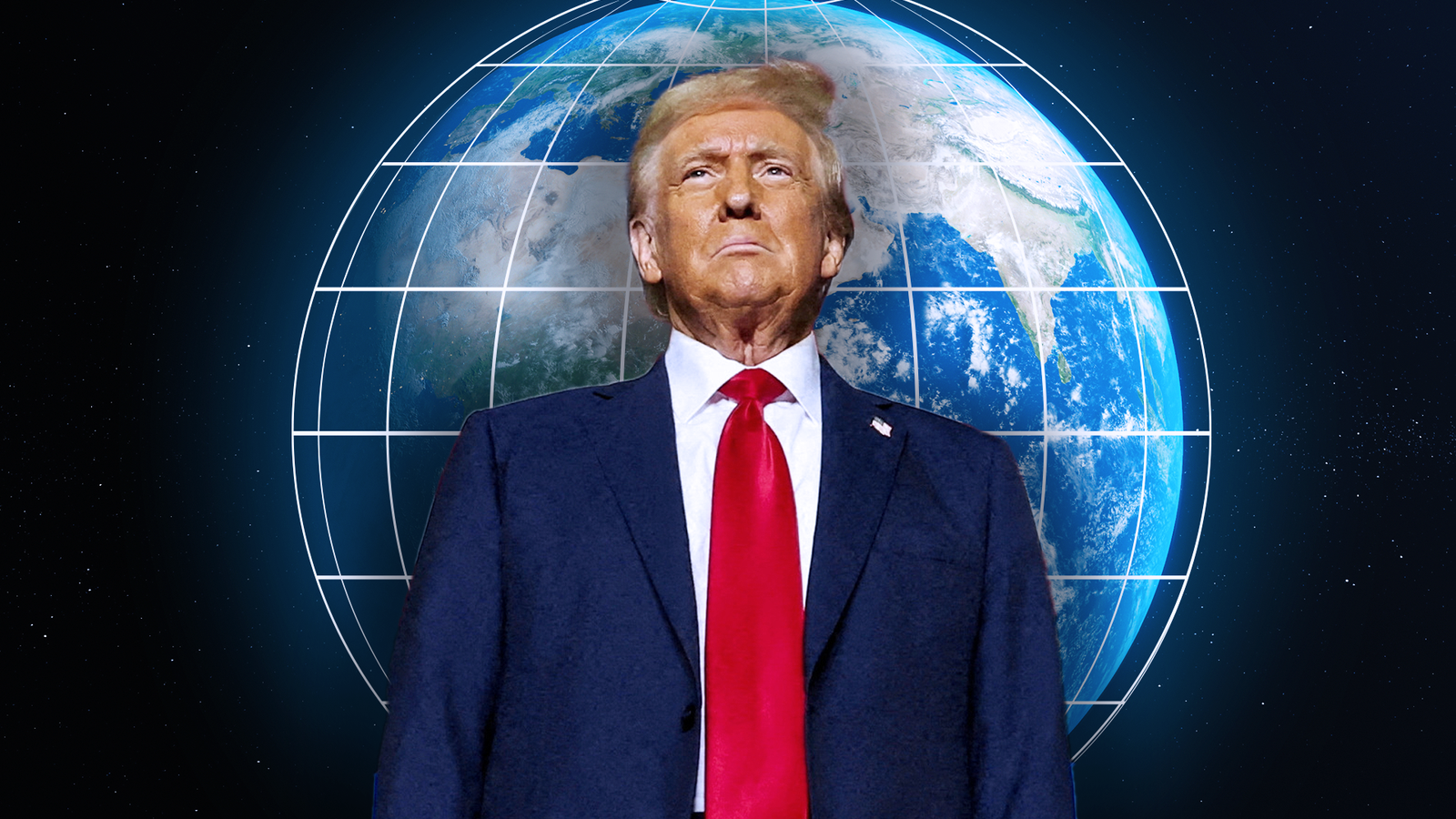
A great-power alternative to the globalist order.
The idea of the C5 or “Core Five” as an alternative to the G7 is a project that flows directly from the political and geopolitical approach of the MAGA movement in world politics. It is political realism; it is a rejection of globalization; it is the construction of a new international architecture based on the real existing centers of sovereignty in the contemporary world.
When, a little less than a year ago, I published my book The Trump Revolution (which has already been translated into many languages), I gave it the subtitle “A New Order of Great Powers.” But what is the “Order of Great Powers”? It is precisely the building of an international system in which genuine sovereignty will belong only to those state-civilizations that possess their own ideology, their own economy, and their own geopolitics—truly sovereign entities that have already proven their viability.
This is, if you will, the MAGA version of a multipolar world. That is exactly what US Secretary of State Marco Rubio was talking about at one time. It was part of the plans of MAGA ideologues such as Steve Bannon. It was supported and substantiated—quite critically towards Trump himself—by John Mearsheimer, an outstanding representative of American political realism. This is a cold, hard approach to the concept of sovereignty. Sovereignty should belong only to the great powers: “A New Order of Great Powers.” In other words, it is the American, Trumpist version of a multipolar world, which differs quite significantly from the BRICS model.
First difference: BRICS does not include the United States or the West; it is built as an alternative to them. This is entirely logical, because until Trump, America functioned as the stronghold of the globalist order of unipolarity. I have said before that a place for America within BRICS remains open—indeed, in a certain sense, reserved—but only for an America that breaks with globalization.
Second difference: BRICS accepts civilizations that have not yet fully formed. The Islamic world, which has still not achieved unity in developing a common civilizational strategy; Latin America, which is also stalling on the path to integration; and the African continent. All the countries of these civilizations are represented in BRICS. In other words, BRICS is a benevolent multipolarity “with room to grow.” It includes both already-formed state-civilizations and those that still have to unite. It is, so to speak, a “project of the future.”
Accordingly, the difference between the “Order of Great Powers” and the BRICS project is that only existing state-civilizations are recognized as sovereign: the United States, Russia, China, and India. Japan is also included—I think to balance China. Japan is, in fact, a powerful country. If it could gain independence from America, it could well become a sovereign pole in its own right. The C5 represents the American version of multipolarity. In the latest US National Security Strategy, this idea is spelled out clearly and directly.
The idea of creating the C5, the “Core Five,” in the eyes of American MAGA strategists (I emphasize: not neocons, not globalists) means giving this “Order of Great Powers” a kind of club status. Not yet the foundations of international law, but a club—one built this time in a completely different way from the G7, which was stuffed with various Western dwarfs that represented nothing, like Canada.
Both the G7 and the G20 were globalist clubs dominated by the globalist agenda. That is why they are completely irrelevant today. And that is precisely why the creation of a truly relevant multipolar club—the C5—is now under consideration.
But how does the MAGA strategy envision it? Most likely, America sees the creation of the C5 as an alternative to BRICS. However, it can perfectly well be considered a complement to BRICS. Because what is fundamentally important here? The absence of Europe, Britain, Canada, and Australia.
That is, the absence of those regimes that, in their death throes, continue to cling desperately to the globalist project. This is genuine MAGA geopolitics, which—in its own way—recognizes multipolarity.
Therefore, the C5 is a very serious proposal. Of course, it can be criticized; one can say that BRICS is better. That is what I think too: BRICS is better in every respect except one: the United States is not in it. And as long as the US and the West are not in it, no one inside BRICS dares to truly challenge global hegemony head-on. But here Trump and MAGA make an interesting move: “Instead of consolidating against us, join us in building multipolarity together.” This is a matter of great seriousness and demands the highest level of attention. Let us see what can come of it.
We are now living in a moment when Trump is beginning to return to his original MAGA strategy, from which in recent months he had moved very far away, a stellar distance away. But now the moment of return has come. It is no coincidence that, at precisely this moment, a proposal has emerged to consider the creation of the C5 (Core Five) club—an extremely important, revealing, and extraordinarily interesting development.
The main thing is that this proposal contains no European Union, no globalists, no Soros, no Schwab, no Davos forum, no Macron… They are all thrown into the trash heap, together with Zelensky and Ukrainian Nazism. This really is a most fascinating moment, when America is forced to recognize multipolarity, even if it offers its own version of it.
(Translated from the Russian)
https://www.multipolarpress.com/p/c5-as-a-maga-model-of-multipolarity